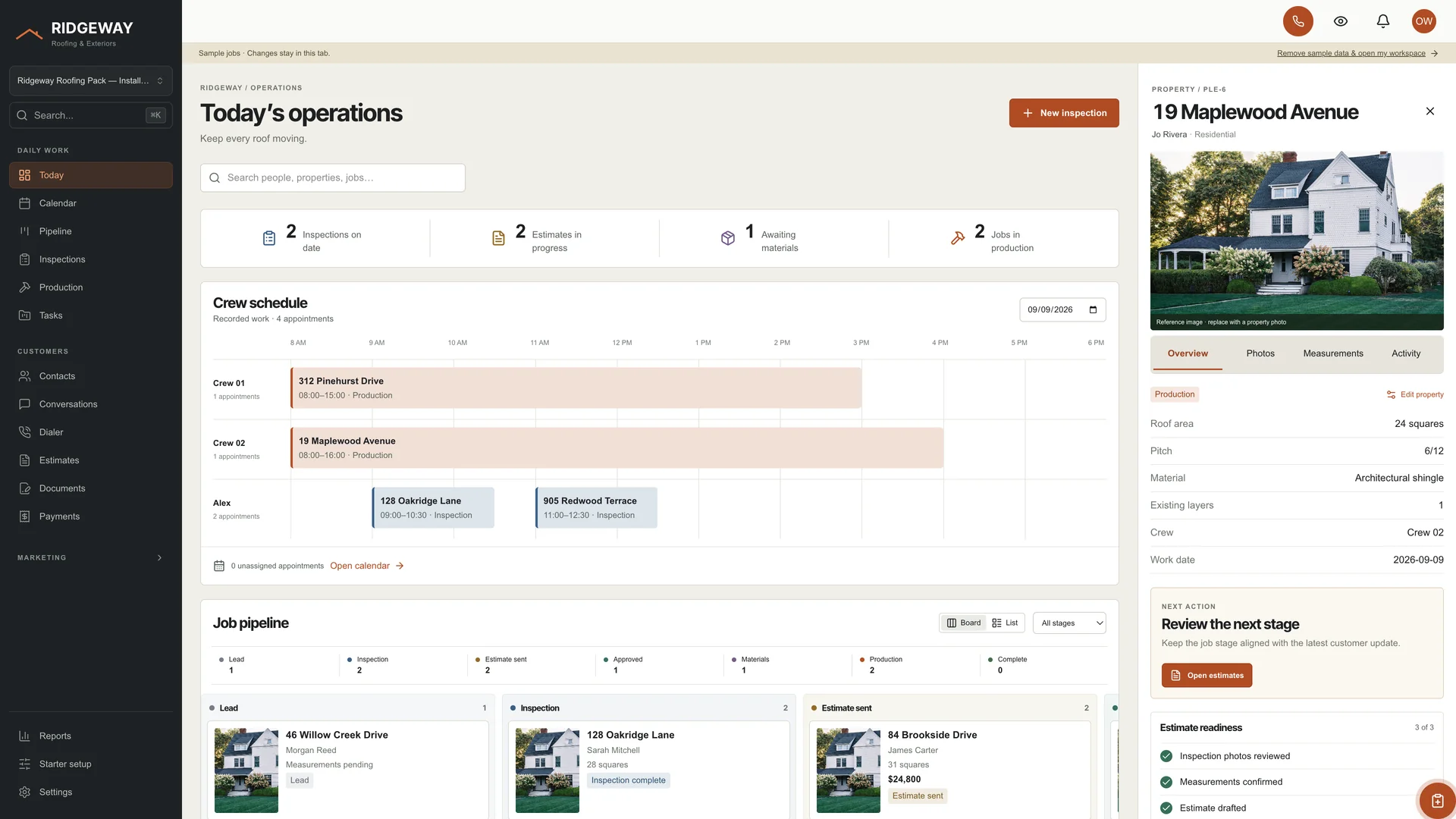
Roofing & exteriors
Roofing Kit
A roofing workspace, optional pipeline and workflow drafts, and the source to make it your own.
GOSEEDLY / CRM KITS
Industry-focused starter kits for your Seedly CRM. A considered interface, useful starting content, and editable code you can make your own.
DevLaunch All Access: every CRM kit, plus all of our classes, courses, and products195 kits
A roofing workspace, optional pipeline and workflow drafts, and the source to make it your own.
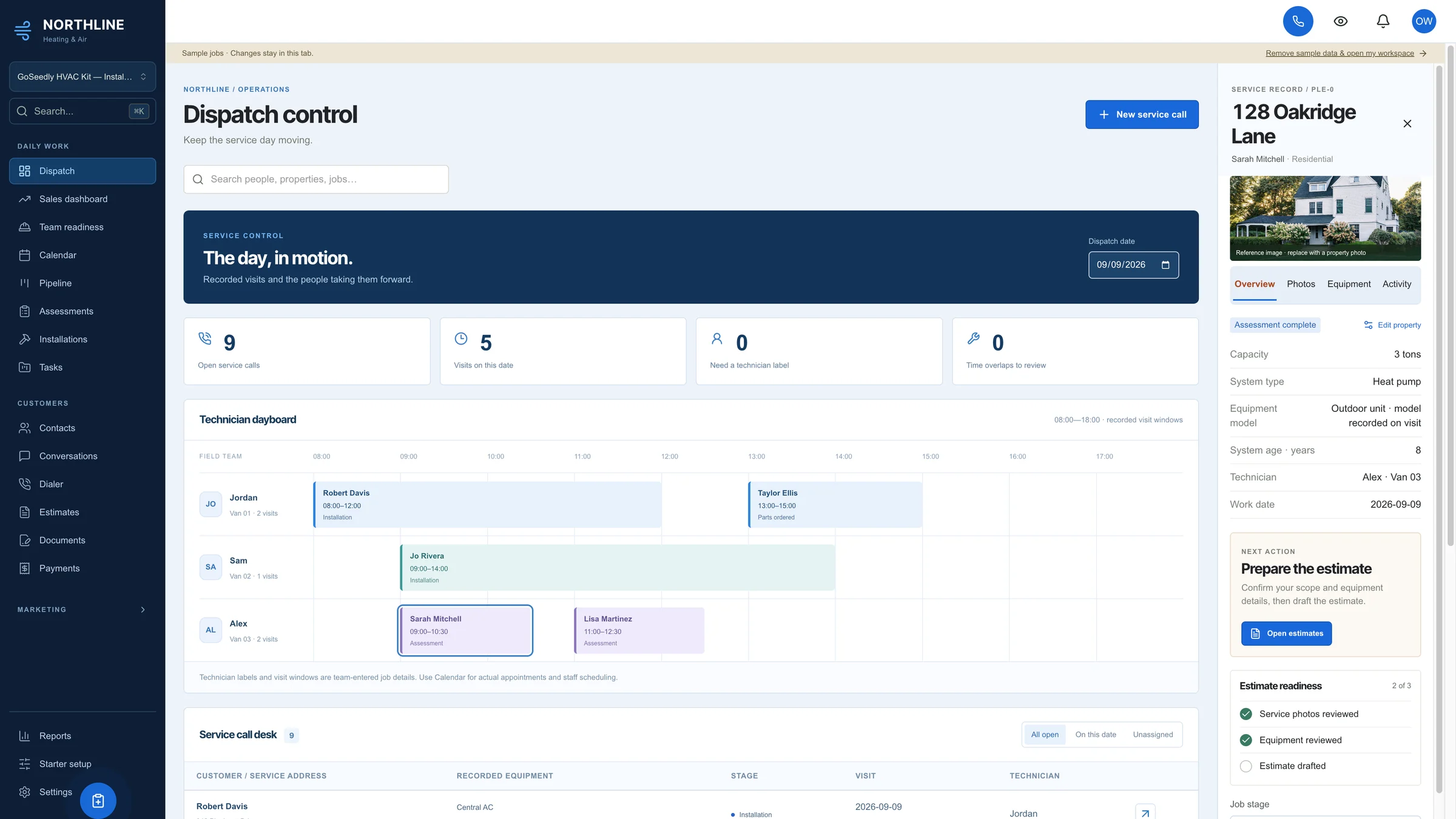
A technician dayboard, service call desk, and equipment details in a compact dispatch workspace.
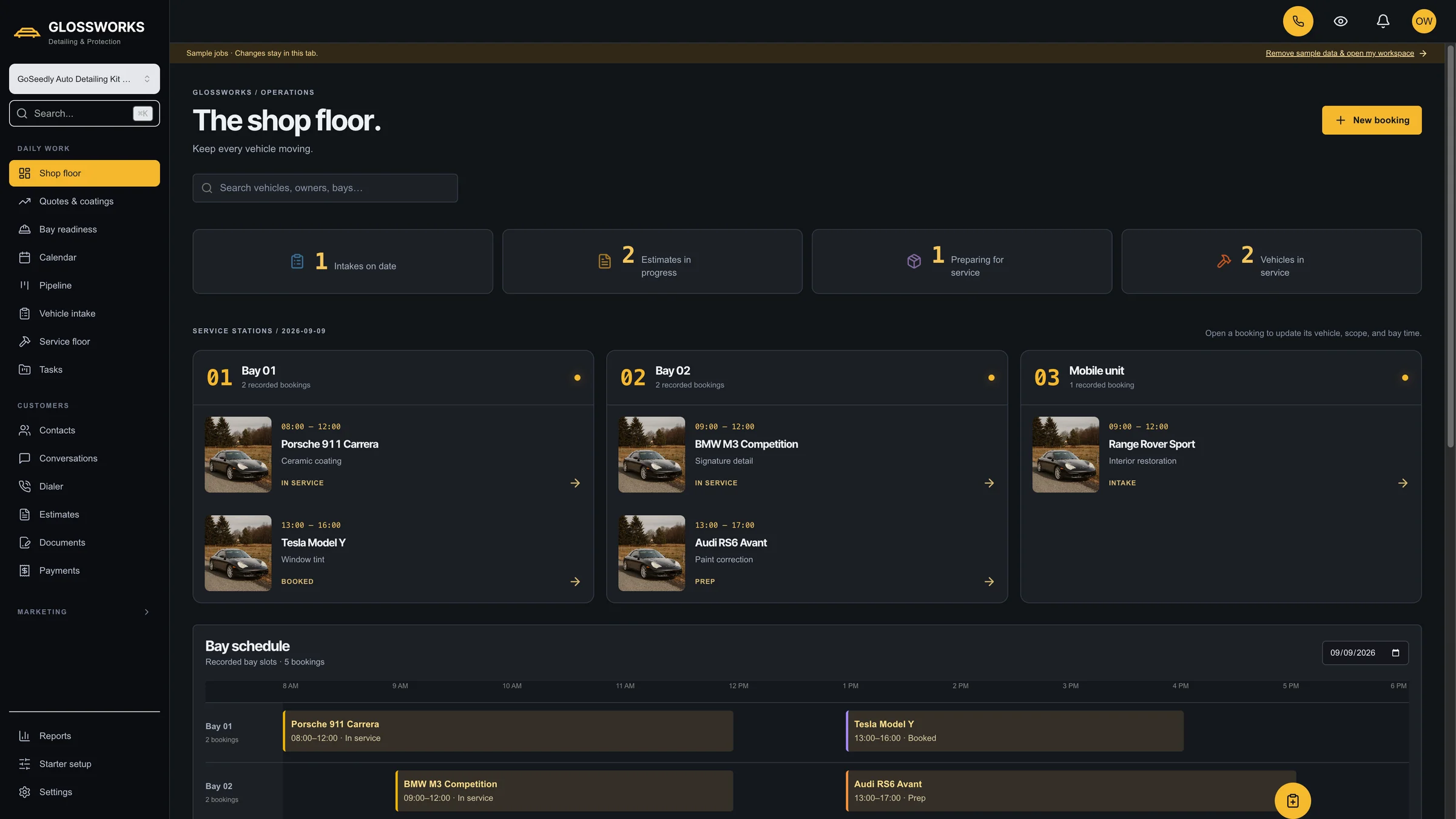
A vehicle-first shop floor with numbered service bays, quote follow-ups, and intake readiness.
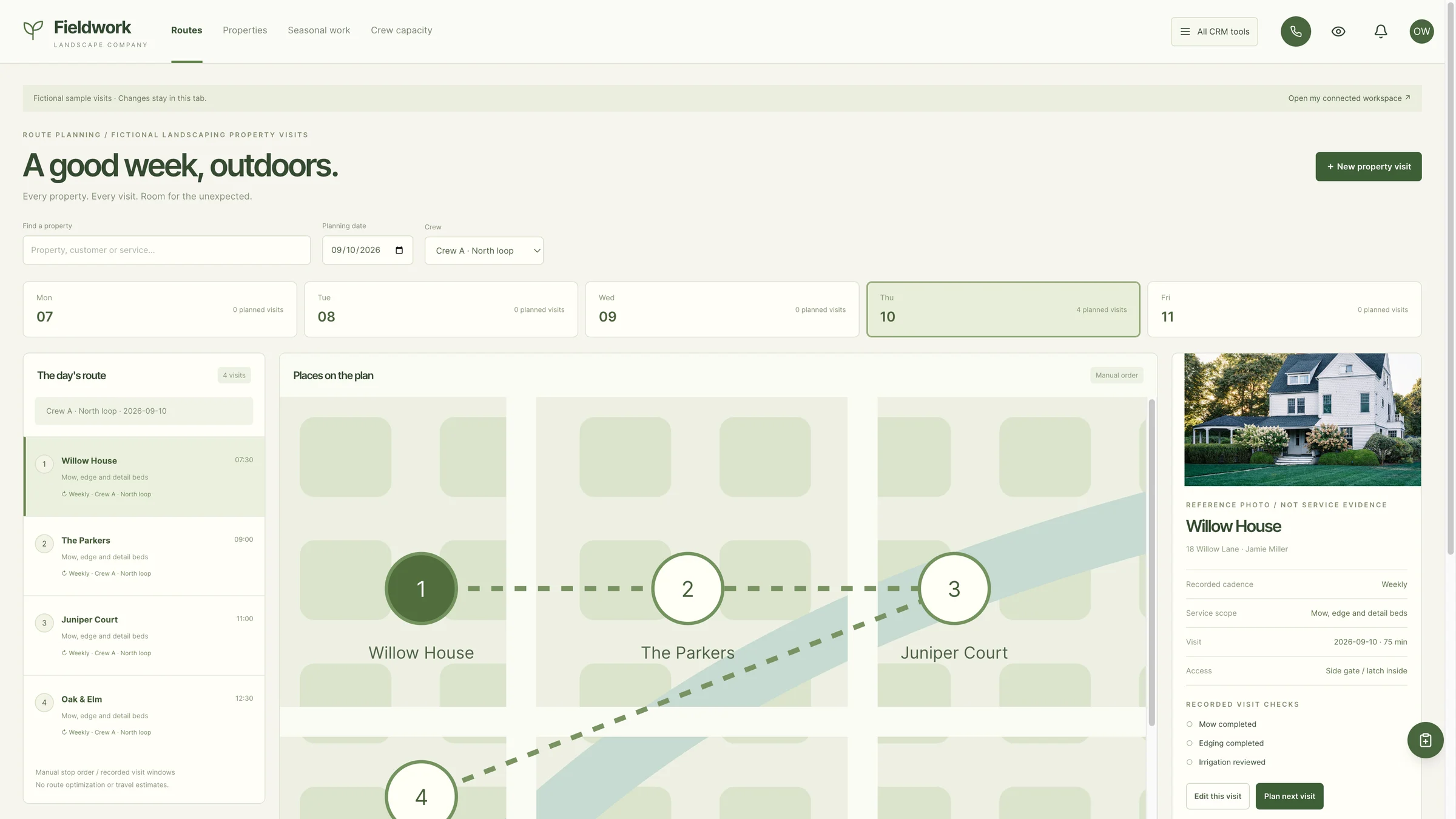
A weekly route workspace with independent service visits, property history, seasonal work, and crew capacity.
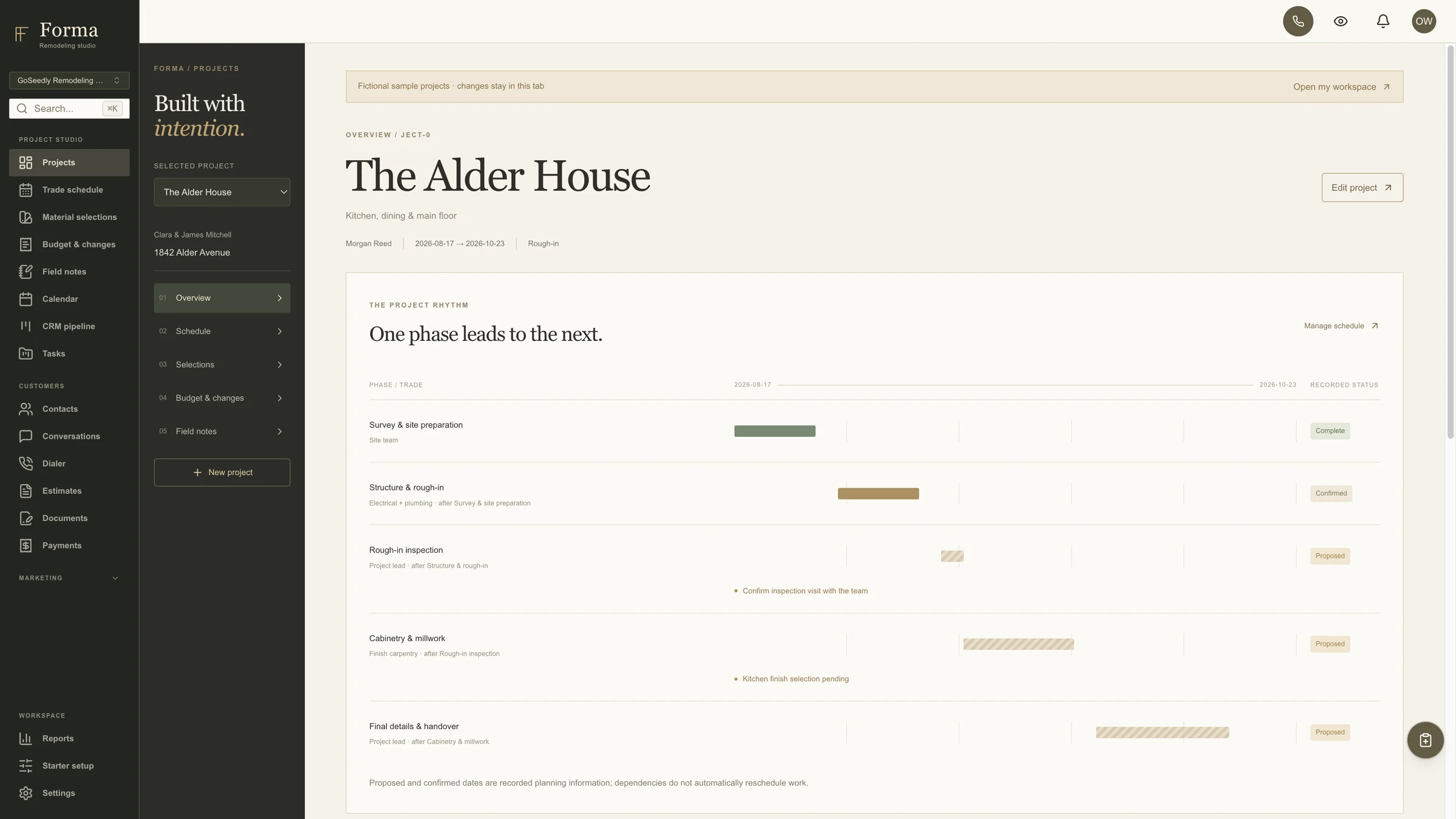
A project studio for milestone plans, material decisions, recorded contract changes, and field notes.
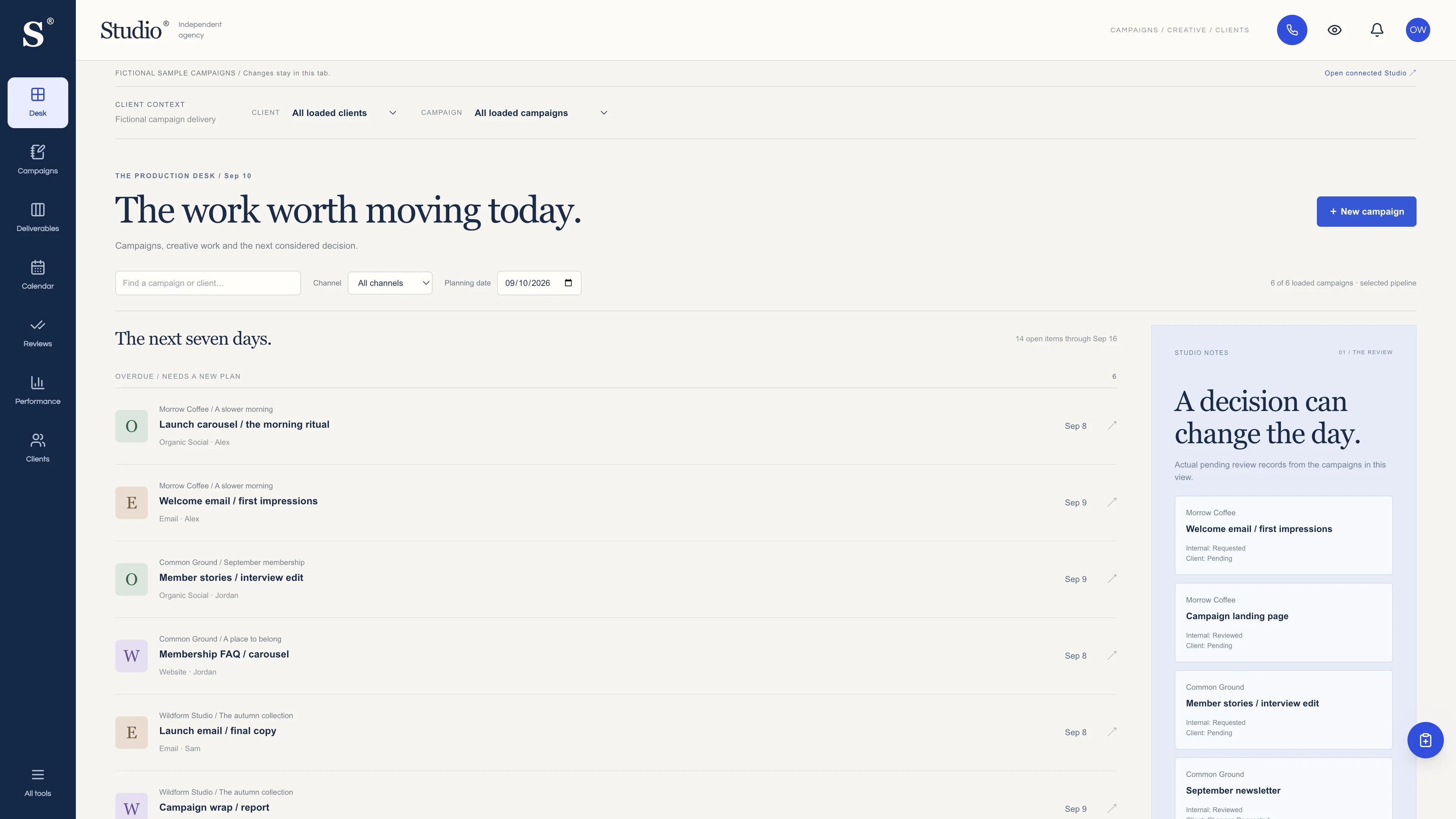
A client-focused studio for campaign briefs, deliverables, recorded reviews, content deadlines, and manual performance snapshots.
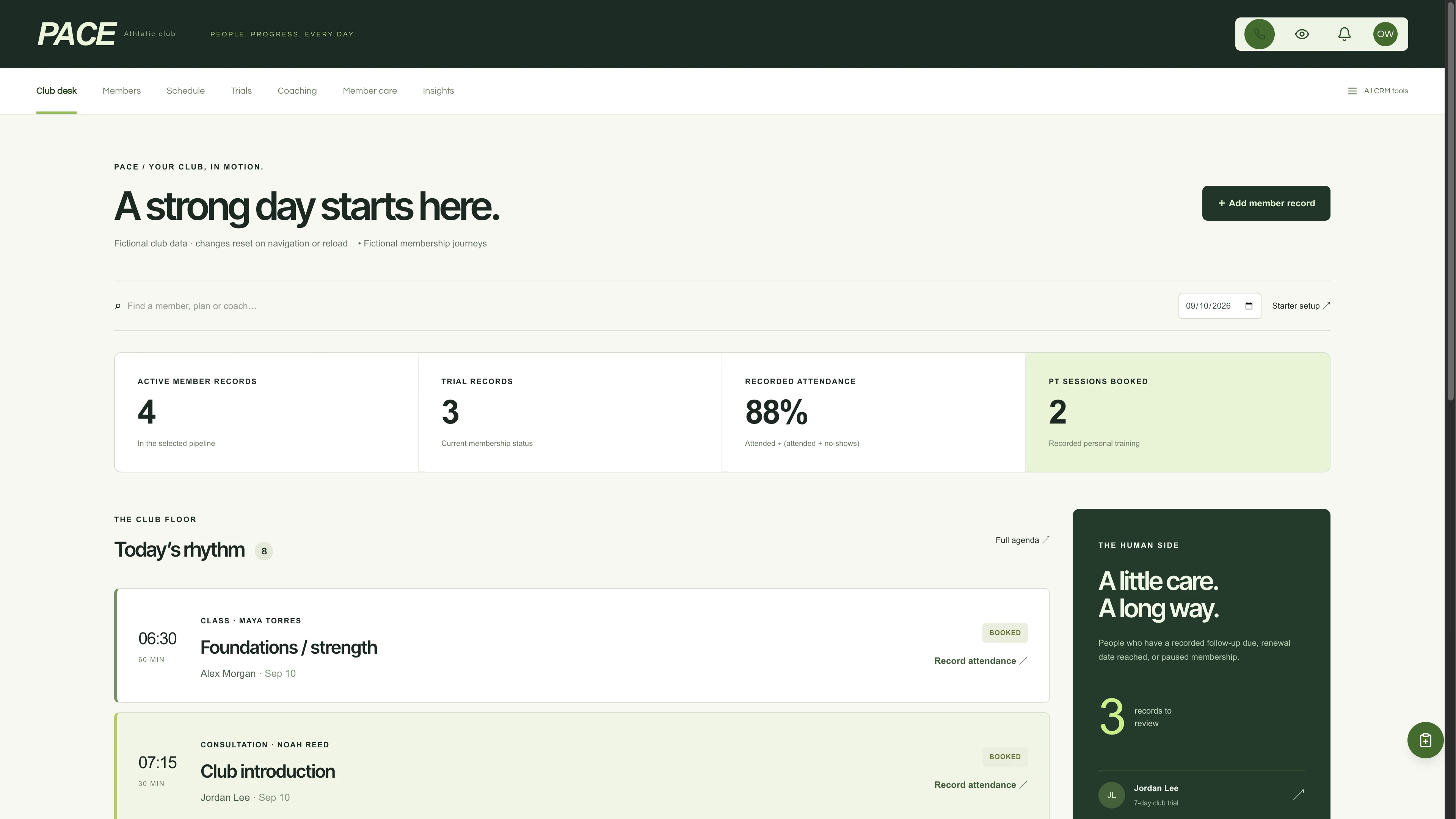
A club workspace for the session schedule, member journeys, trial follow-ups, personal training, and retention.
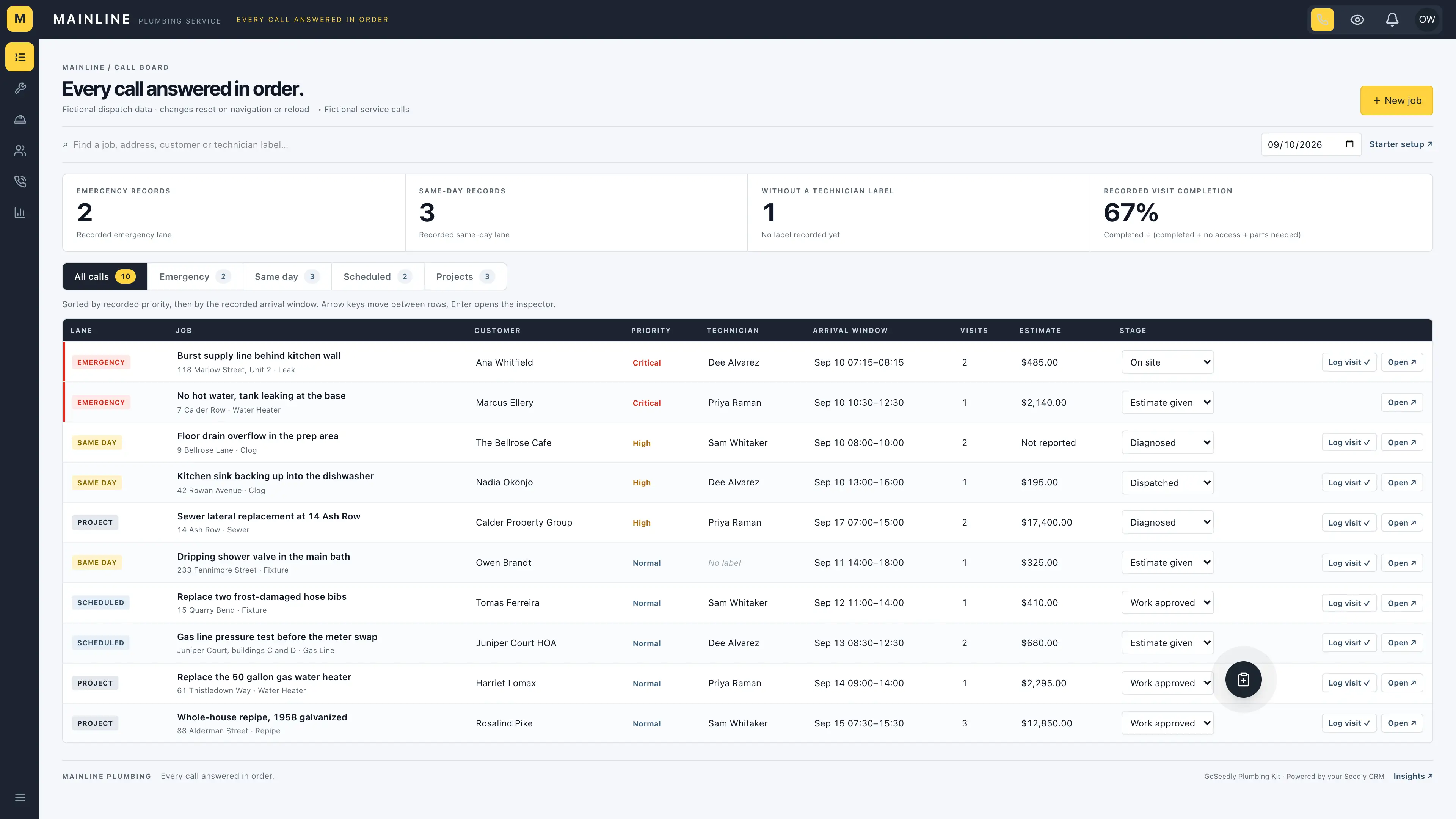
A dense dispatch ledger for emergency, same-day, scheduled and project work, with a job inspector beside the table.
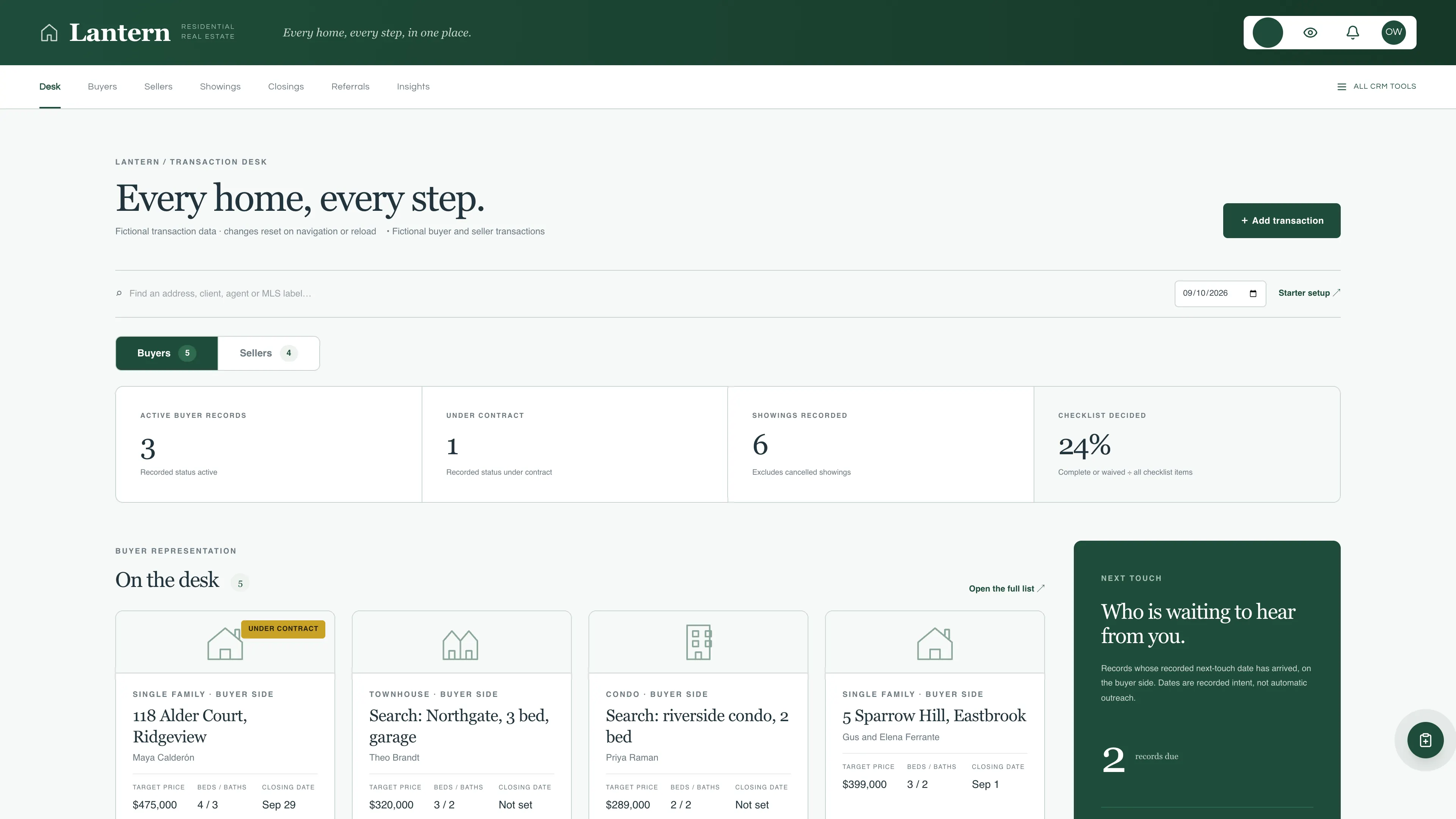
A dual-pipeline transaction desk for buyer and seller representation, with recorded showings and closing checklists.
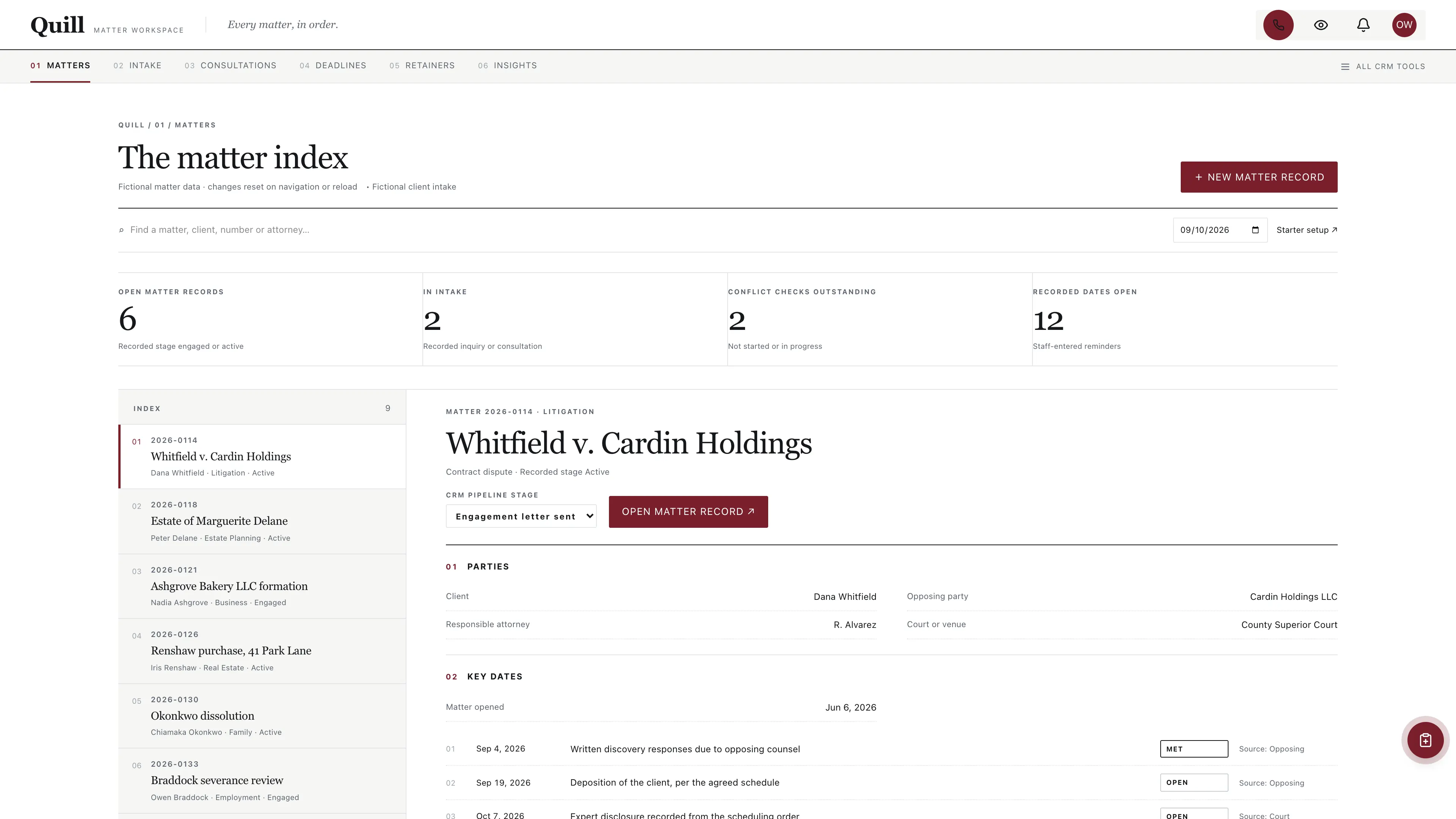
A document-style matter index, intake desk, consultation record, staff-entered deadline ledger and retainer references.
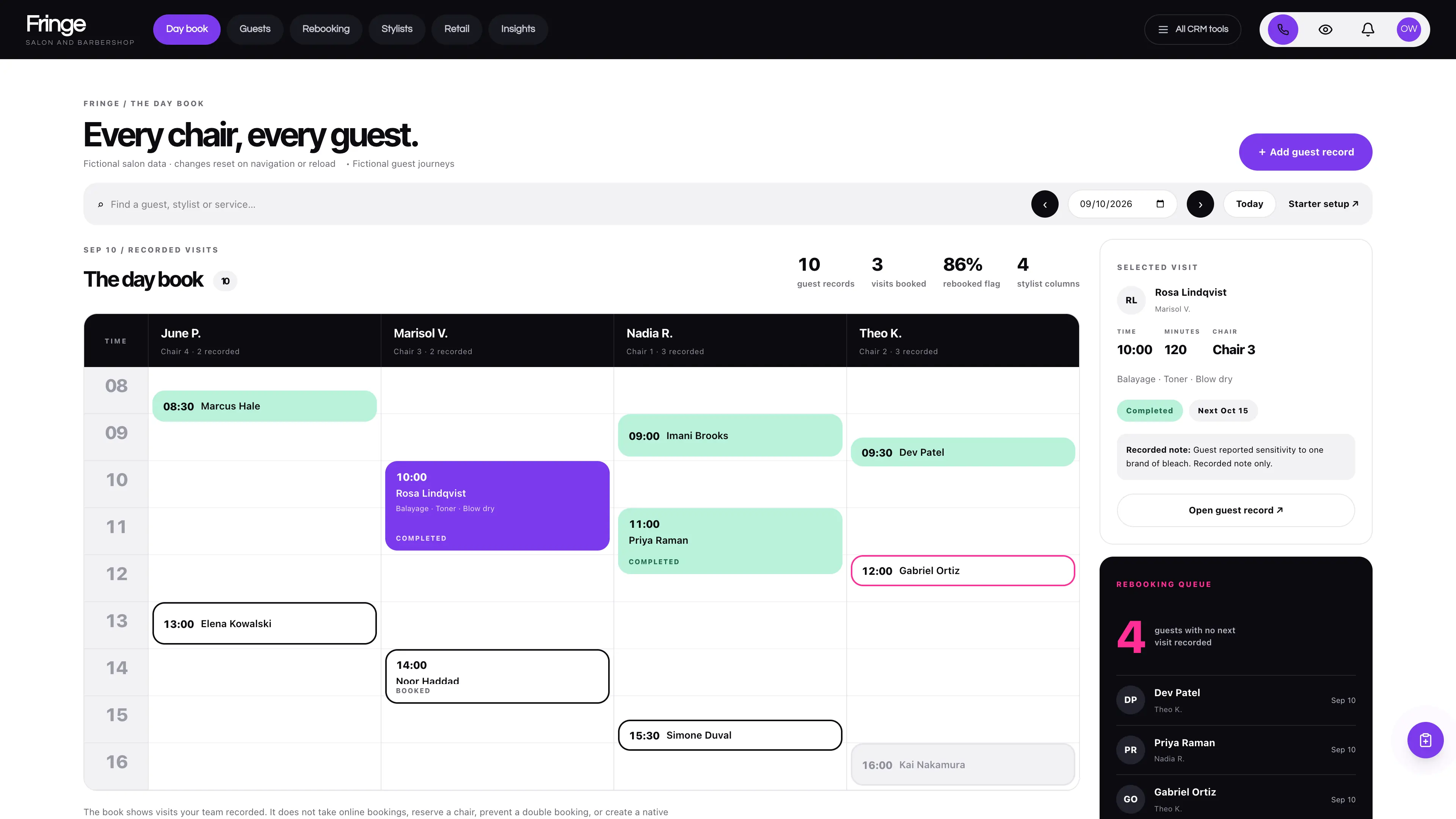
A stylist column day book, guest preferences and a rebooking queue in one salon workspace.
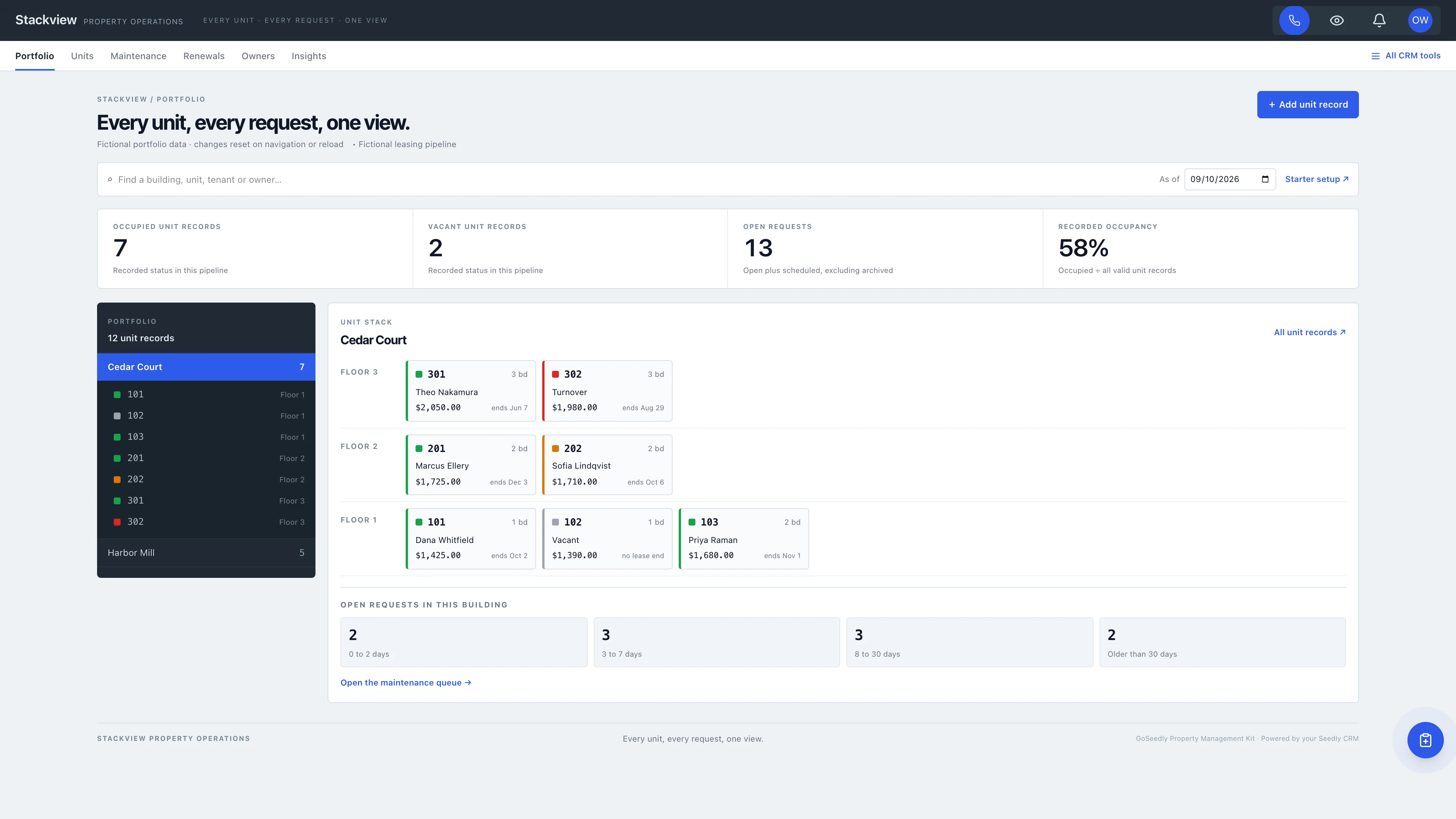
A portfolio workspace with a building and unit tree, a floor-ordered unit stack, an aged maintenance queue, and lease renewal dates.
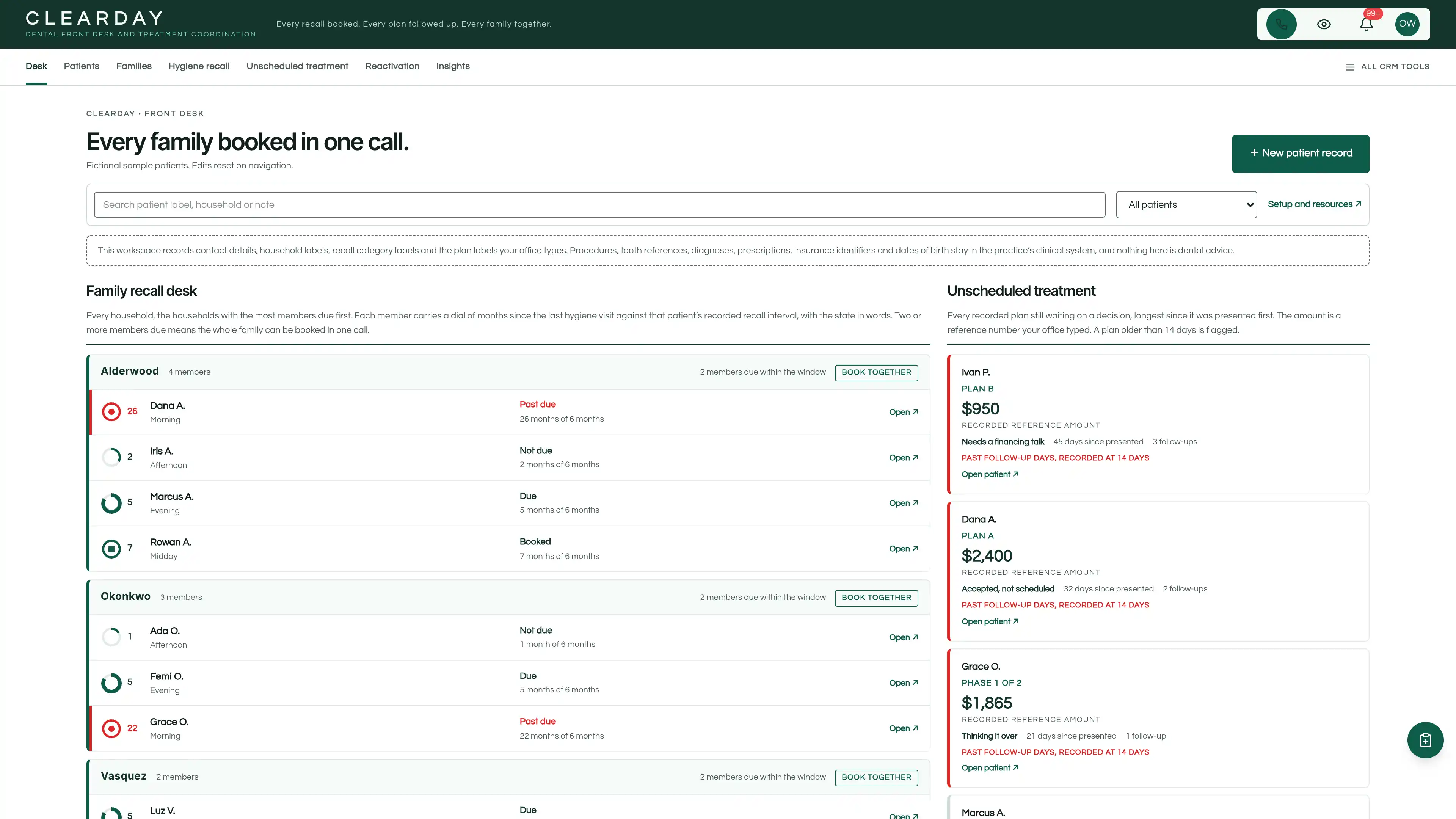
A family recall desk where every household is one block and every member carries a recall dial, beside an unscheduled treatment column that flags any plan past your recorded follow-up window.
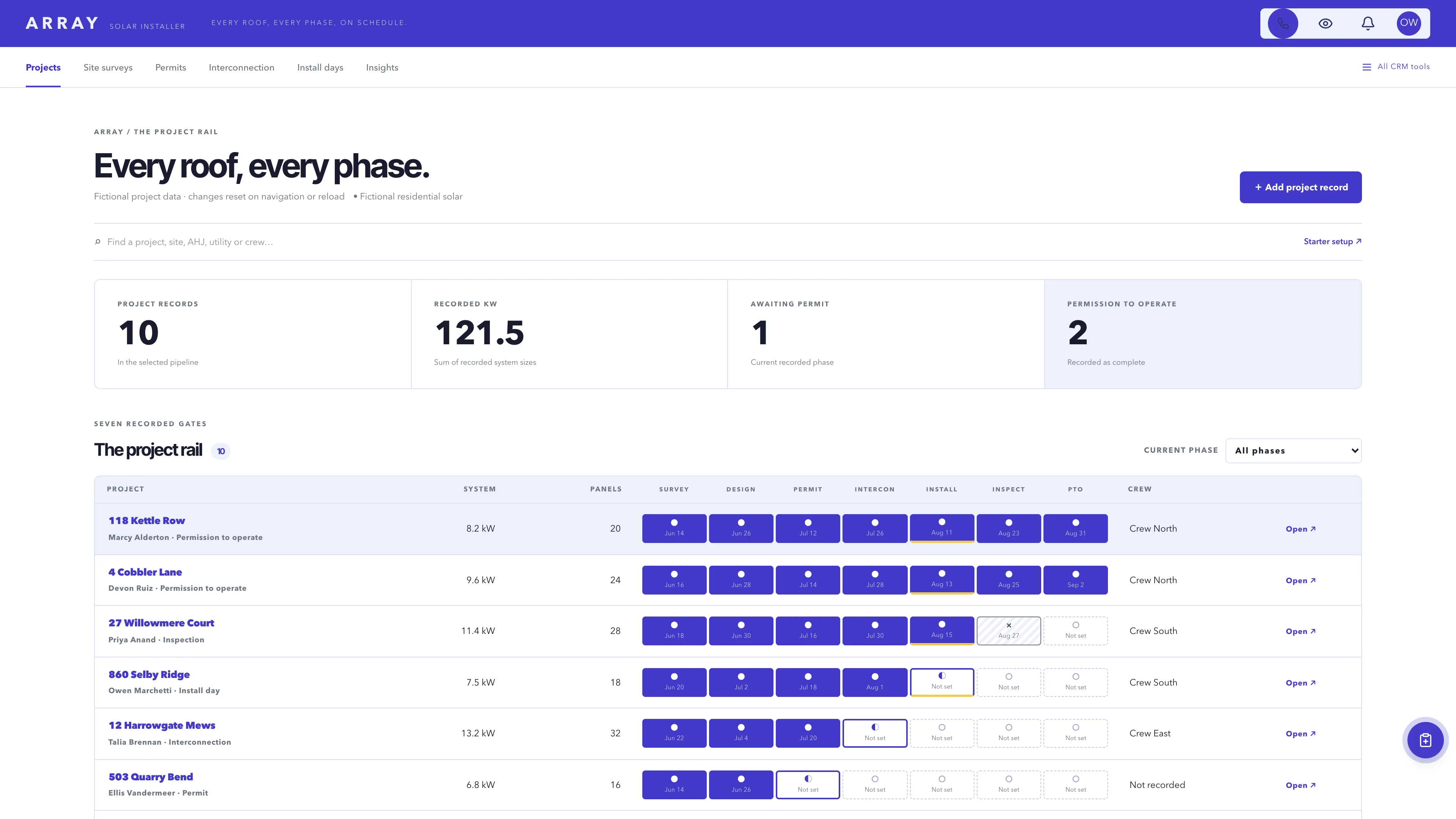
A solar project rail that puts survey, design, permit, interconnection, install day, inspection and permission to operate on one row per project.
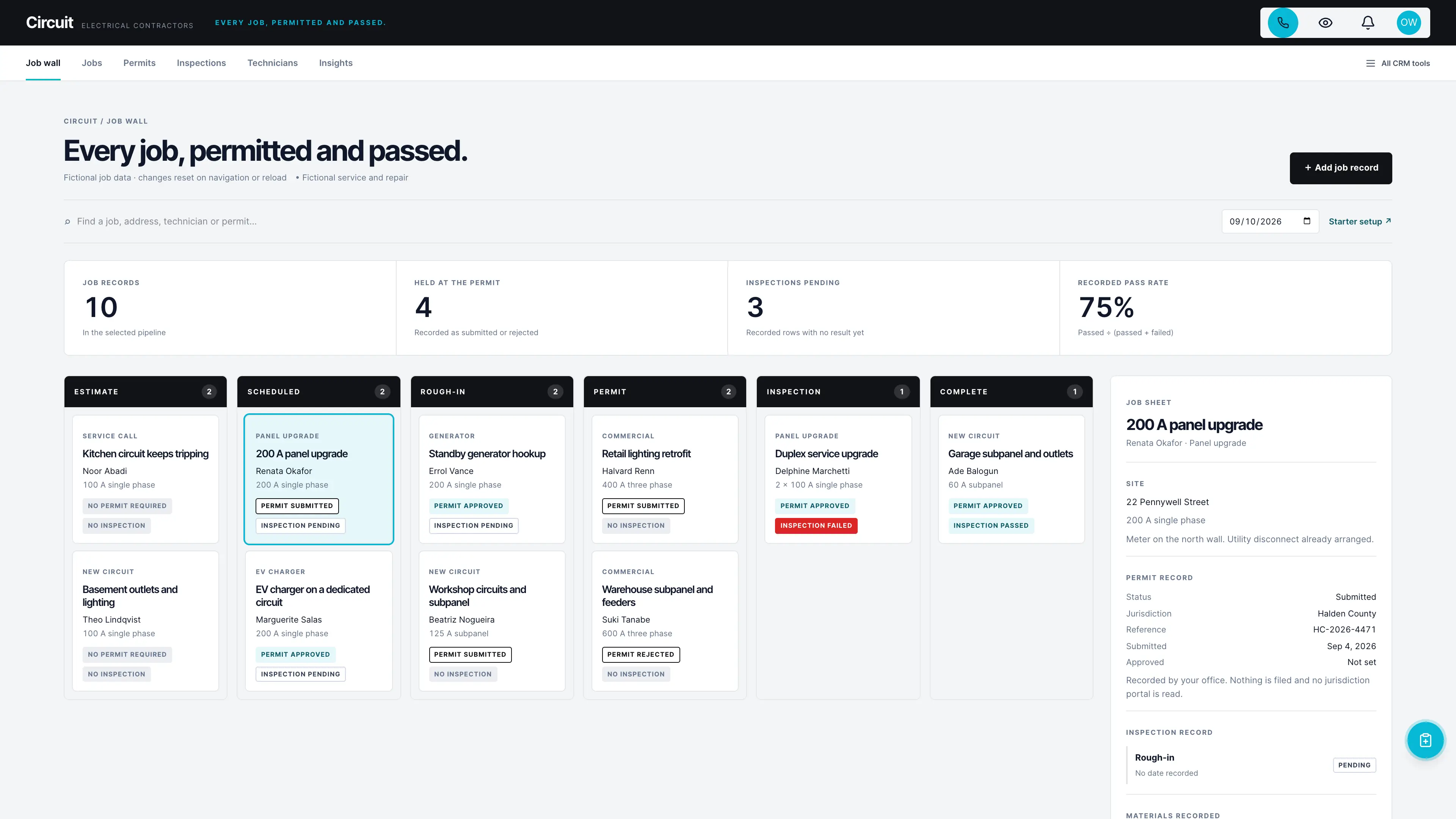
A job wall of stage columns where every card carries its permit status and its inspection status, plus a job sheet with the recorded permit, inspections and materials.
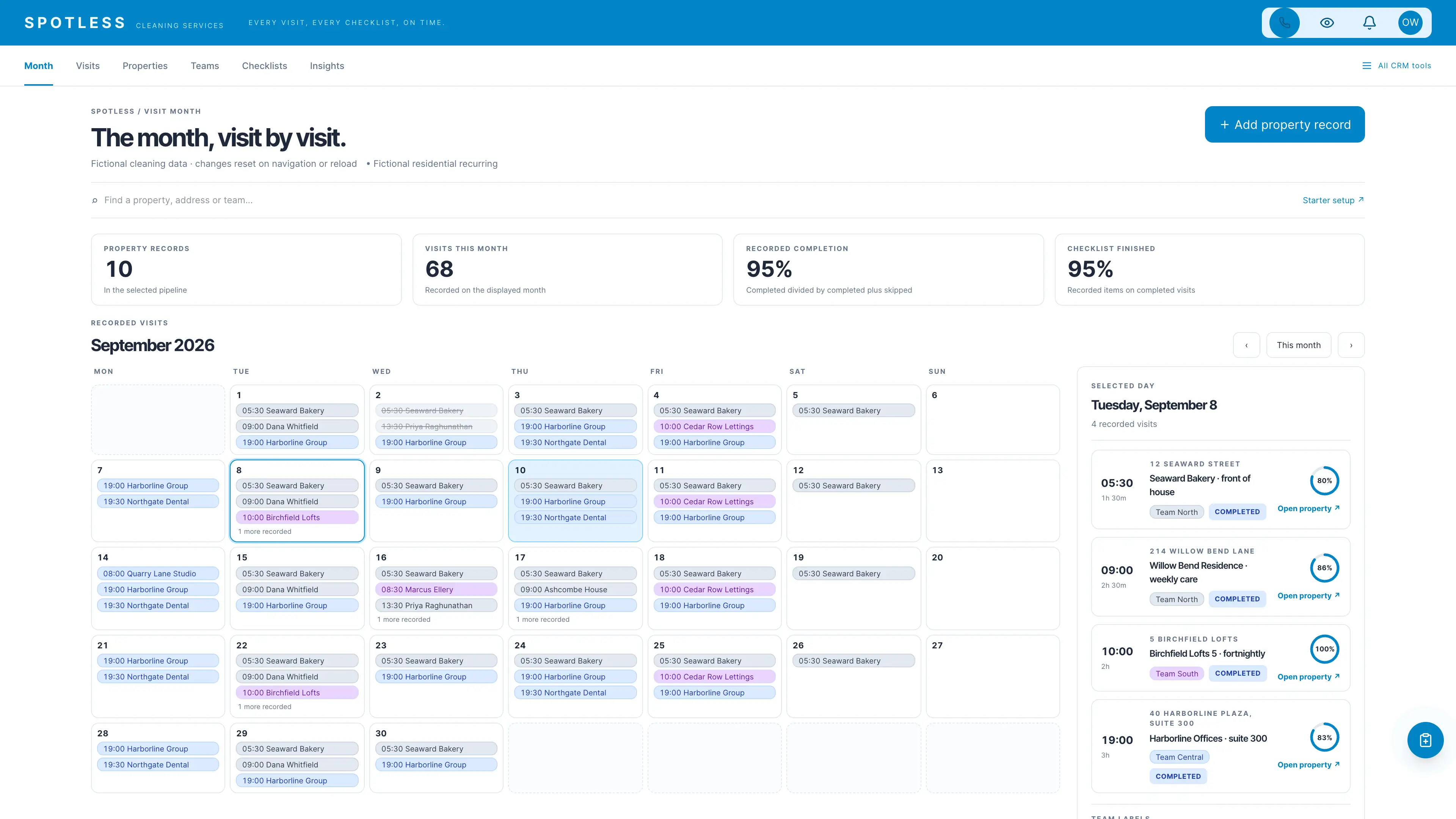
A month of recorded visits, property care agreements, team labels, and the checklist each property asks for.
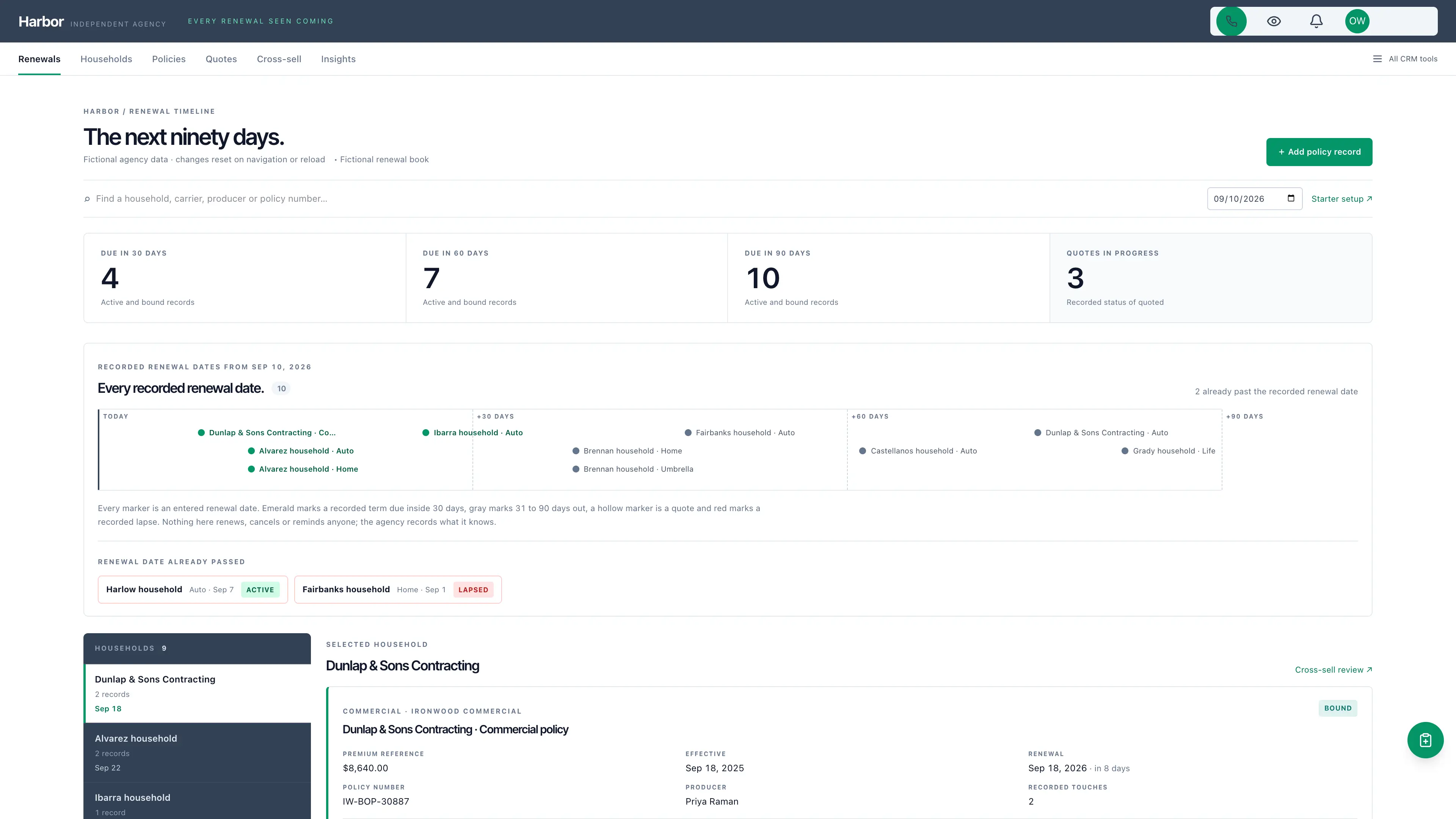
A ninety-day renewal timeline, a household rail, and the policy, quote and cross-sell records behind the book of business.
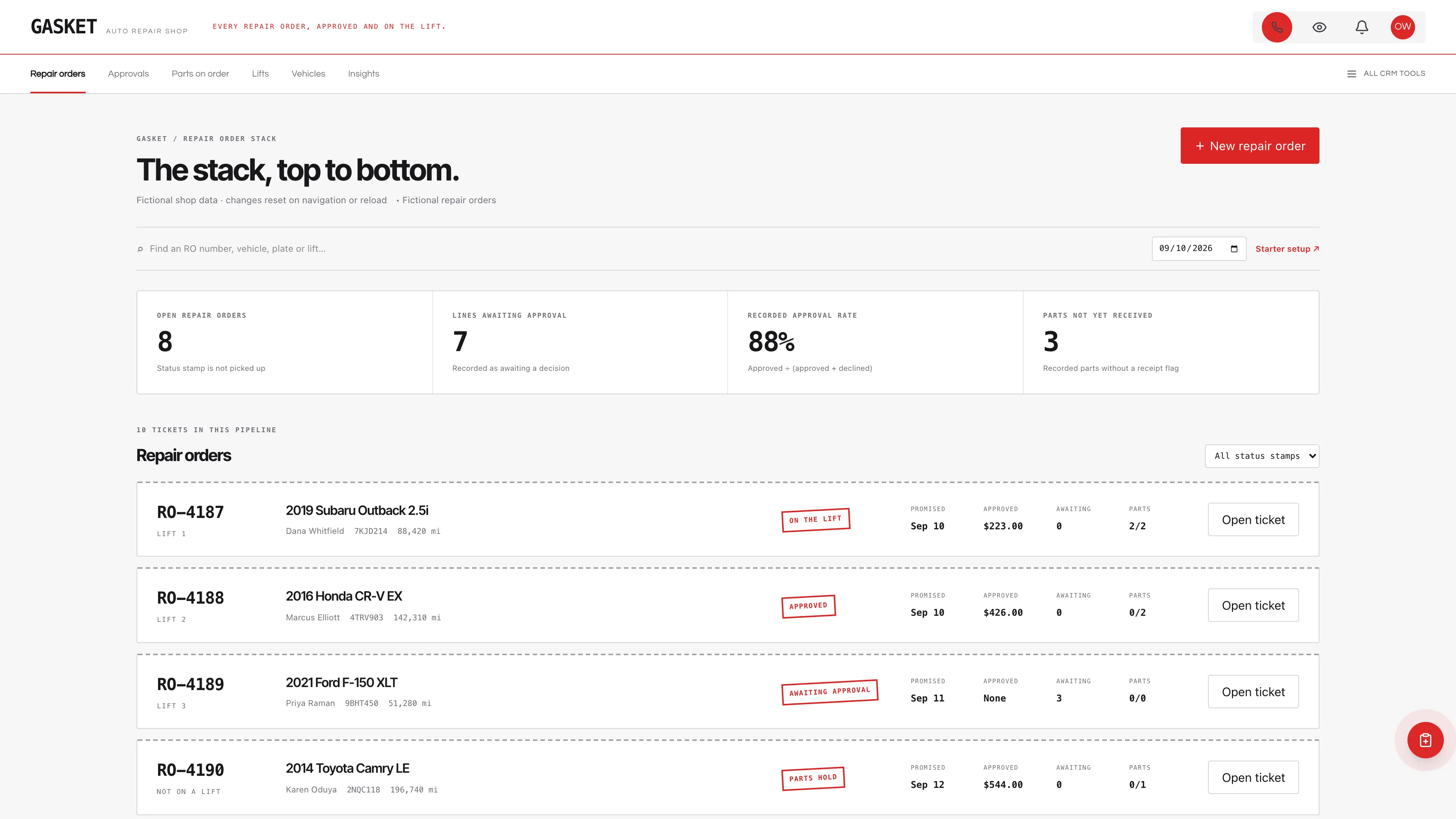
A repair order ticket stack with an approvals queue for the line items a customer has not answered yet and a tracker for parts on order.
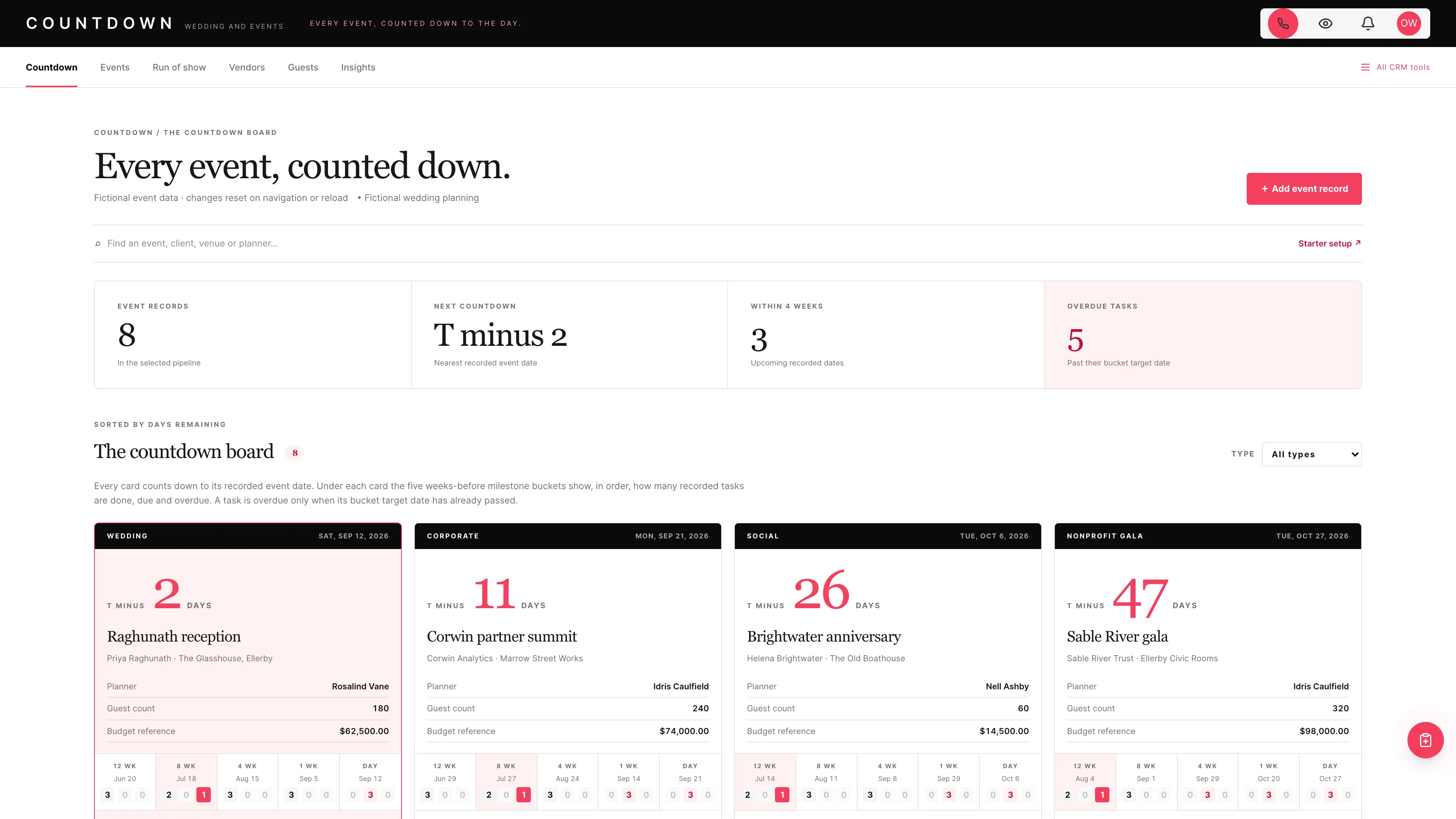
A countdown board that leads every event with the days remaining, then measures milestone tasks, the run of show and the vendor sheet back from that date.
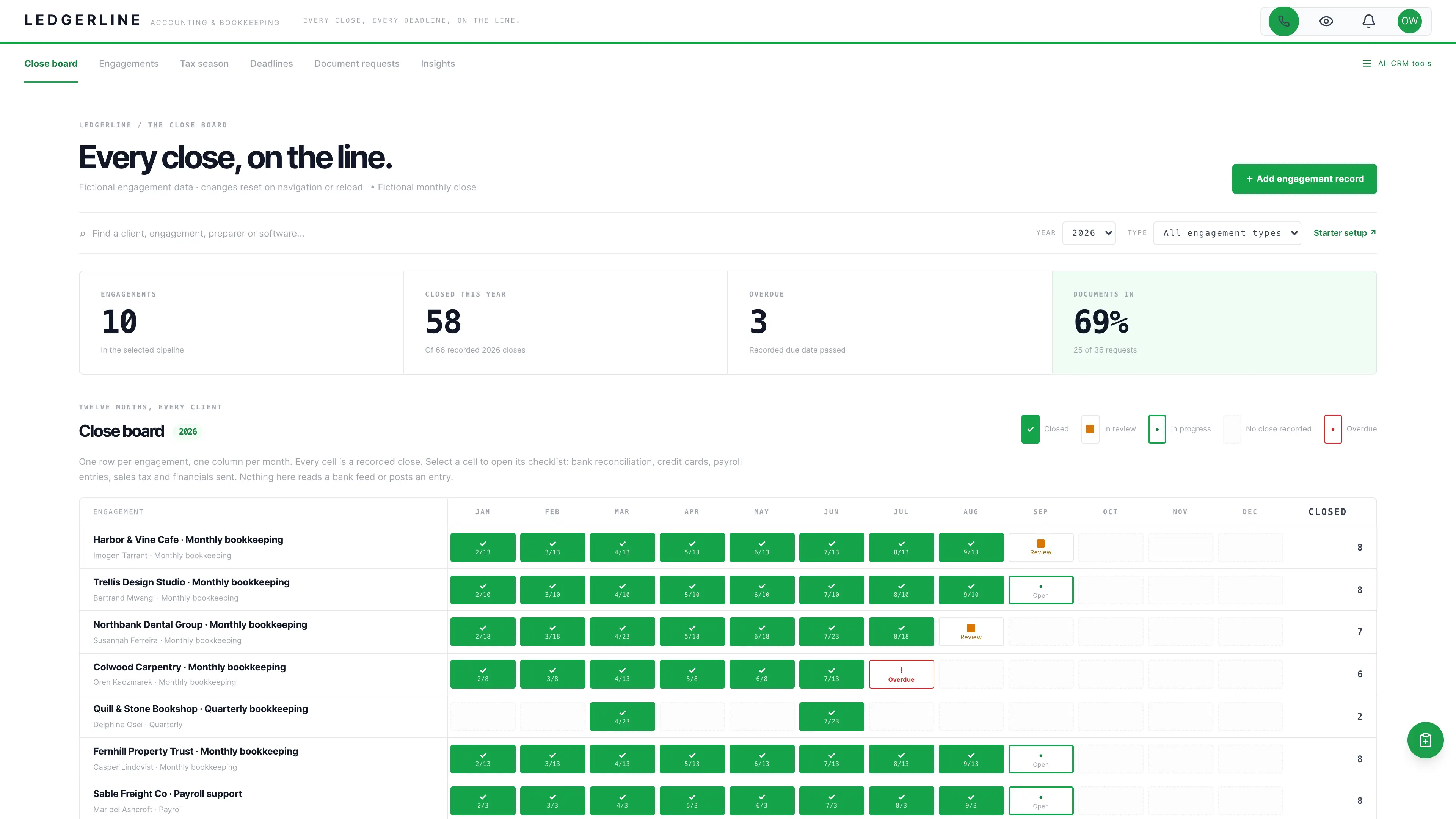
A close board that puts every client engagement on a row and every month of the year in a column, beside a tax season queue and a recorded deadline list.
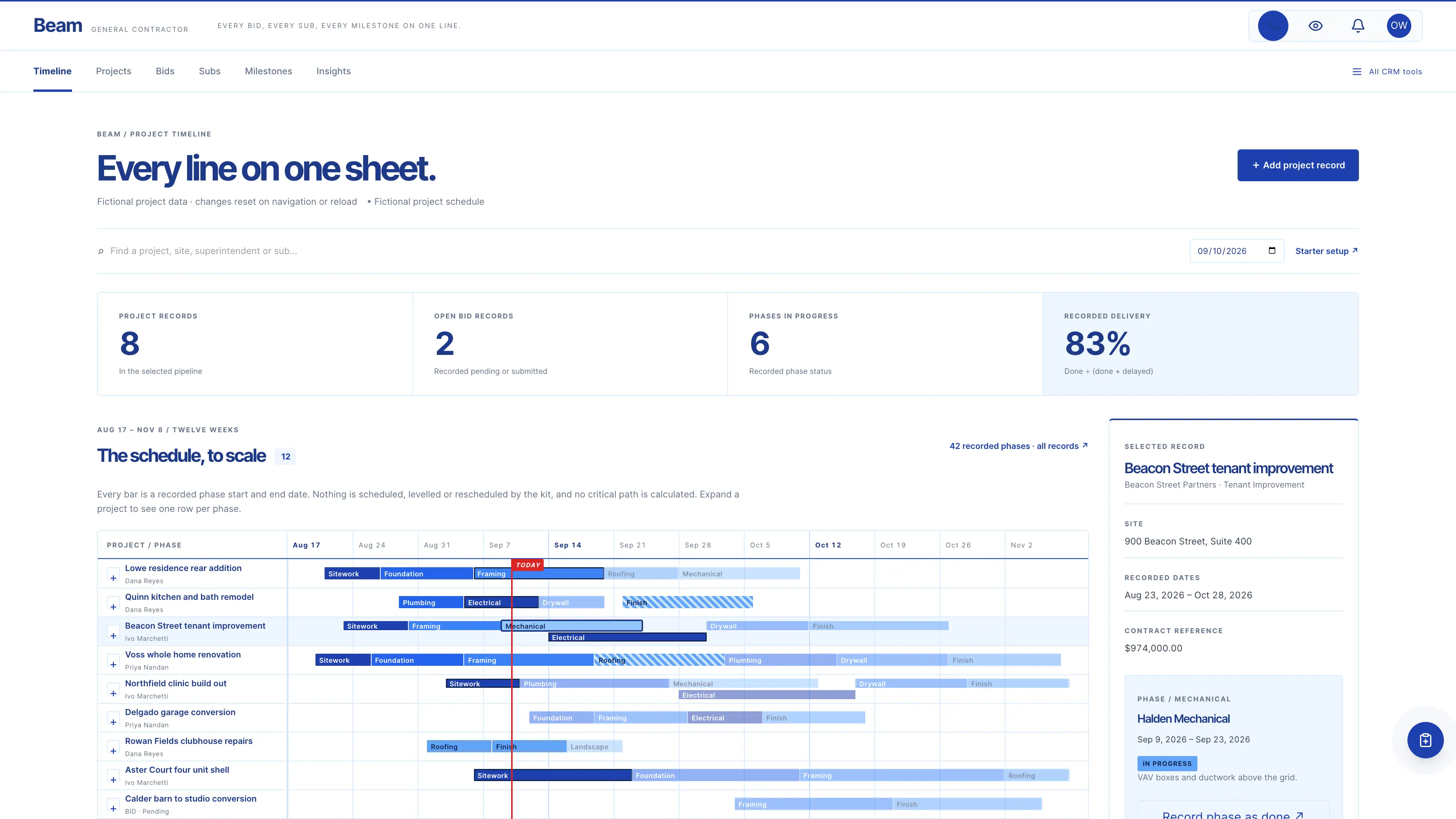
A twelve-week Gantt timeline of recorded trade phases, a bid desk, subcontractor grouping and milestone weeks.
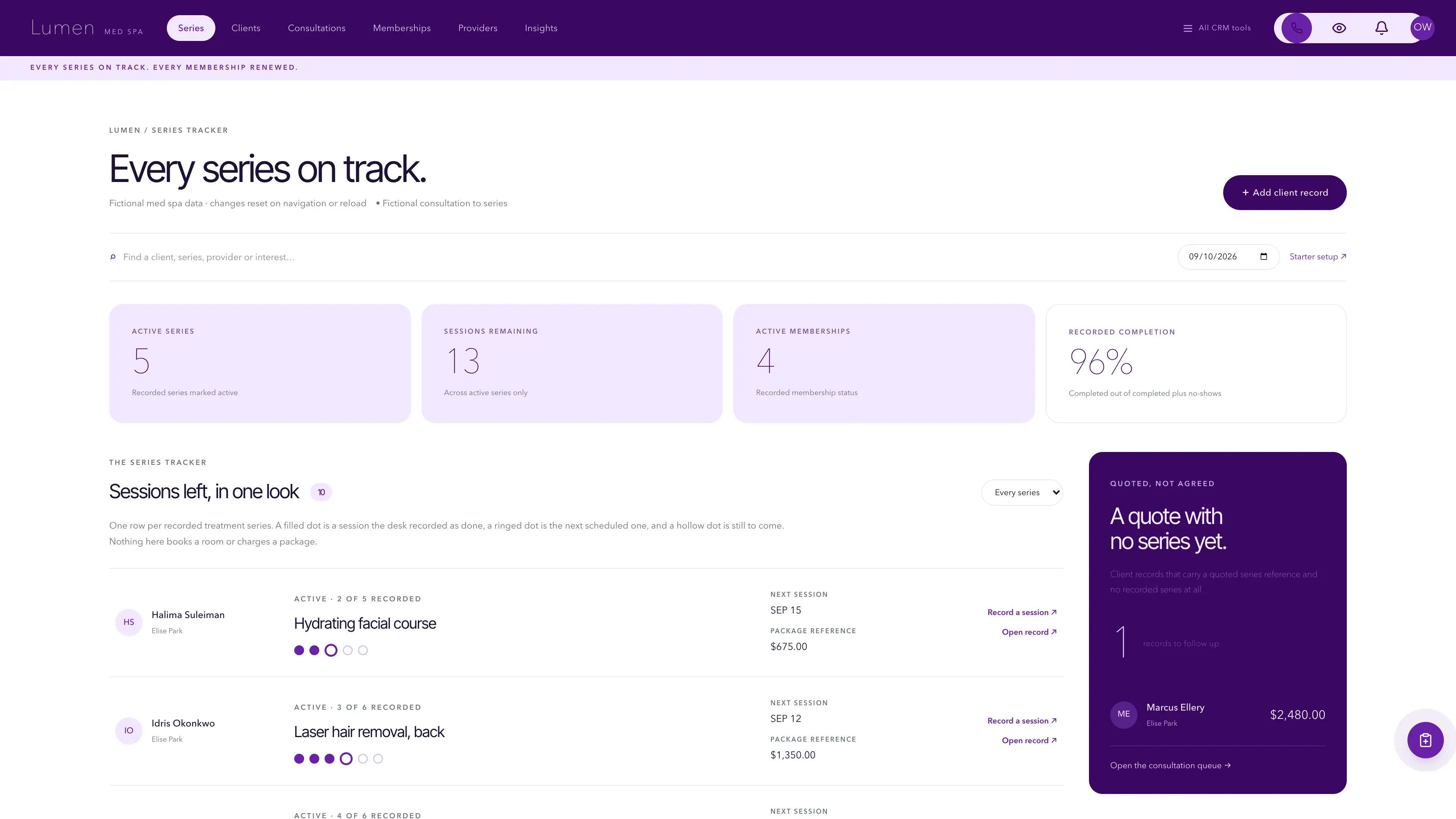
A series tracker that shows how many sessions are left on every treatment package, beside a consultation queue and membership renewal bands.
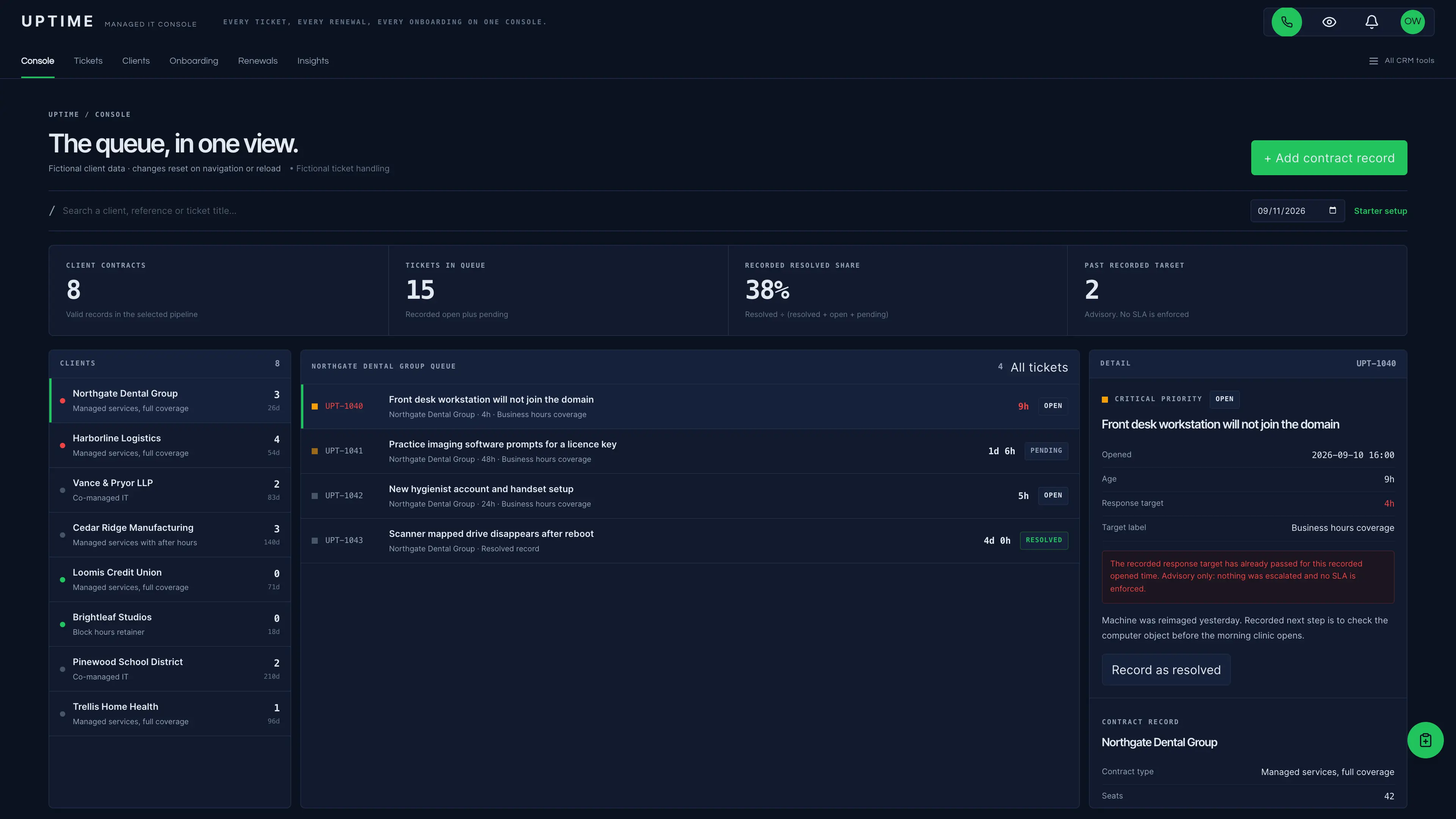
A dark three-pane console holding the client rail, the ticket queue and the selected ticket at once, plus onboarding checklists and 30, 60 and 90 day renewal bands.
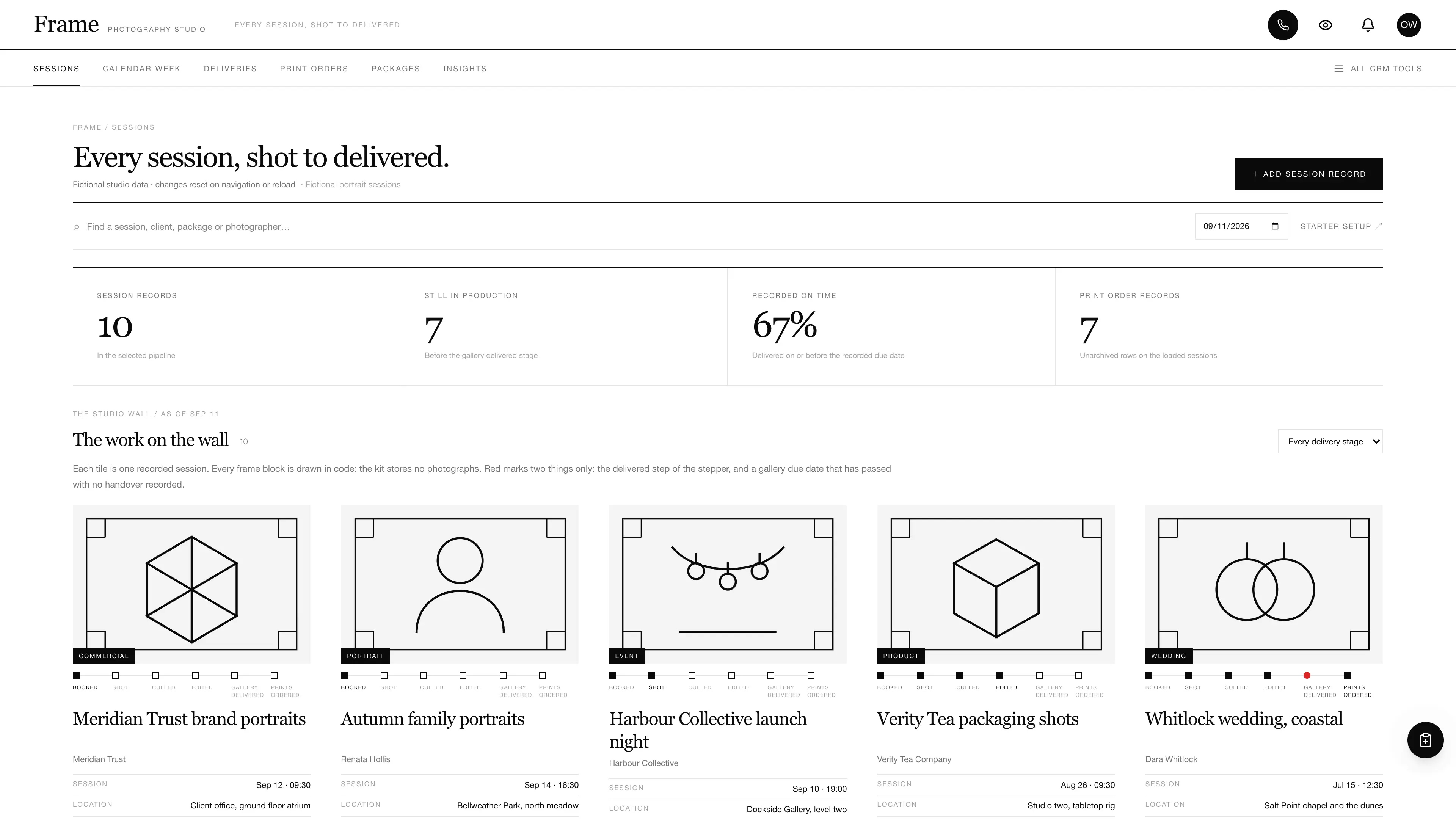
A monochrome gallery grid of sessions, a six-step delivery pipeline, print orders, and the source to make it your own.
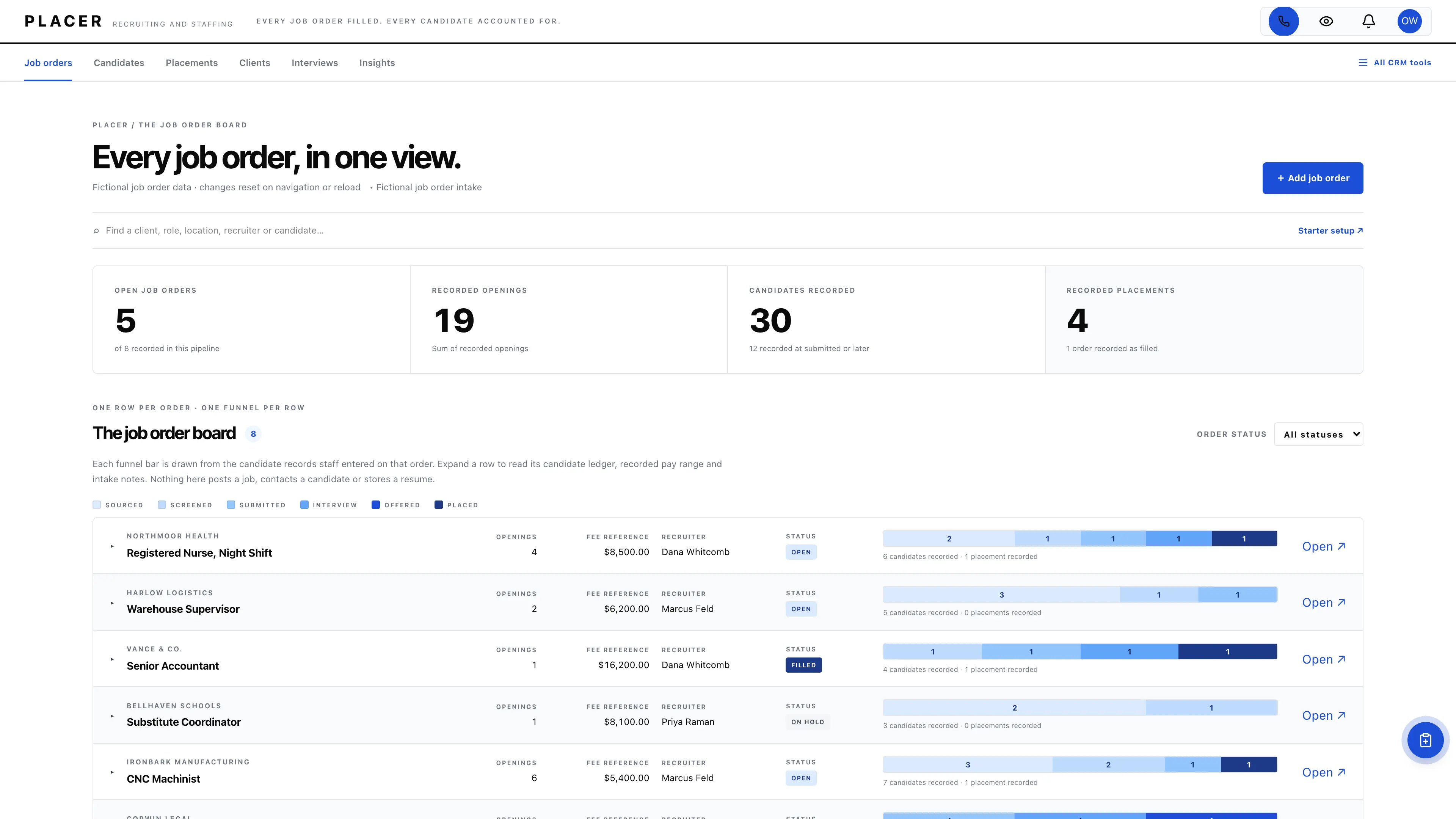
A job order board where every row carries its own candidate funnel, plus candidate, placement, client and interview records.
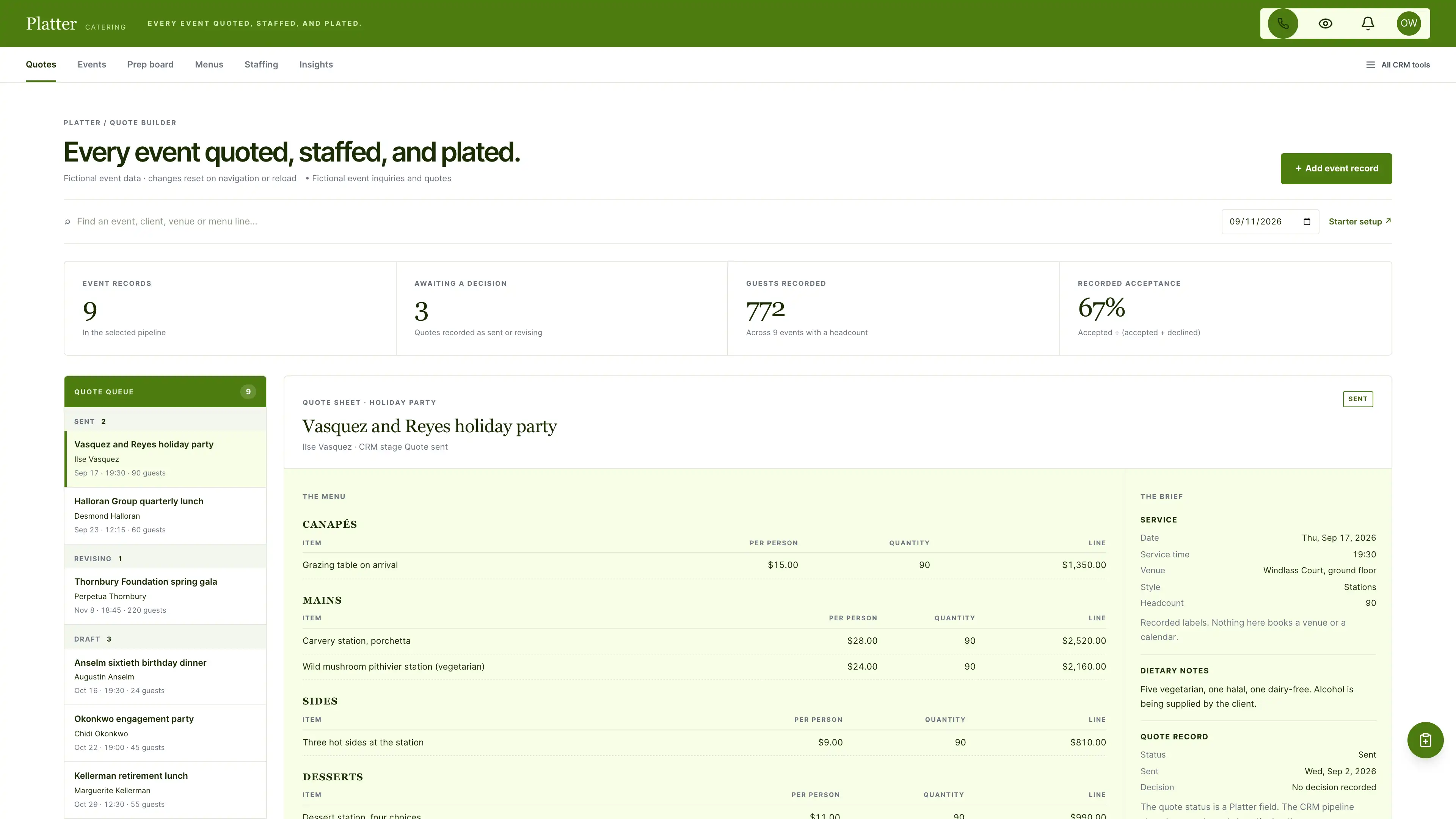
A quote builder that puts an event’s menu lines next to the brief those numbers depend on, with a prep board, recorded menus and staffing counts.
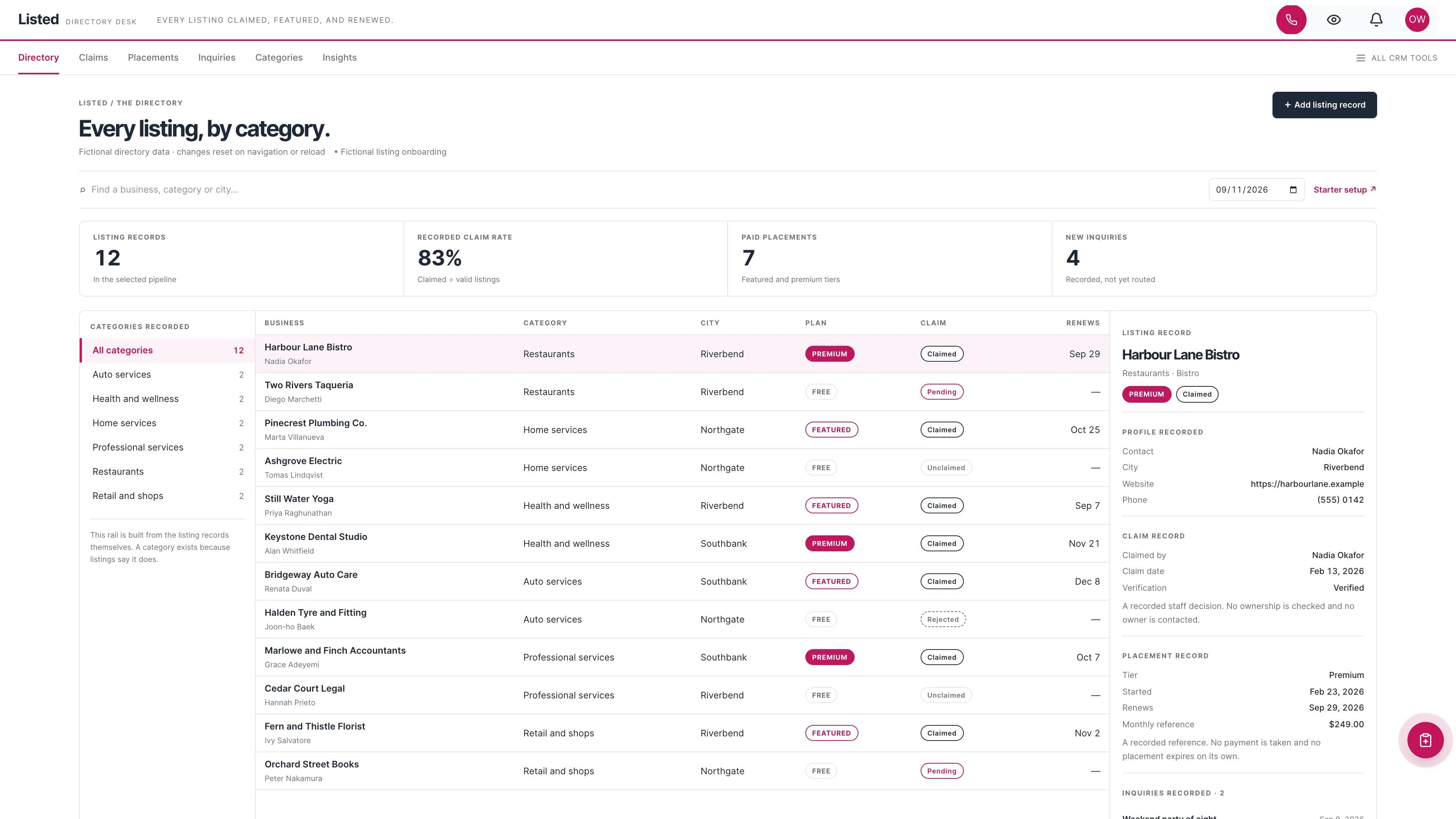
A category rail built from the listing records themselves, a searchable listing grid with plan tier and claim badges, and a listing sheet holding the claim record, the placement record and the inquiry log.
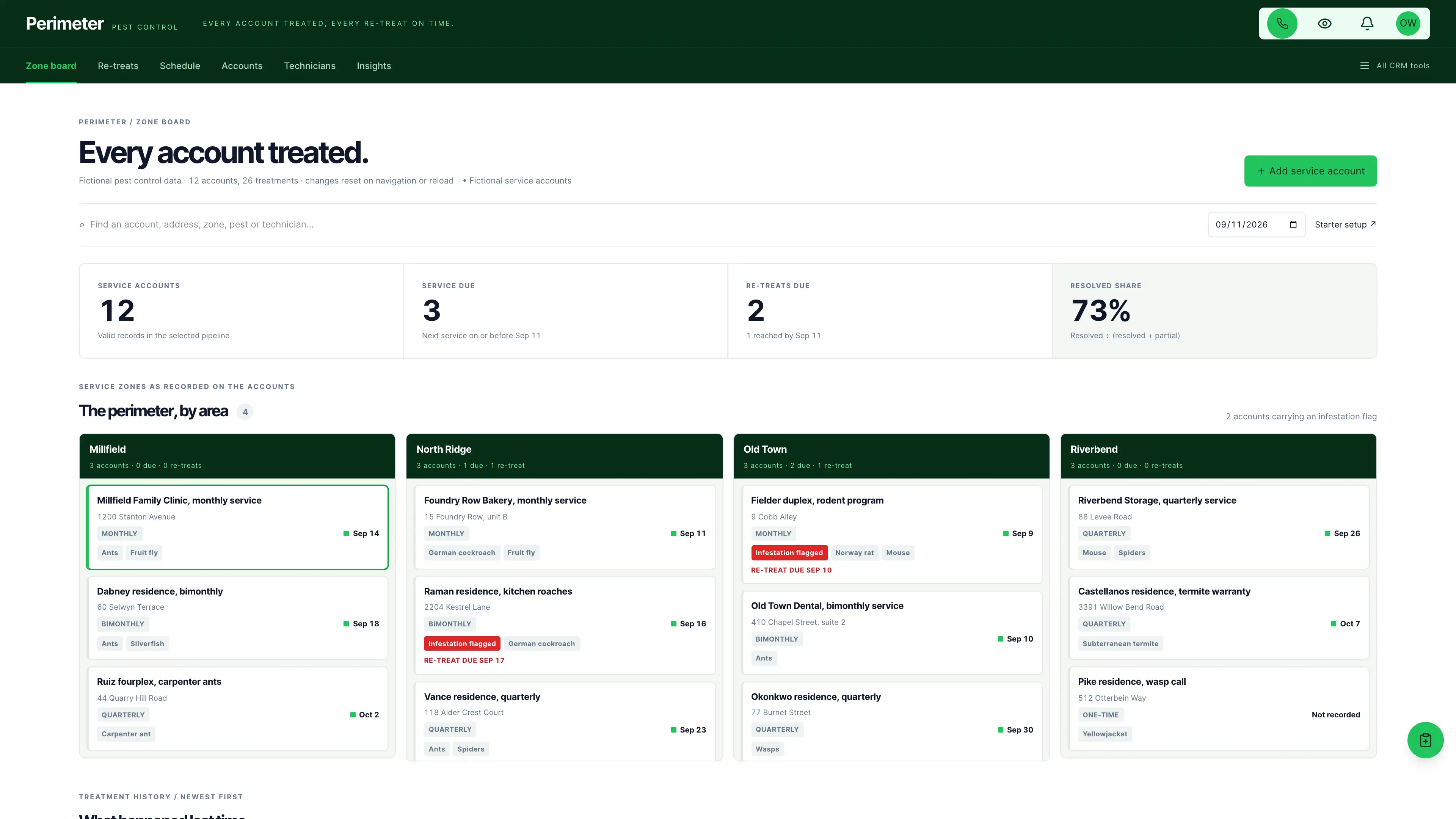
A zone board whose columns come from the service zone labels on the accounts, with the selected account’s treatment history and record underneath, plus a re-treat queue that names the visit behind every follow-up.
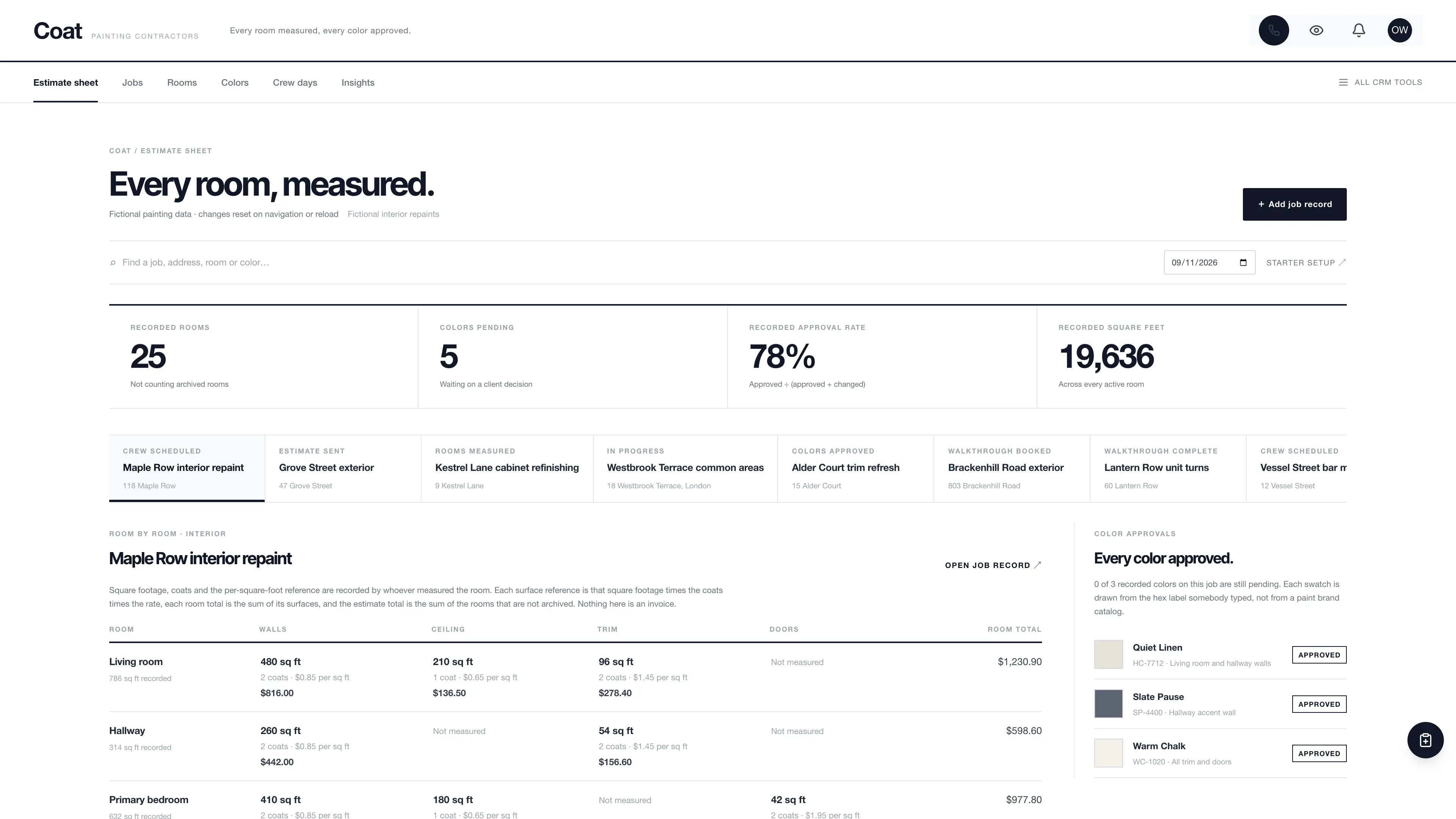
A room-by-room estimate sheet beside a rail of recorded color approvals, in a white workspace where the only color is the paint the client chose.
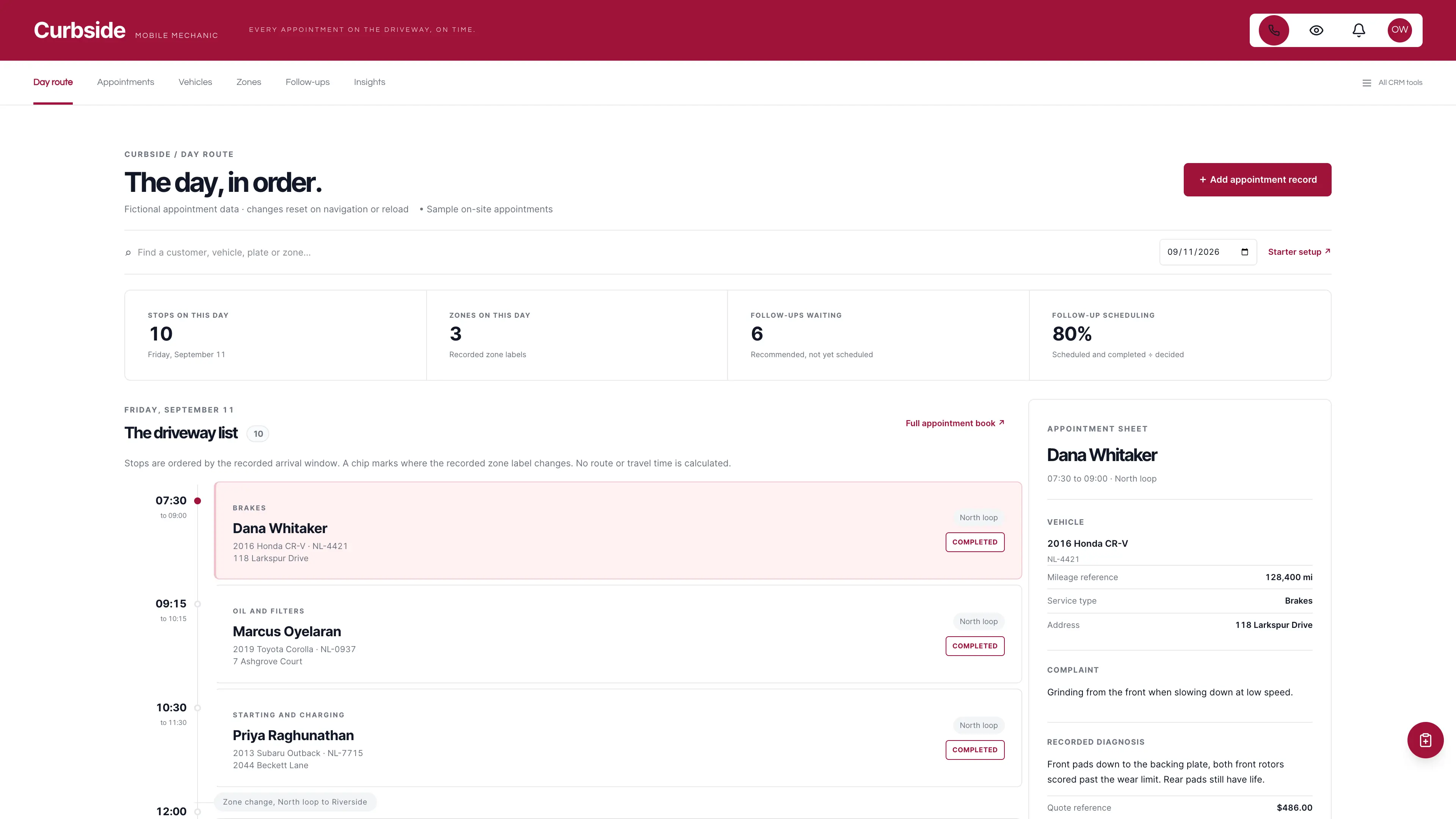
A day route timeline for a mechanic who drives to the car. Stops in recorded arrival-window order, a chip where the recorded travel zone changes, and the vehicle, complaint, diagnosis and parts list for the selected stop.
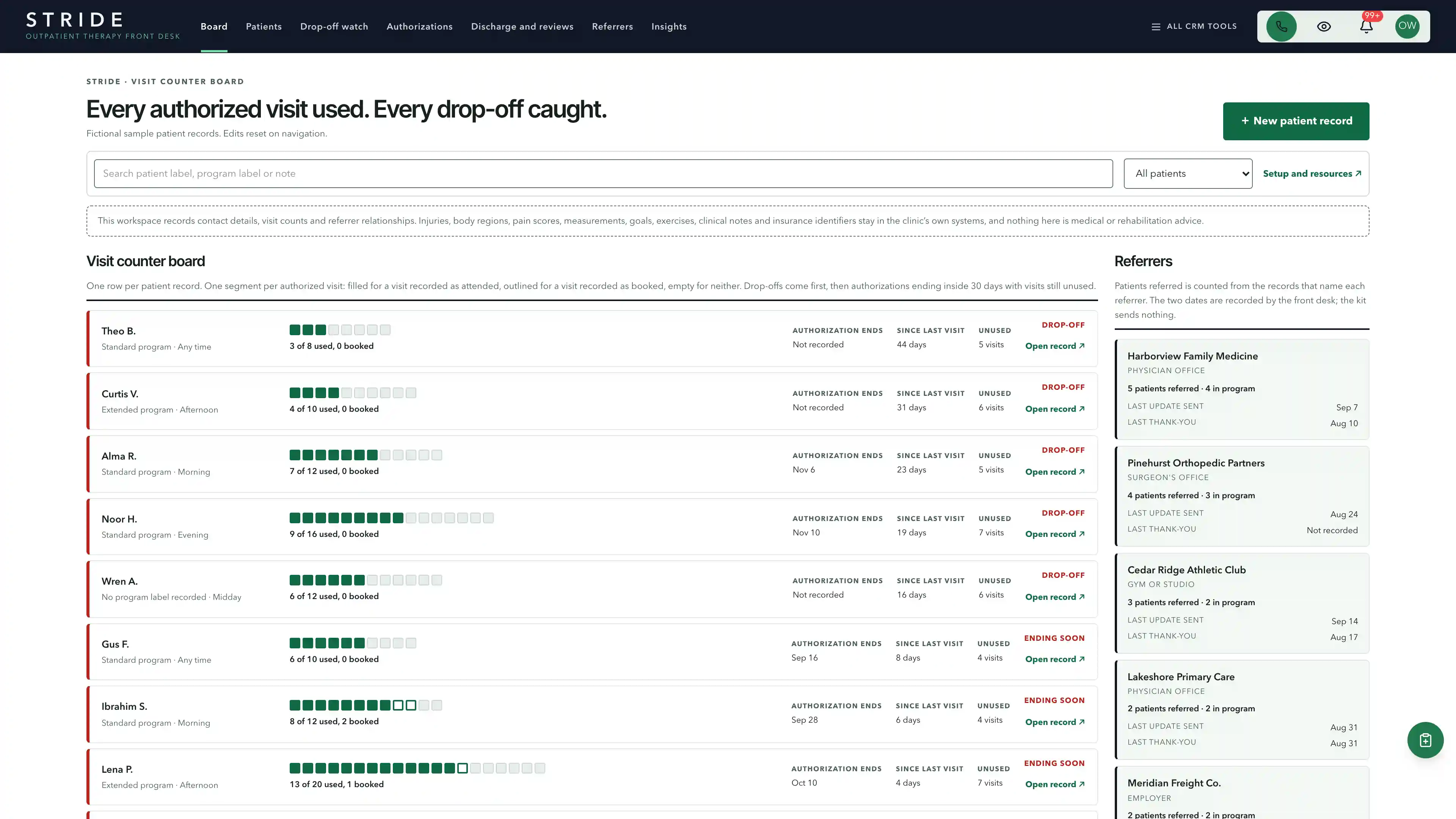
A visit counter board where every patient is a row of segments, one per authorized visit, with a drop-off marker the moment somebody stops coming.
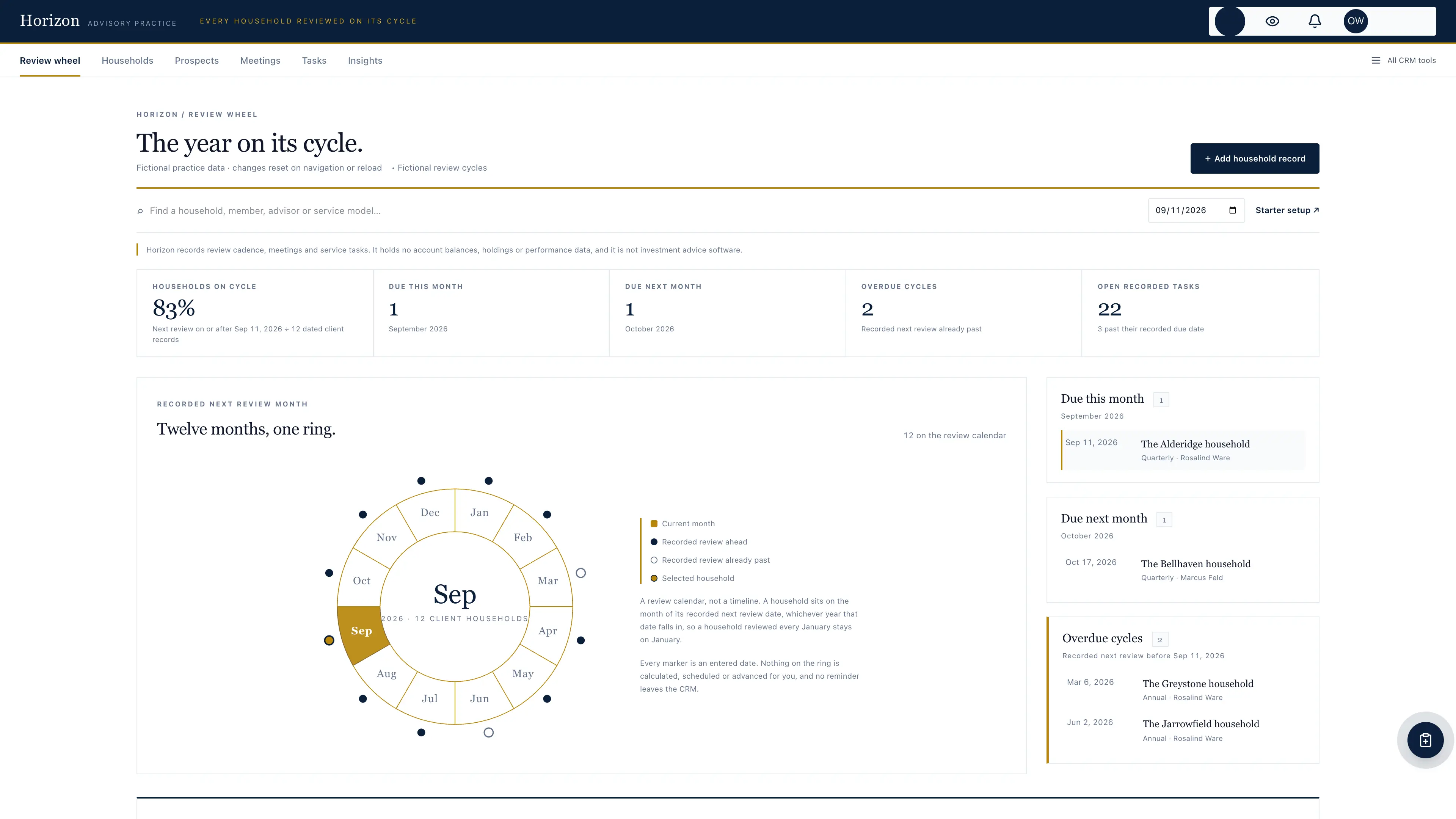
A twelve-month review wheel, household relationships, prospects, recorded meetings and service tasks in one advisory workspace.
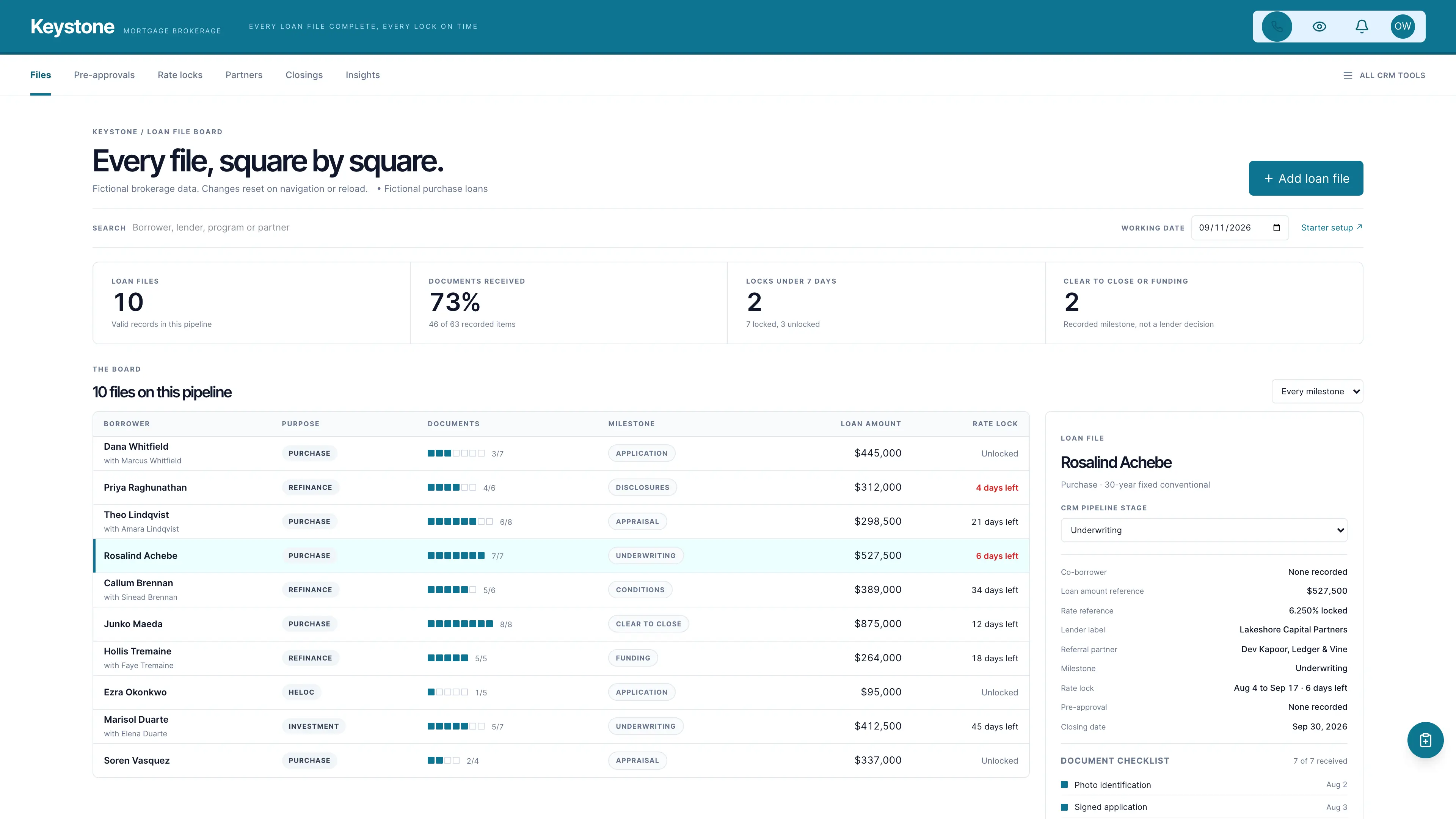
A loan file board where every row shows its document checklist, current milestone, and rate lock countdown.
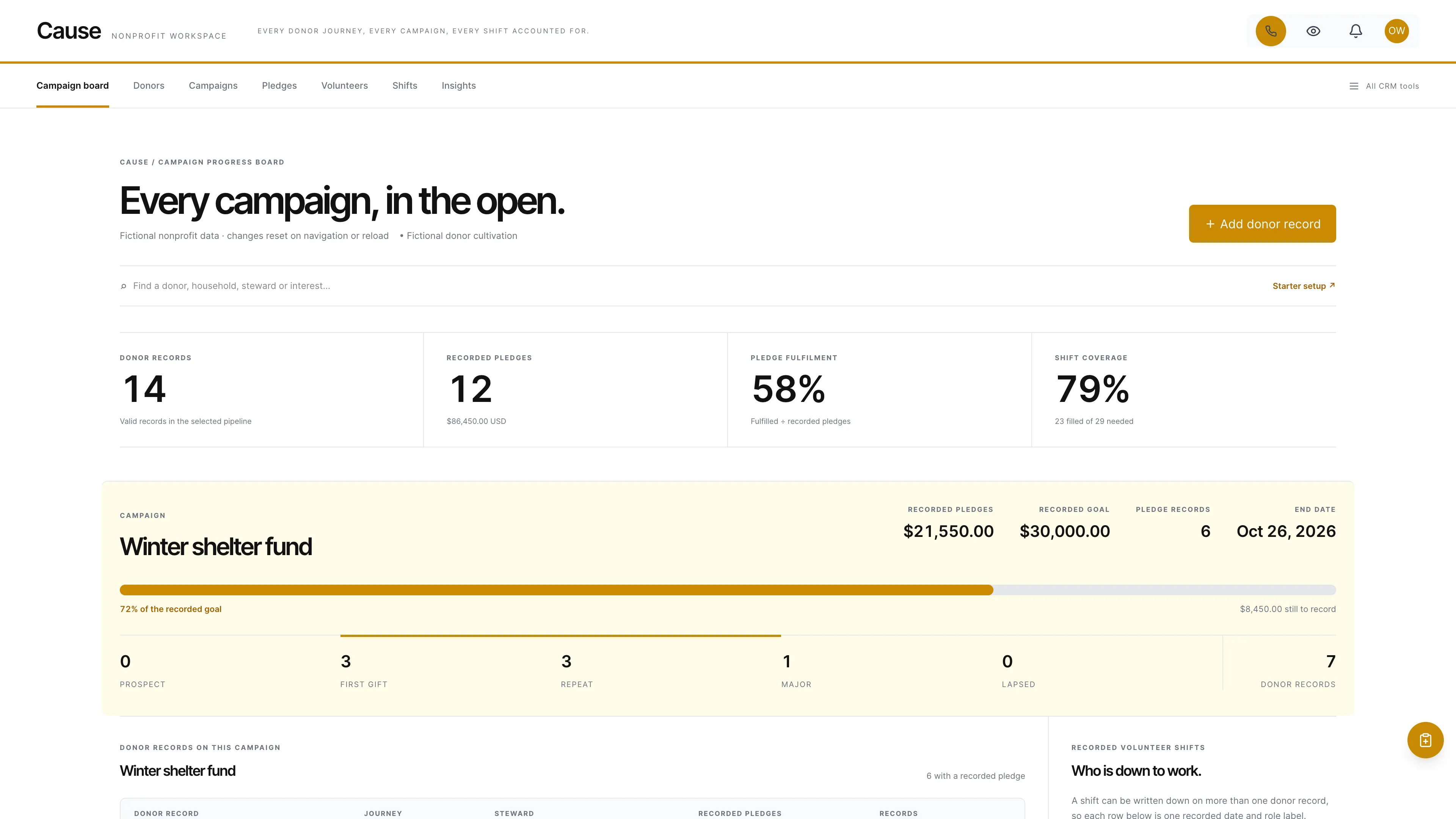
A campaign progress board with recorded pledges against recorded goals, donor journeys, and volunteer shifts.
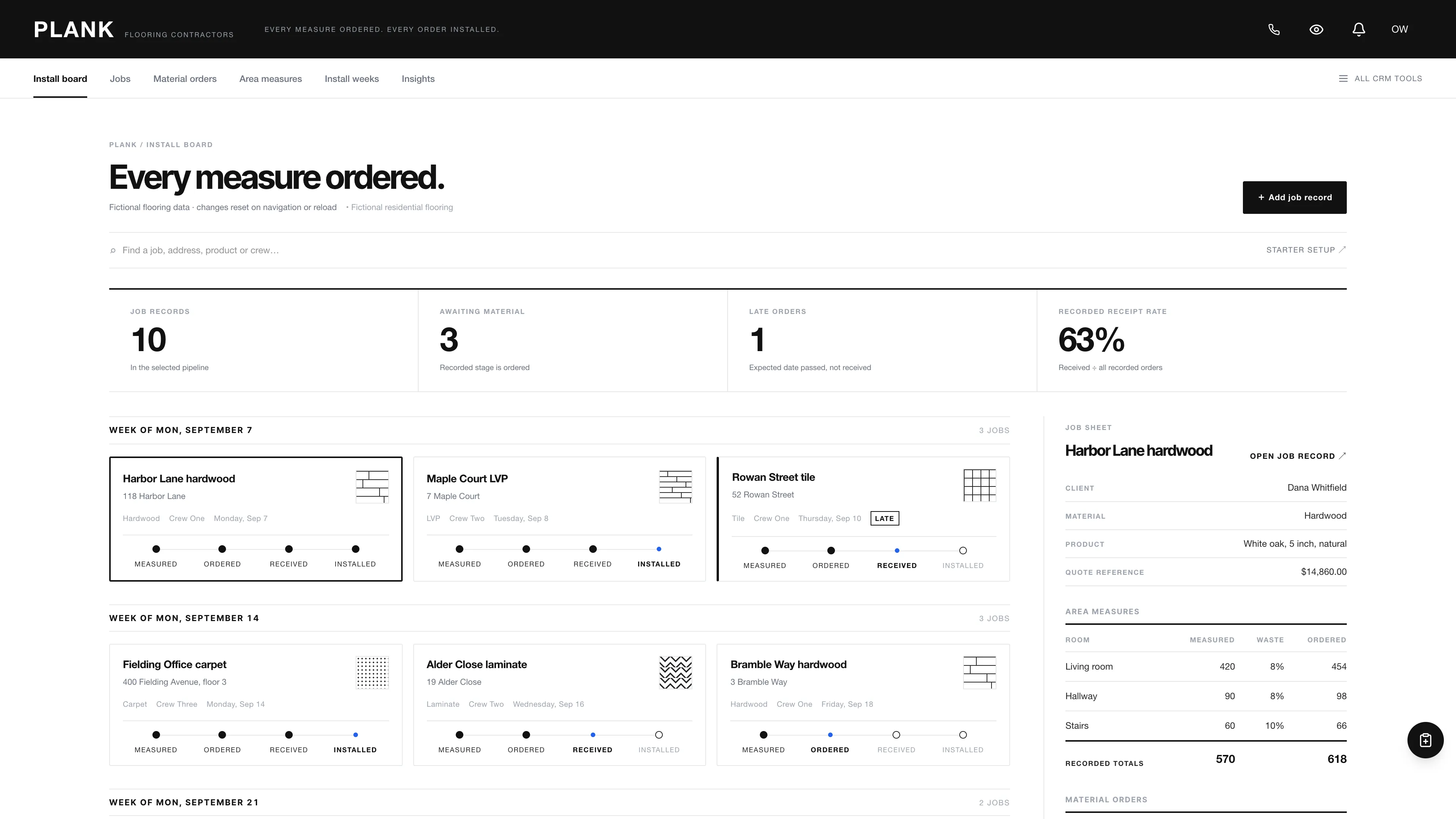
An install week board where every job card carries four marks, measured, ordered, received, installed, so nobody sends a crew to a house the material has not reached yet.
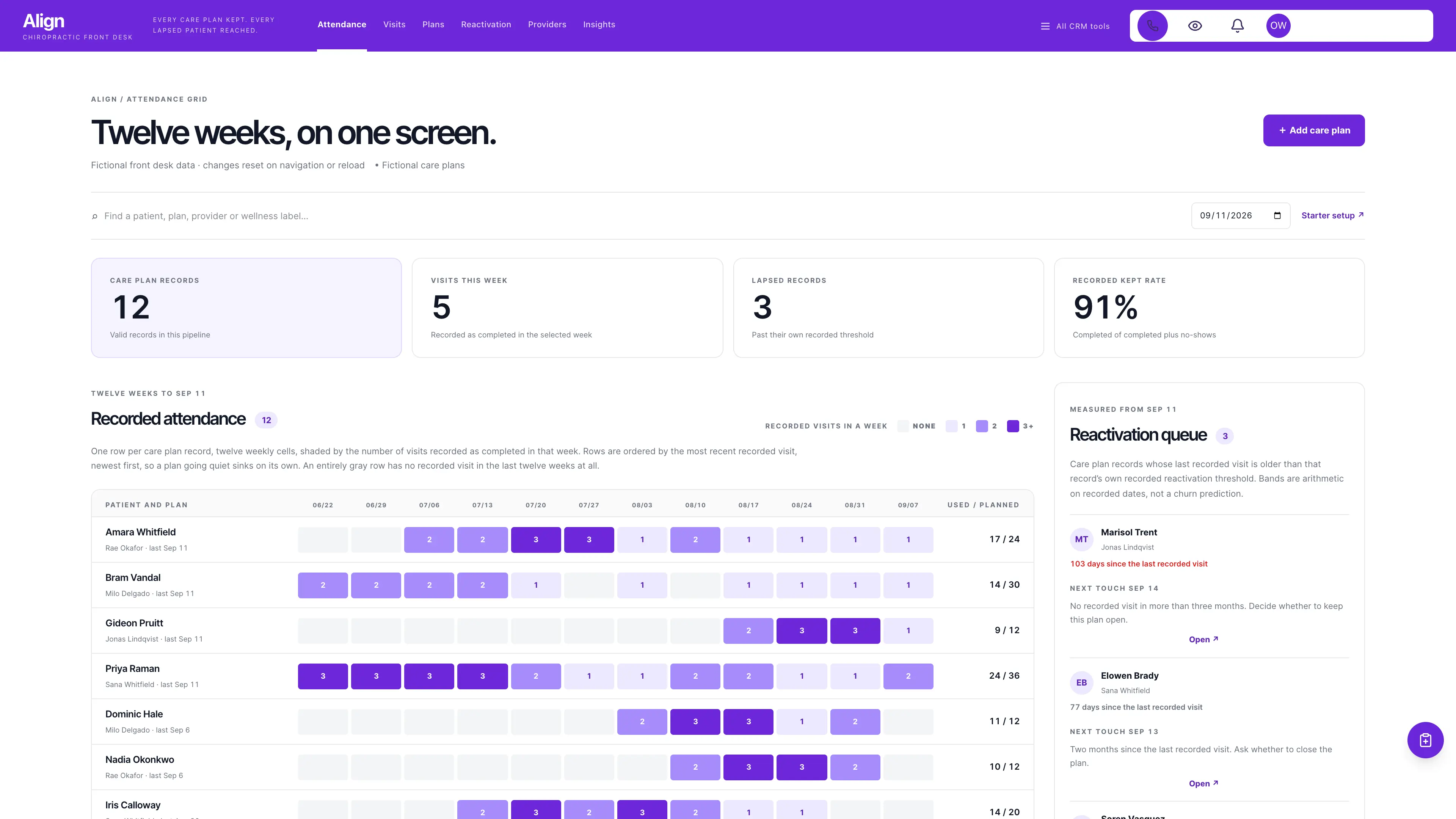
A twelve-week attendance grid where every care plan is one row of weekly cells, so the week a patient stopped showing up is visible before it becomes a lapse, with the reactivation queue beside it.
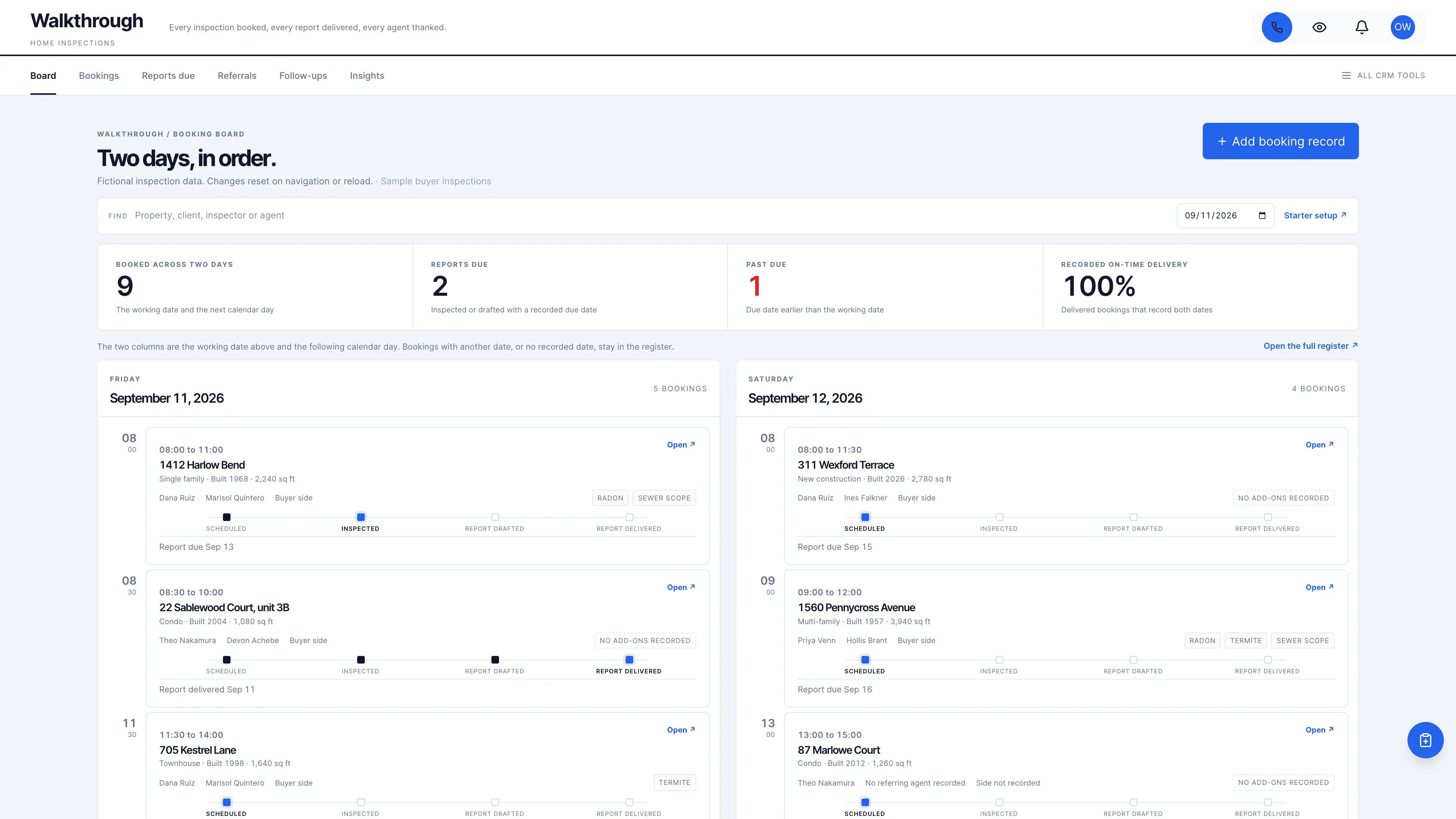
A two-day booking board where every card carries its report delivery step and the date that report is due.
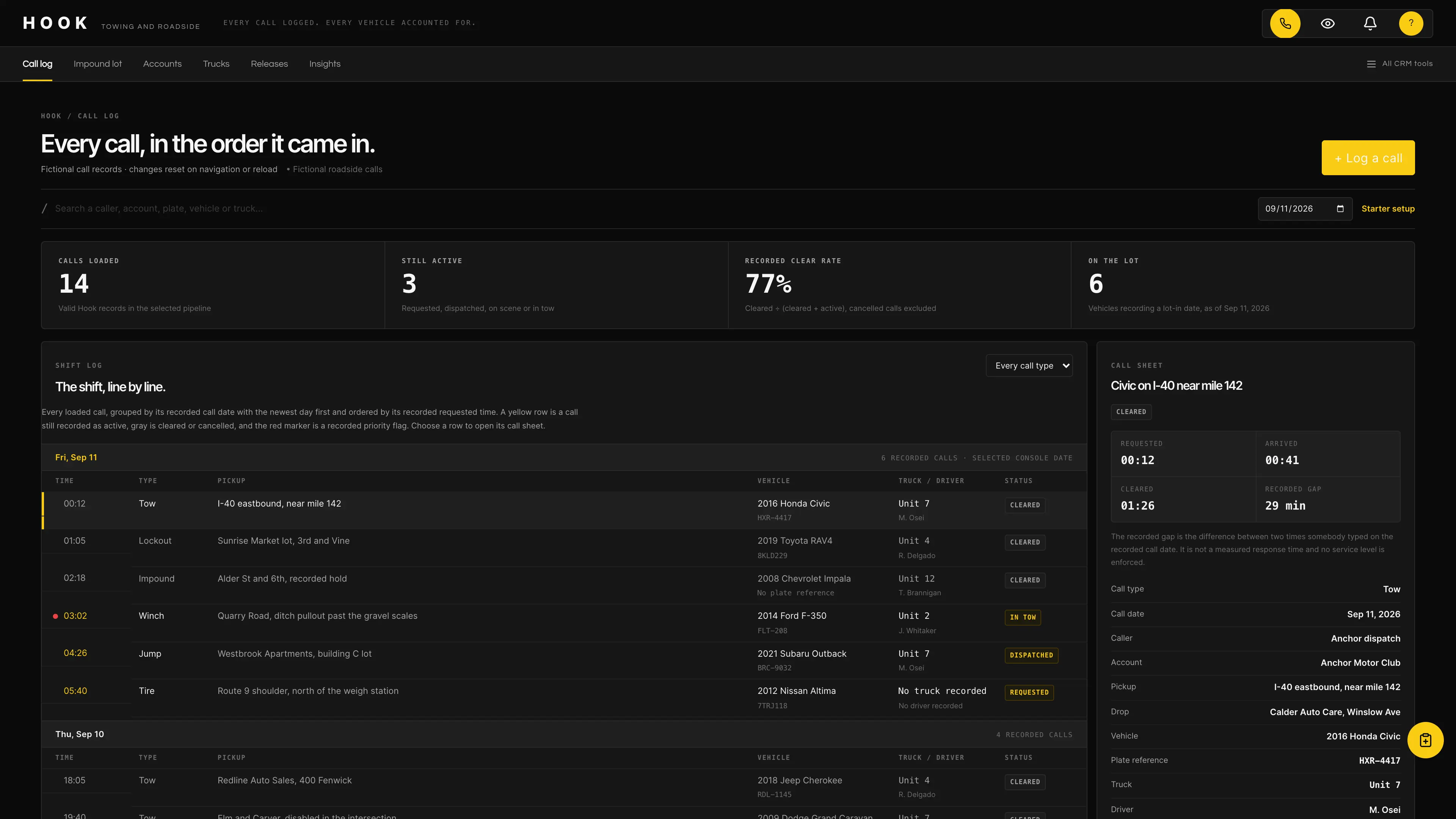
Hook turns your Seedly CRM into a night-shift towing console: a dense call log in the order the phone rang, the selected call sheet beside it with the recorded times and charges, and an impound lot that counts the days every vehicle has been on the ground.
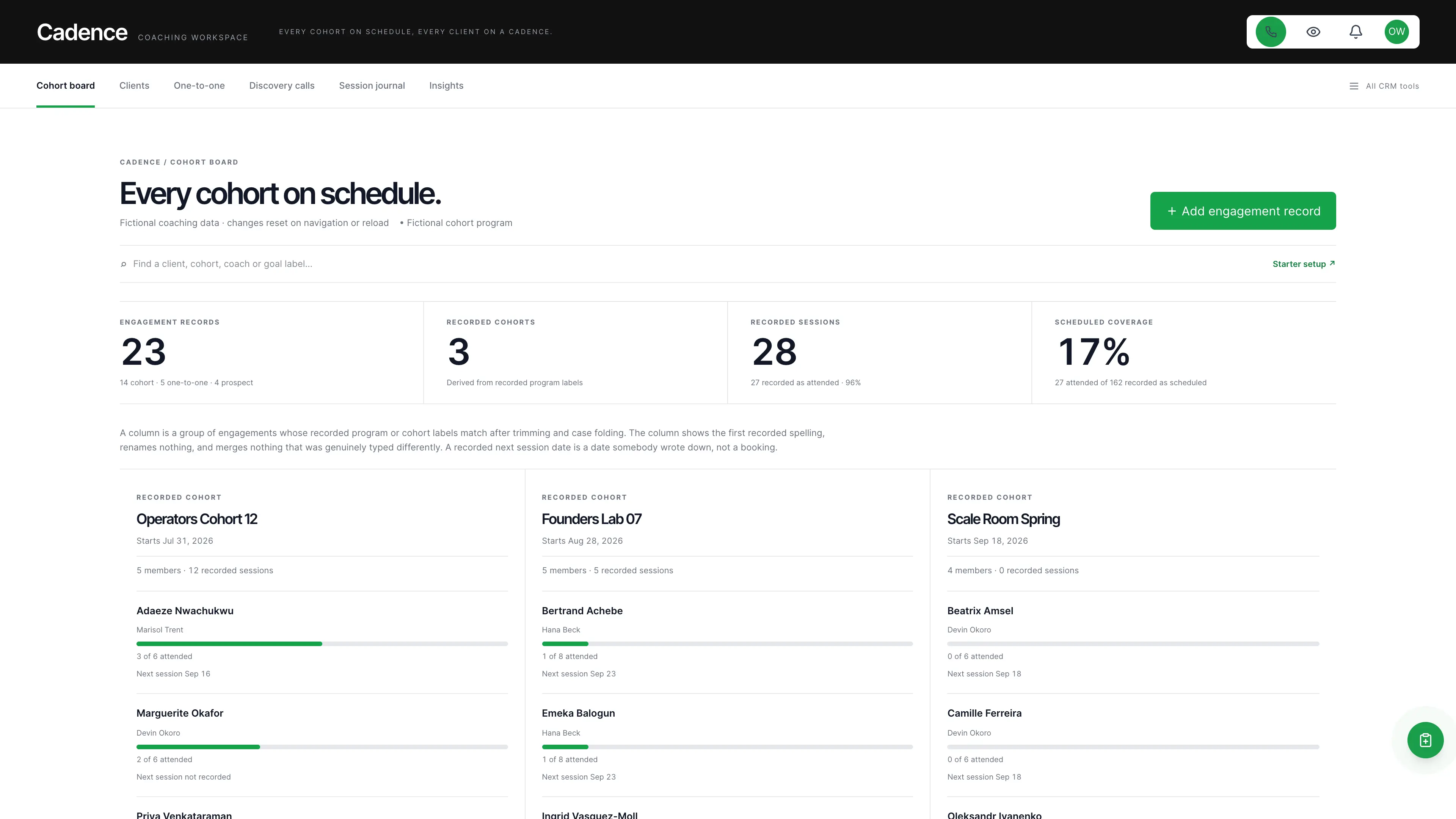
Cadence turns your Seedly CRM into a coaching workspace: a cohort board grouped from the program labels your team typed, private clients sorted by their recorded cadence, a discovery call log, and a session journal that keeps what was said beside what was agreed next.
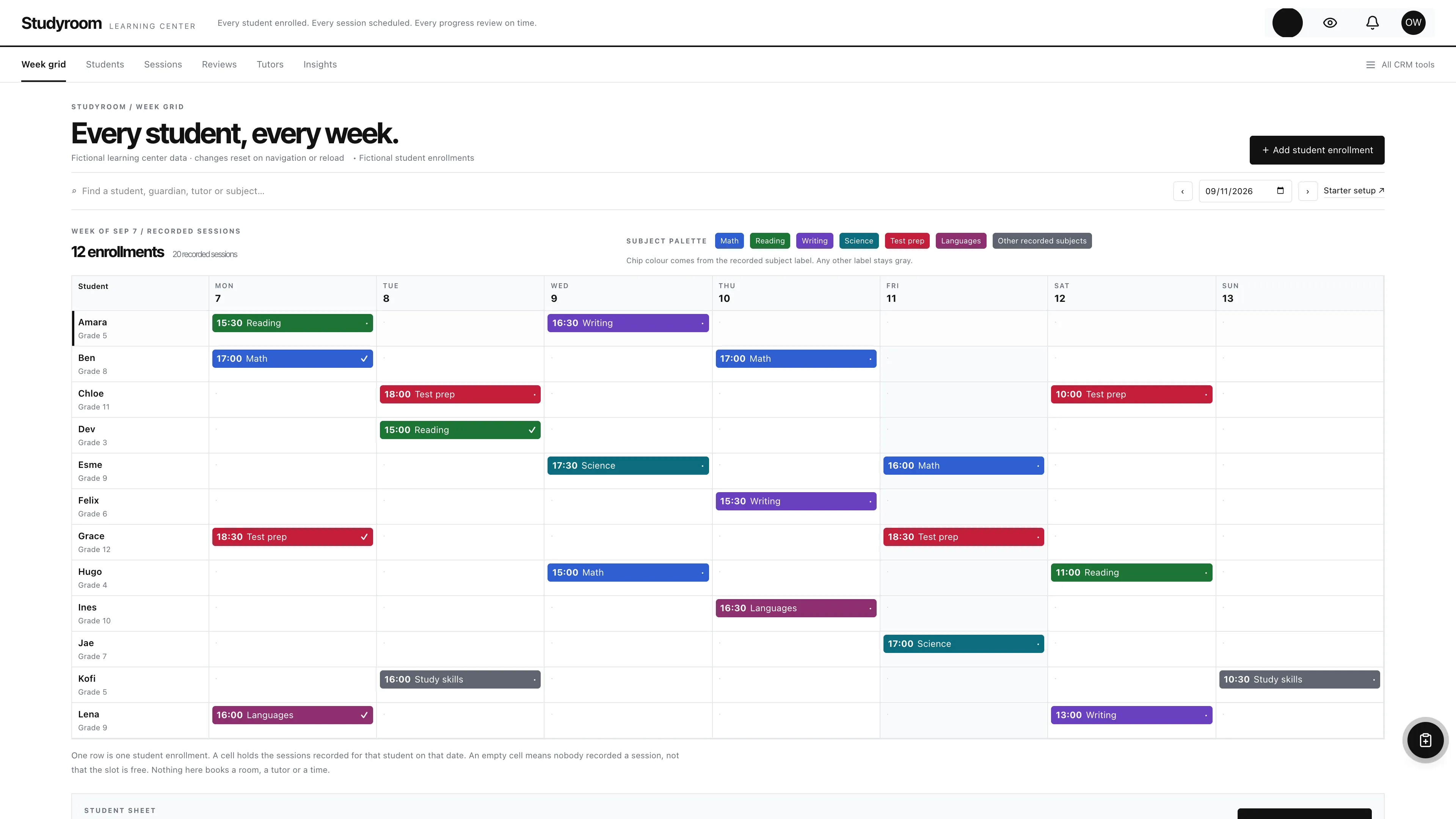
Studyroom turns your Seedly CRM into a learning center week: students as rows, weekdays as columns, every recorded session a subject-coloured chip, and the selected student sheet underneath with the package, the tutor label and the progress review a family is waiting for.
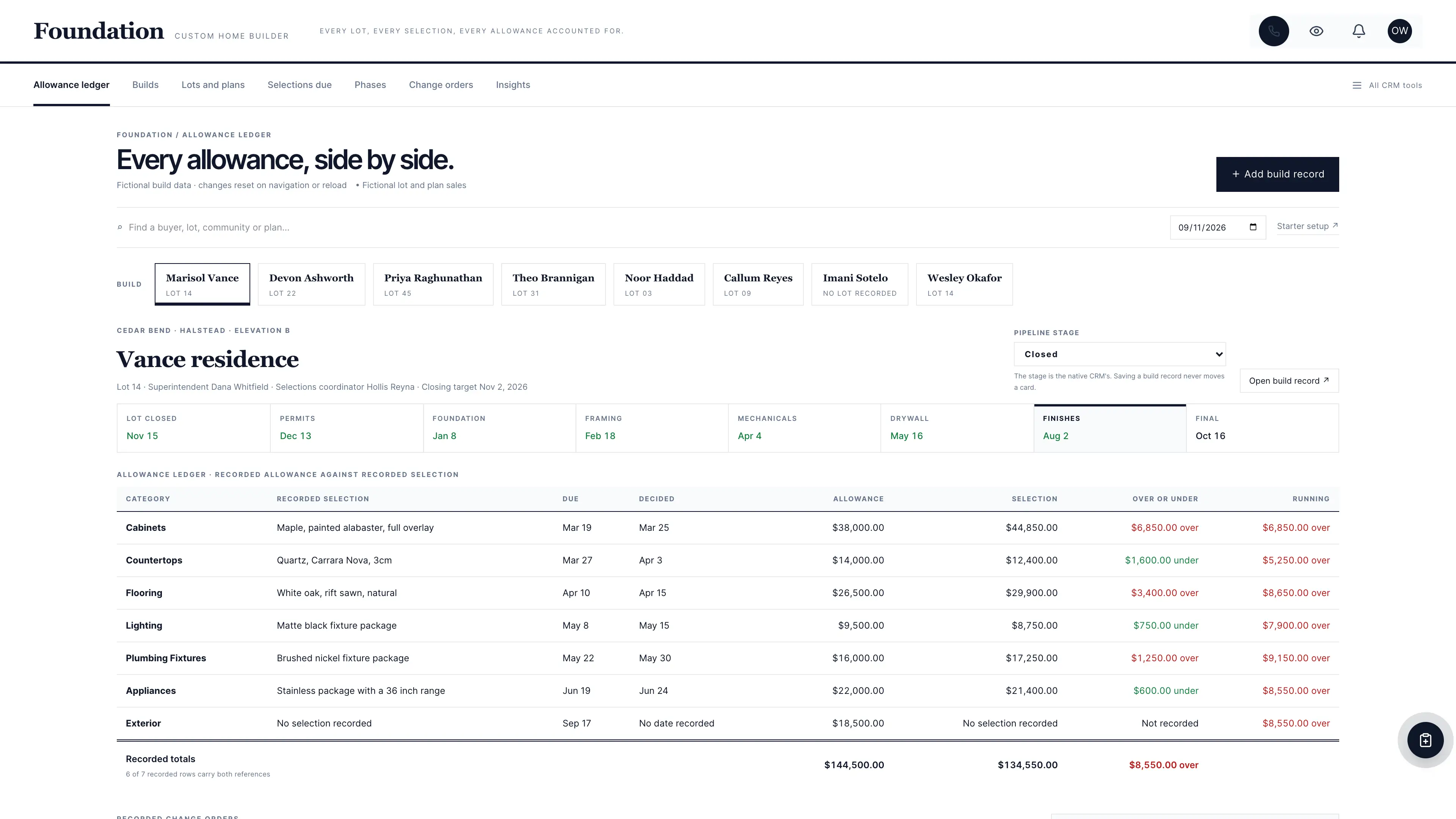
Foundation turns your Seedly CRM into an allowance ledger: the recorded allowance in one column, the recorded selection in the next, the over or under beside them, a running total down the page, and the eight recorded build phase dates as a thin strip above it.
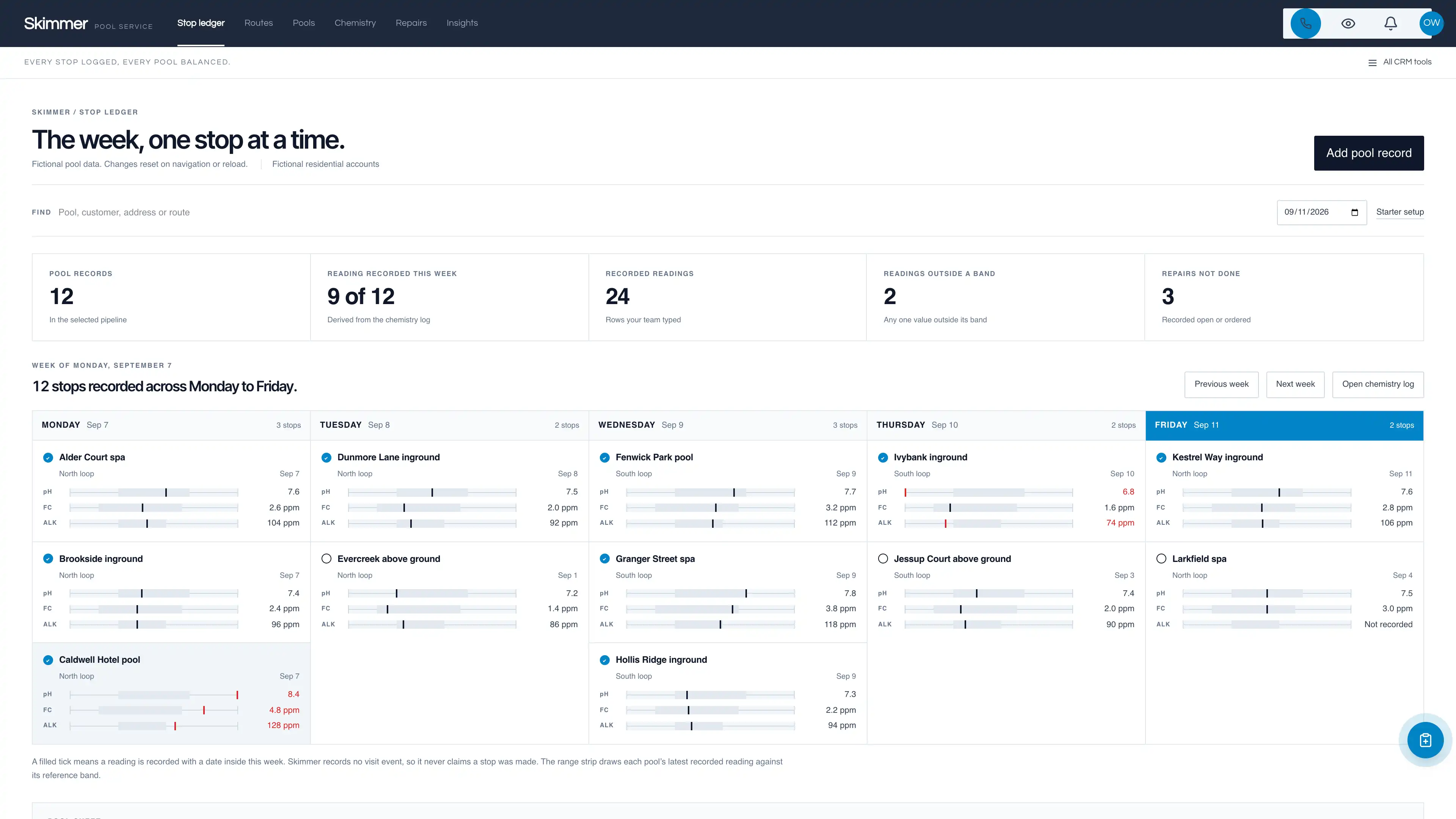
Skimmer turns your Seedly CRM into a service week: five weekday ledgers of stops, a tick on every row for whether a reading is recorded this week, and a three-bar chemistry strip drawn against the reference band so an out-of-band pool is the one you see first.
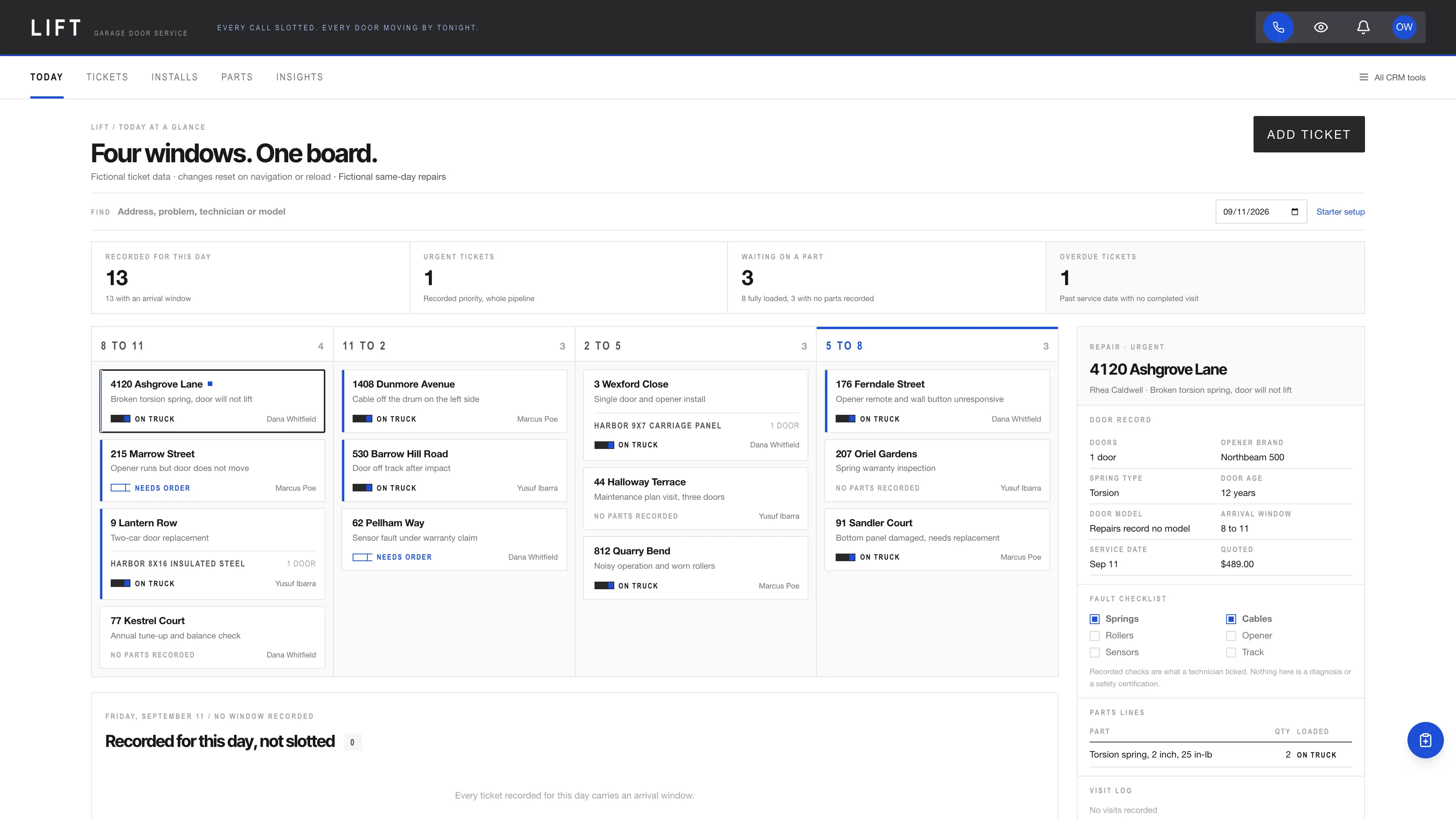
A four-column arrival-window board, a parts-on-truck chip, and the door record beside every ticket.
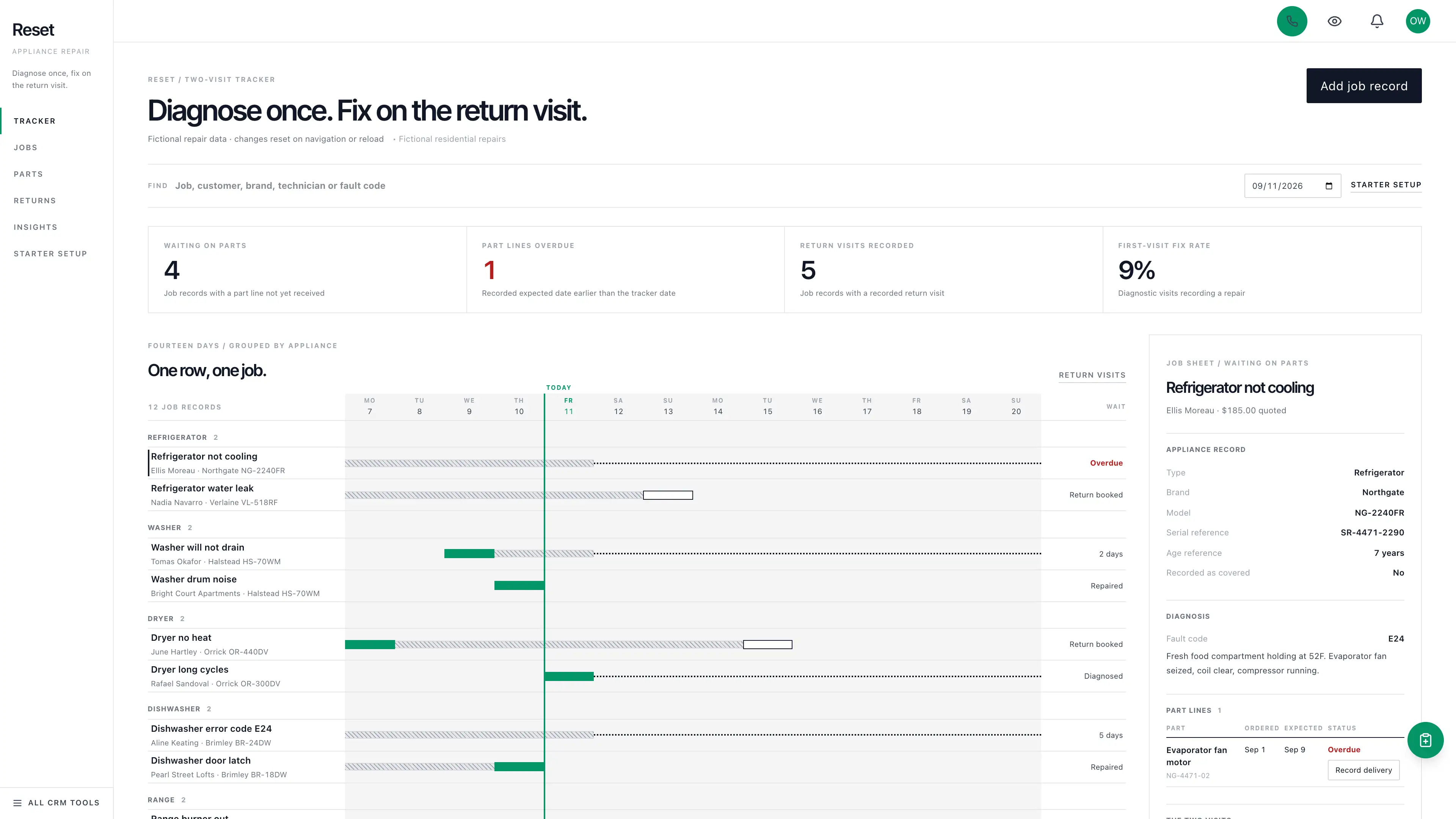
A two-visit tracker for repair jobs, with the parts wait, the return visit, and the part lines you are waiting on.
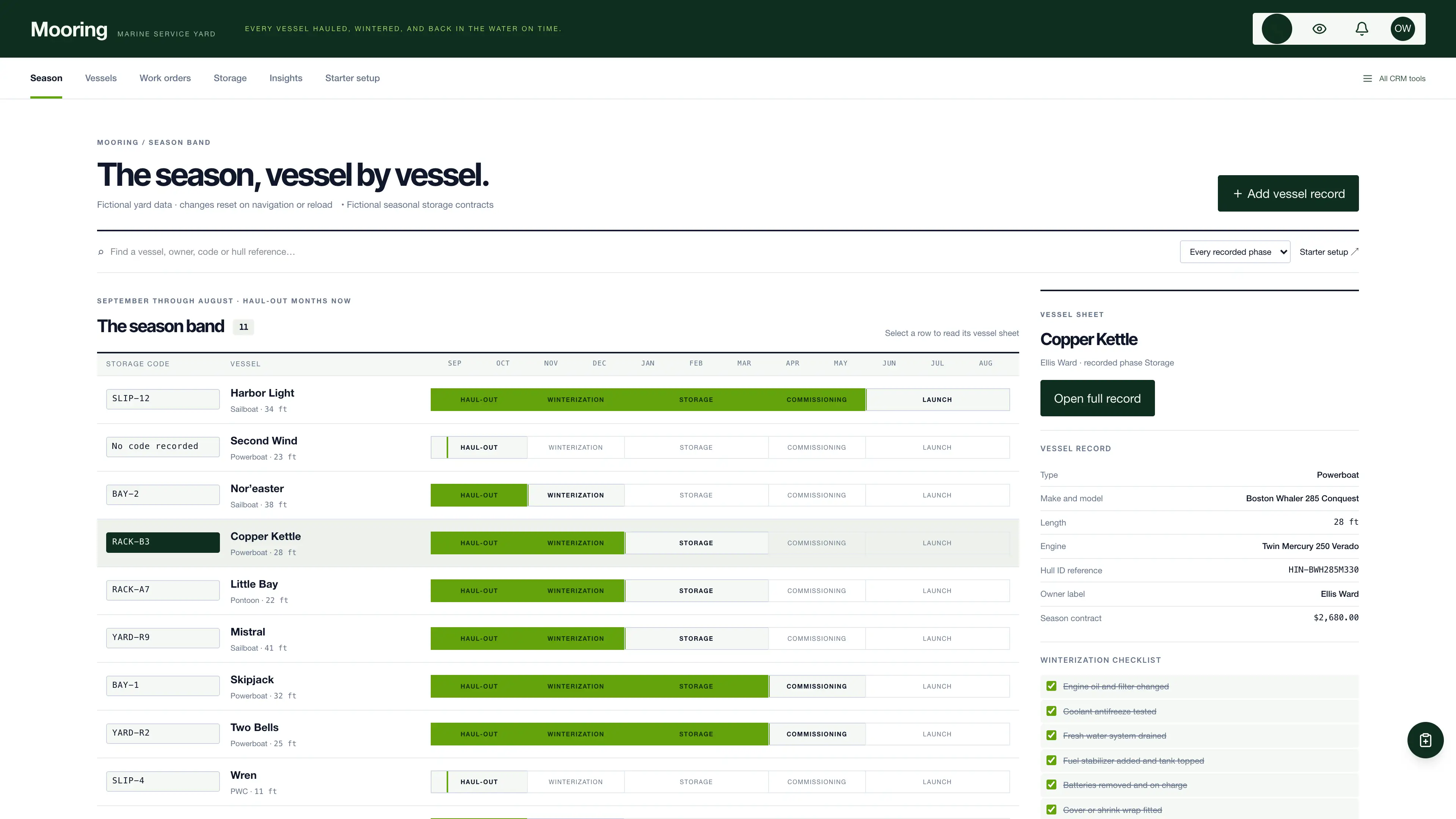
A season band with one row per vessel, twelve months from September to August, and the storage location code at the row start.
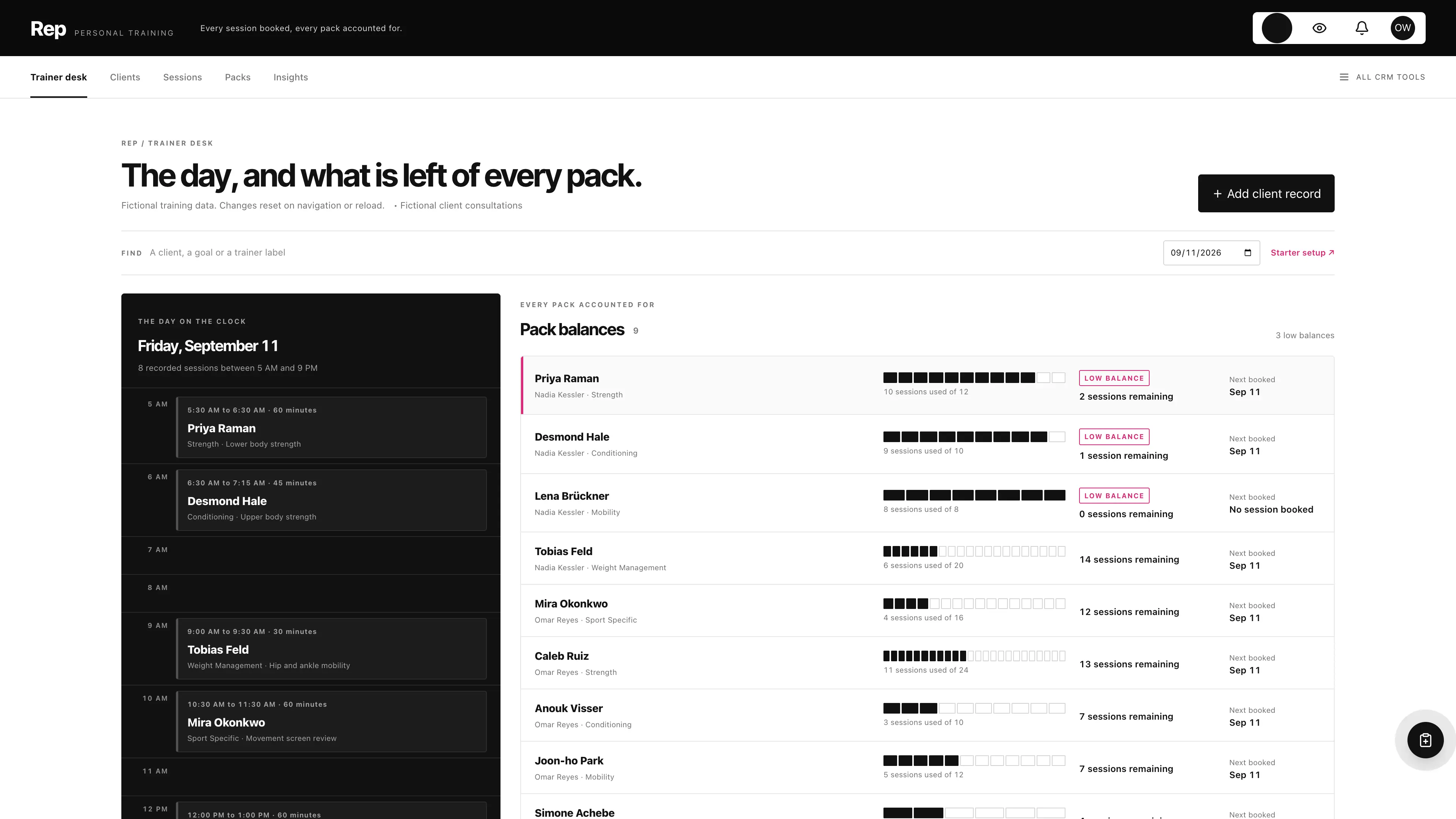
A two-pane trainer desk: today’s sessions on a 5 am to 9 pm rail beside a pack depletion list that flags every low balance.
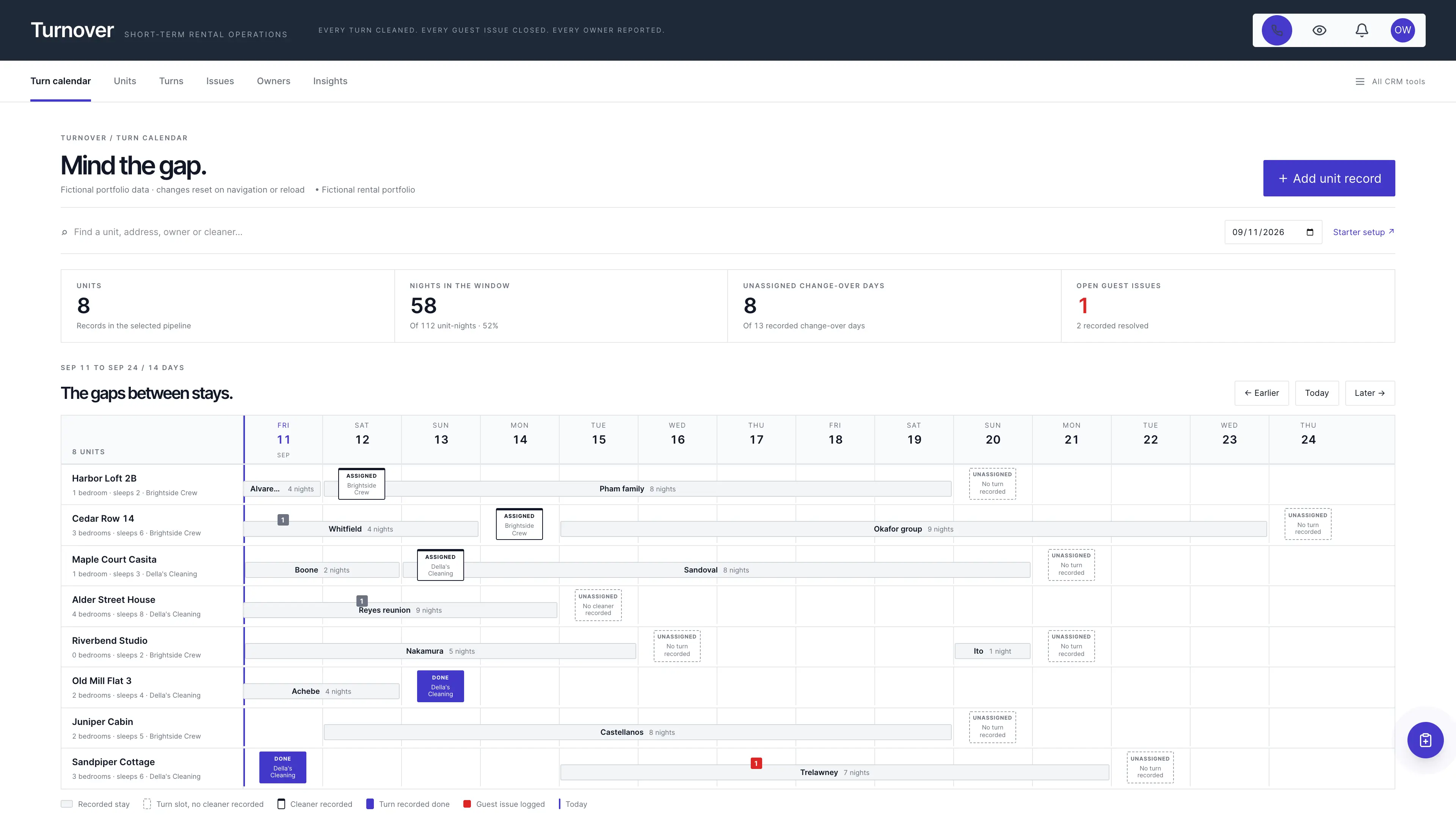
A fourteen-day turnover strip calendar where every change-over day stands up as a three-state block, plus units, turns, guest issues and owner reports.
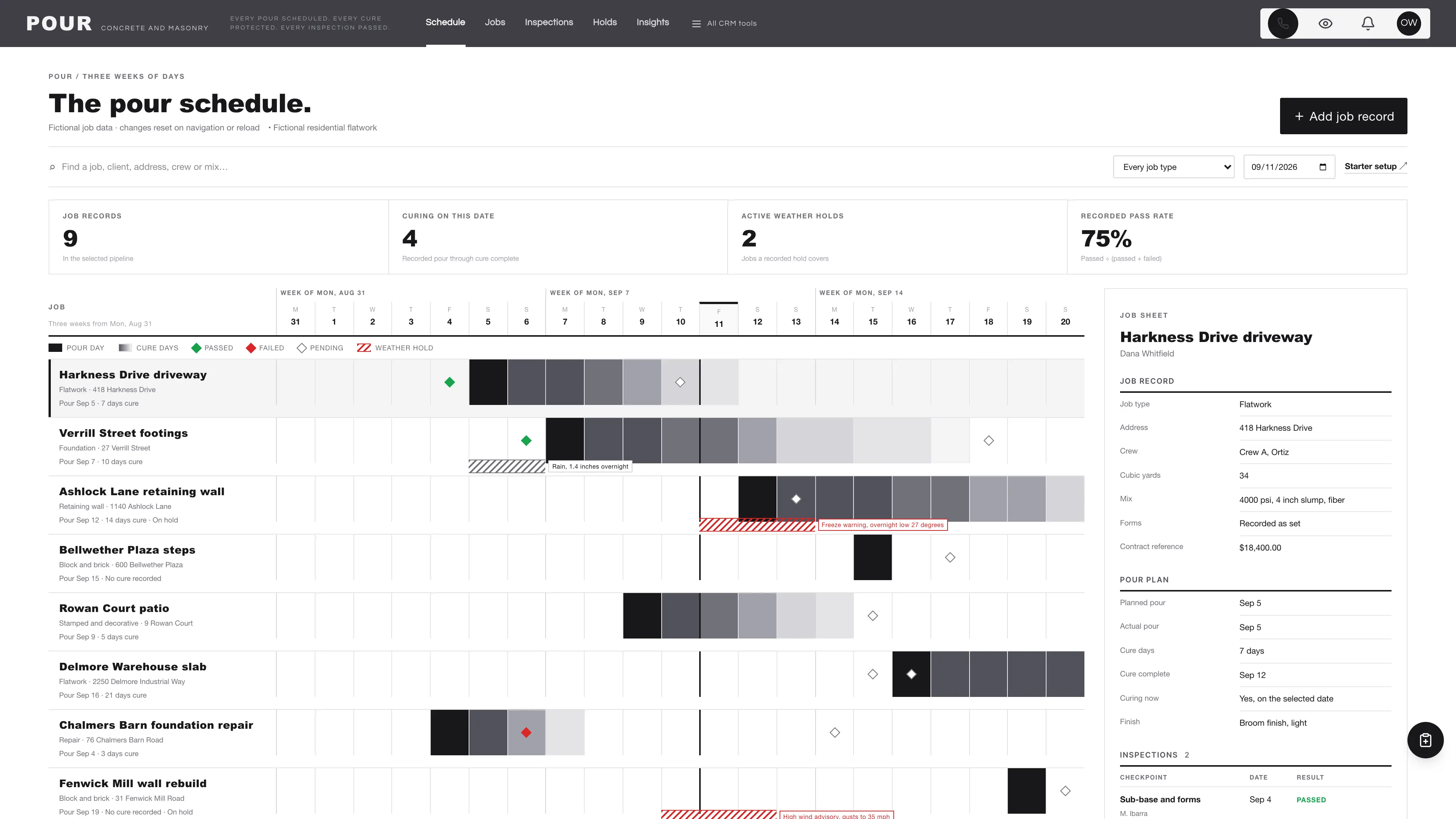
A three-week pour schedule with cure shading, inspection checkpoints, weather holds, and the source to make it your own.
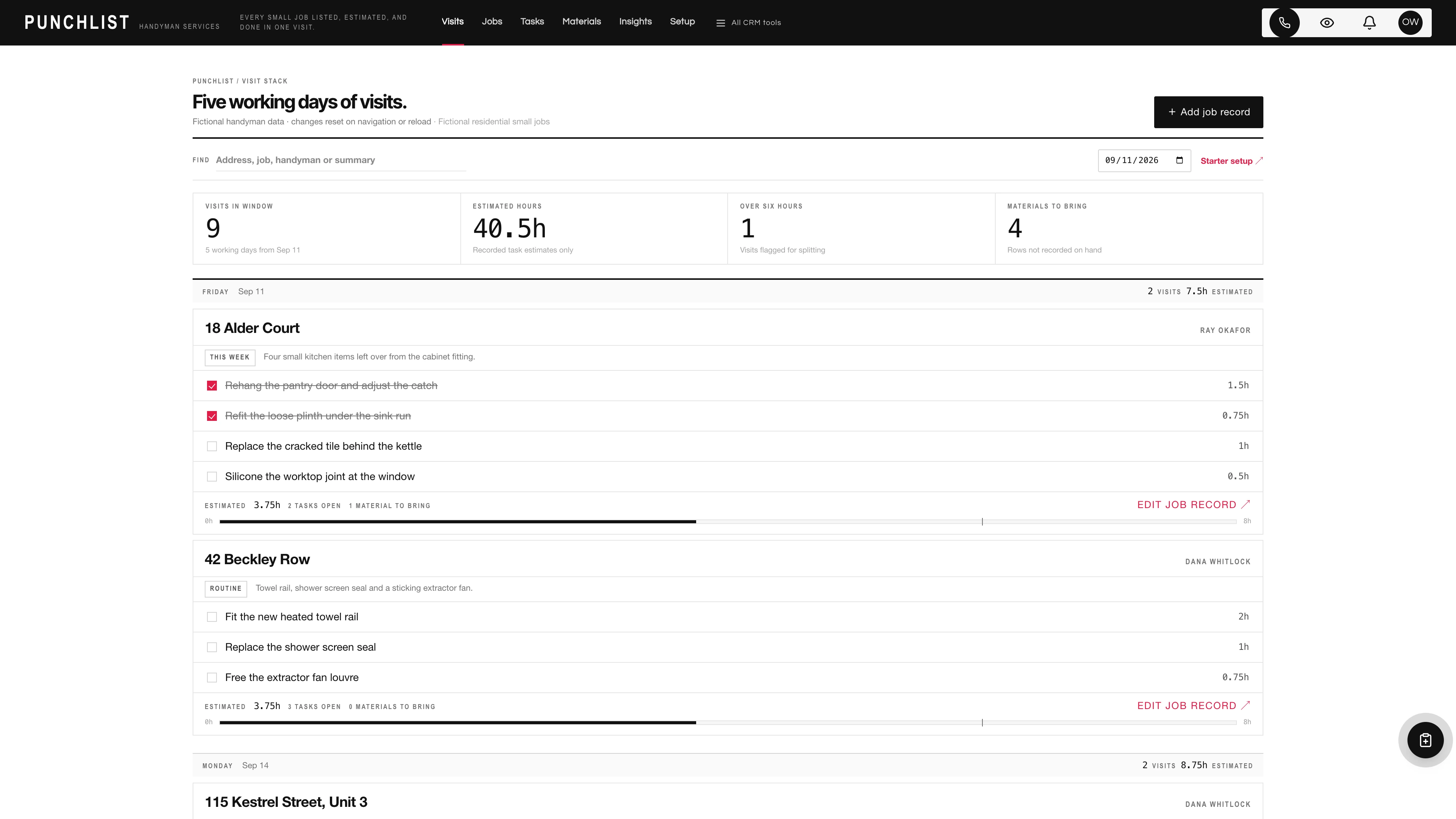
A five working day visit stack of wide cards, each a punch list of small tasks with hour estimates that add up against the length of a day.
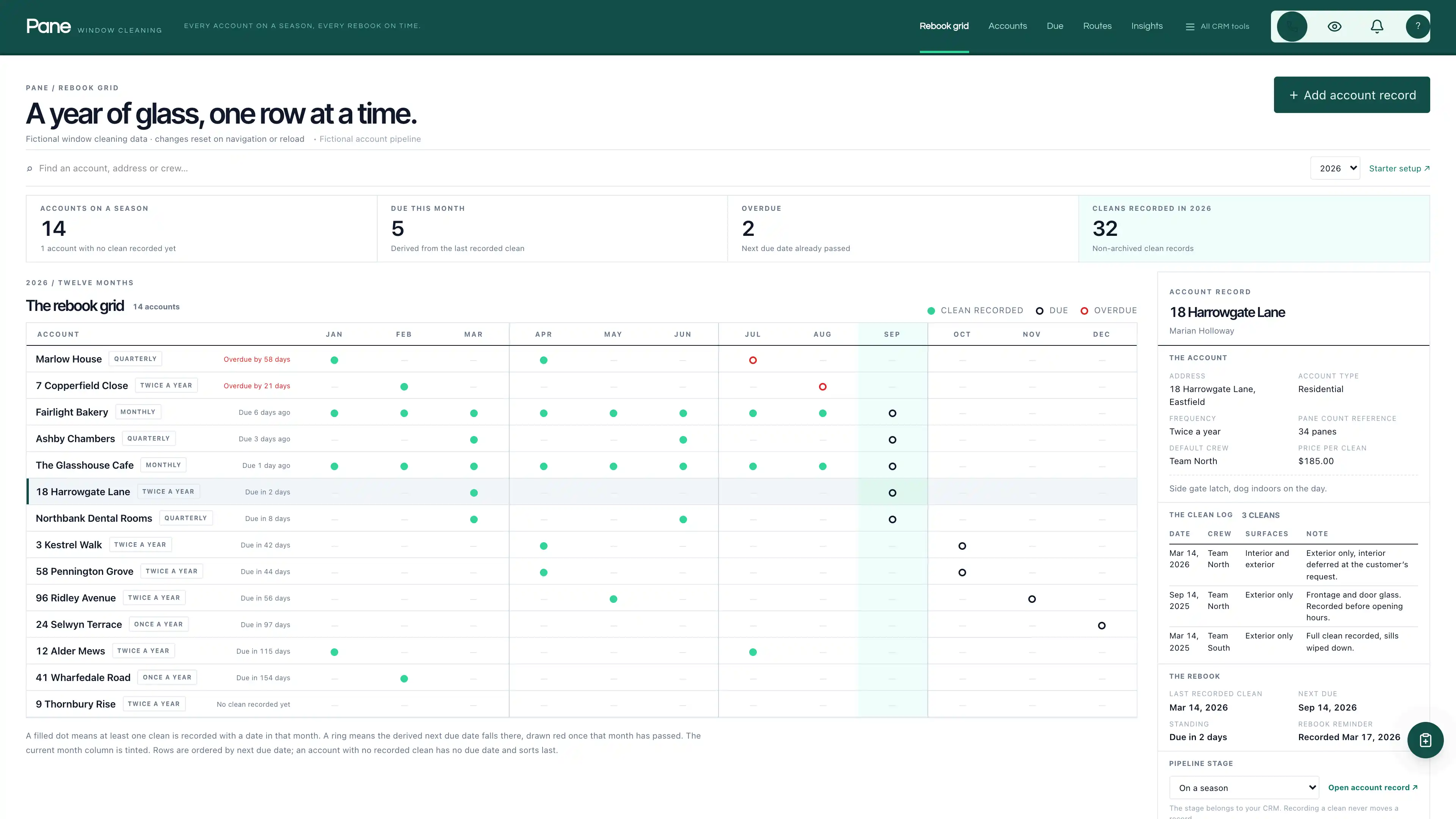
A twelve-month rebook grid with one row per recurring account, a service dot in every month, a derived next due date and the accounts that have fallen off their season listed first.
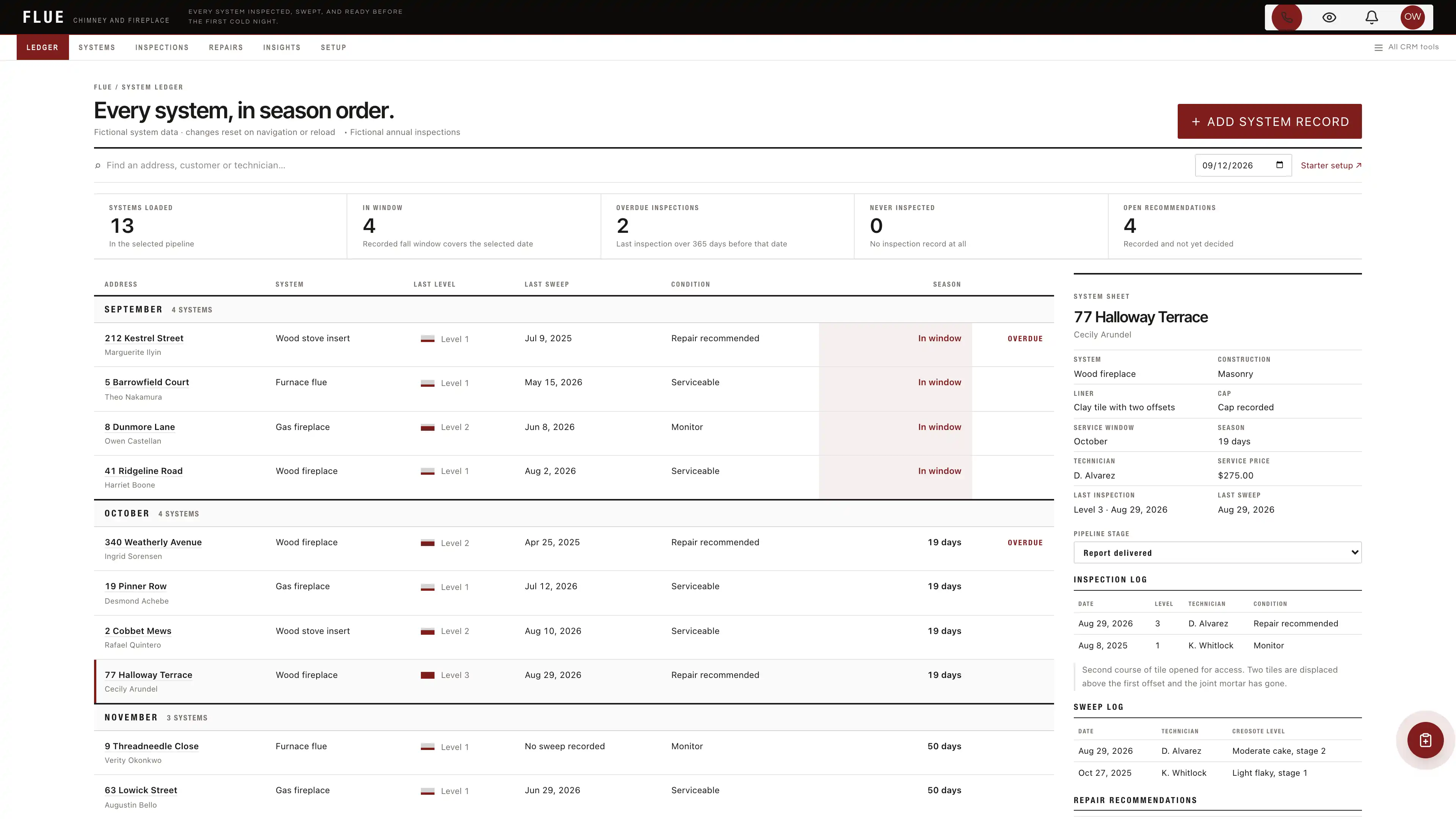
A seasonal system ledger with inspection levels, sweep history, open repair recommendations and a countdown to each customer’s fall service window.
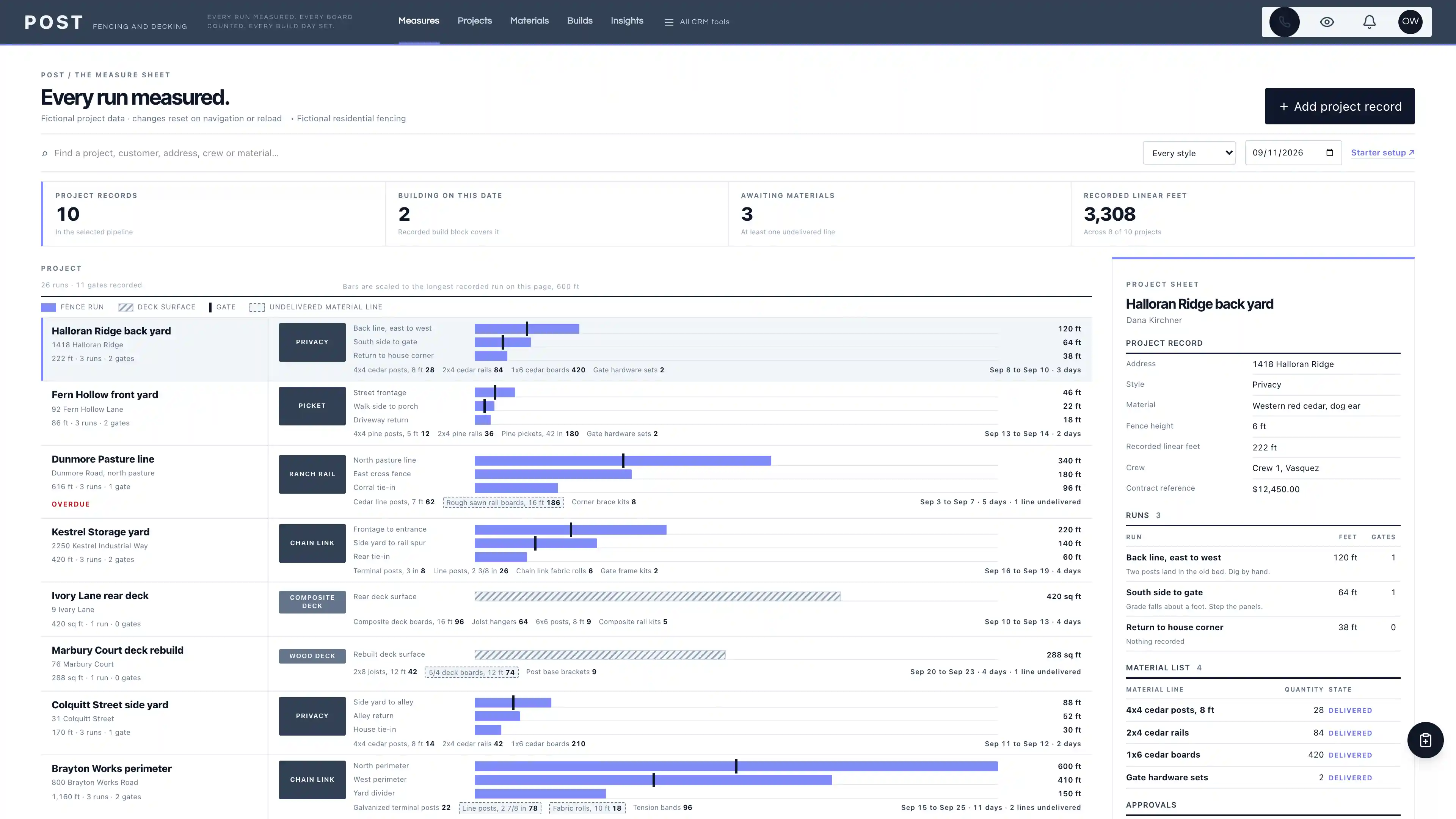
A measure sheet whose axis is feet, with scaled run bars, gate ticks, material readiness, build days, and the source to make it your own.
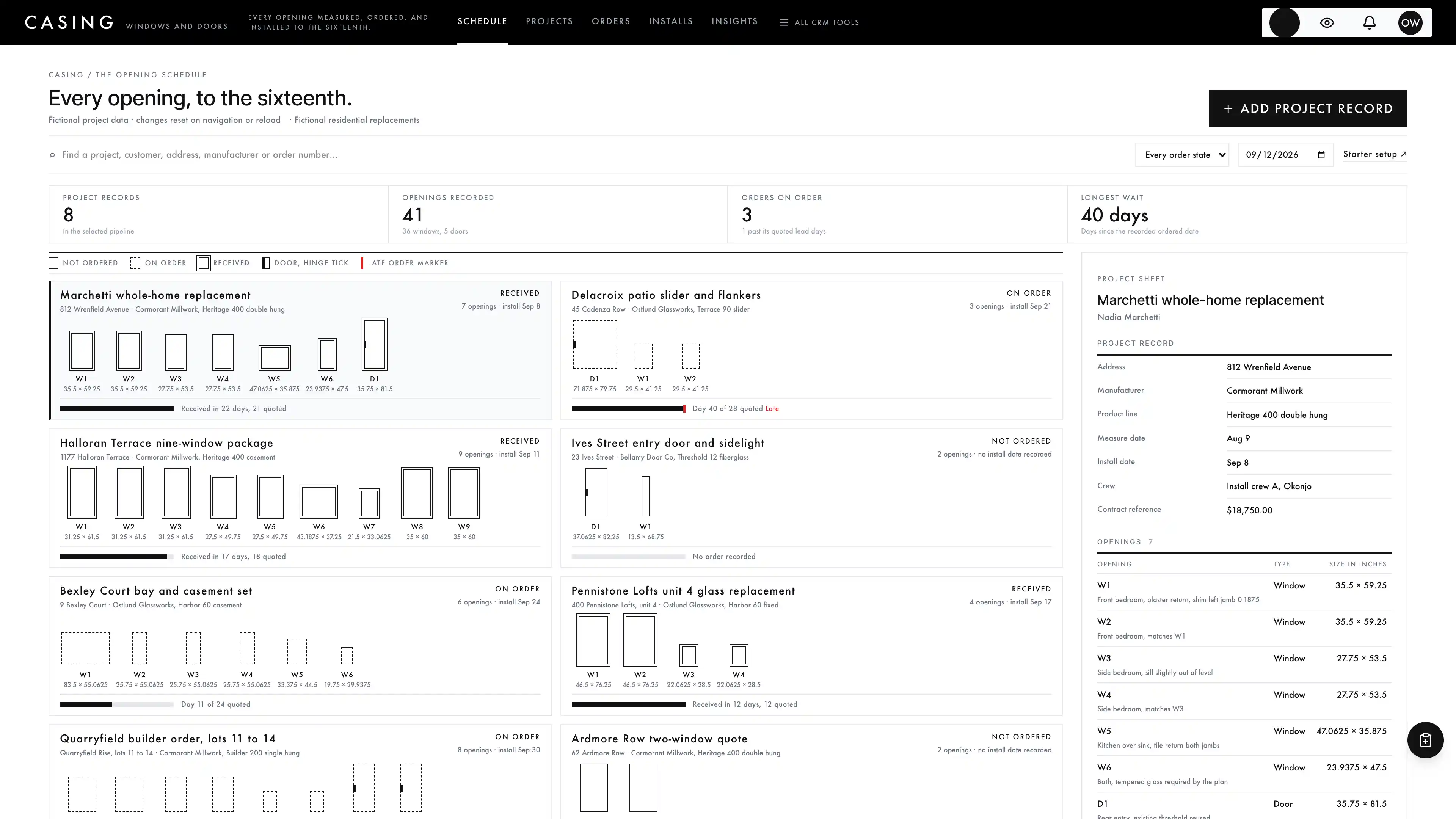
An opening schedule where every rough opening is drawn to scale, with manufacturer lead times, install days, and the source to make it your own.
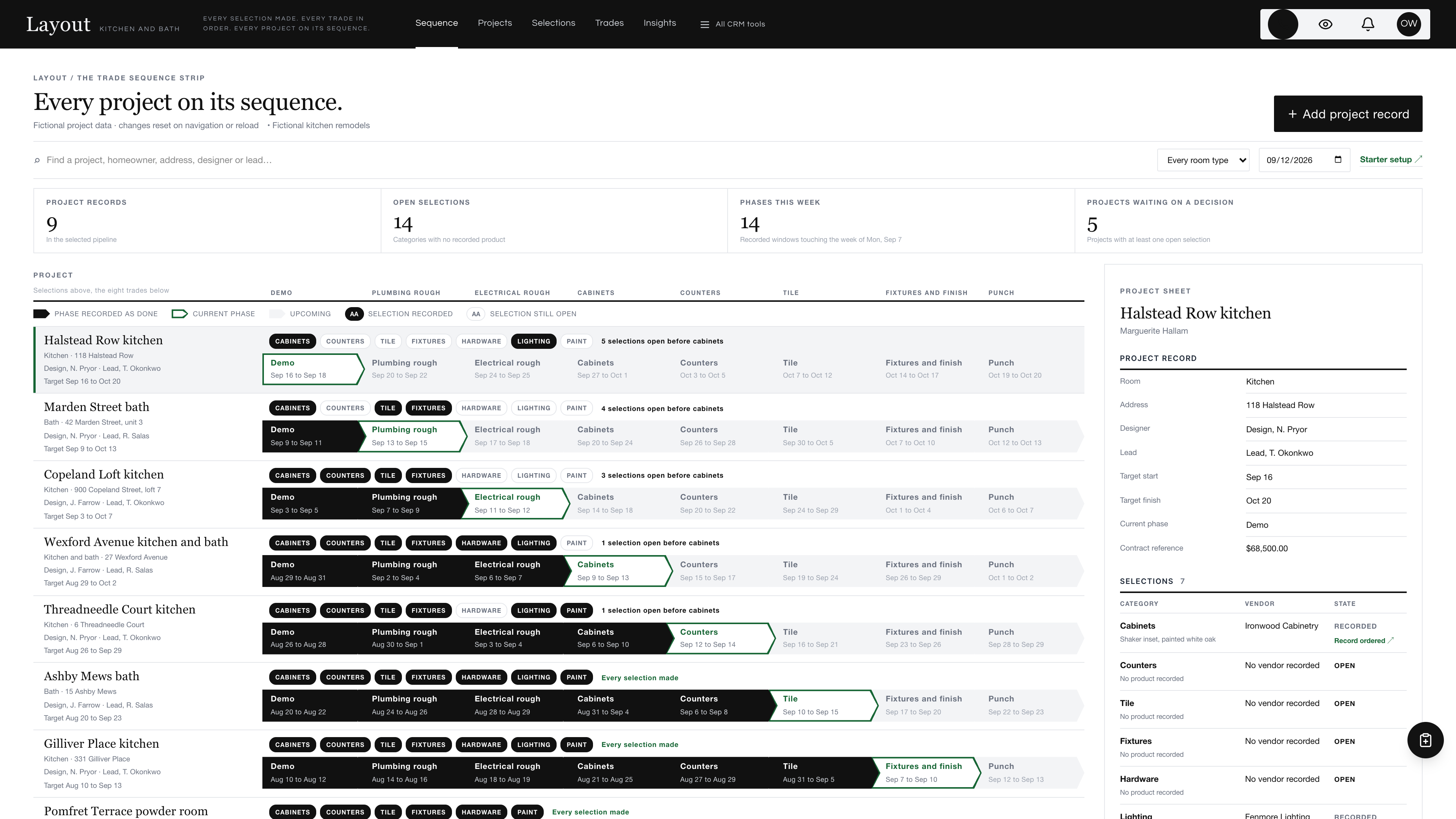
A trade sequence board for kitchen and bath remodels: every project is one row carrying a pill per selection category above eight adjoining trade chevrons, with a countdown naming how many decisions are still open before the cabinet order, and the project sheet beside the board.
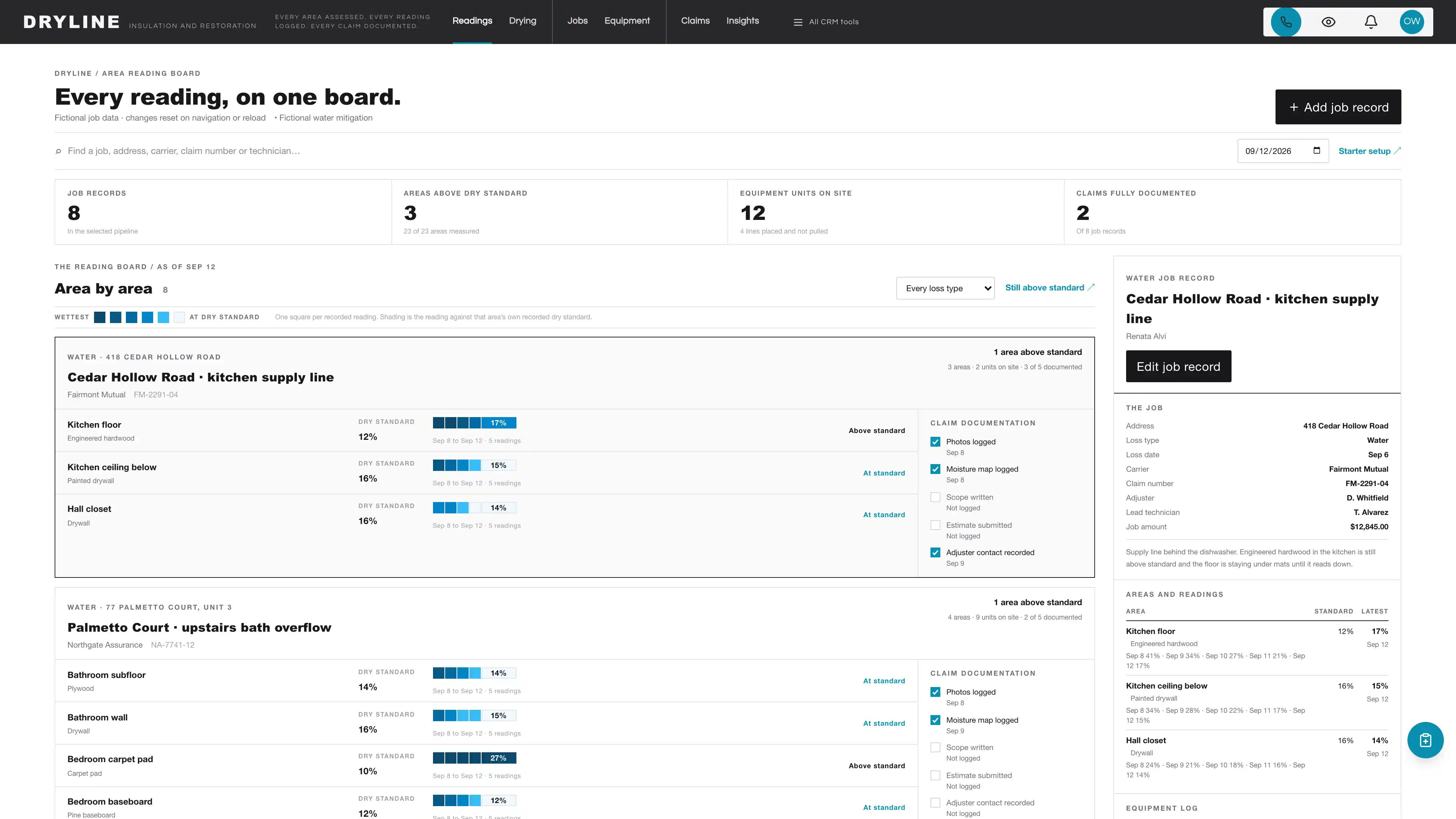
An area reading board for insulation and restoration work: every job is a card, every affected area is a row with a moisture reading strip shaded against its own recorded dry standard, and the five-item claim documentation checklist sits beside the strips.
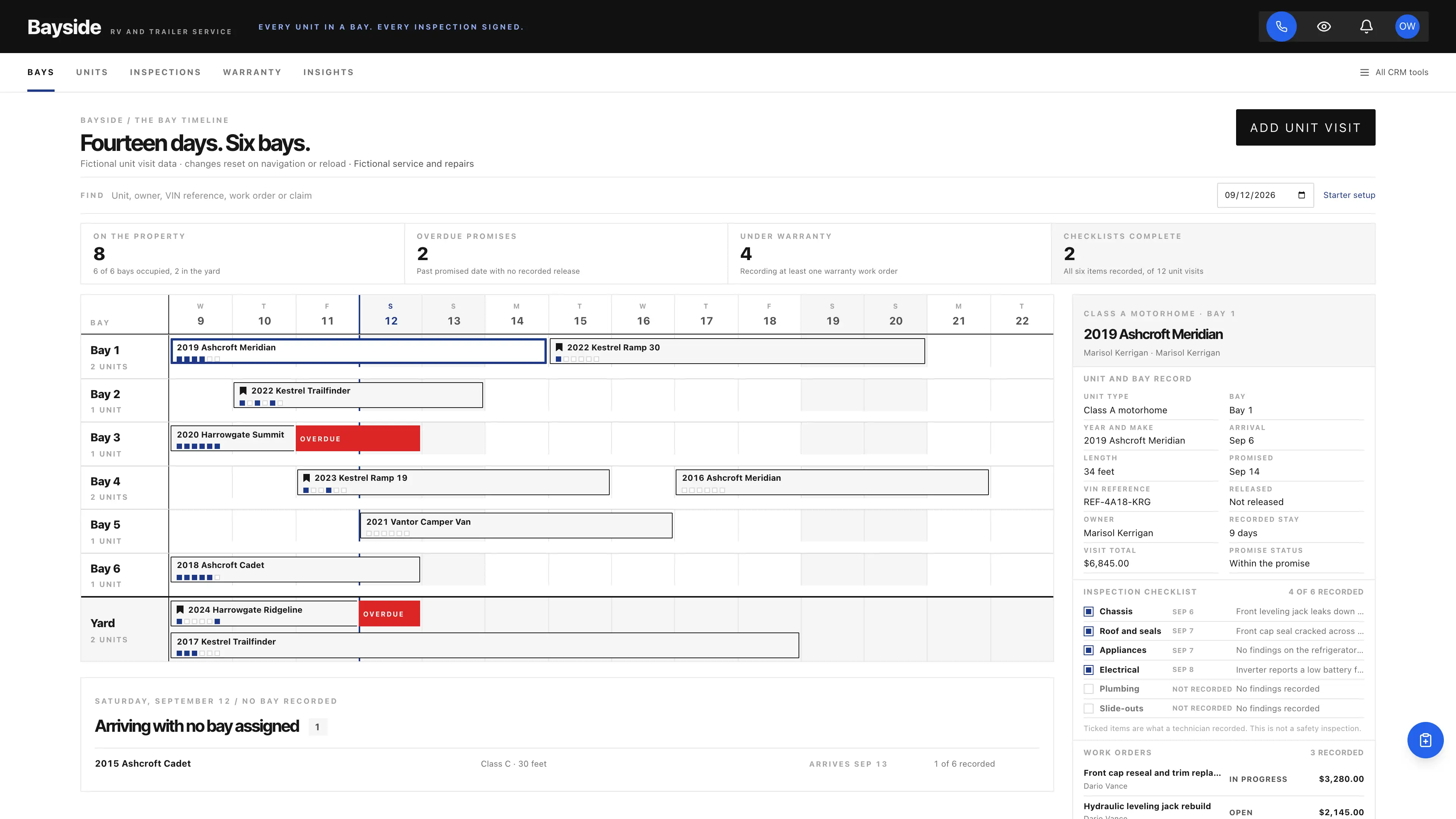
A fourteen-day bay timeline, inspection checklists, warranty claims, and the source to make it your own.
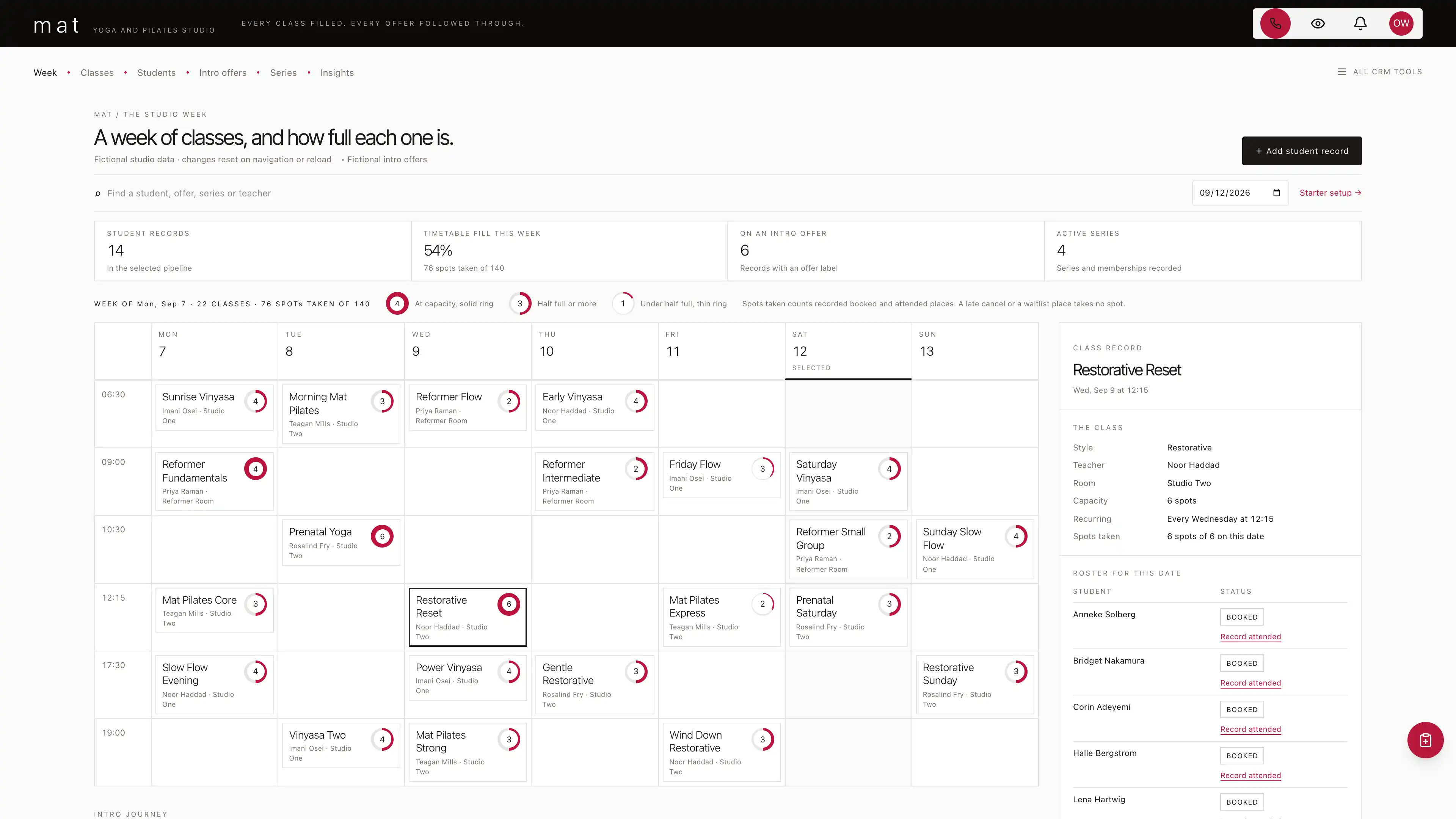
A weekly class grid with a fill ring on every class, and an intro journey strip that puts every intro student on a five step path with the days left beside it.
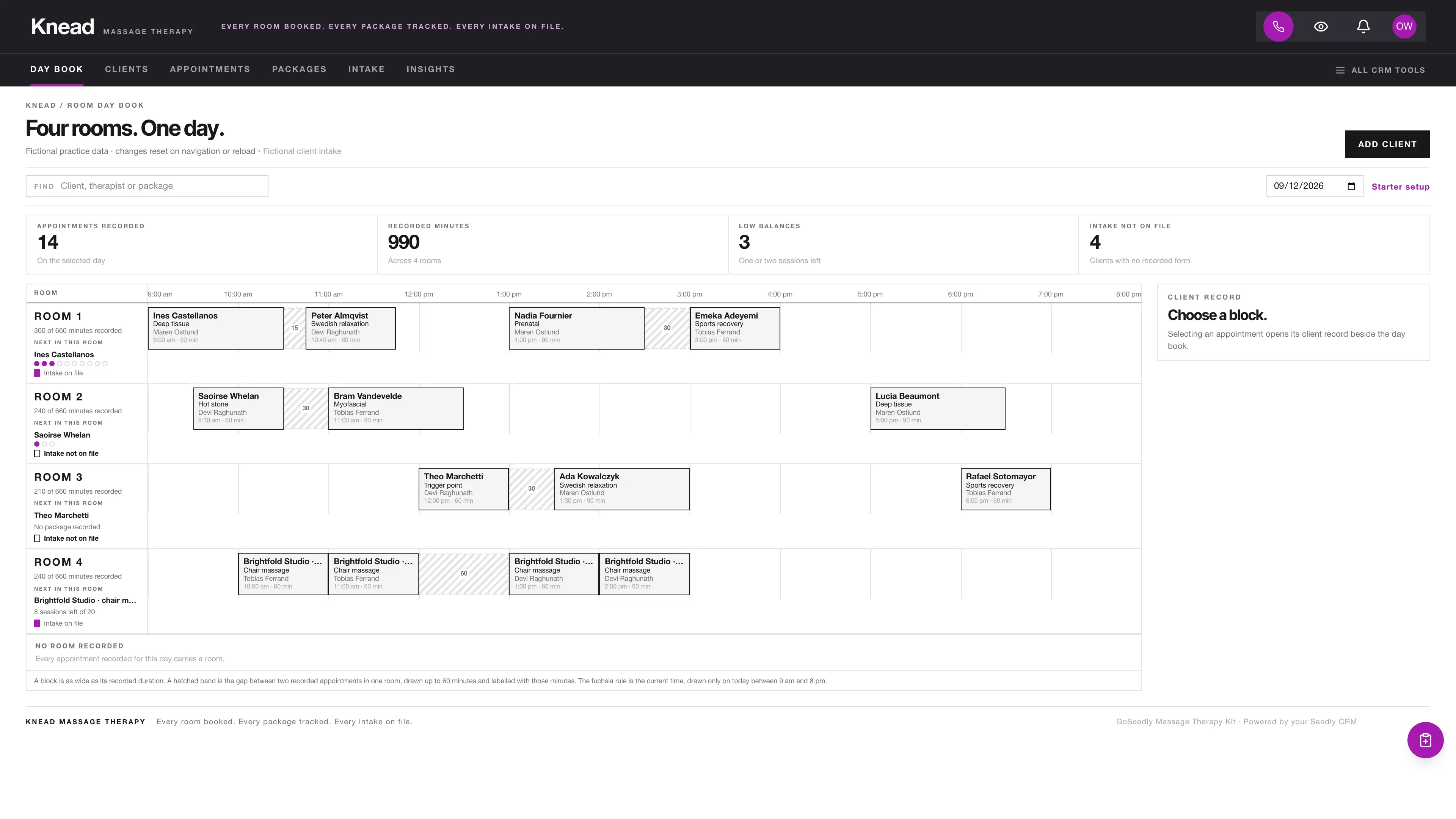
A room lane day book where every appointment is as wide as its recorded duration, with the package balance and the intake flag on every lane.
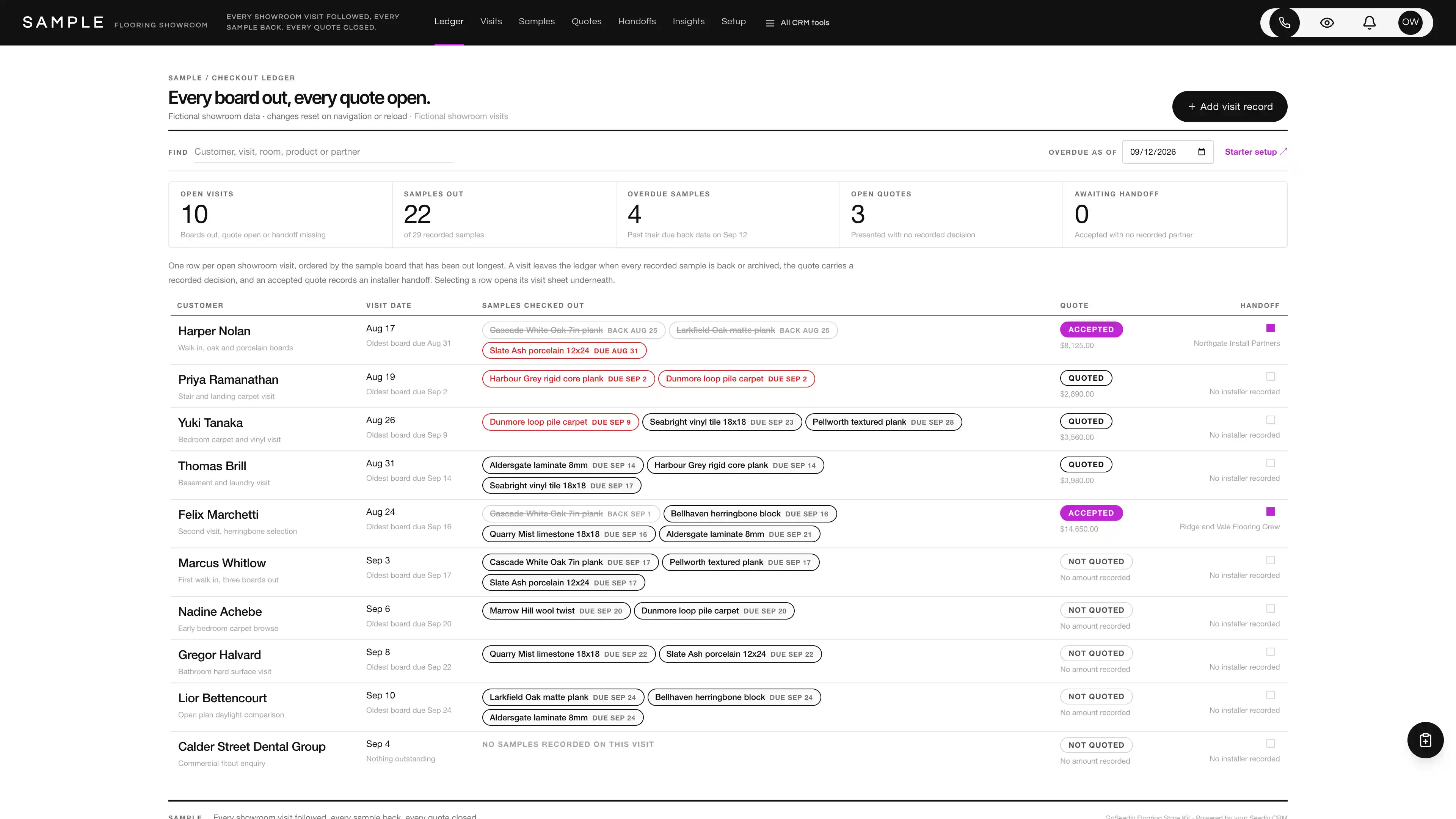
A sample checkout ledger for a flooring showroom: one row per open customer visit, with a chip for every sample board that left the building, a quote state pill, and an installer handoff flag.
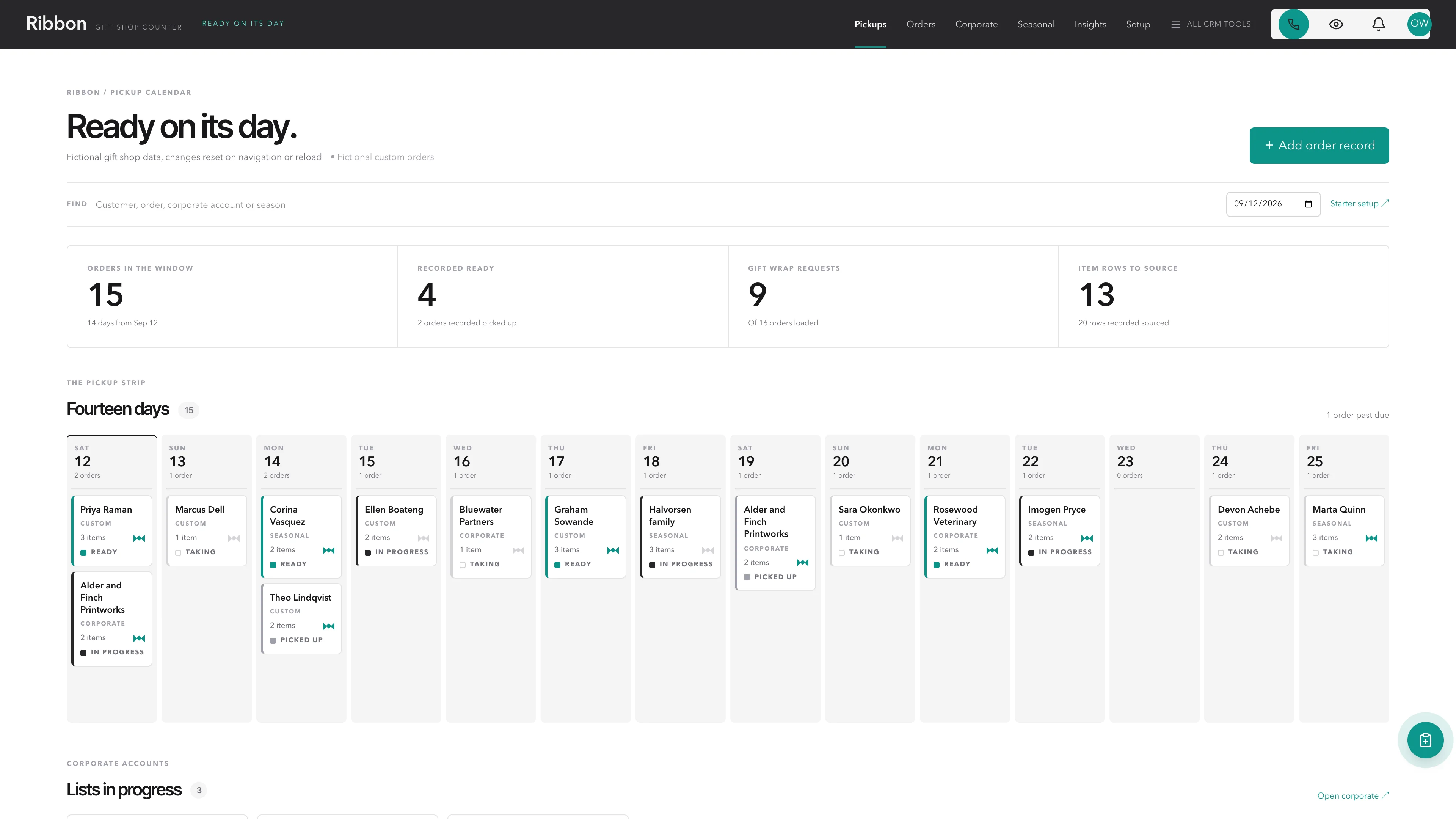
A fourteen day pickup calendar strip, corporate recipient lists, seasonal reorders, and the source to make it your own.
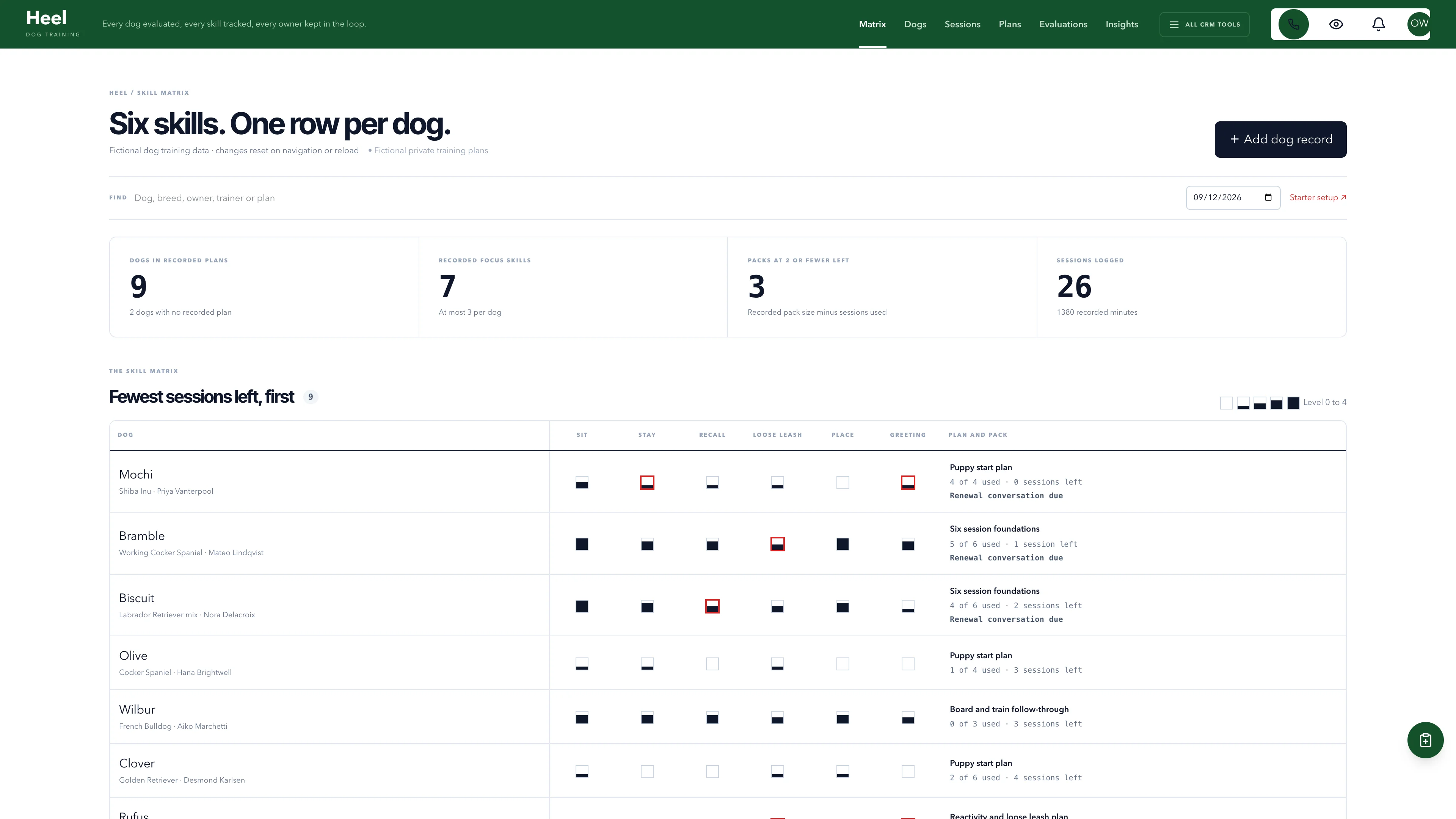
A skill progress matrix of dogs against six core skills, with the session pack at the end of every row.
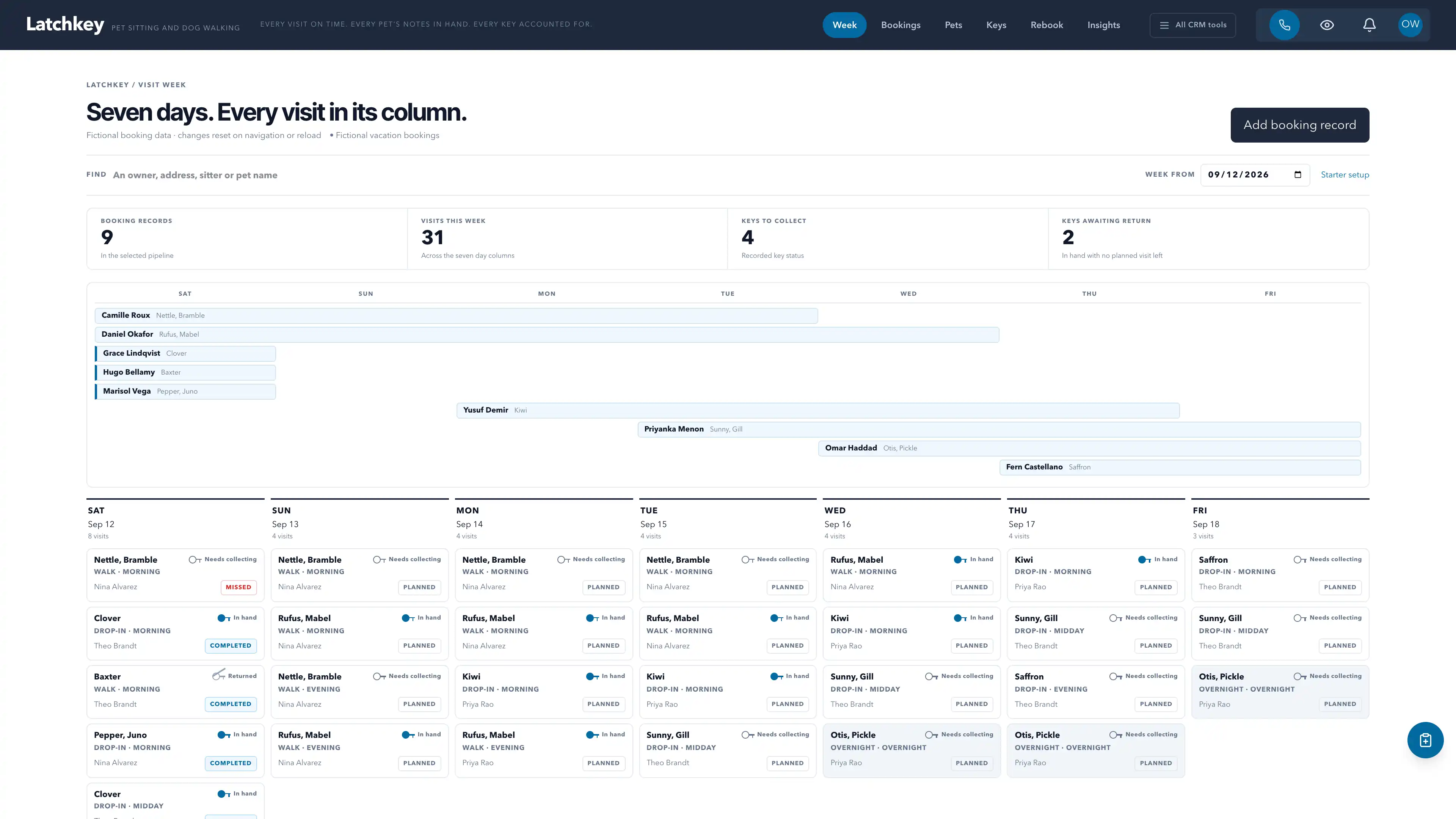
A seven-day visit schedule with booking date bands, pet care notes and recorded key handovers.
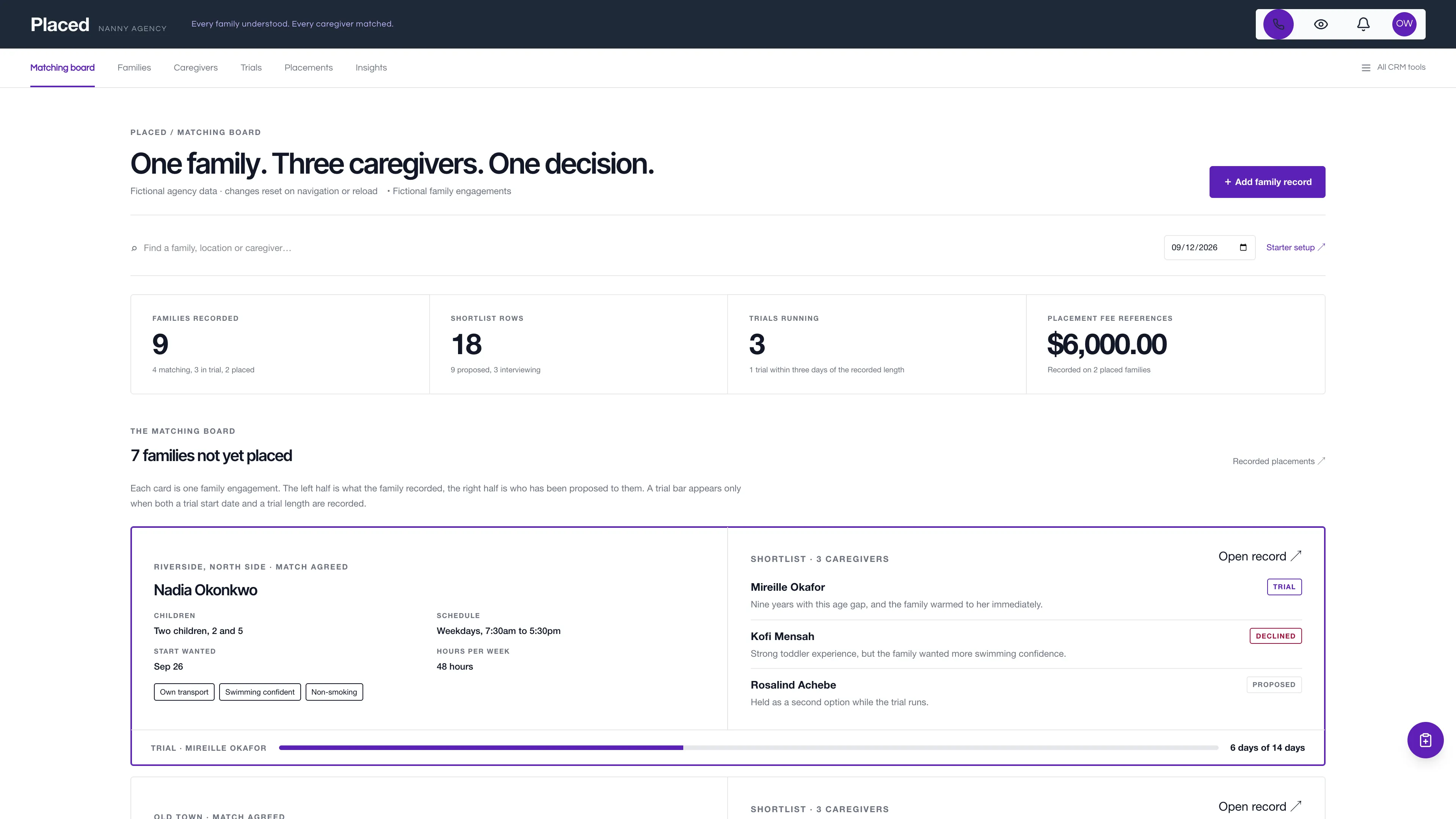
A matching board that reads one family and its shortlist side by side, with trial countdowns and placement records.
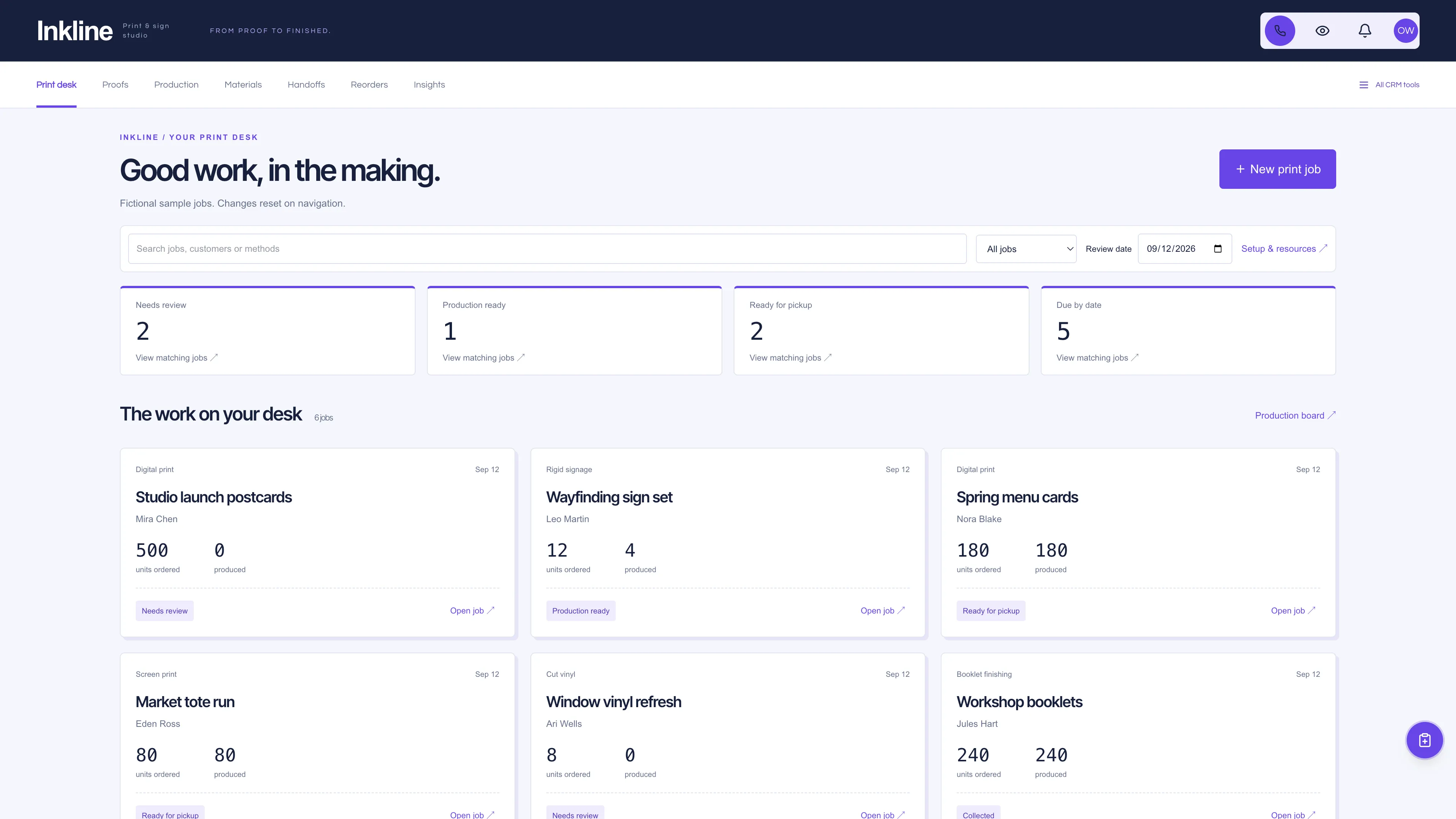
A print production desk for proof decisions, materials, production quantities and partial handoffs.
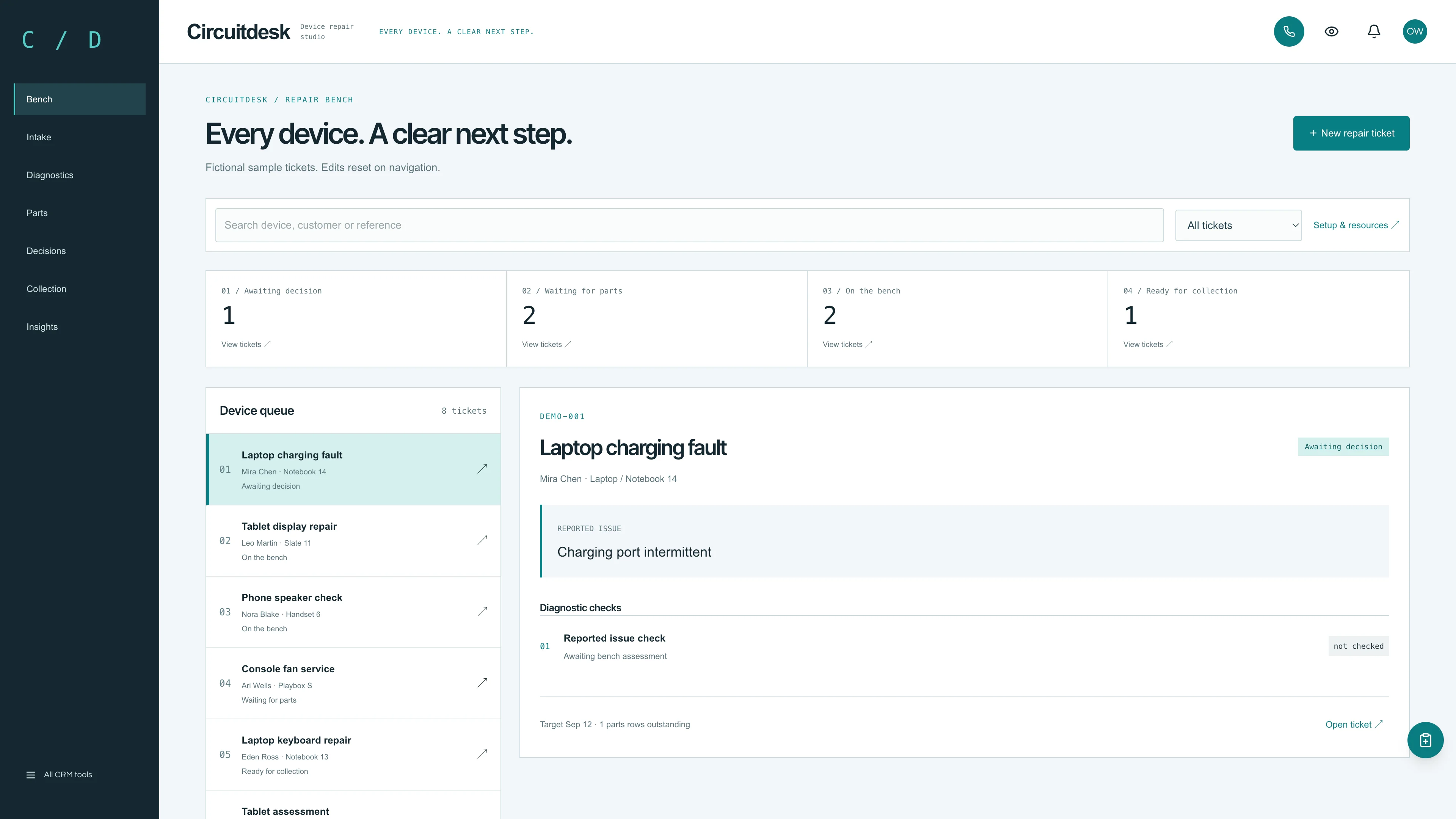
A repair bench for device intake, diagnostic findings, required parts, repair decisions and collection.
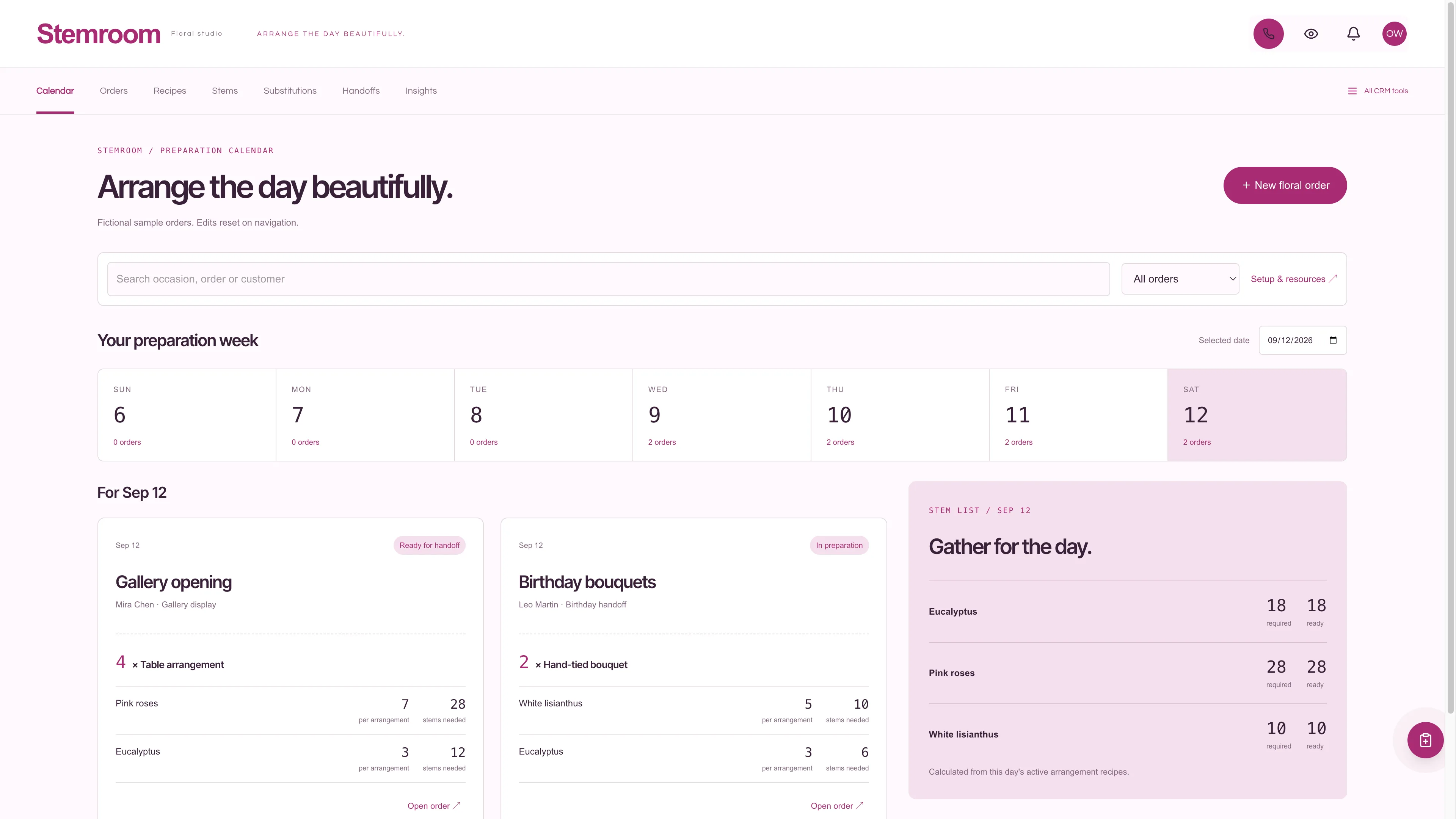
A floral preparation calendar with arrangement recipes, dated stem demand, substitutions and handoff quantities.
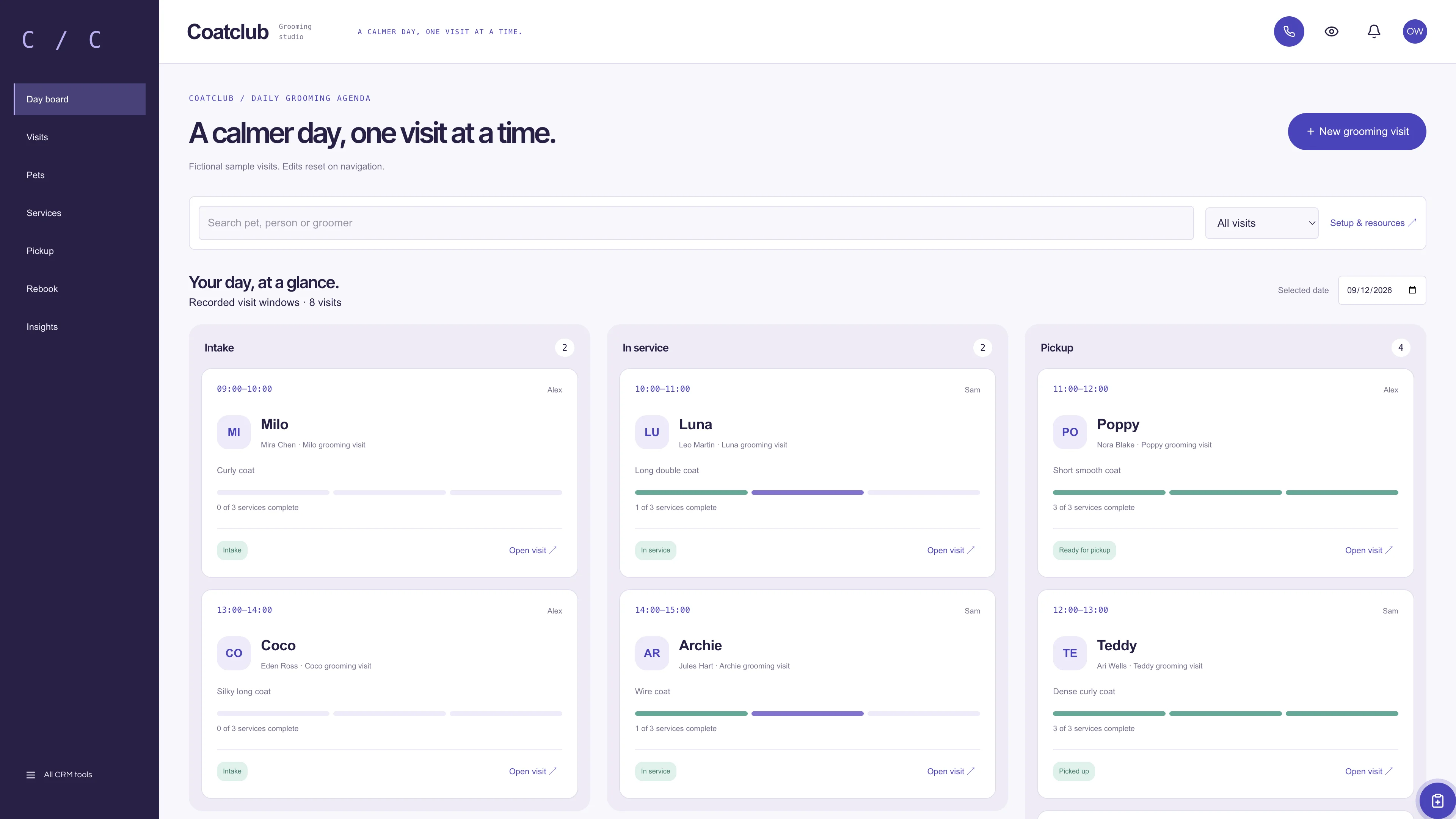
A grooming day board with pet context, service progress, pickup checklists and recorded next-visit dates.
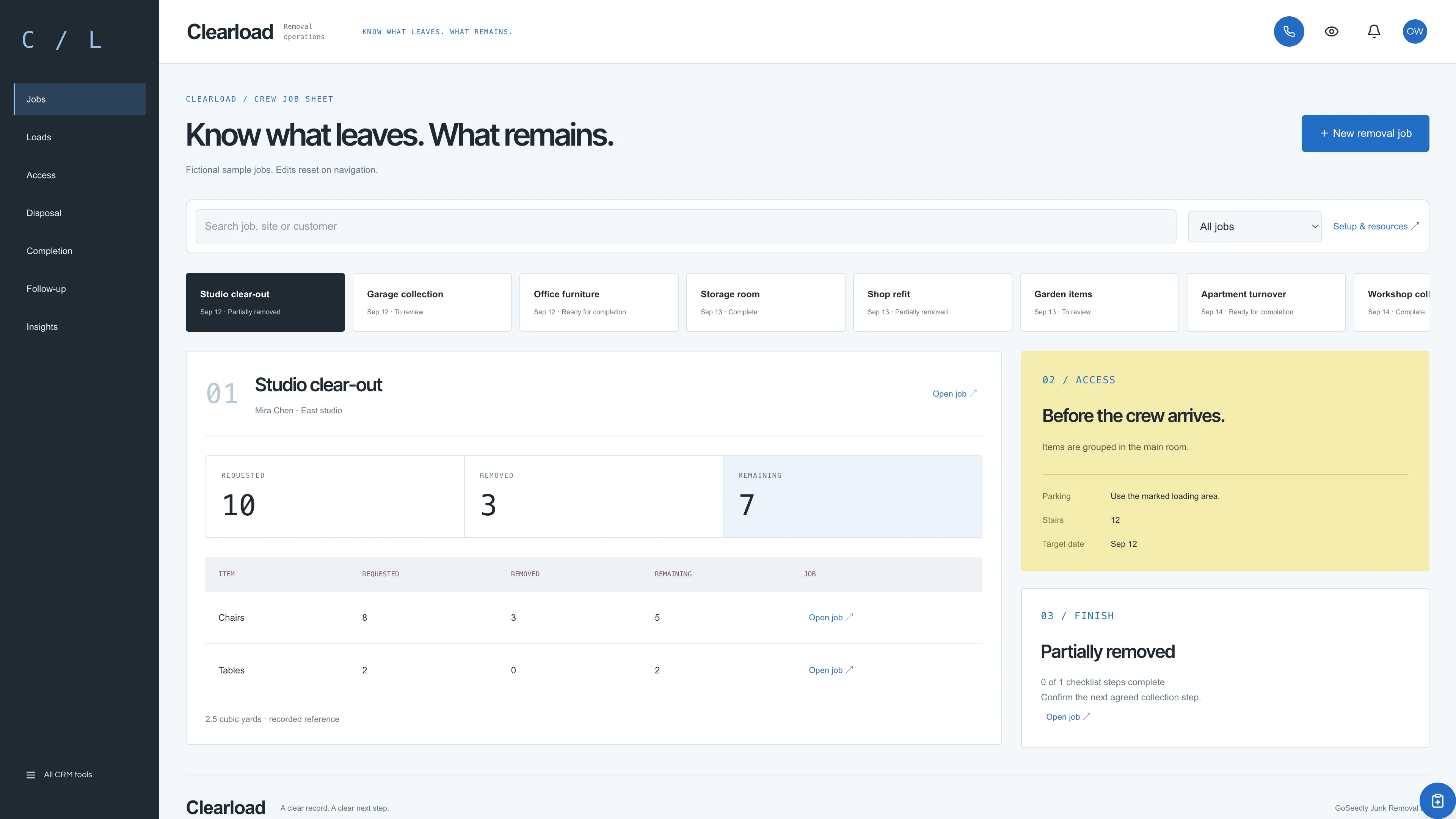
A crew job sheet with requested and removed quantities, access notes, disposal references and completion evidence.
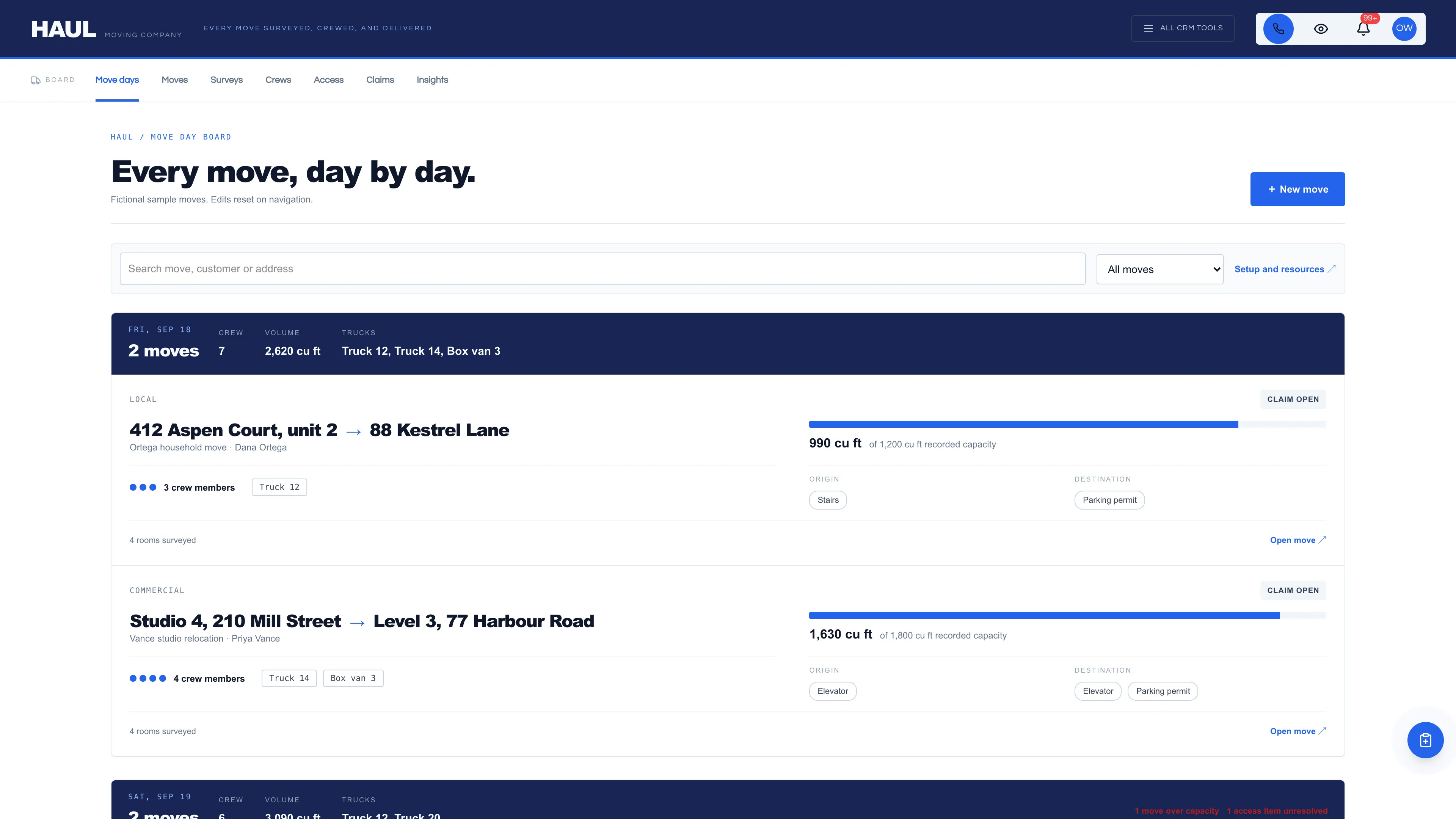
A move day board with crew and truck records, room surveys measured against a recorded truck capacity reference, access items at both ends and claims follow-up.
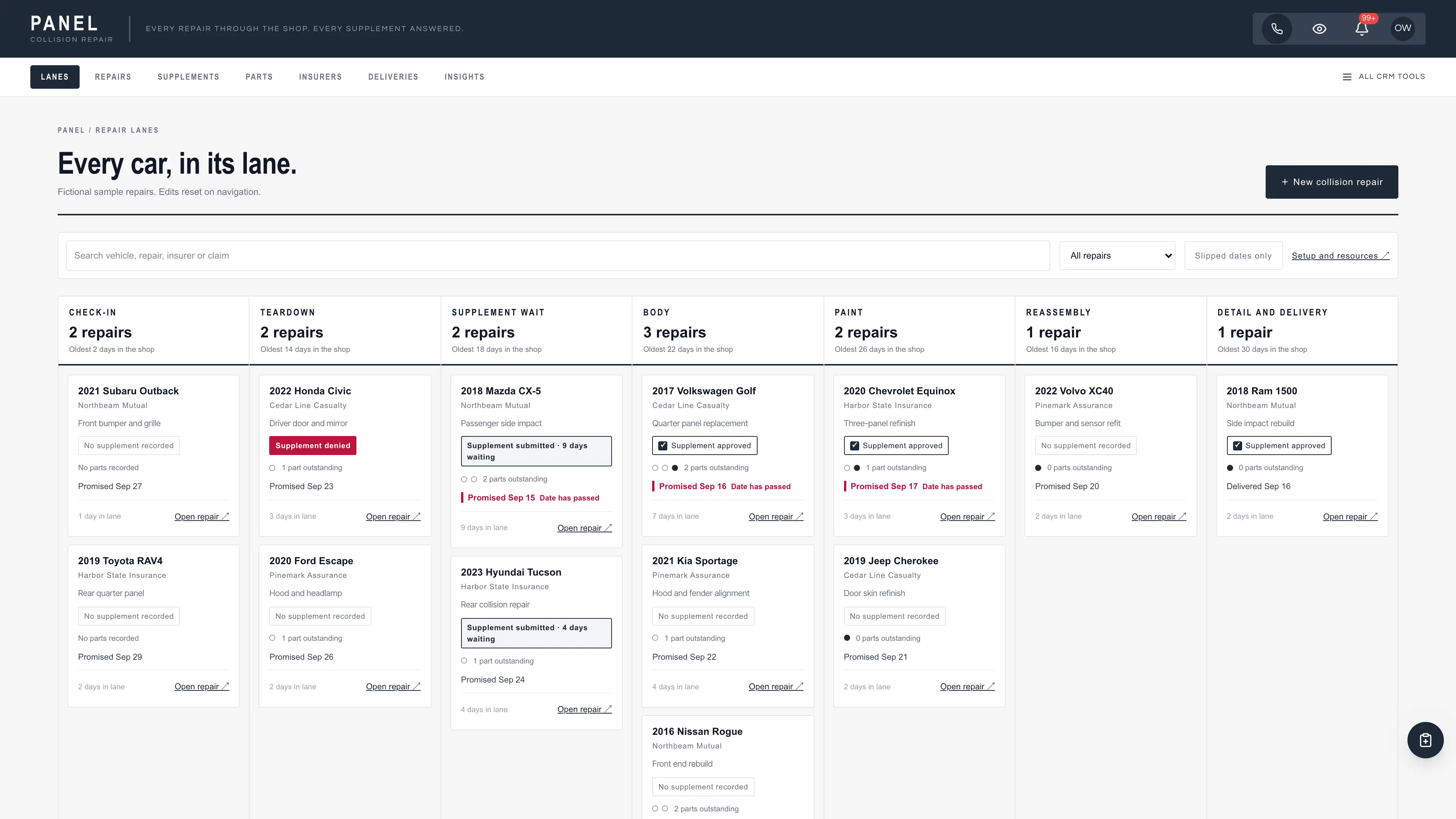
A seven lane repair board, supplements ordered by days waiting, outstanding parts lines, and the source to make it your own.
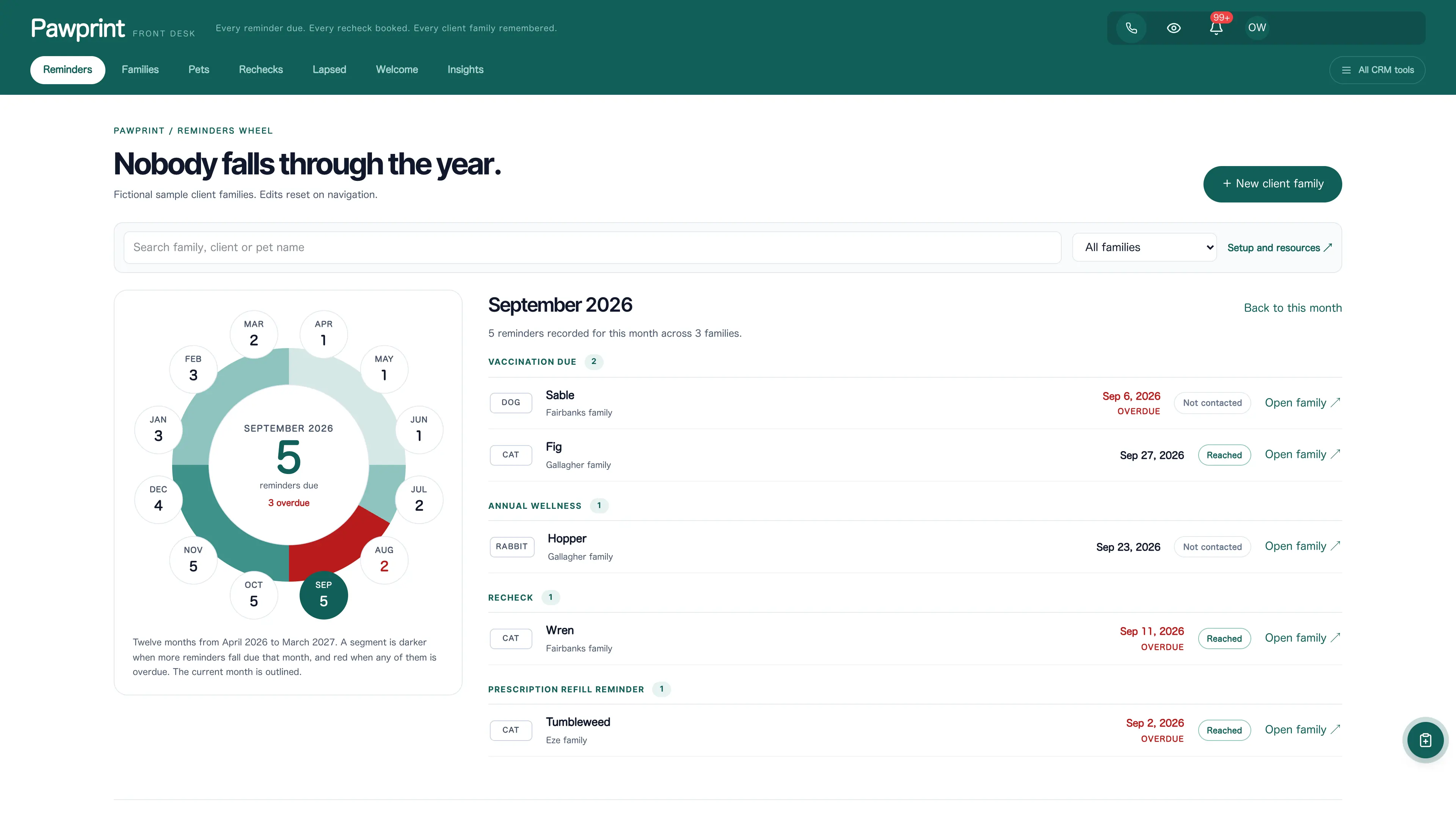
A front desk reminders wheel for vaccinations and rechecks, with the client families and pets behind them.
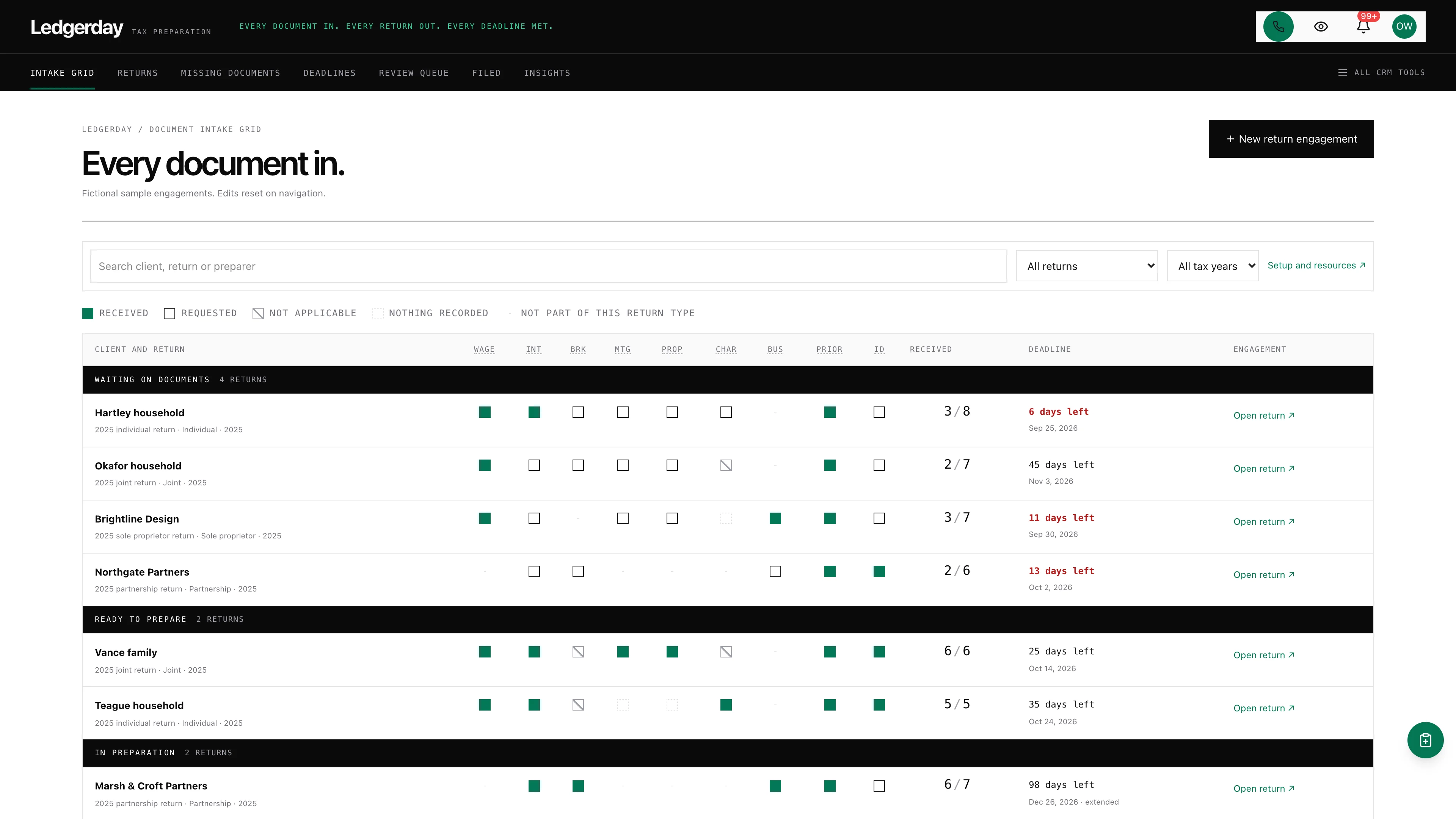
A document intake grid for tax season, with a received-of-required count and a deadline countdown on every return engagement.
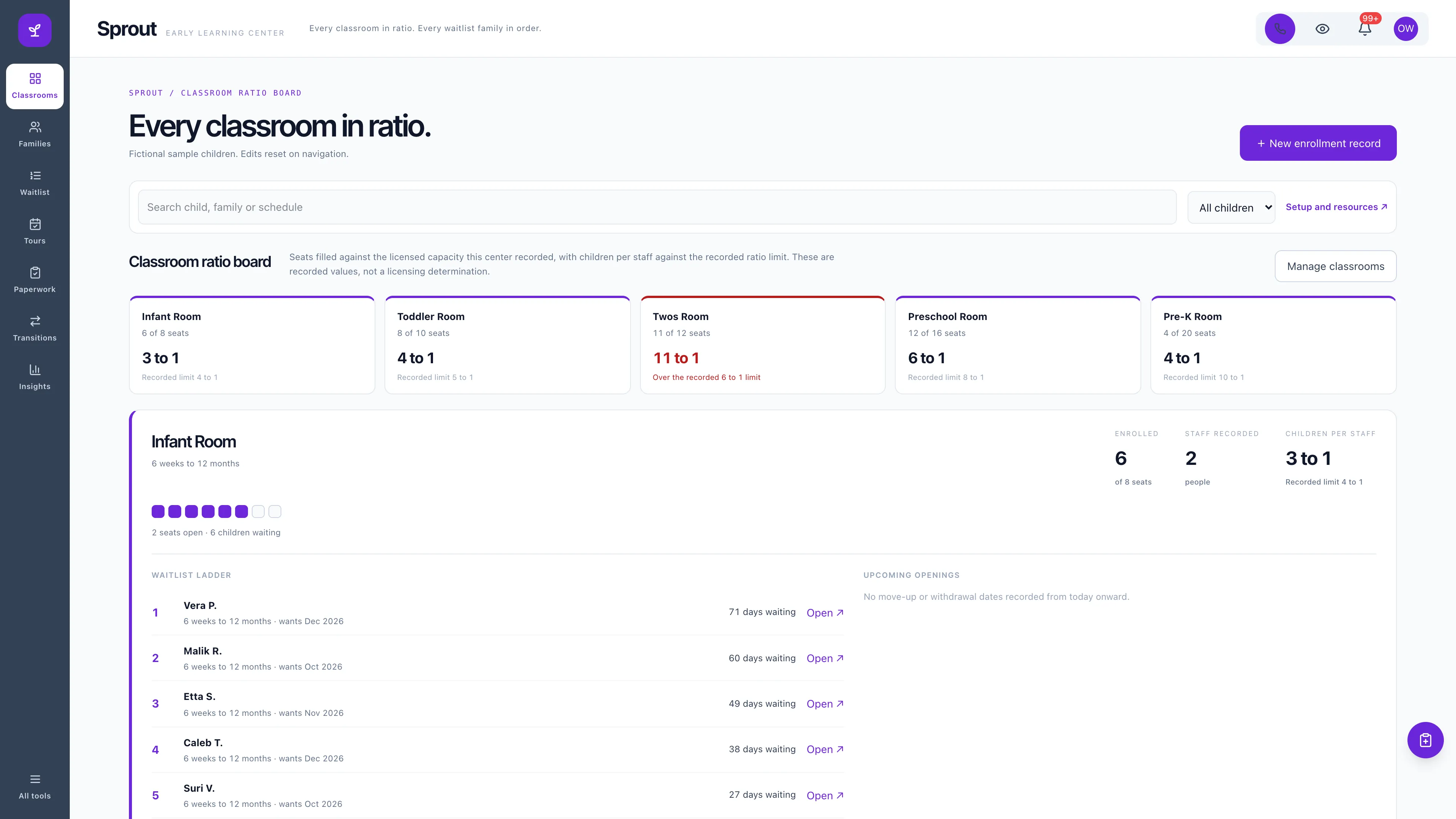
A classroom ratio board with seat-by-seat capacity, a waitlist ladder per room, tour follow-ups and enrollment paperwork.
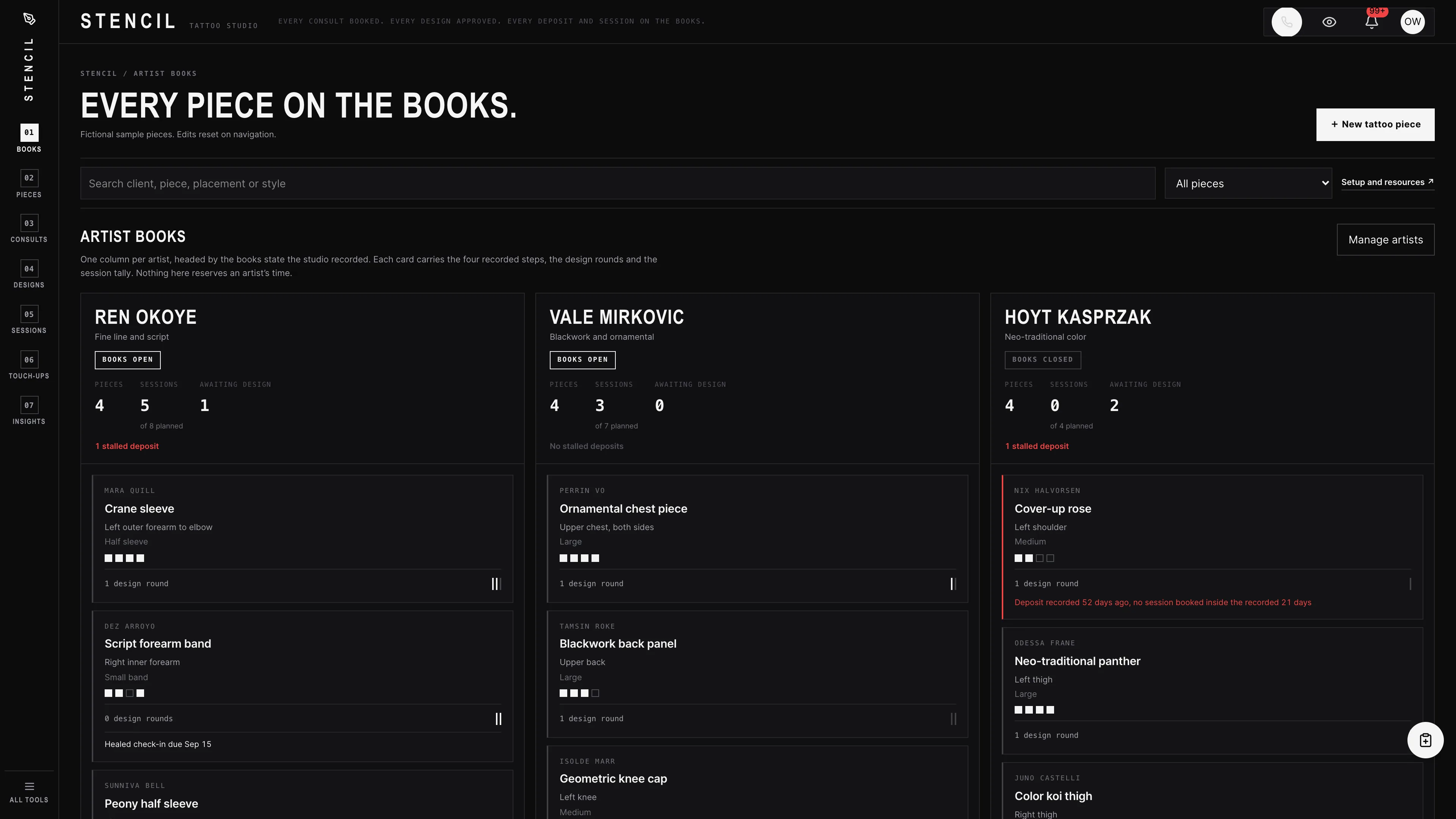
Artist books with a four-step approval stepper, recorded design rounds, session tallies and a flag for a deposit past its hold window.
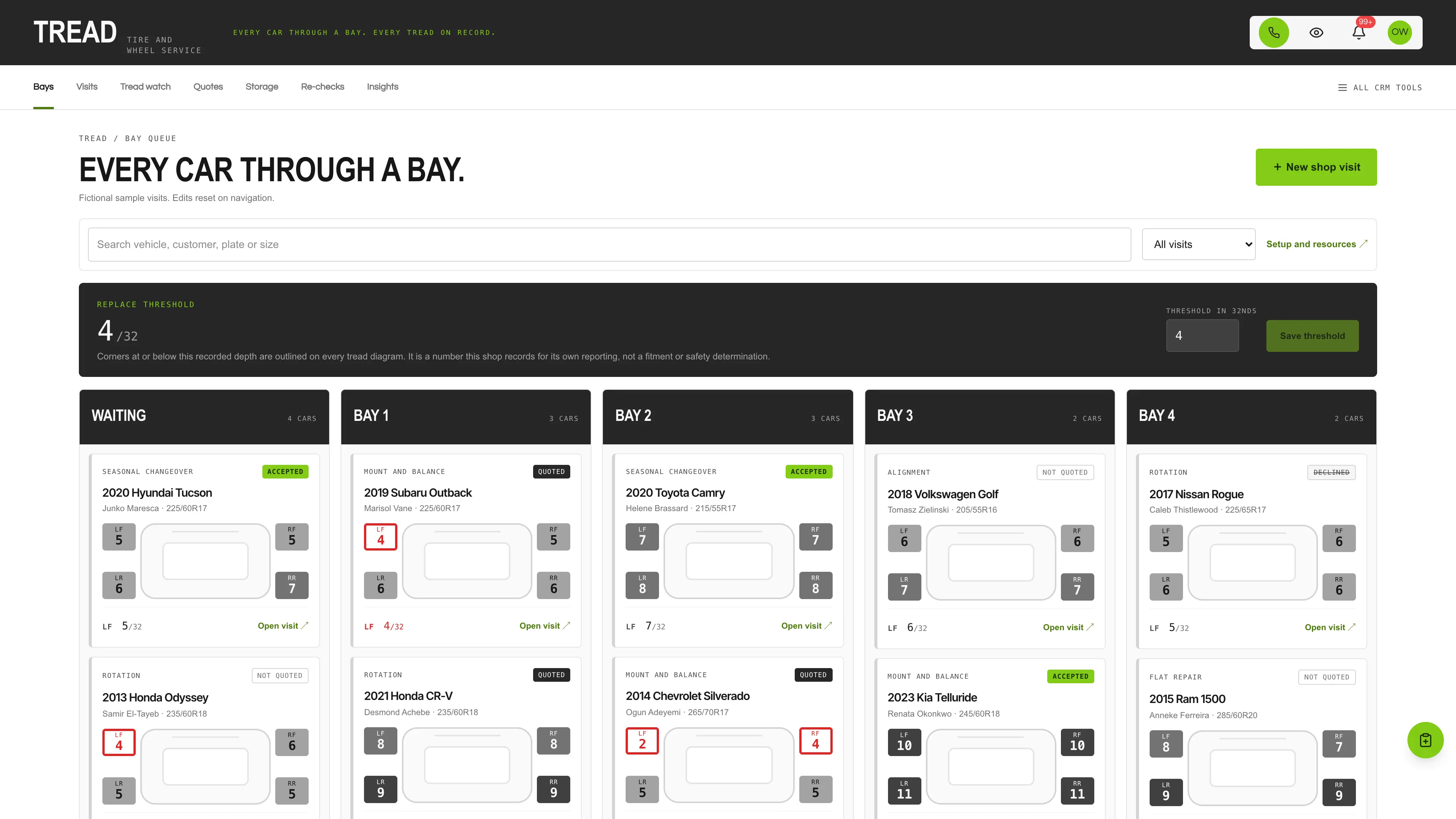
A five-column bay queue where every car carries a four-corner tread card, plus replacement quotes, seasonal sets by rack code and torque re-checks.
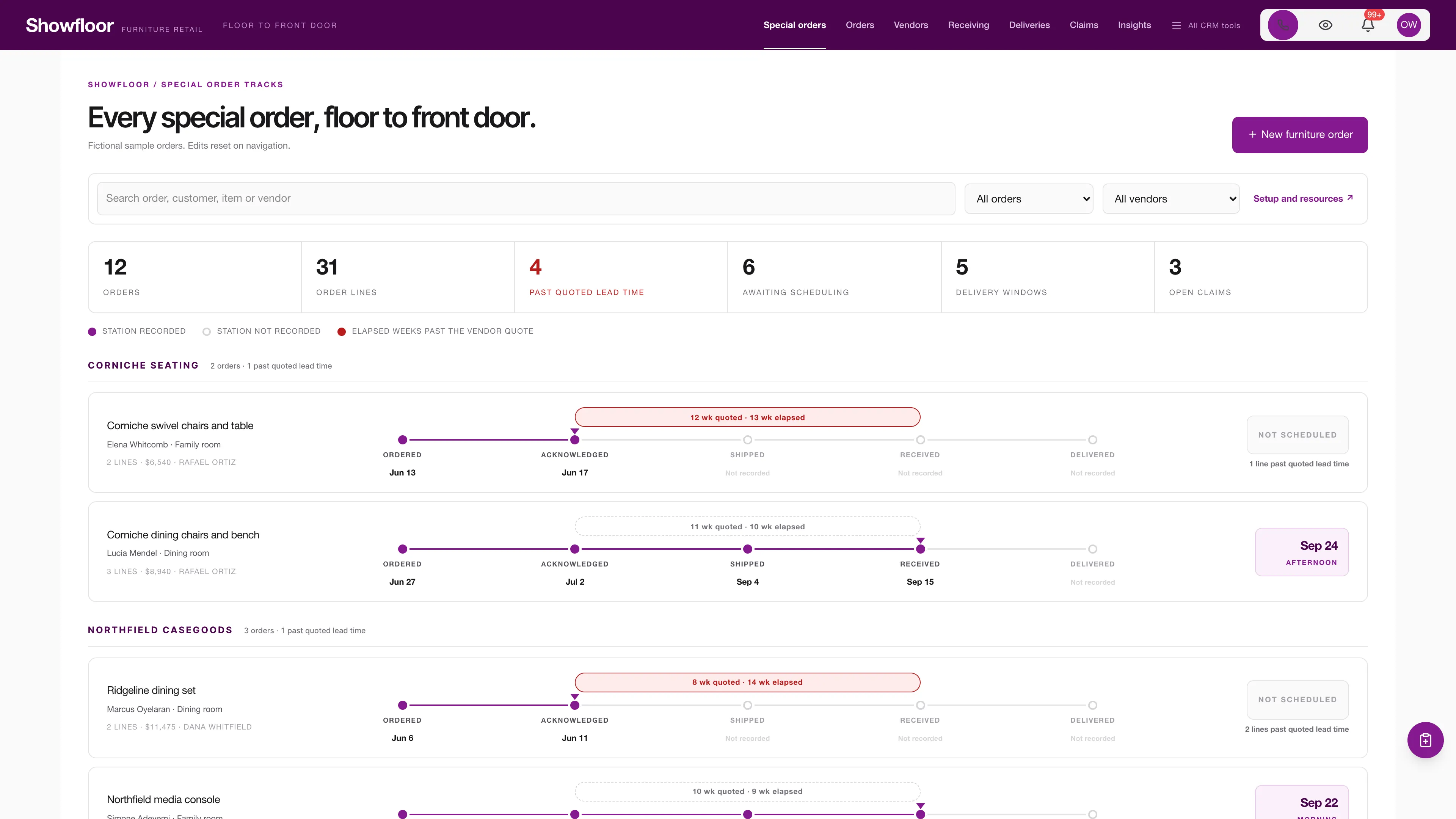
A special-order track across five dated stations per order, with the vendor’s quoted lead time read against the weeks elapsed, delivery window chips and damage claims.
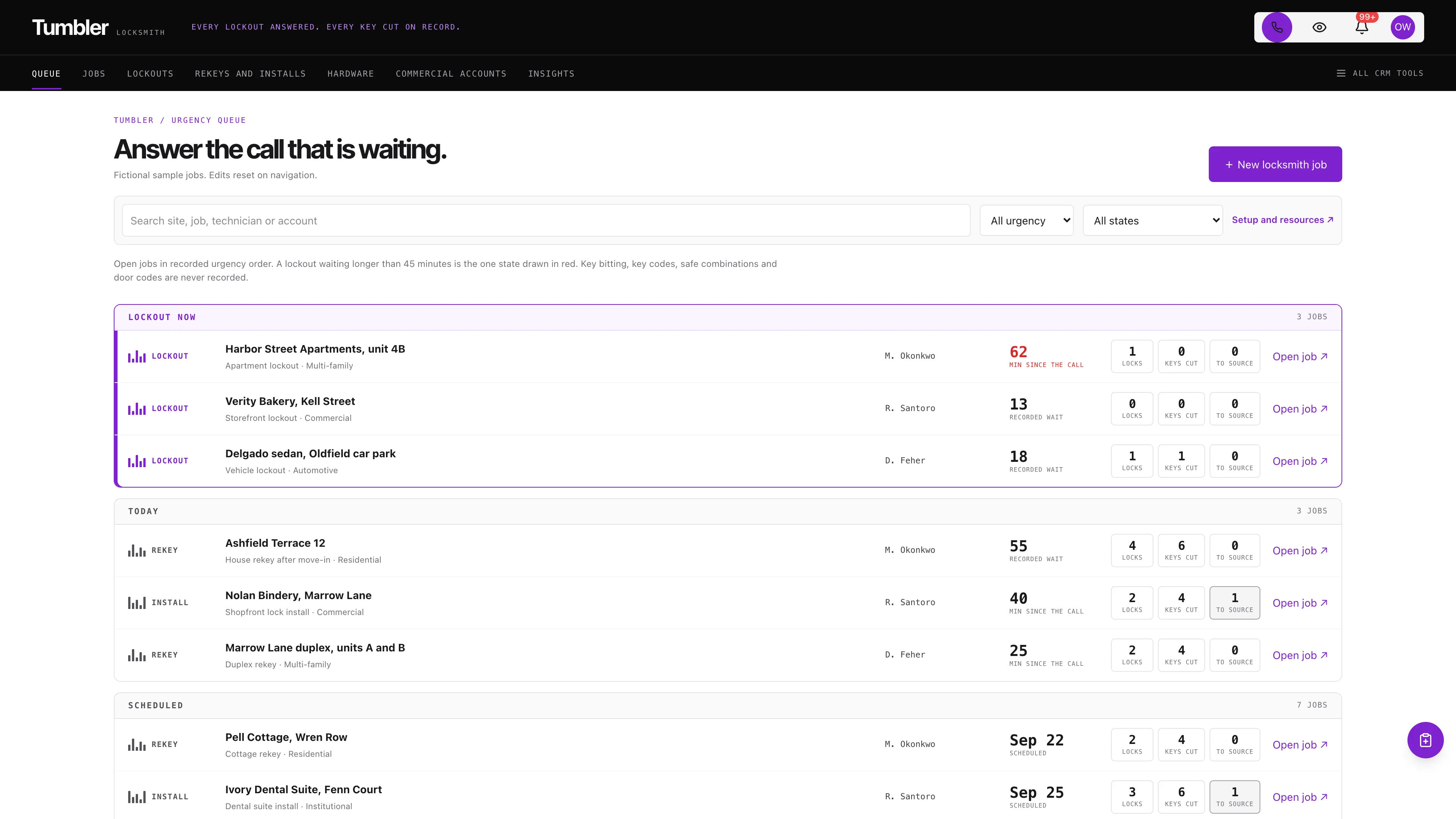
An urgency queue in three bands over a hardware ledger, with minutes since the call on lockouts and the locks, keys cut and hardware still to source on every row.
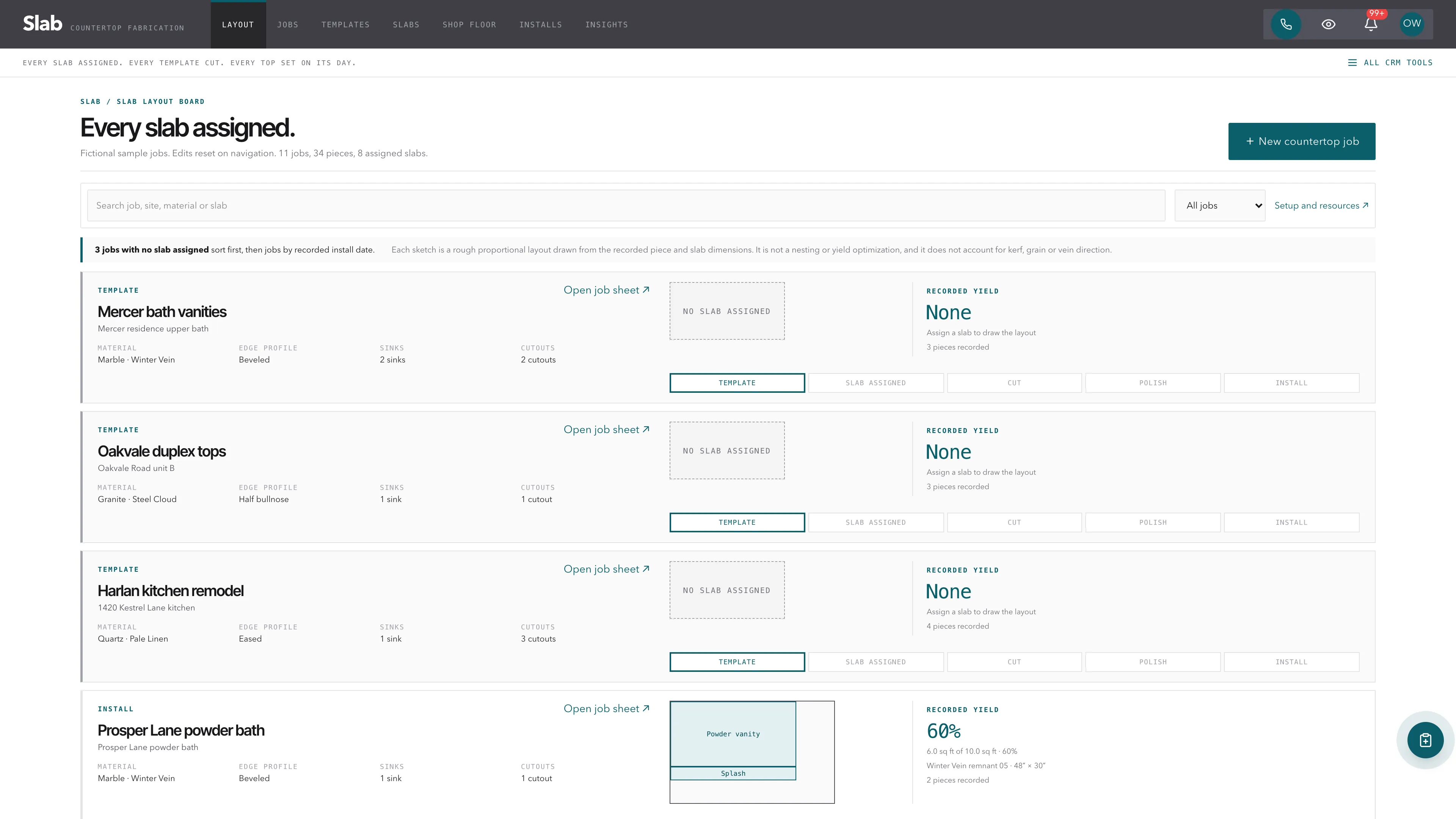
A slab-to-job layout board that draws each job’s recorded pieces against its assigned slab, prints the square-foot yield, and runs template, slab, cut, polish and install.
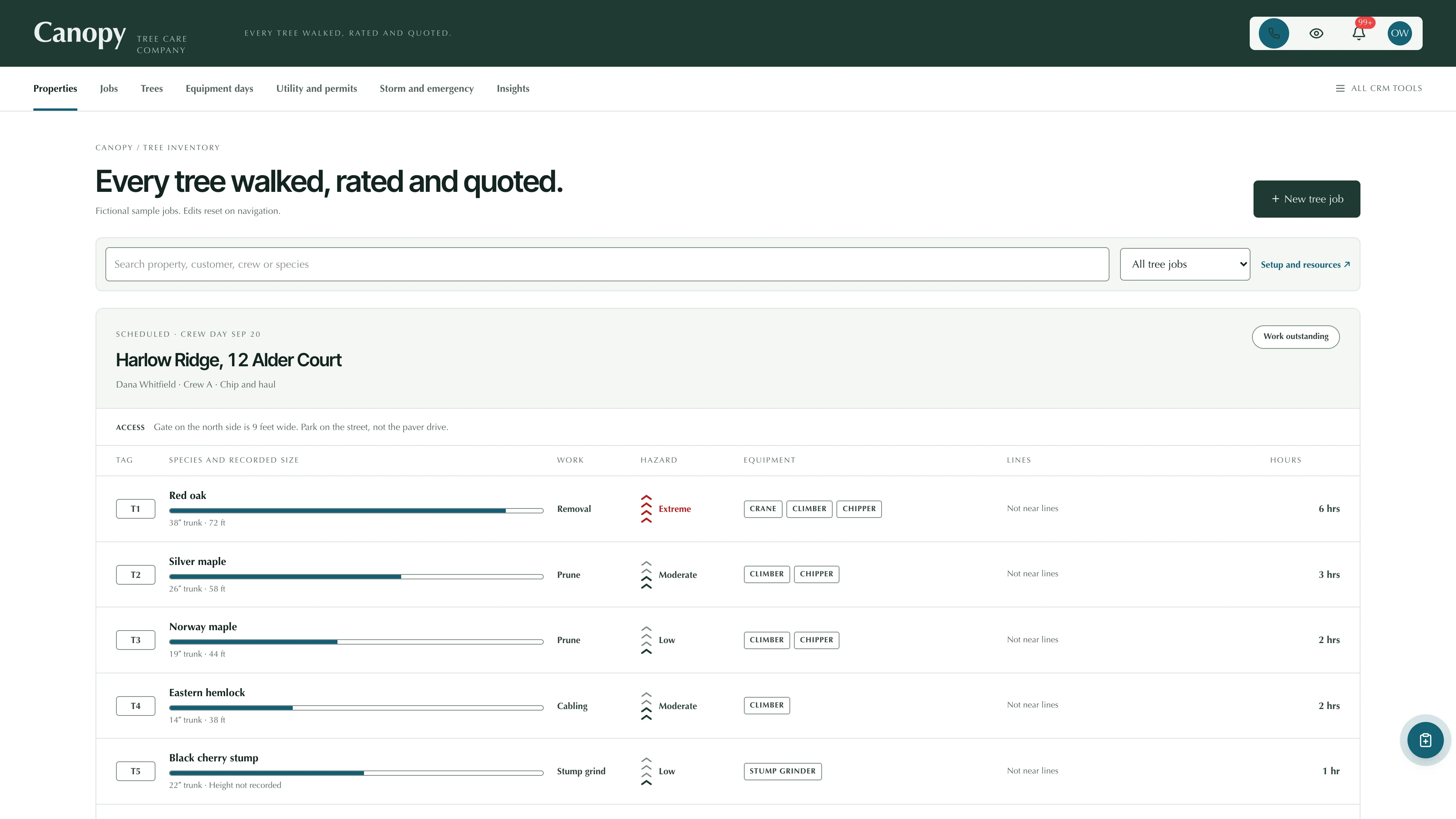
A per-property tree inventory that gives every tree a size bar scaled to its recorded trunk diameter, the hazard rating your staff entered, equipment flags, and a flag for anything near the lines.
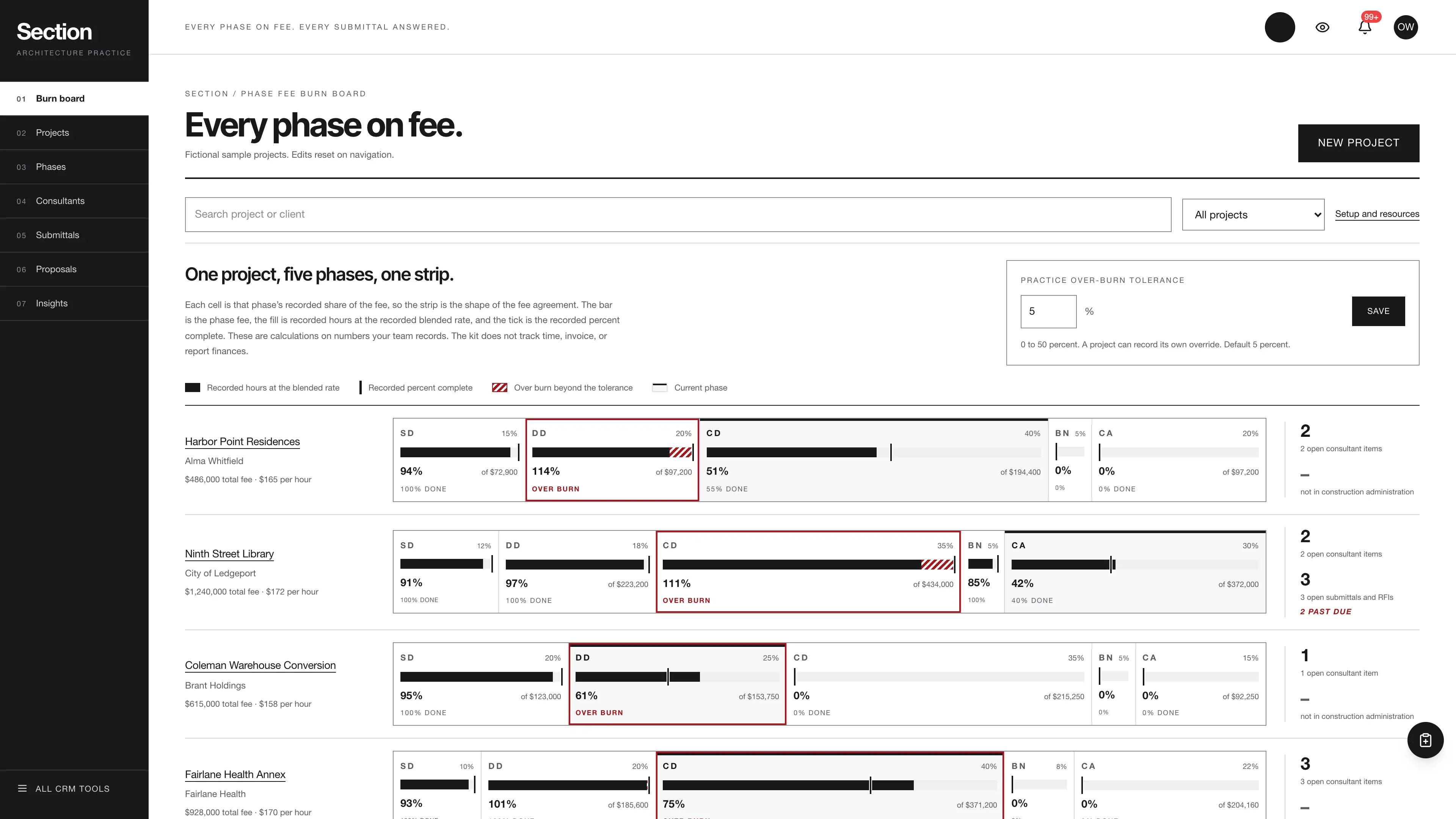
A phase fee burn board where every project is one wide row of five phase cells sized to the recorded share of the fee, each comparing recorded hours at the recorded blended rate against the recorded percent complete.
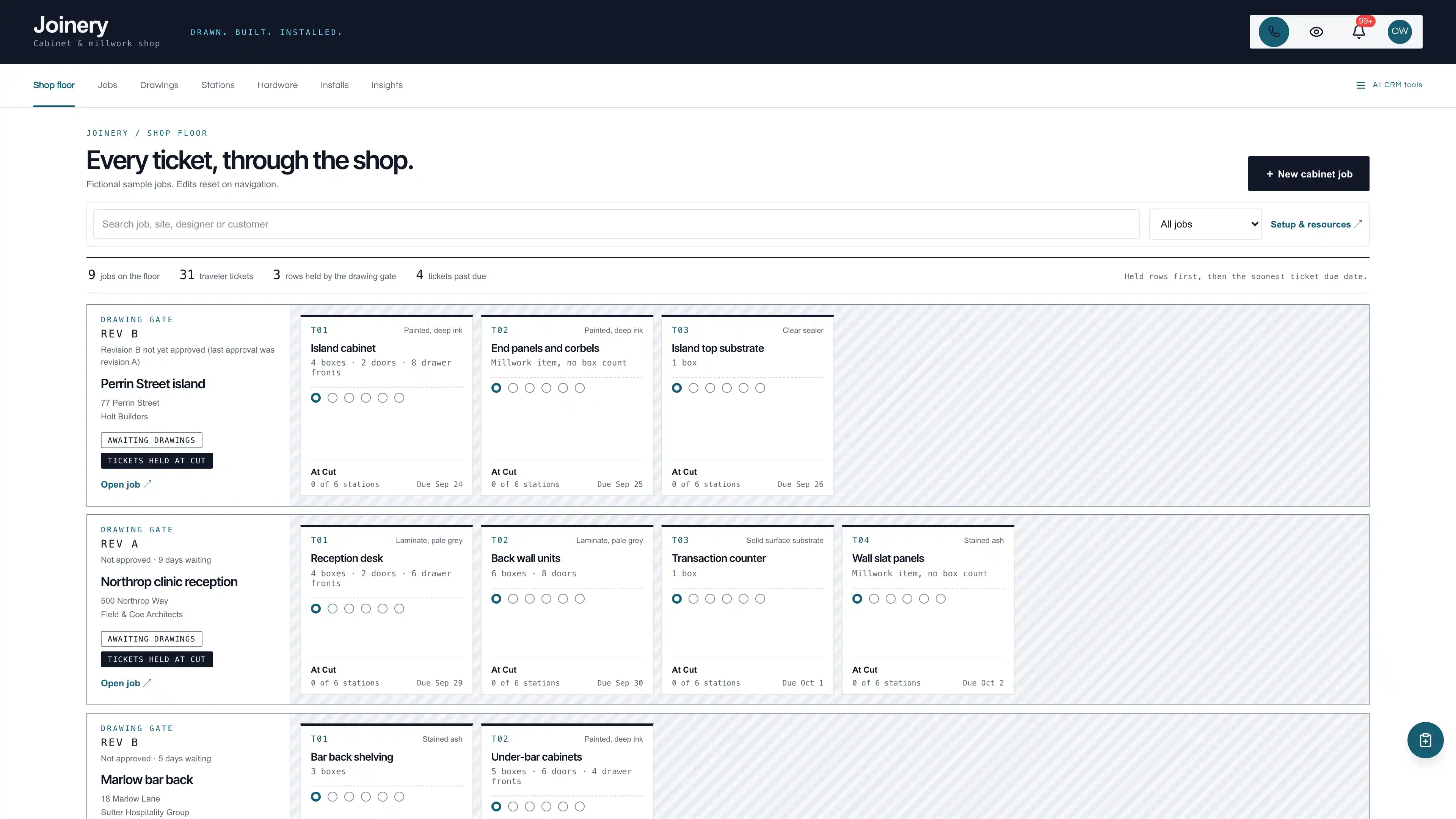
A shop-floor traveler board where every job is a row behind a drawing gate and every cabinet group or millwork item is a ticket with a punched six-station strip.
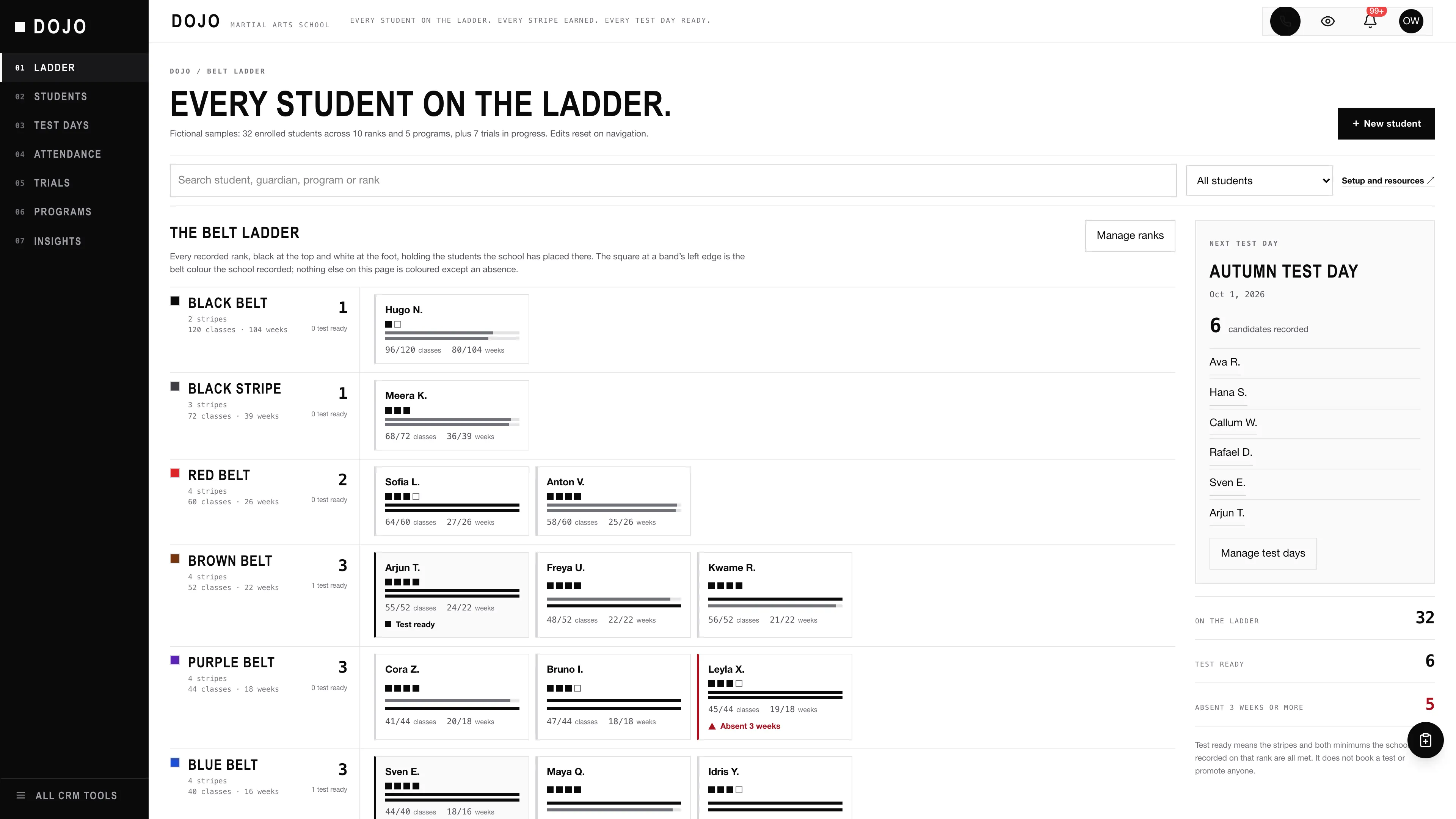
A belt ladder built from your own ranks, with stripe pips, a two-bar readiness meter against each rank’s own minimums, test days and absences.
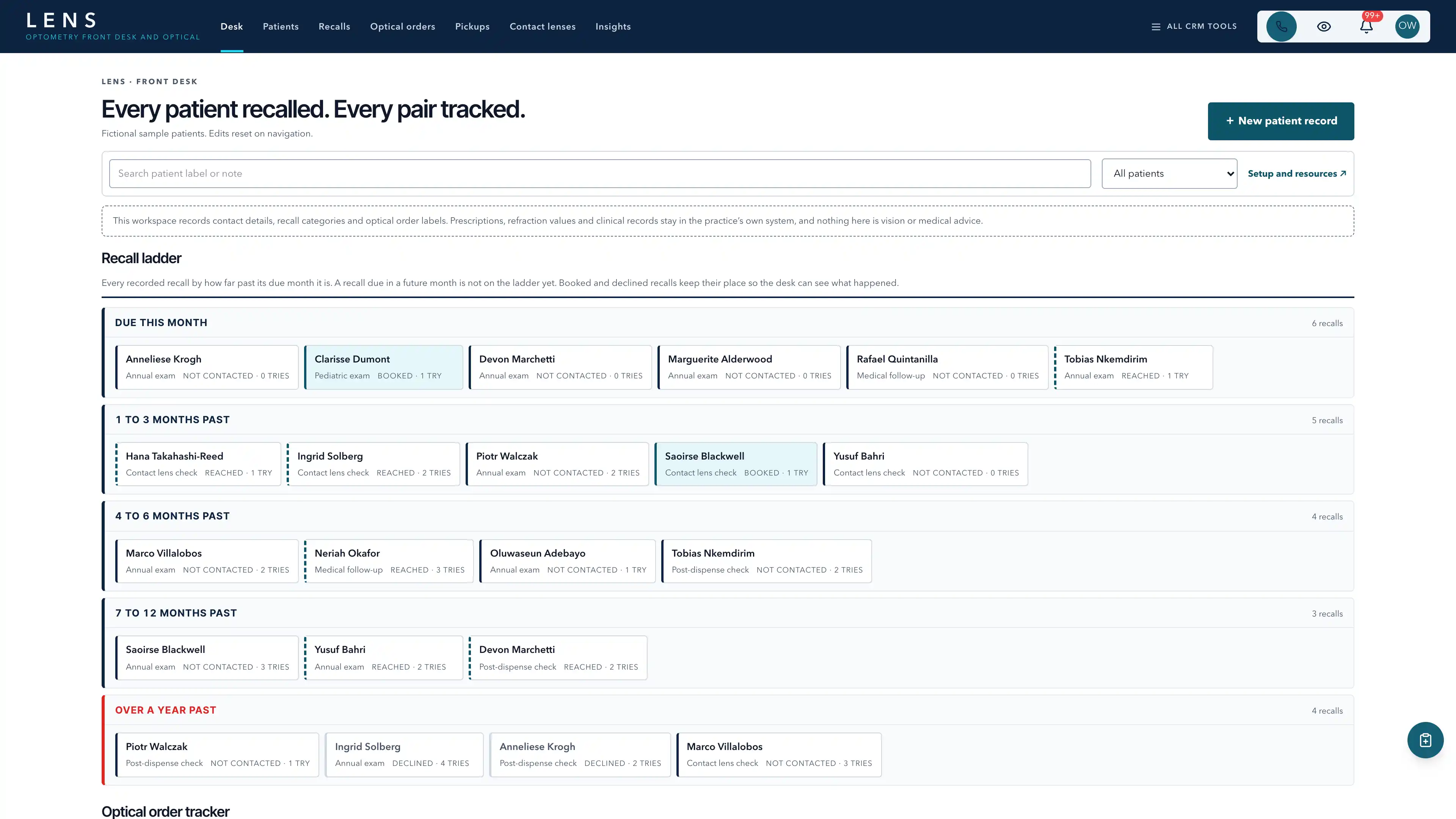
A two-rail front desk: a five-rung recall ladder of patient chips above an optical order tracker where every pair is a five-segment capsule from ordered to dispensed.
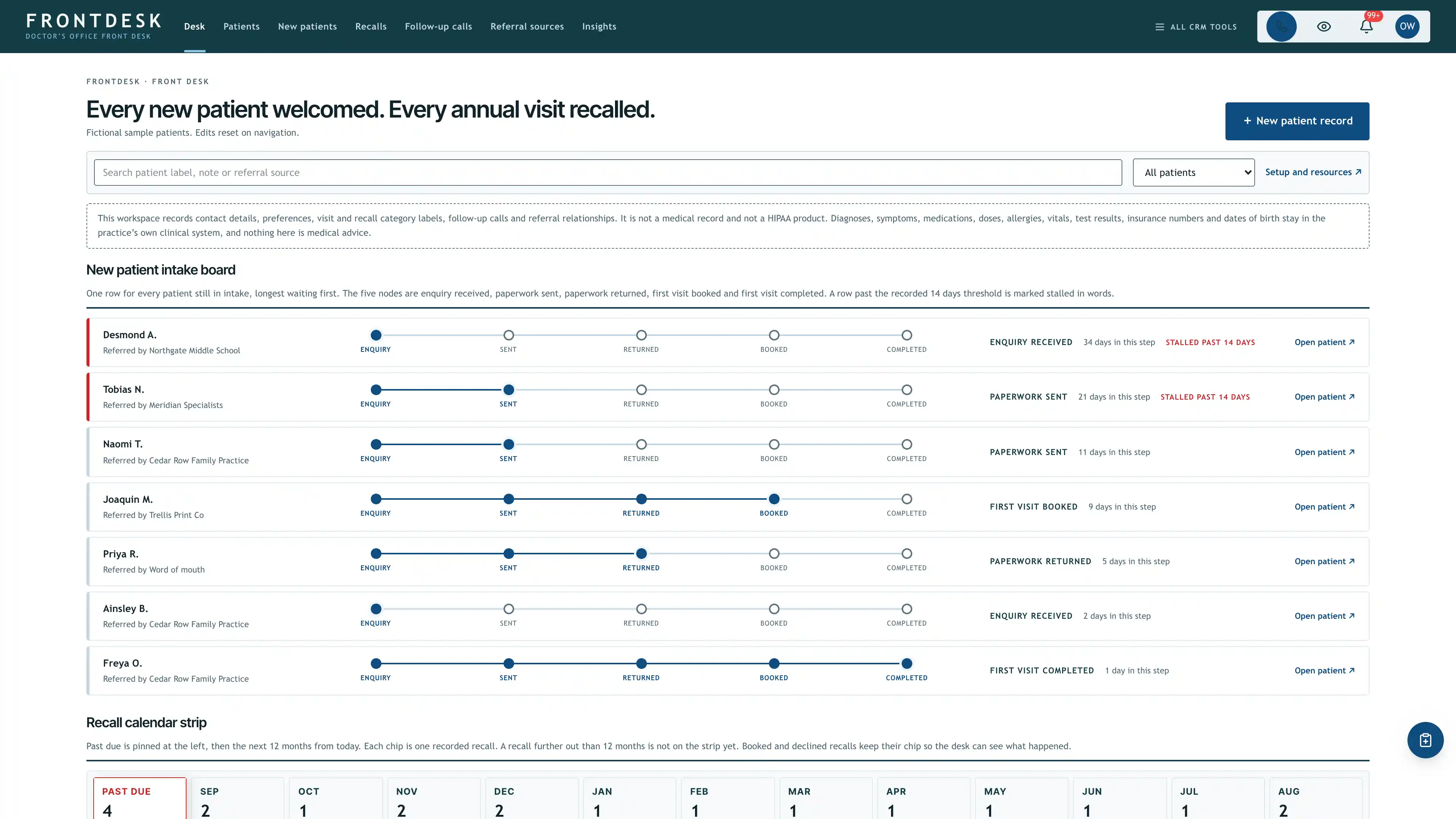
A new patient intake board where every enquiry walks a five-step track, over a twelve-month recall calendar strip with past due pinned at the left, plus the referral offices that send the patients.
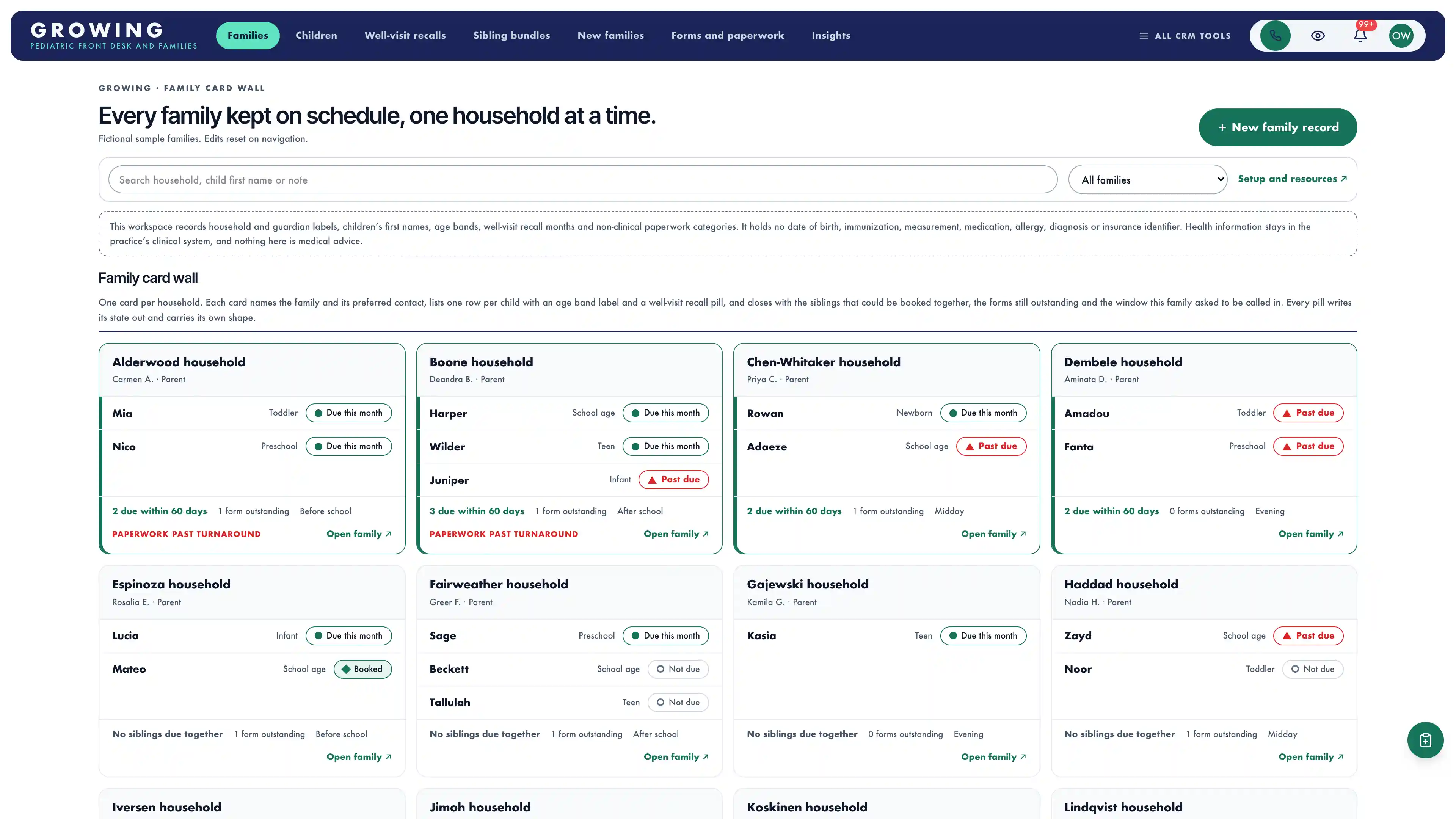
A family card wall where every household is one card, every child is a row with an age band label and a well-visit recall pill, and the footer says which siblings could be booked in one call.
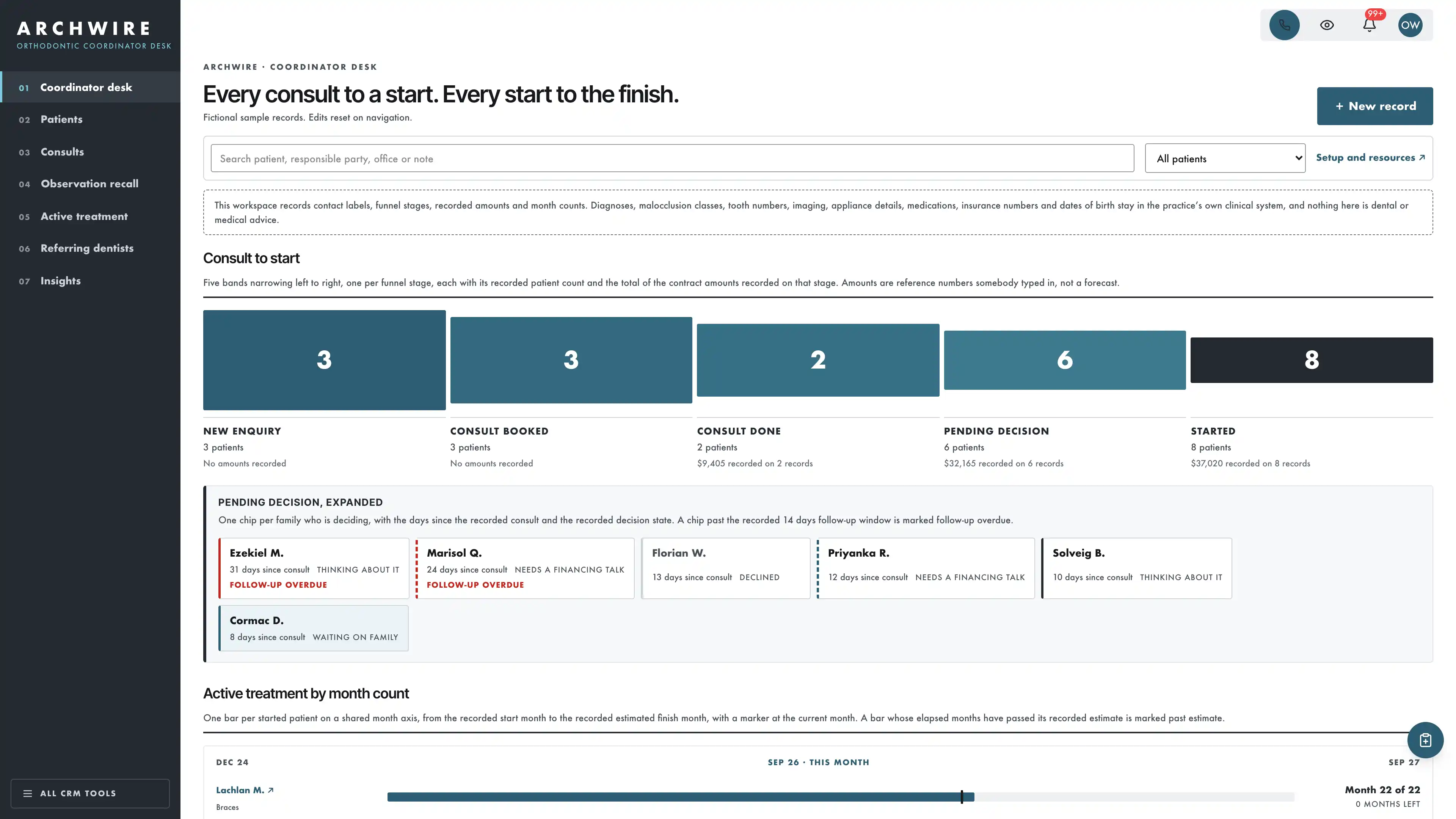
A consult-to-start funnel of five bands narrowing left to right, its pending band opened into patient chips, above a treatment timeline where every started patient is one bar labelled month N of M.
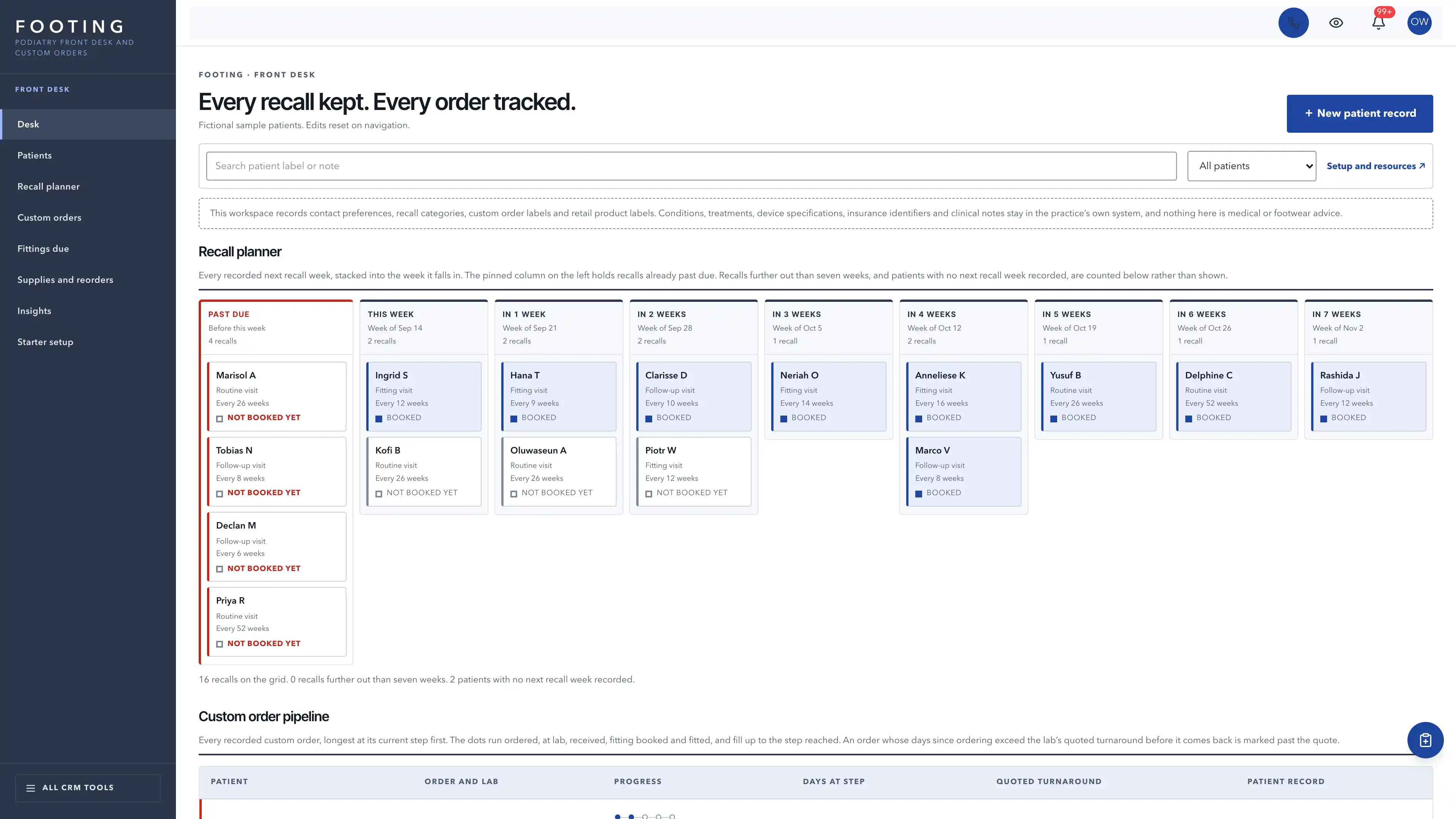
A nine-column week grid of recall chips, past due pinned left through seven weeks ahead, above a custom order pipeline where every order is one row of five step dots running from ordered to fitted.
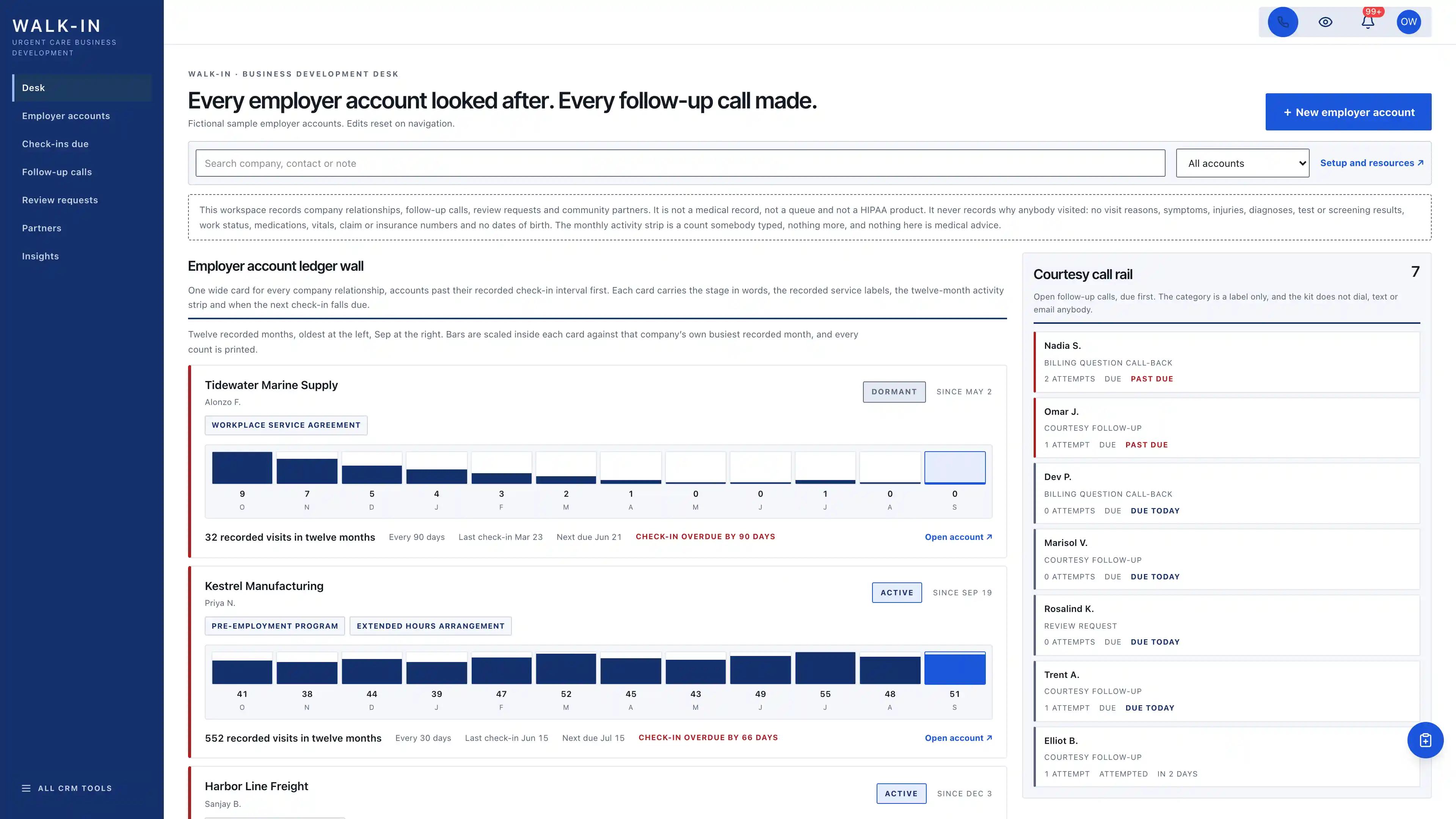
An employer account ledger wall where every company carries a twelve-cell strip of recorded visit counts, beside a courtesy call rail of the calls the desk owes today.
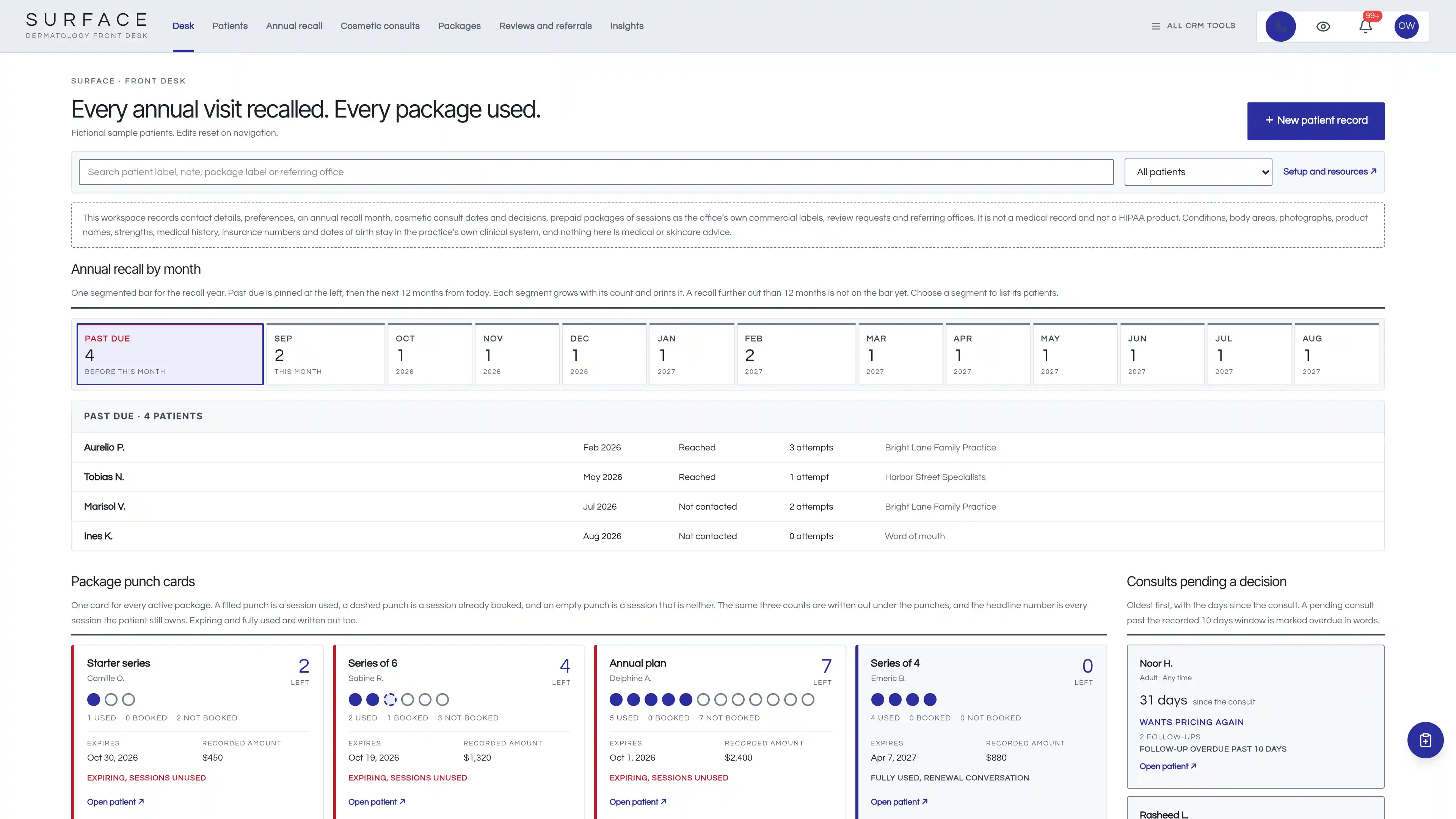
A thirteen-segment annual recall bar that opens into its patients, over a wall of package punch cards where a filled punch is a session used, a dashed punch is one already booked and an empty punch is one still to book.
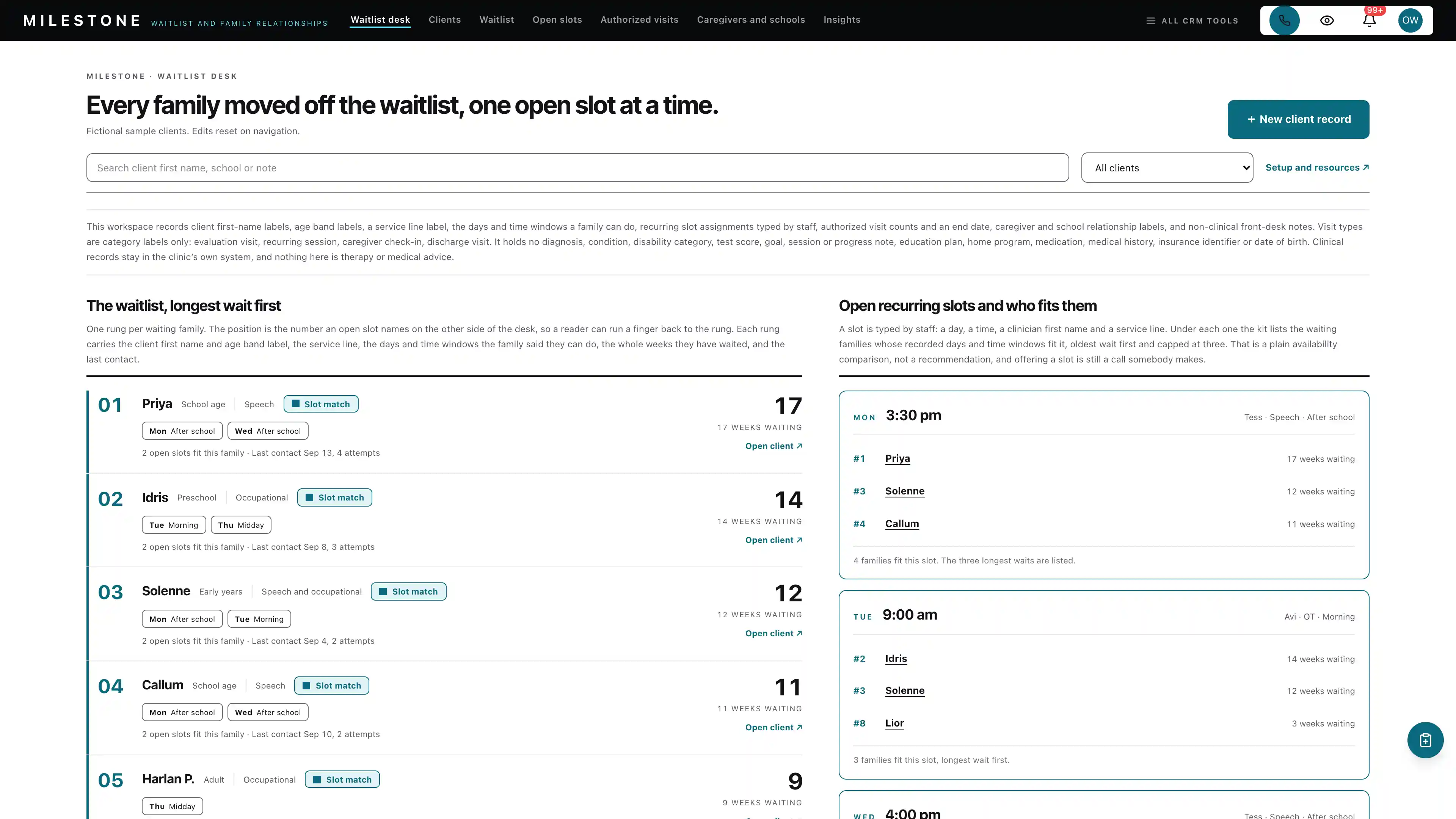
A numbered waitlist ladder read against the open recurring slots, where every slot names the three longest waits whose recorded days and time windows already fit it.
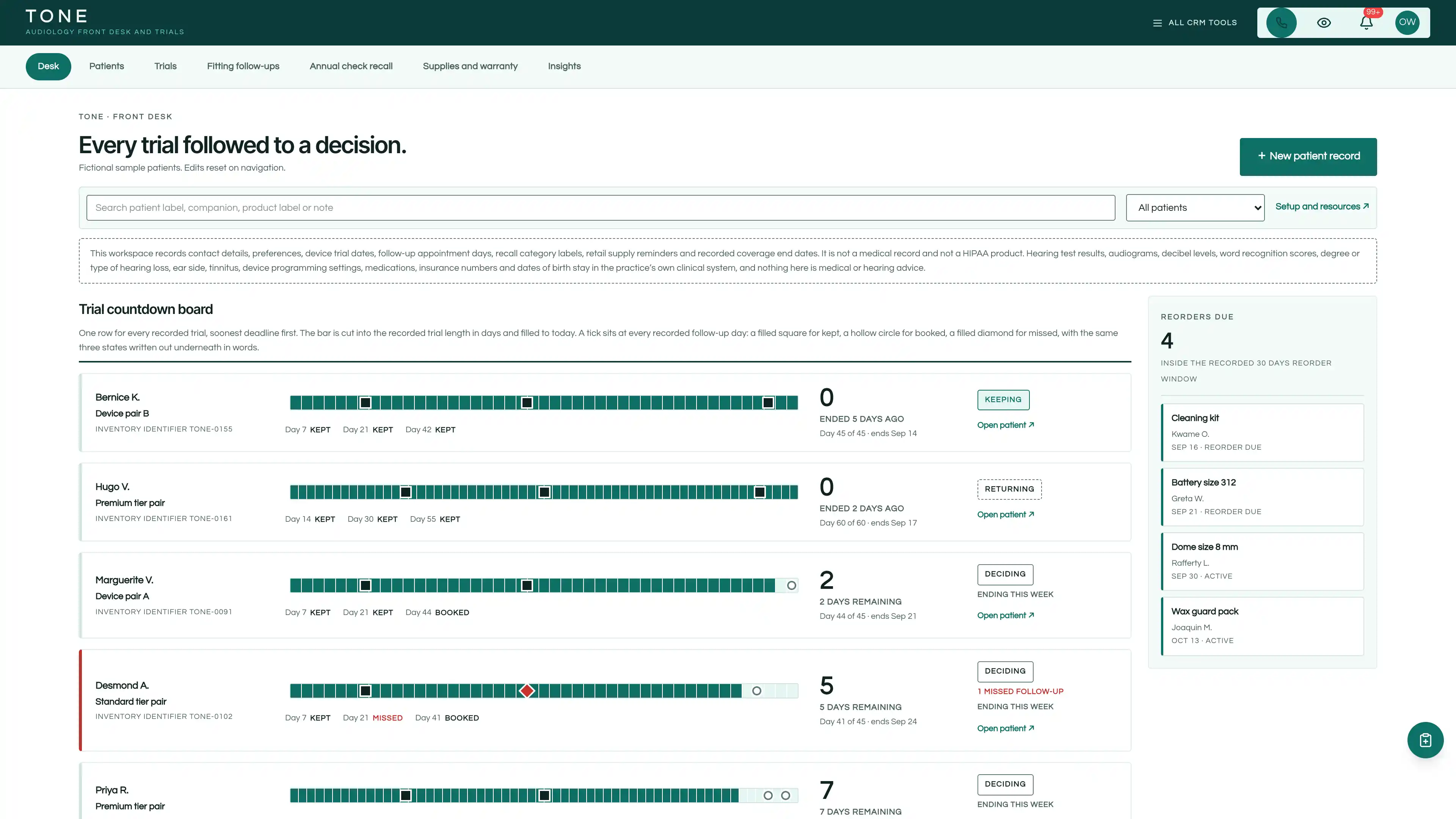
A trial countdown board where each device trial is a bar cut into its recorded length in days, ticked at every follow-up appointment and counted down to the decision day.
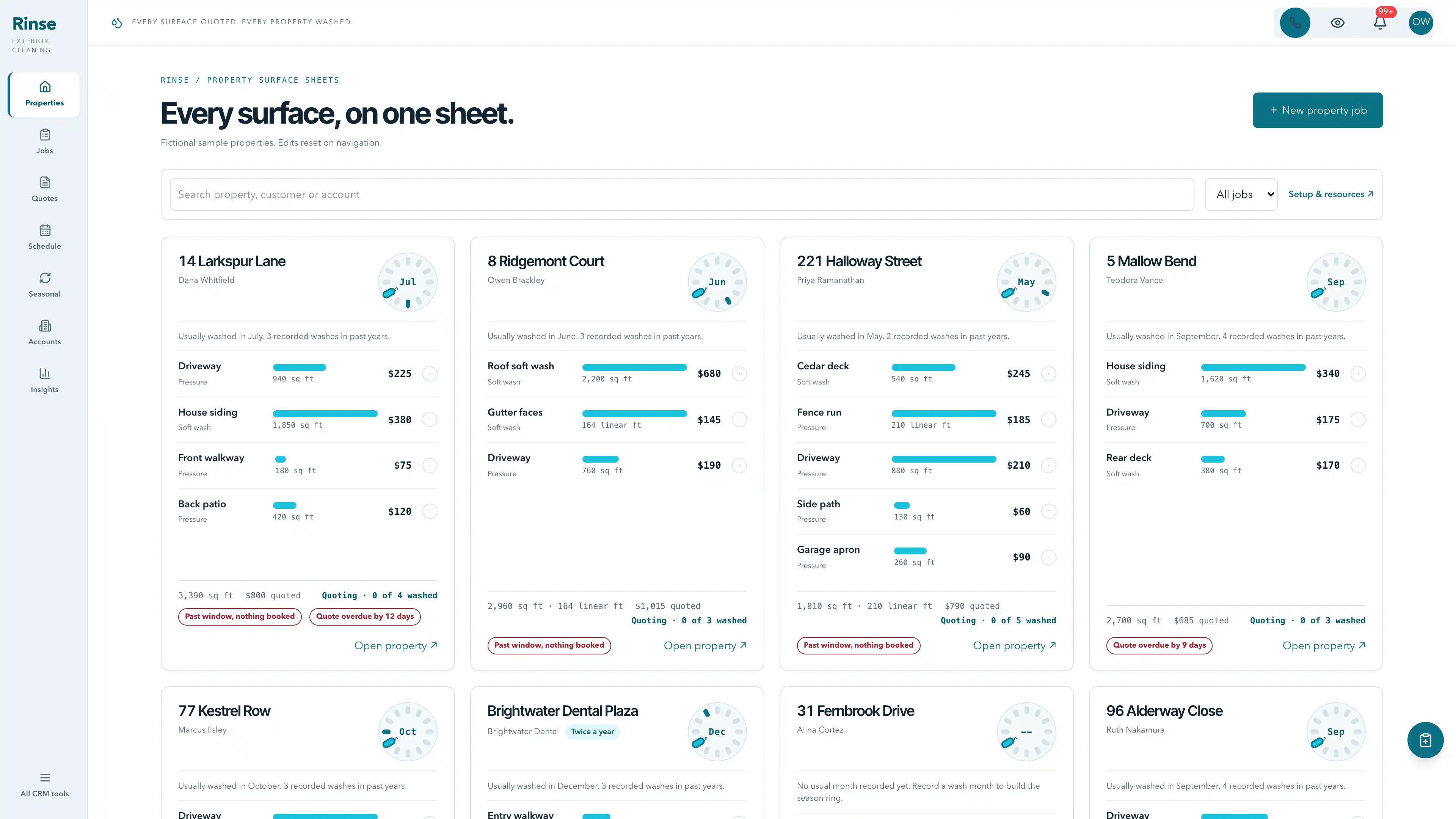
A property surface sheet wall where every driveway, siding run, deck and roof soft wash carries its own measurement, method and price, under a twelve-month repeat-season ring.
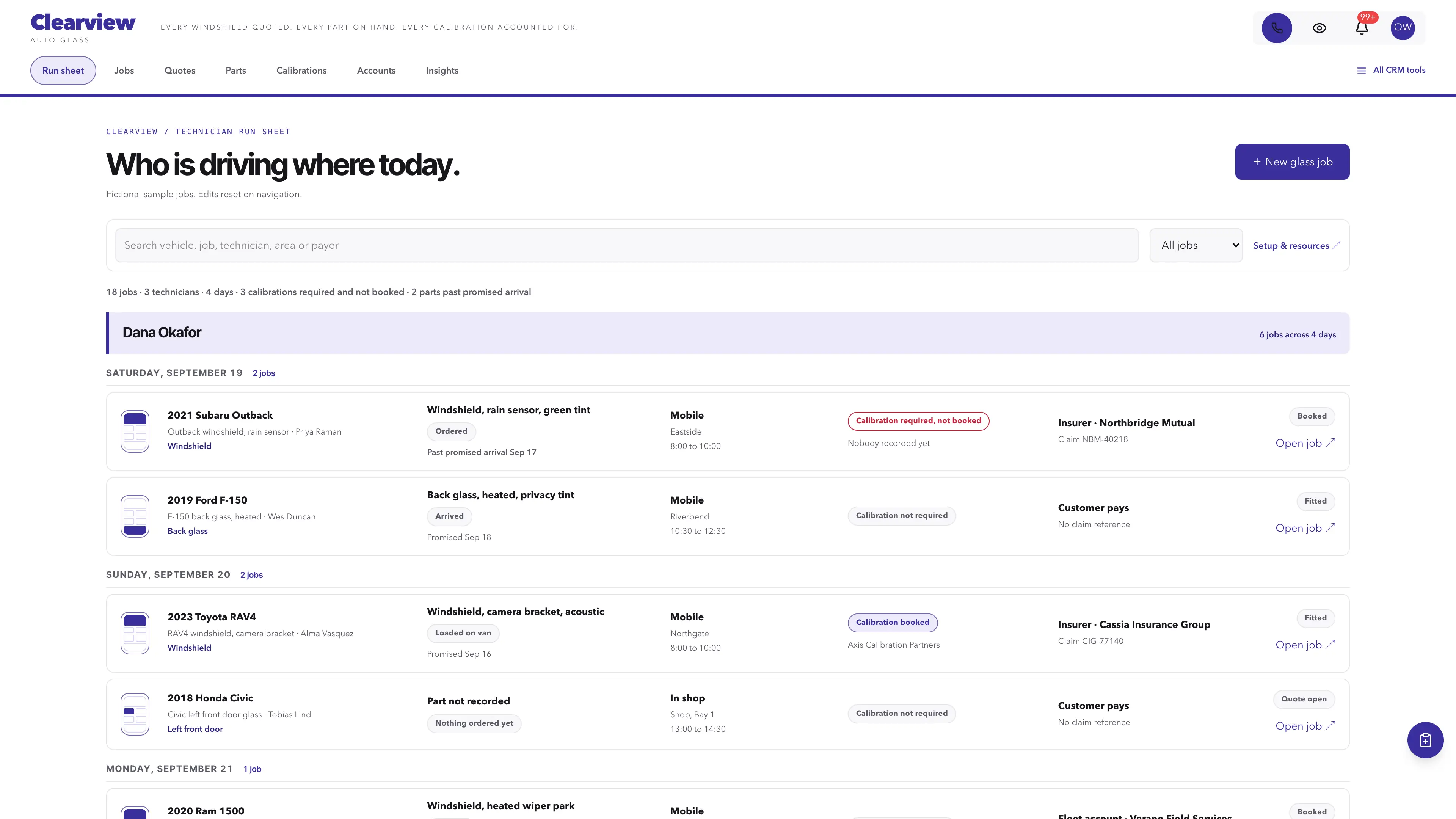
A technician run sheet grouped by technician and day, where every job carries a six-pane vehicle glass diagram, the glass part and its state, and a calibration chip that stays visible until it is recorded done.
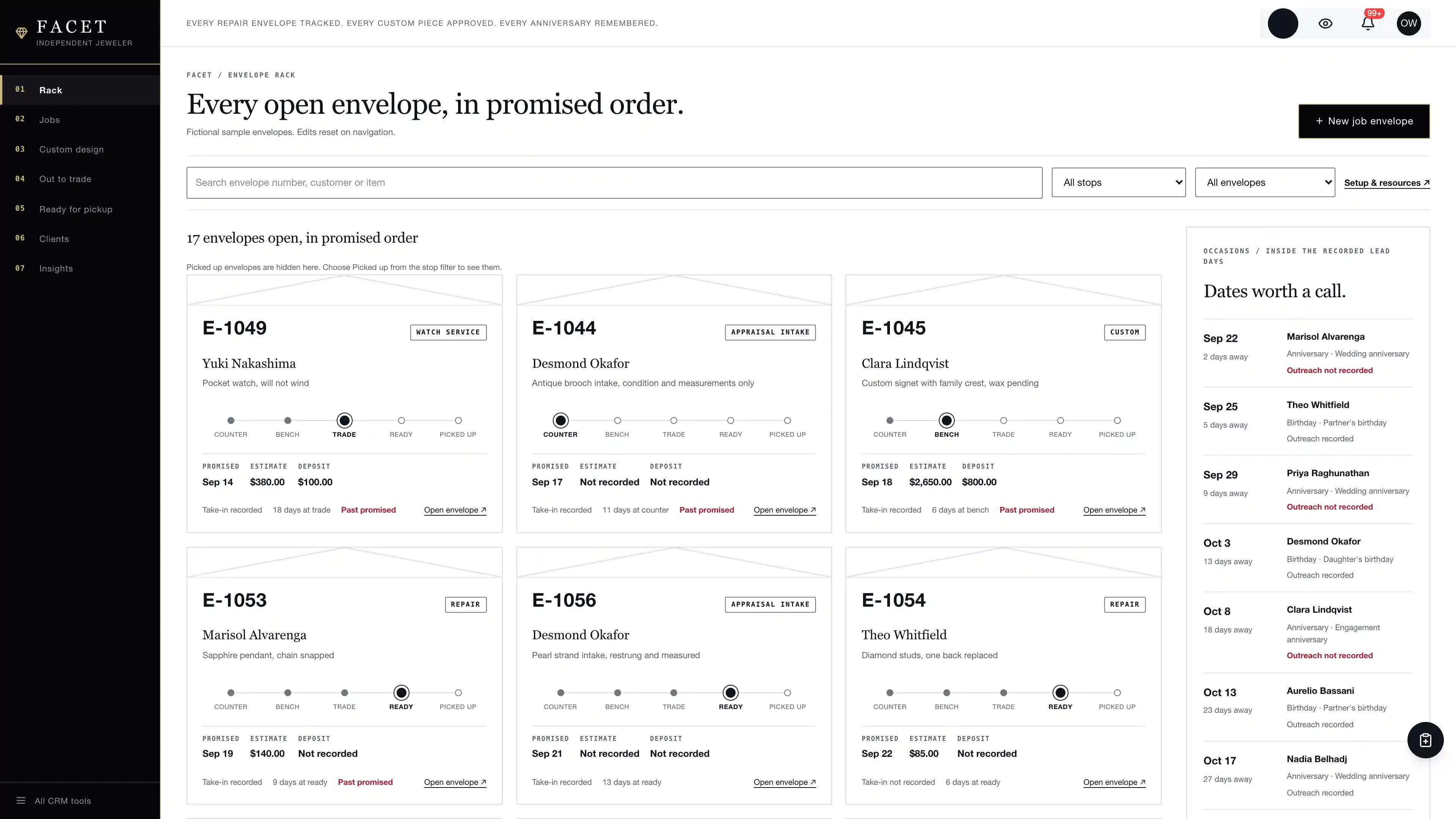
An envelope rack where every open repair, resize, custom commission, appraisal intake and watch service is a numbered envelope card sorted by promised date, past-promised first, beside a column of the customers’ recorded anniversaries and birthdays.
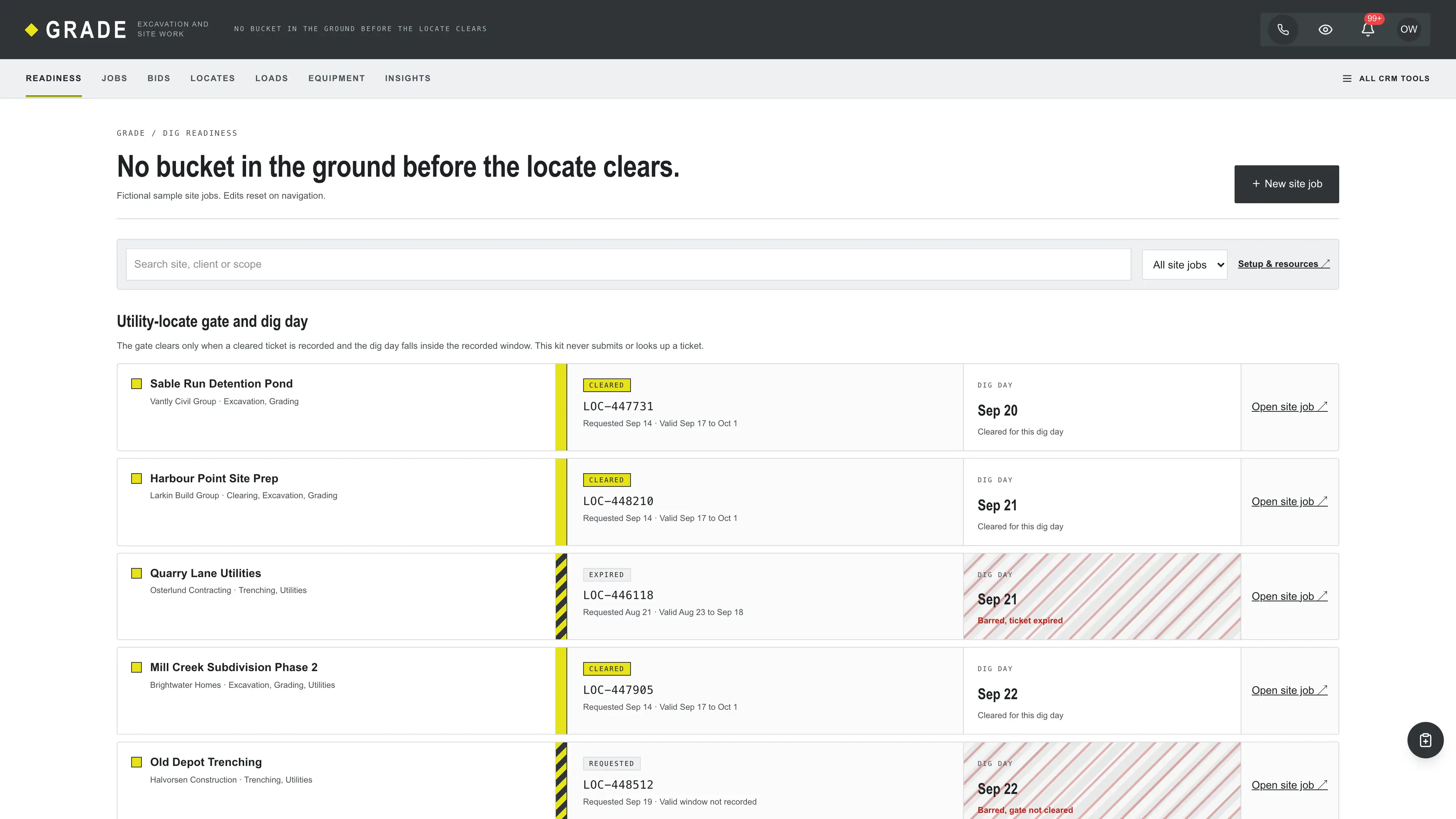
A dig-readiness board where every upcoming job sits behind a utility-locate gate, its scheduled dig day is barred whenever the gate does not cover it, and a load and haul ledger counts every load by material and unit.
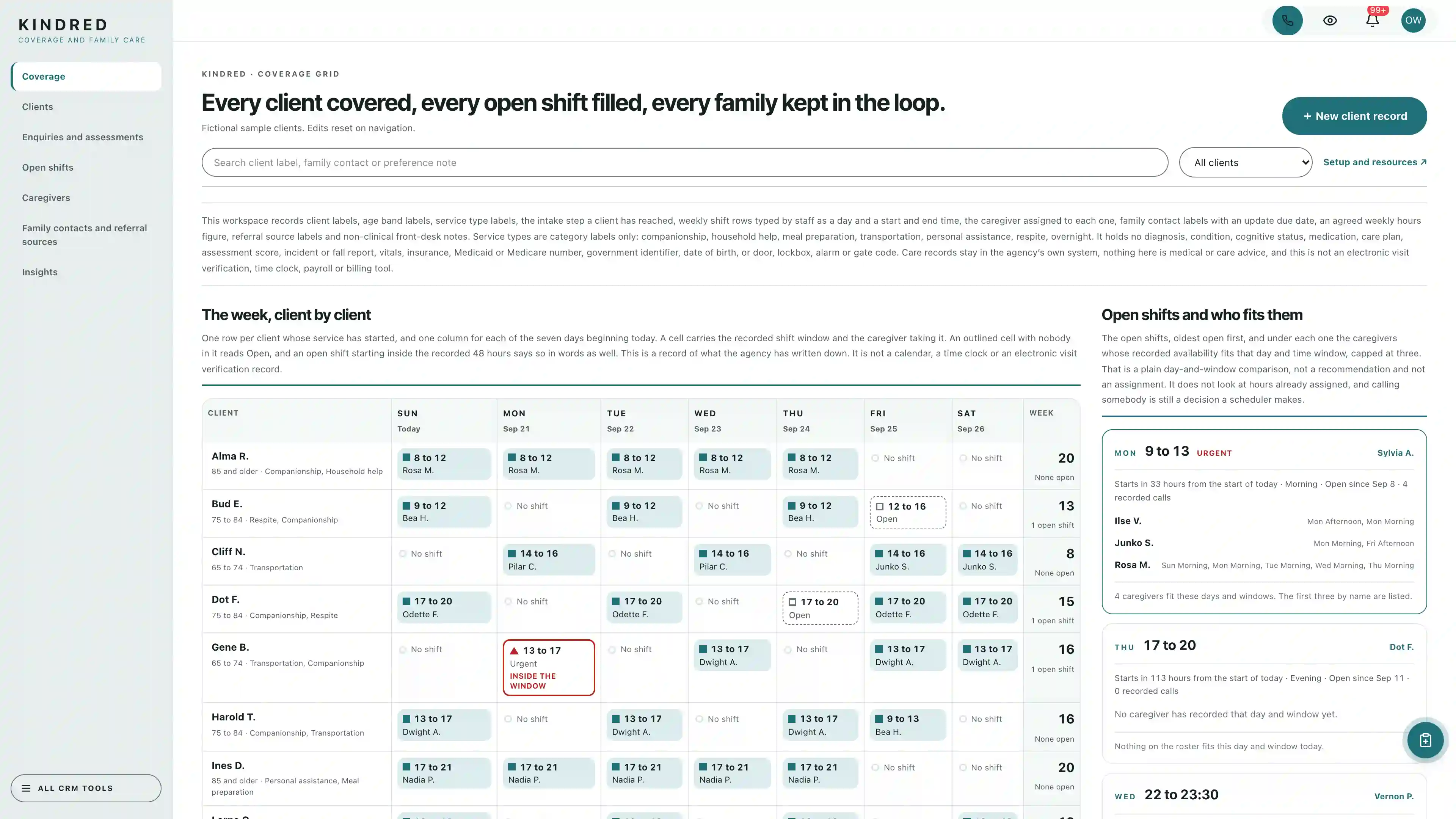
A client-to-day coverage grid where every unassigned shift reads Open, a shift starting inside the window you record says Urgent in words, and the caregivers whose recorded availability fits it are listed beside it.
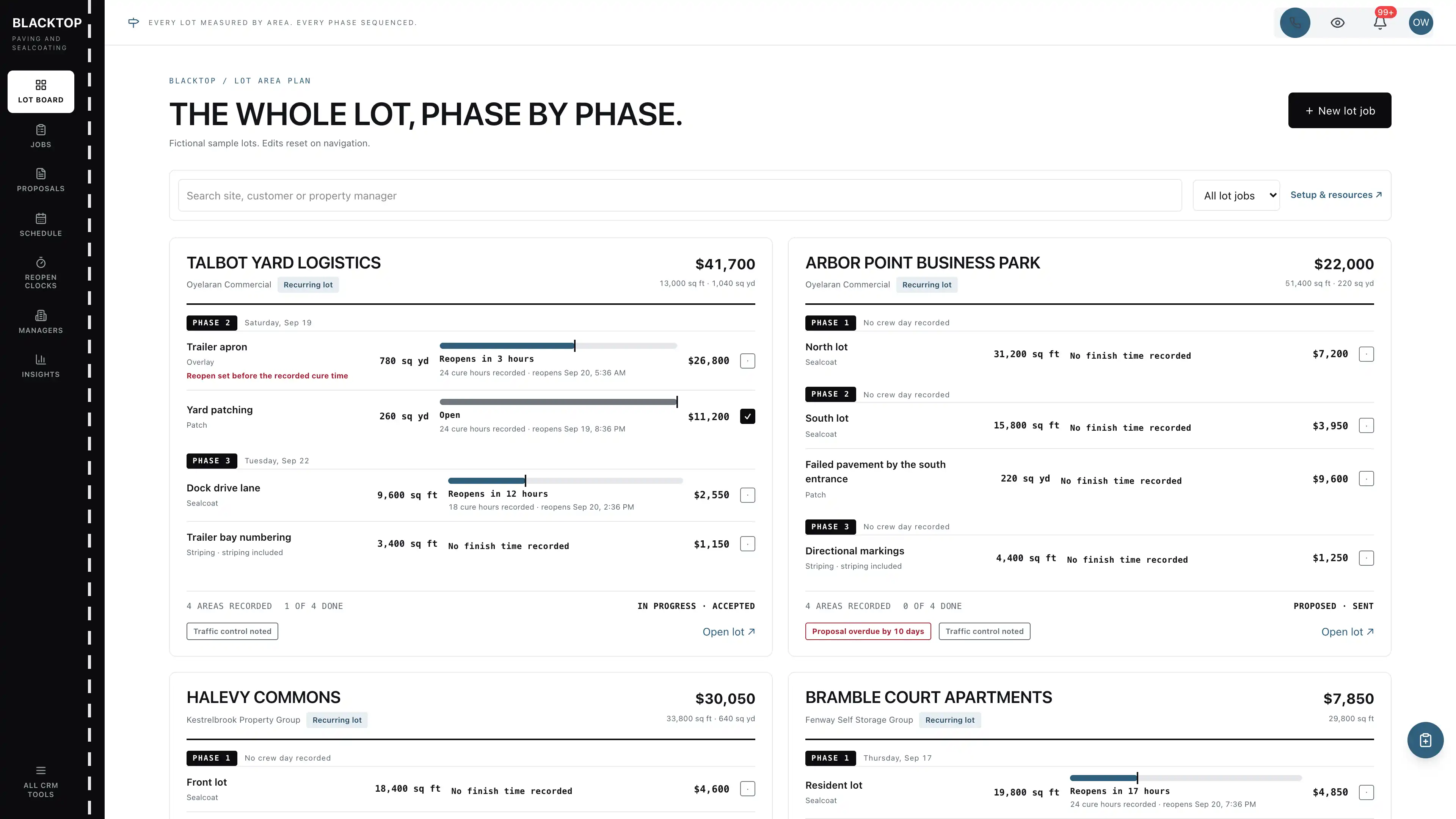
A lot area plan where every area carries its own measurement, service and phase, and every finished area runs a cure and reopen clock that reads in words.
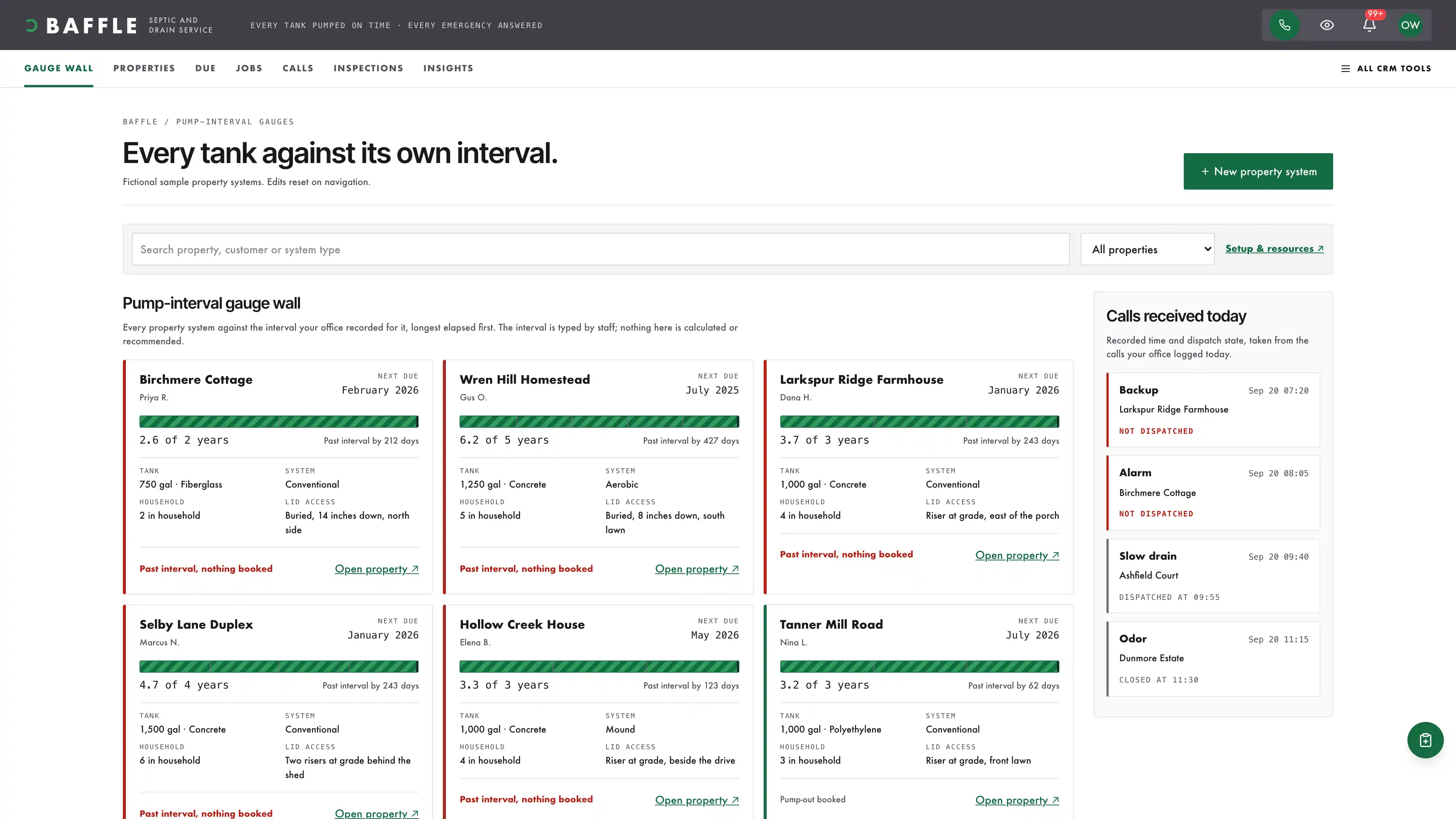
A pump-interval gauge wall where every tank sits against the interval your office recorded for it, reads out in words, and turns red only when it is past that interval with nothing booked.
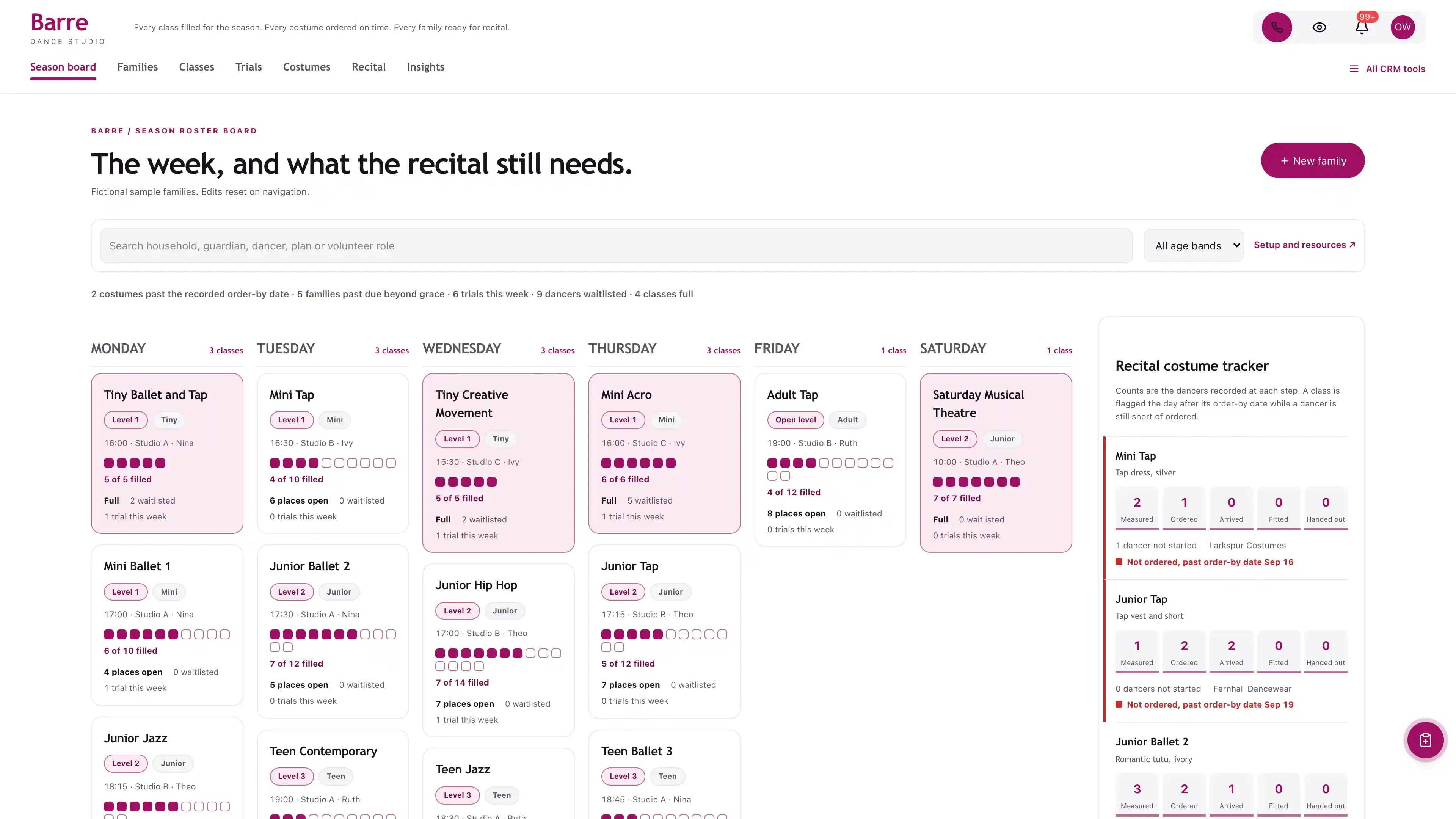
A season roster board where every class card carries an enrolment meter against the capacity you recorded, beside a recital costume tracker that leads with the classes past their order-by date.
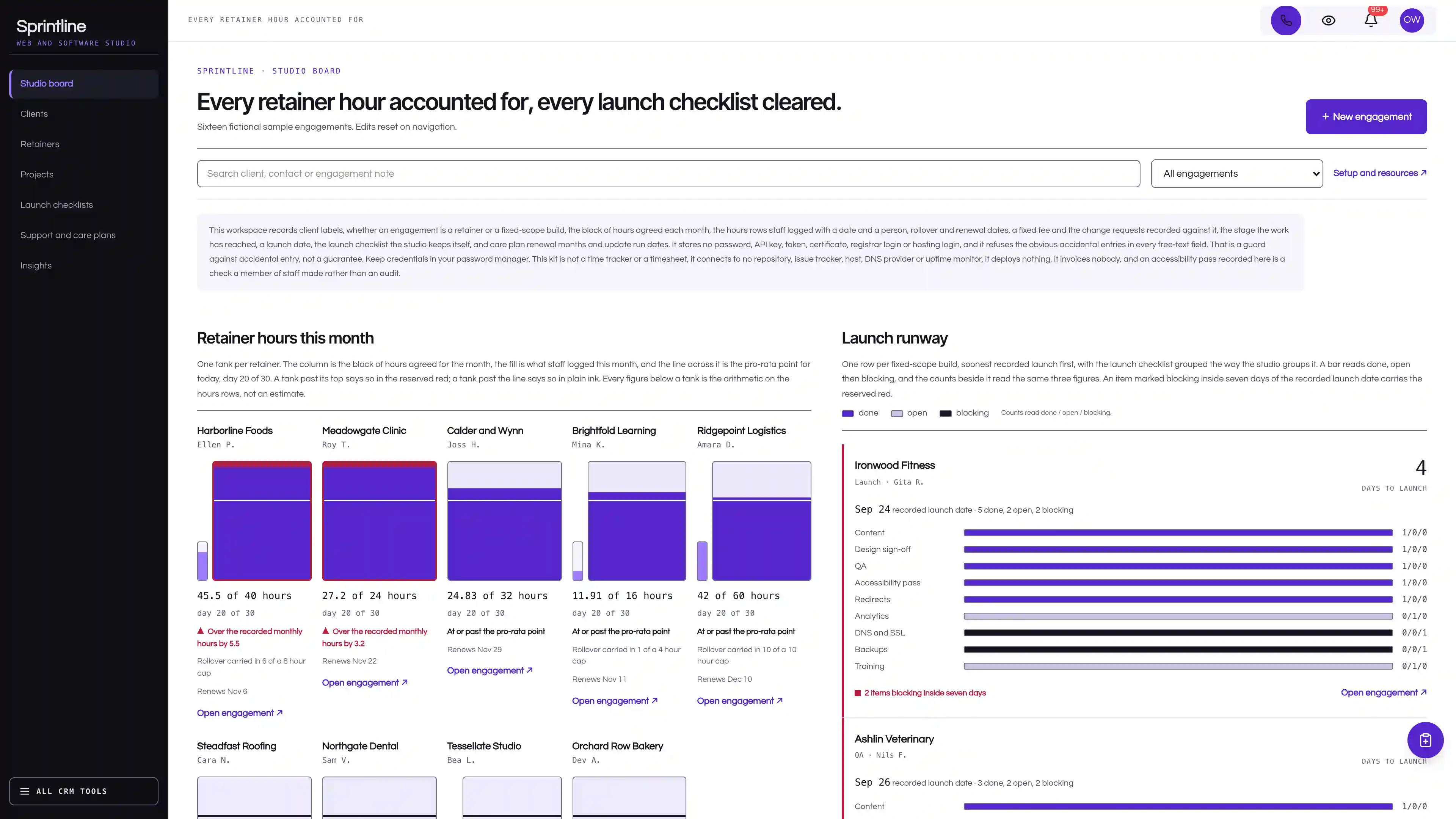
A retainer hours tank wall beside a launch runway: every retainer filled to the hours your team logged this month against the block the client bought, and every build checked against the list it has to clear before it goes live.
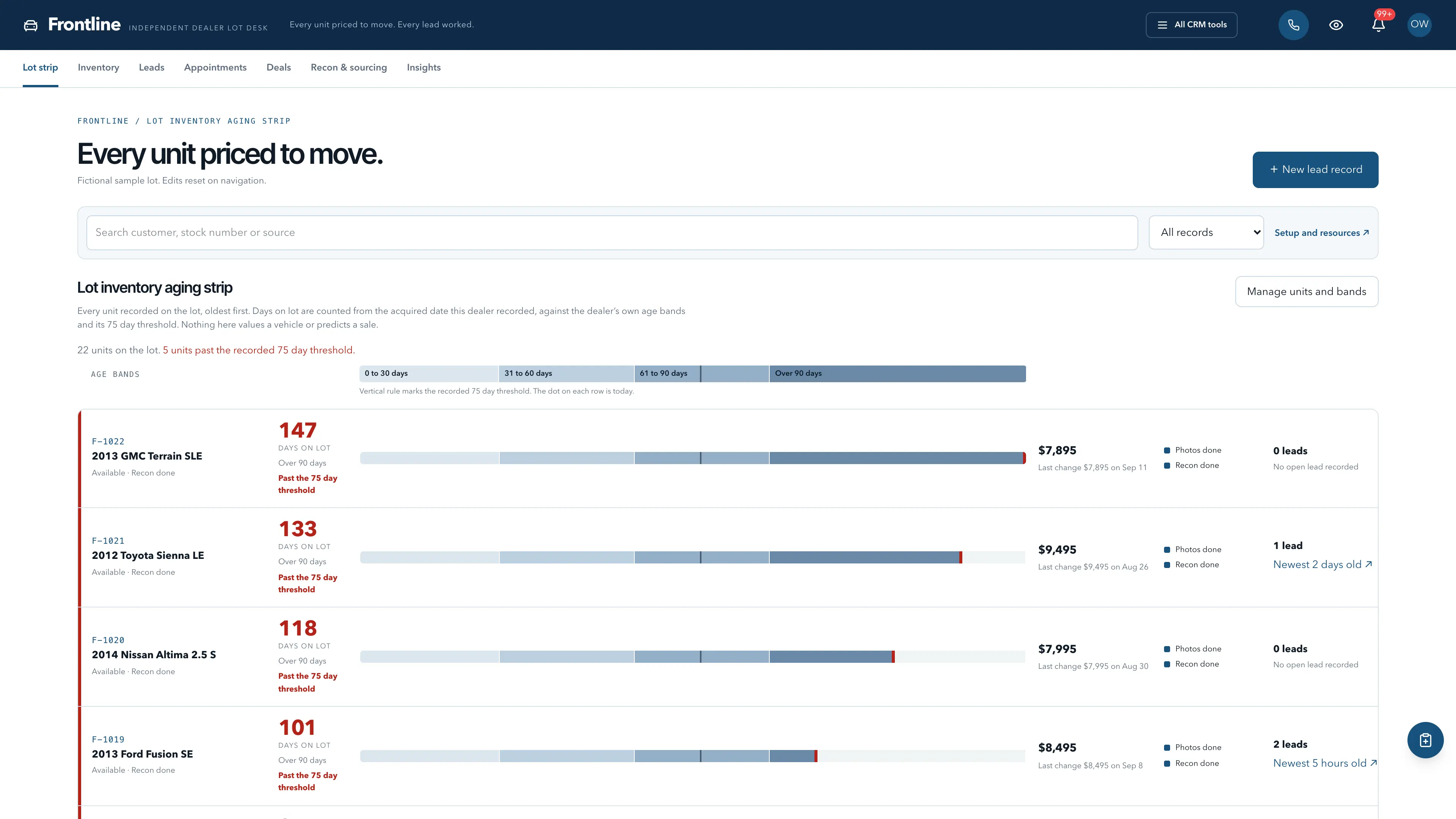
A lot inventory aging strip that puts every unit on one row, oldest first, with days on lot against your own age bands and the leads sitting on that unit.
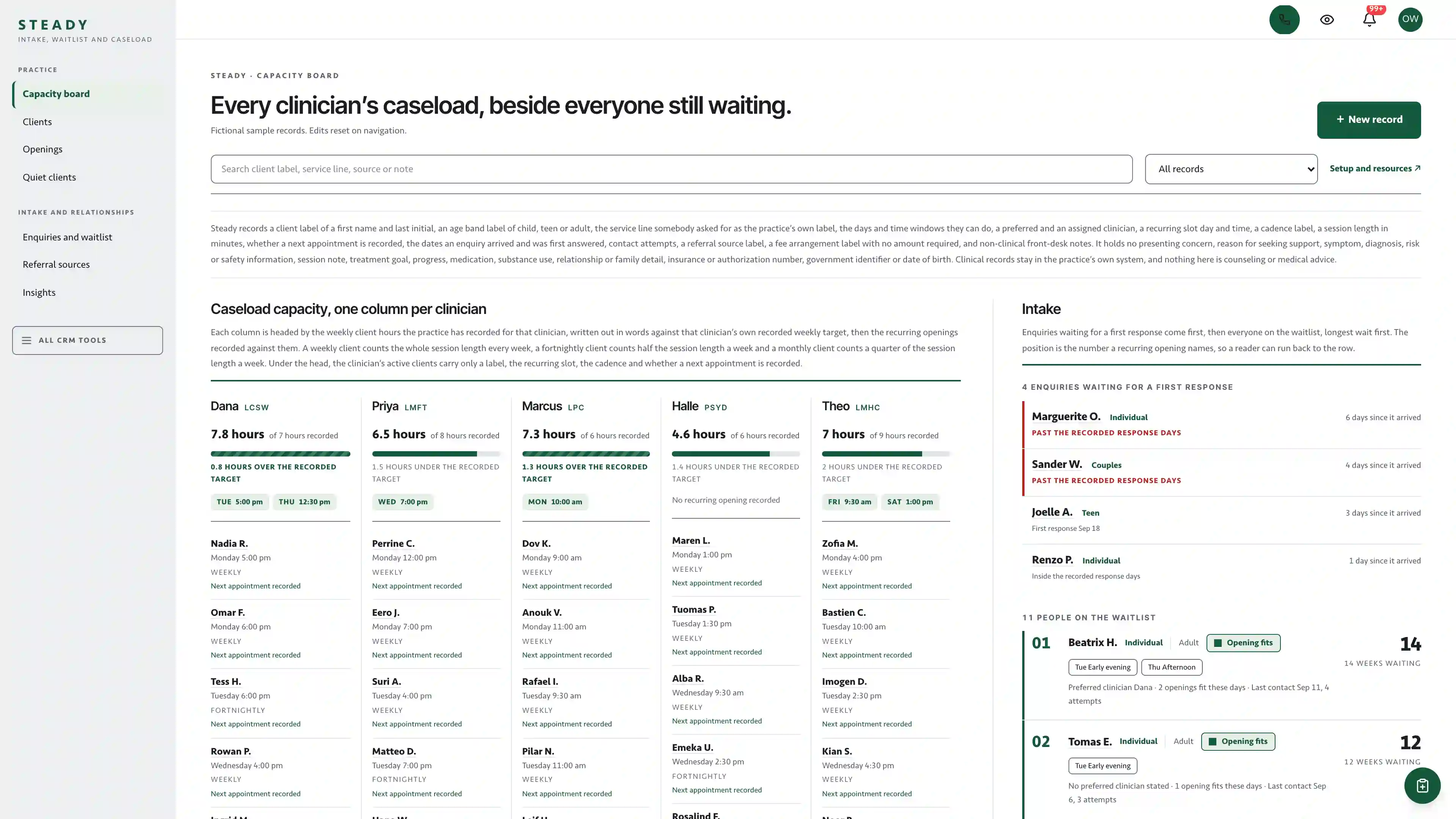
A caseload capacity board with one column per clinician, their recorded weekly hours against their own target, and the intake list of unanswered enquiries and everybody still waiting beside it.
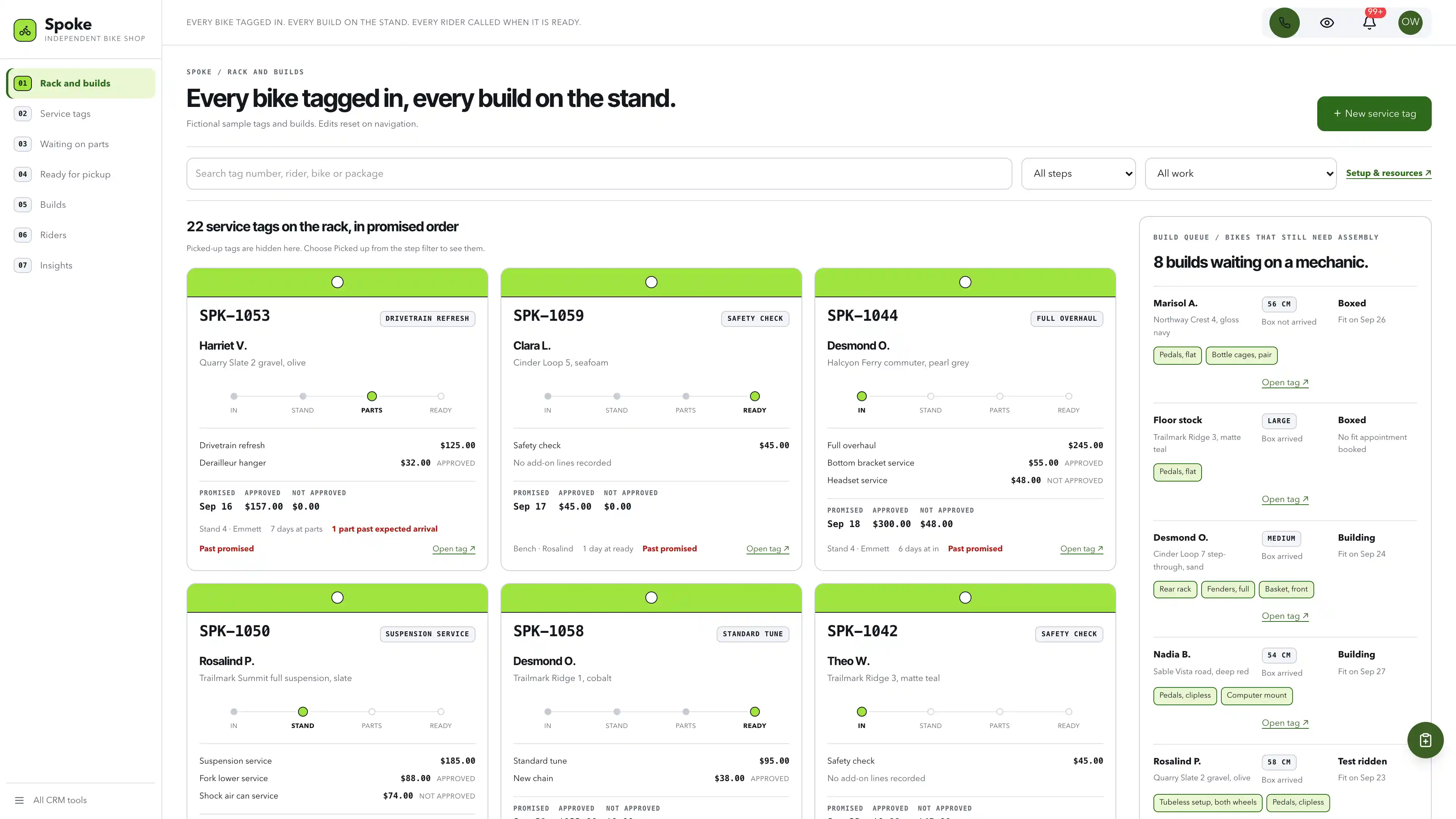
A service tag rack where every open bike hangs in promised order with its package, its add-on lines and a four-step line, beside the build queue of new bikes still waiting on a mechanic.
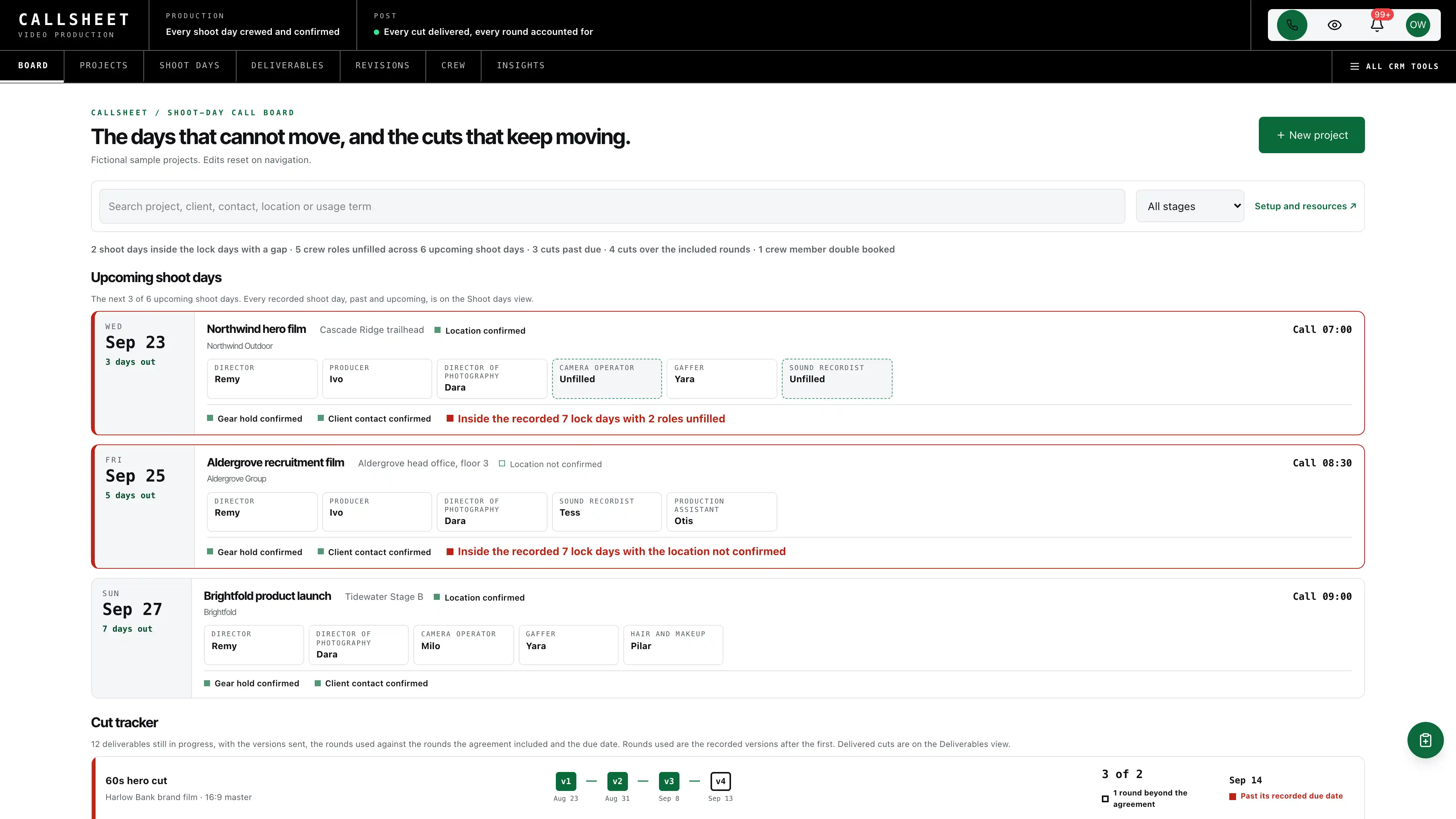
A shoot-day call board over a deliverable cut tracker: the crew each upcoming day still needs, and the versions and revision rounds underneath.
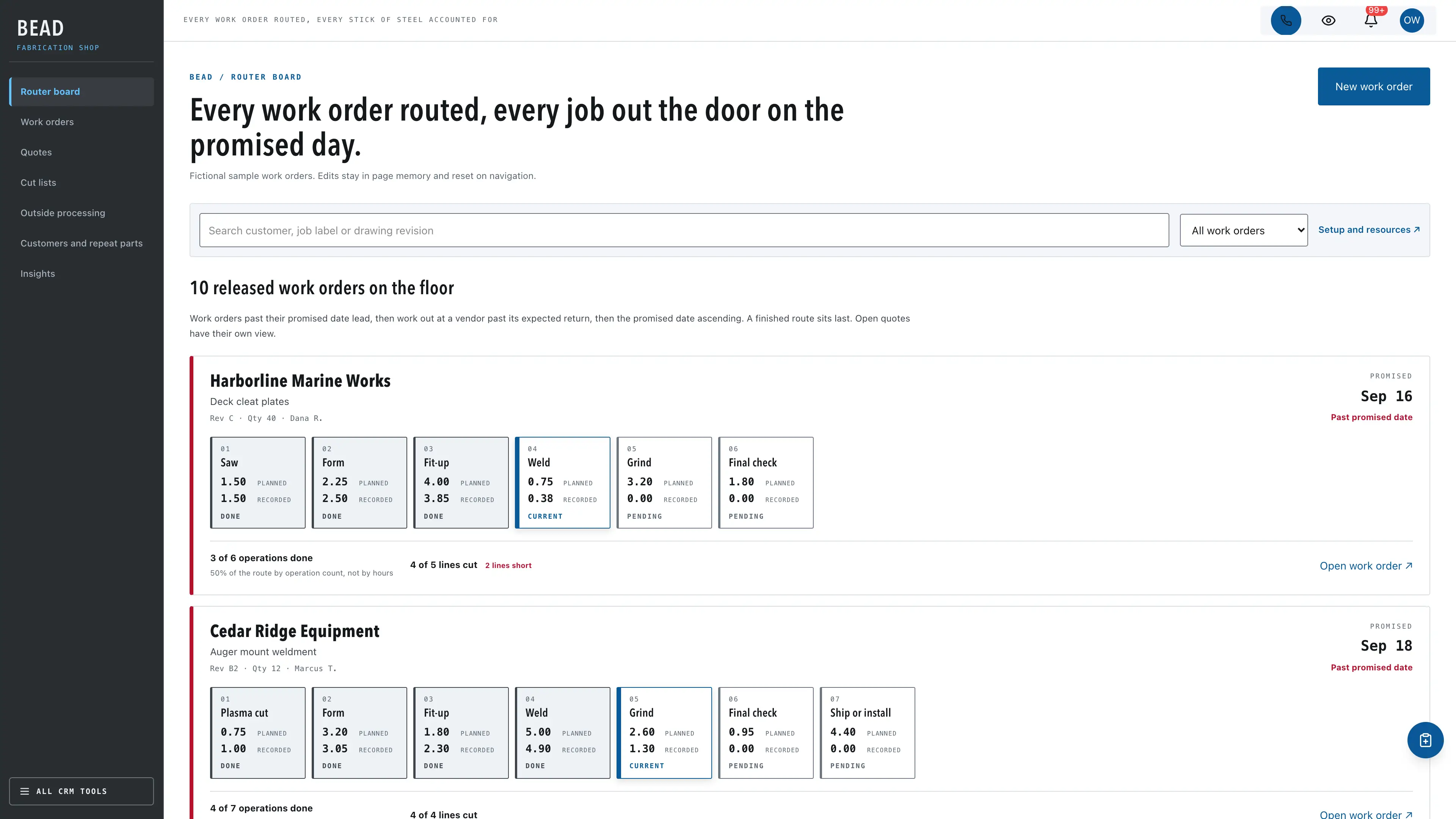
A router board where every work order is drawn as its own ordered chain of operations, beside the cut list it eats and the work sitting at an outside vendor.
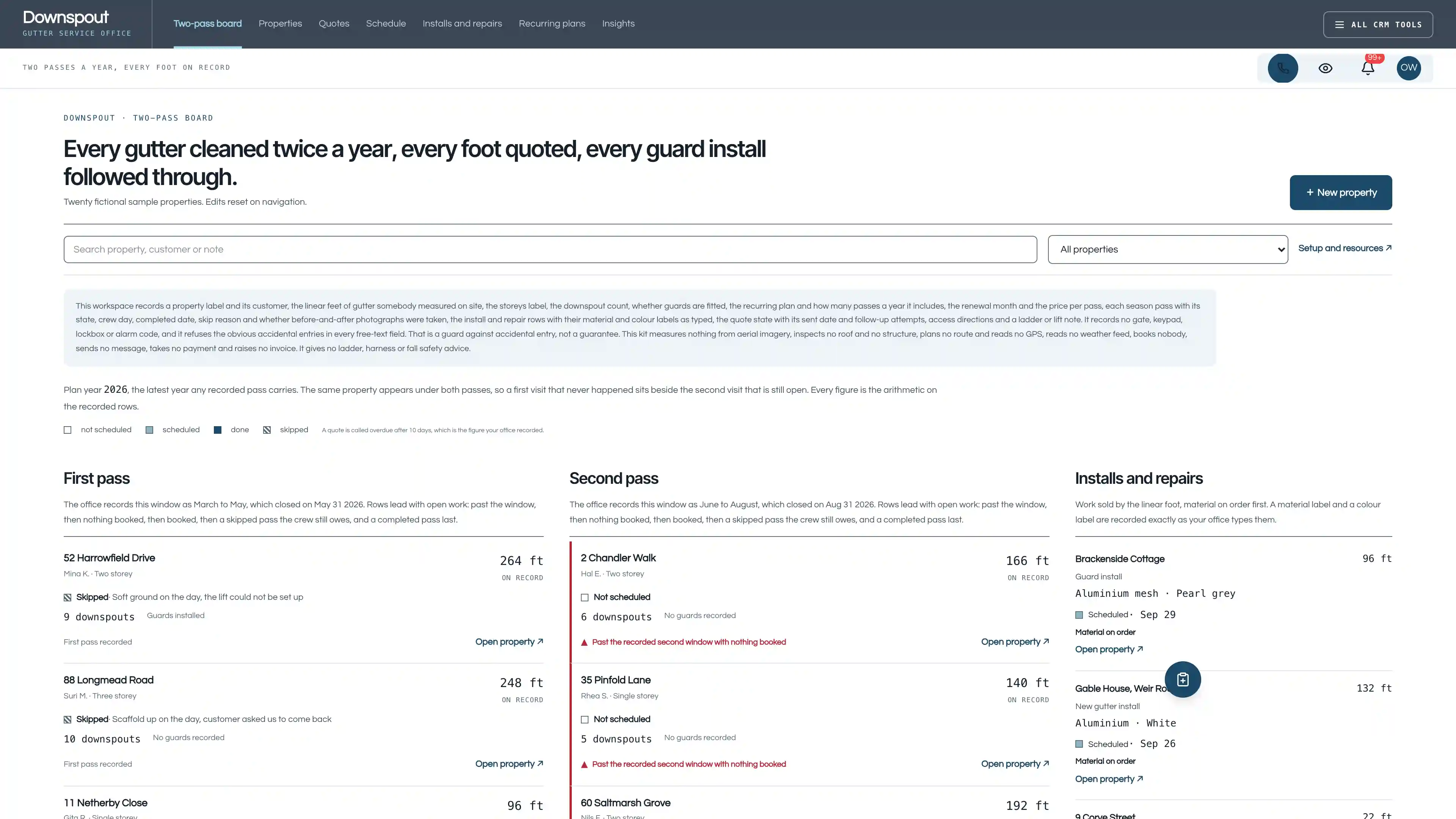
A two-pass service board where the same property sits under both passes of the plan year, beside the install and repair work sold by the linear foot.
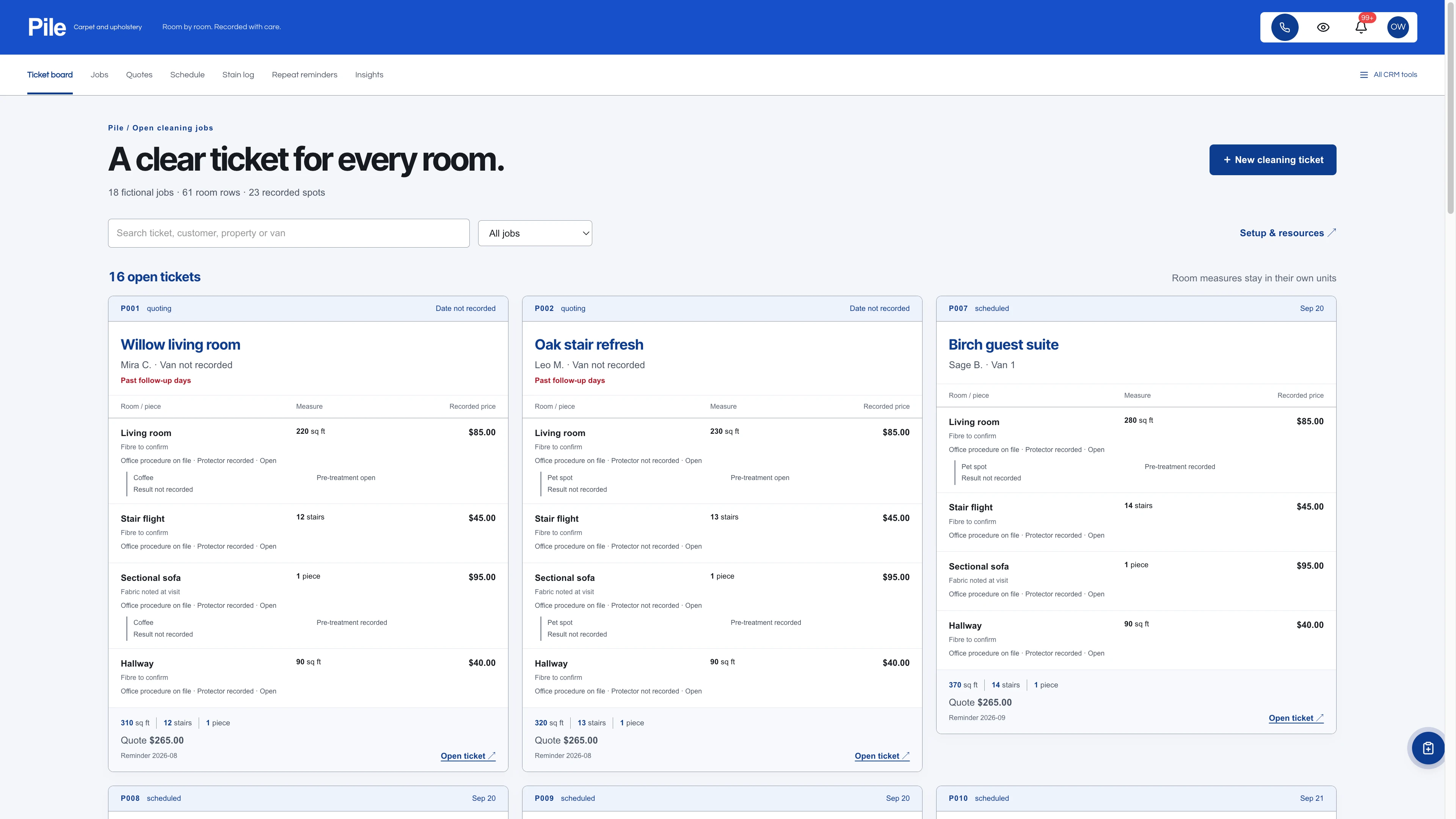
Room-by-room cleaning tickets with separate measures, recorded prices, linked stain logs, van days and repeat reminders.
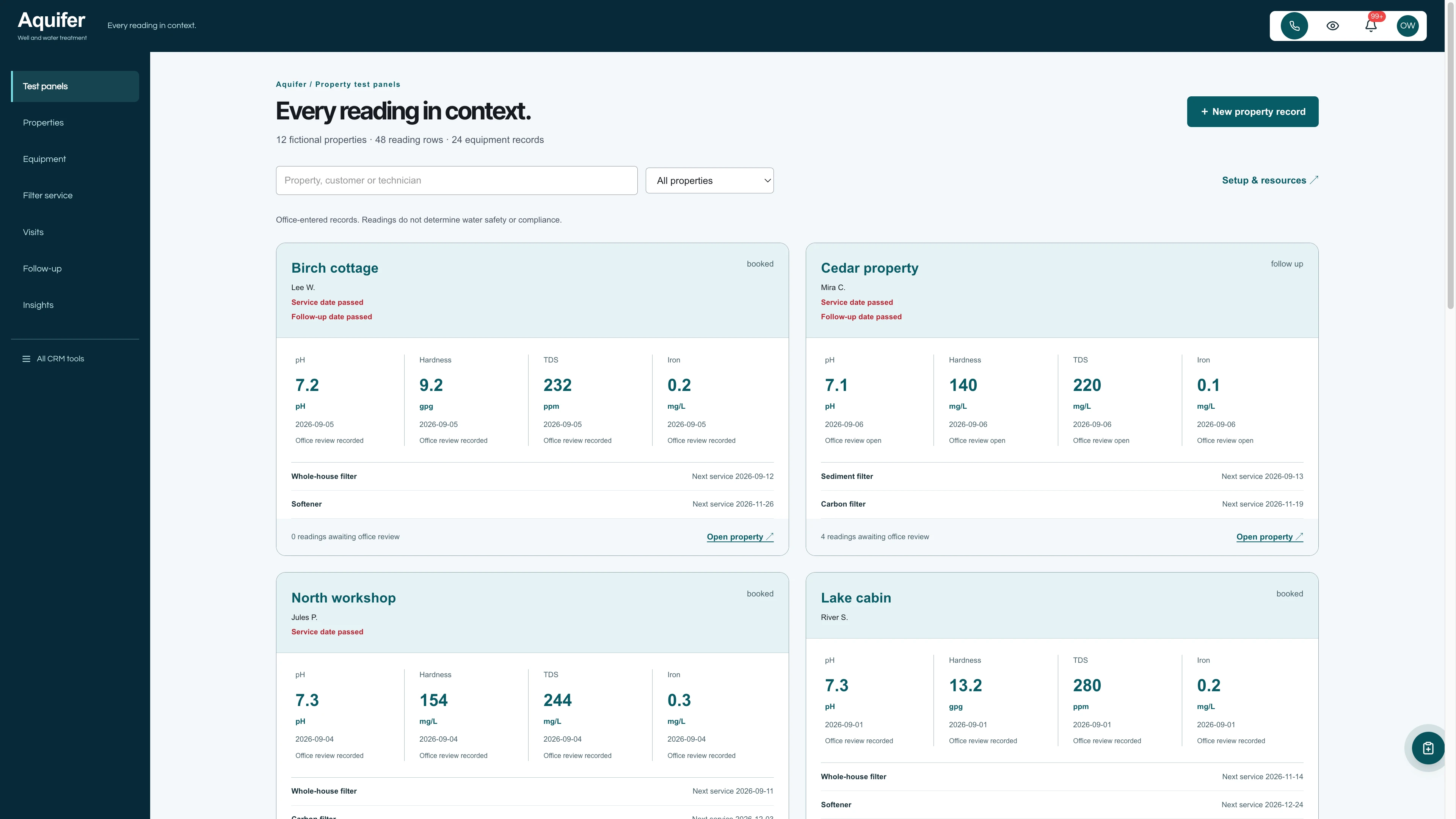
Property test panels with recorded readings, original units, equipment service dates, visits and office follow-up.
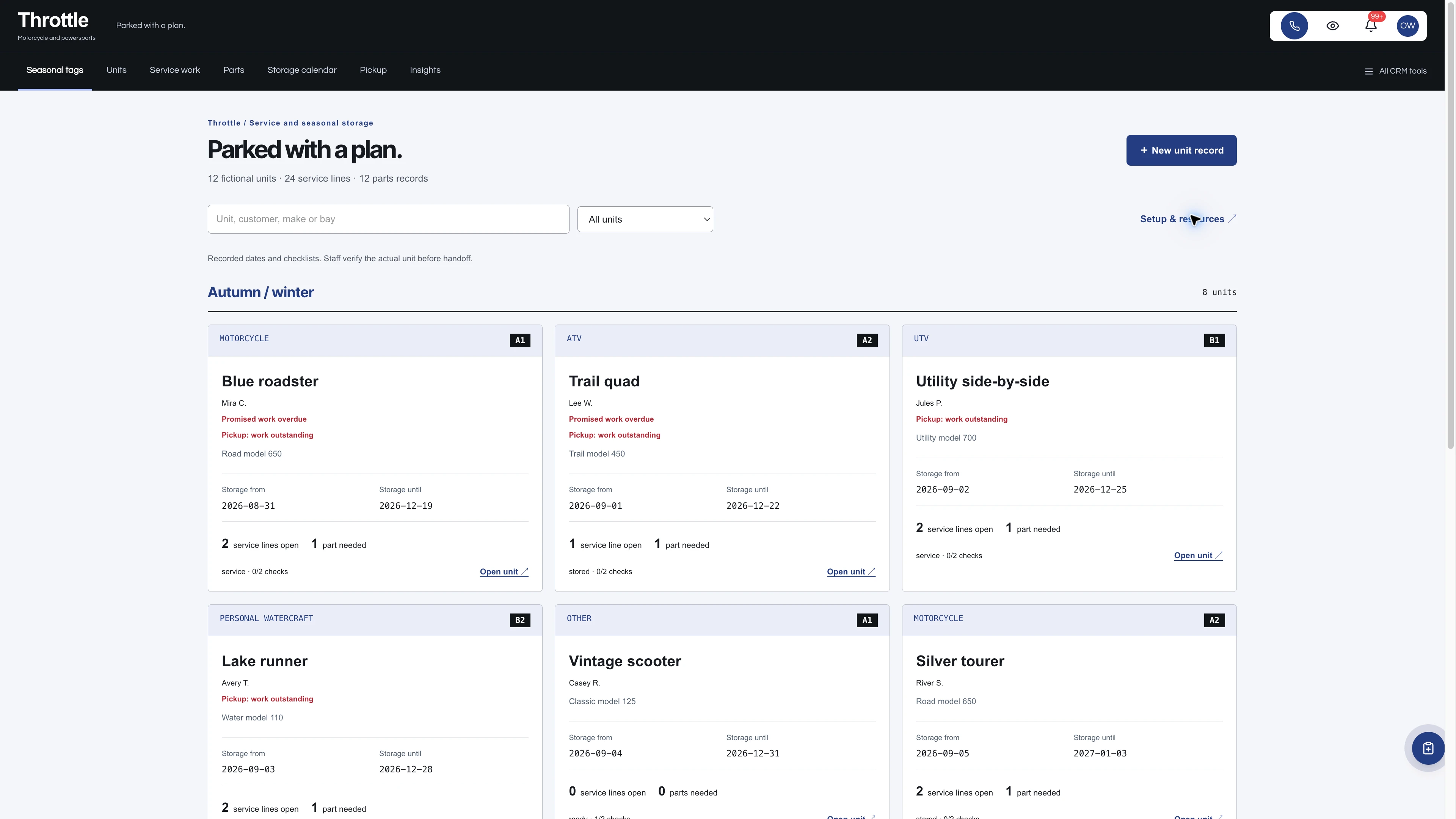
Seasonal unit tags with service lines, recorded parts quantities, storage dates and pickup checklists.
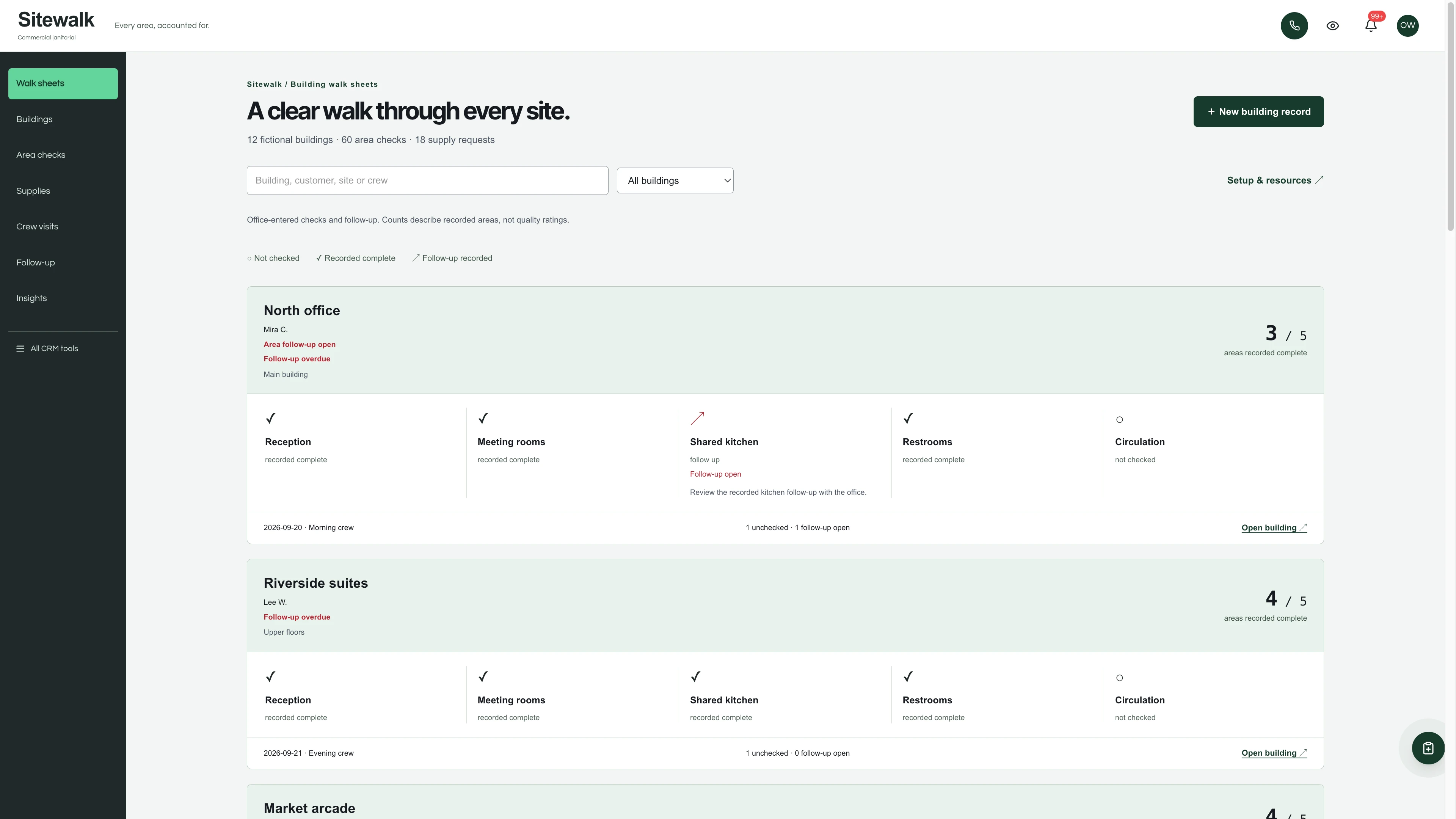
Building walk sheets with explicit area checks, recorded crew visits, supply quantities and office follow-up.
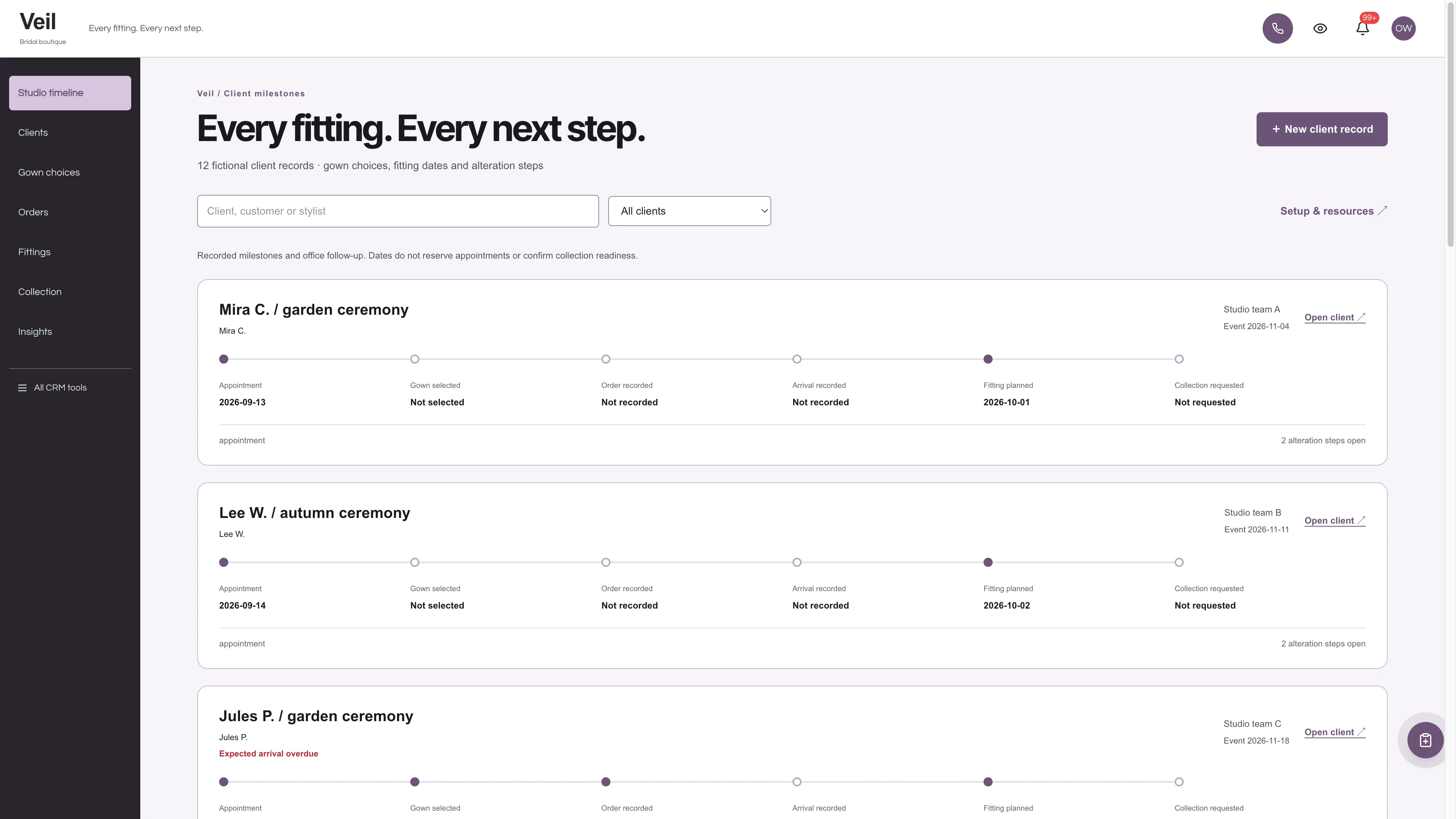
Client milestones with gown choices, recorded order arrivals, fitting dates and alteration checklists.
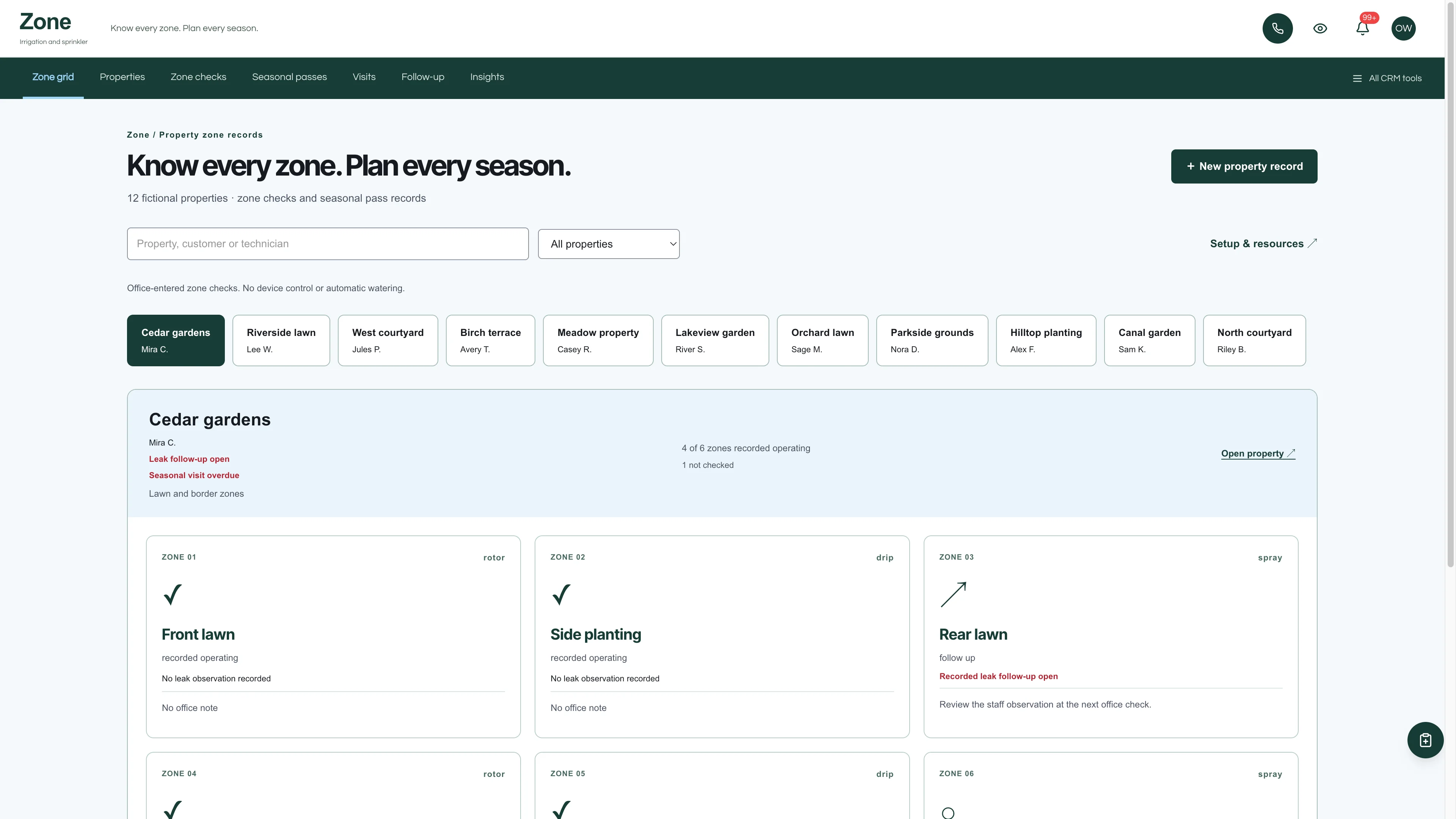
Property zone grids with recorded checks, leak observations, seasonal passes and technician visit dates.
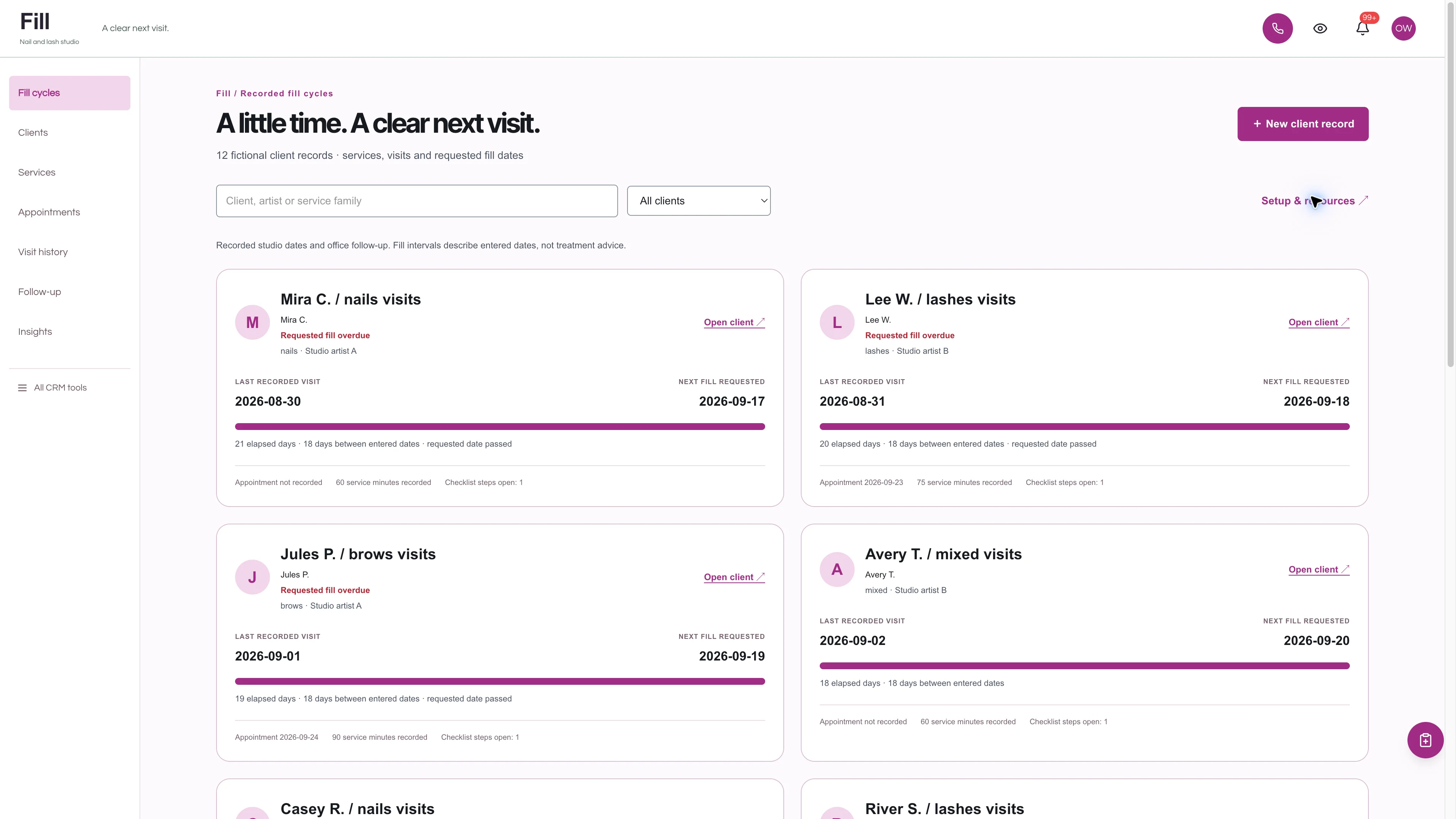
Client fill cycles with recorded services, appointment dates, visit history and next-fill follow-up.
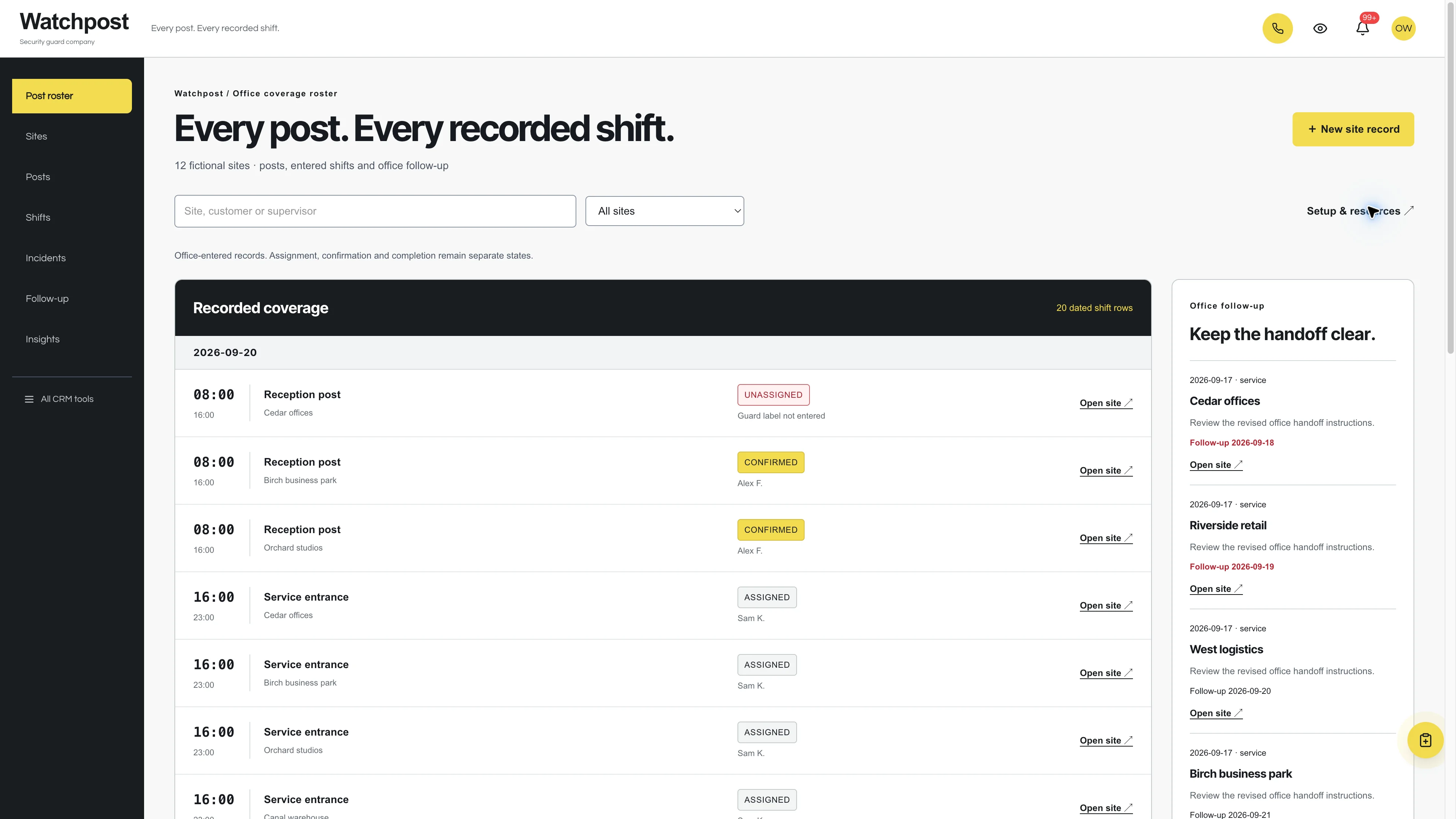
Site posts, dated shift rosters and non-sensitive office incident follow-up.
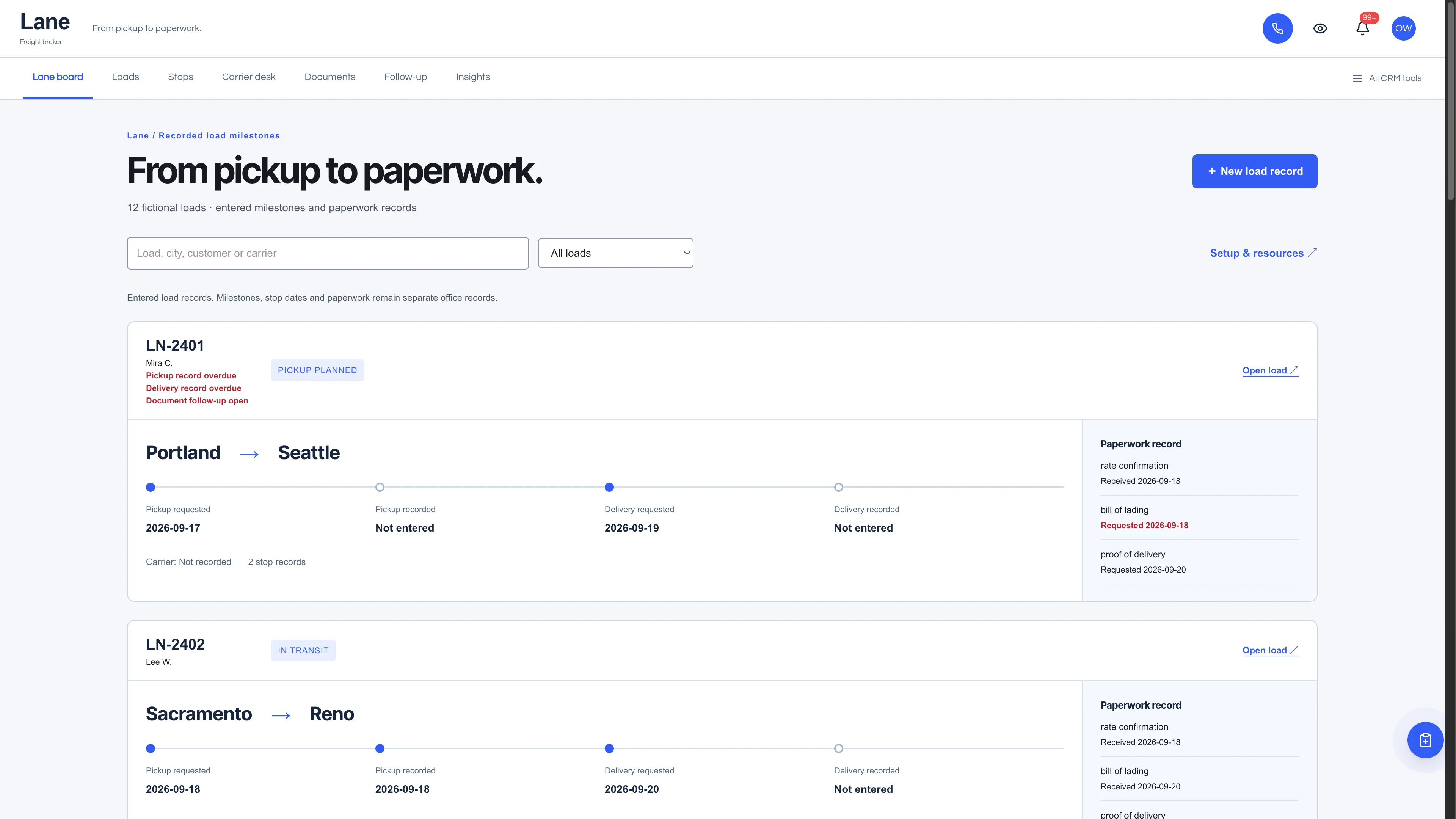
City-pair load records with entered milestones, carrier rates and paperwork follow-up.
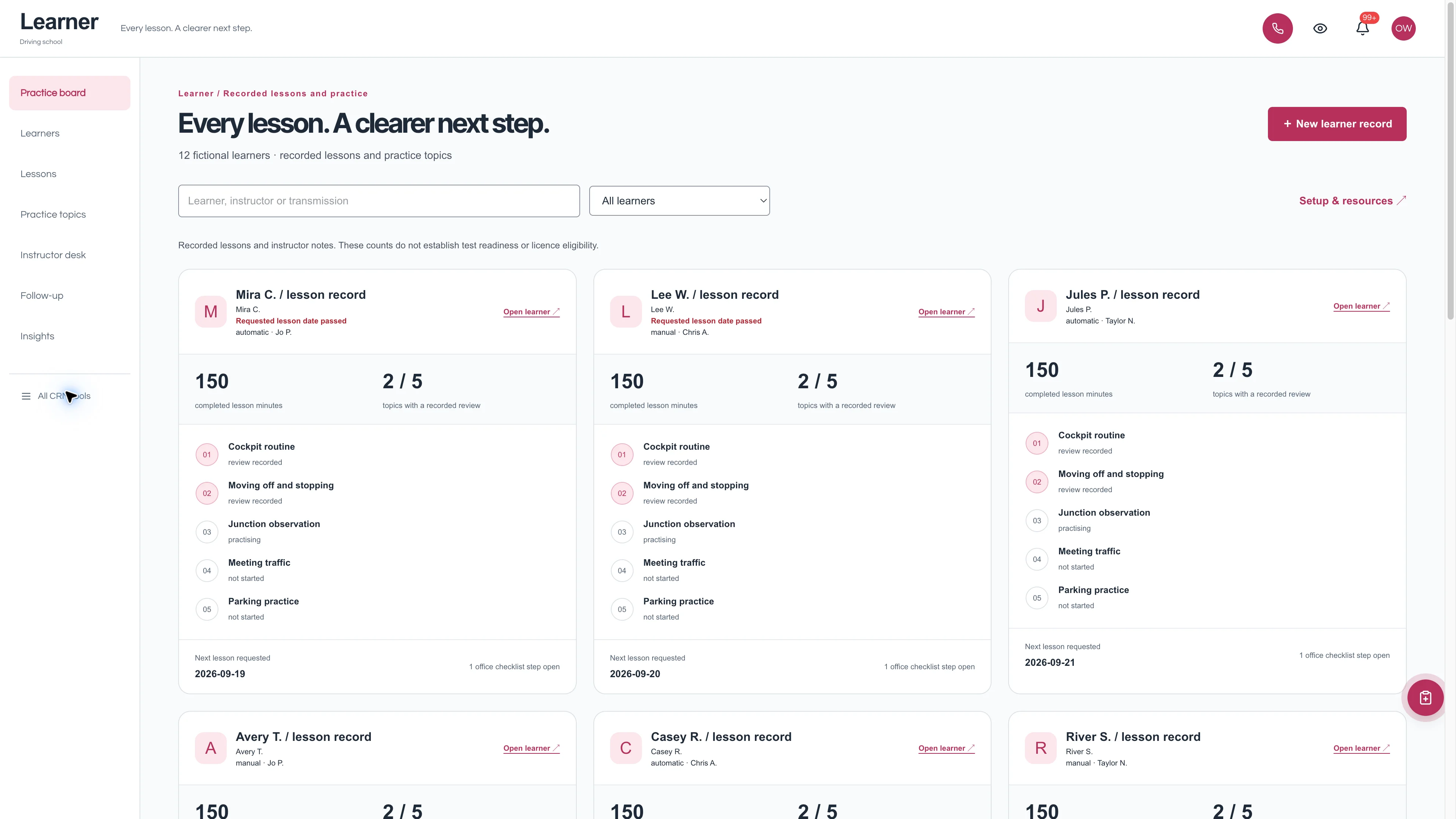
Learner records with lesson minutes, practice topics and next-lesson follow-up.
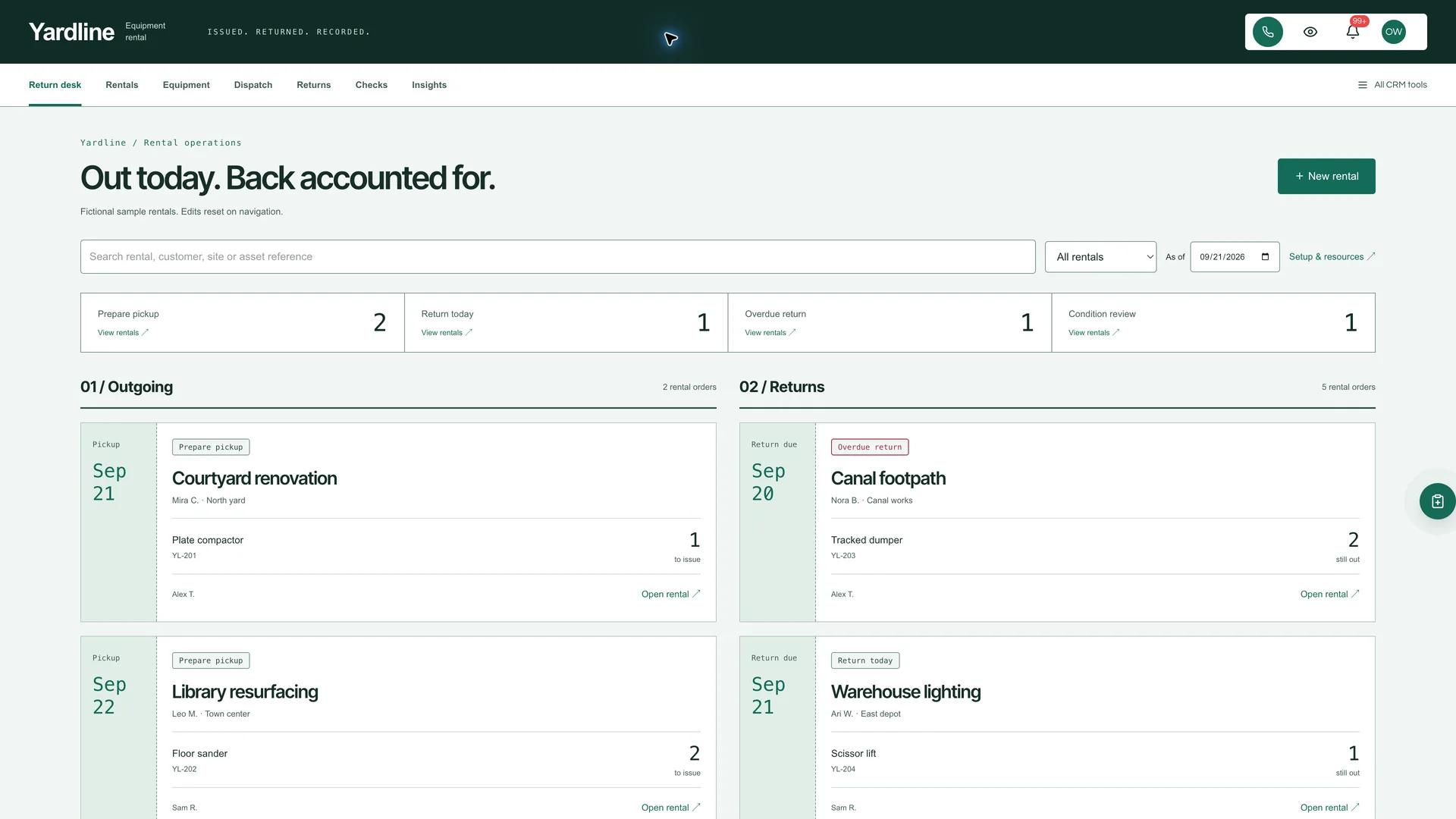
Rental orders with equipment references, pickup dates, partial returns and condition reviews.
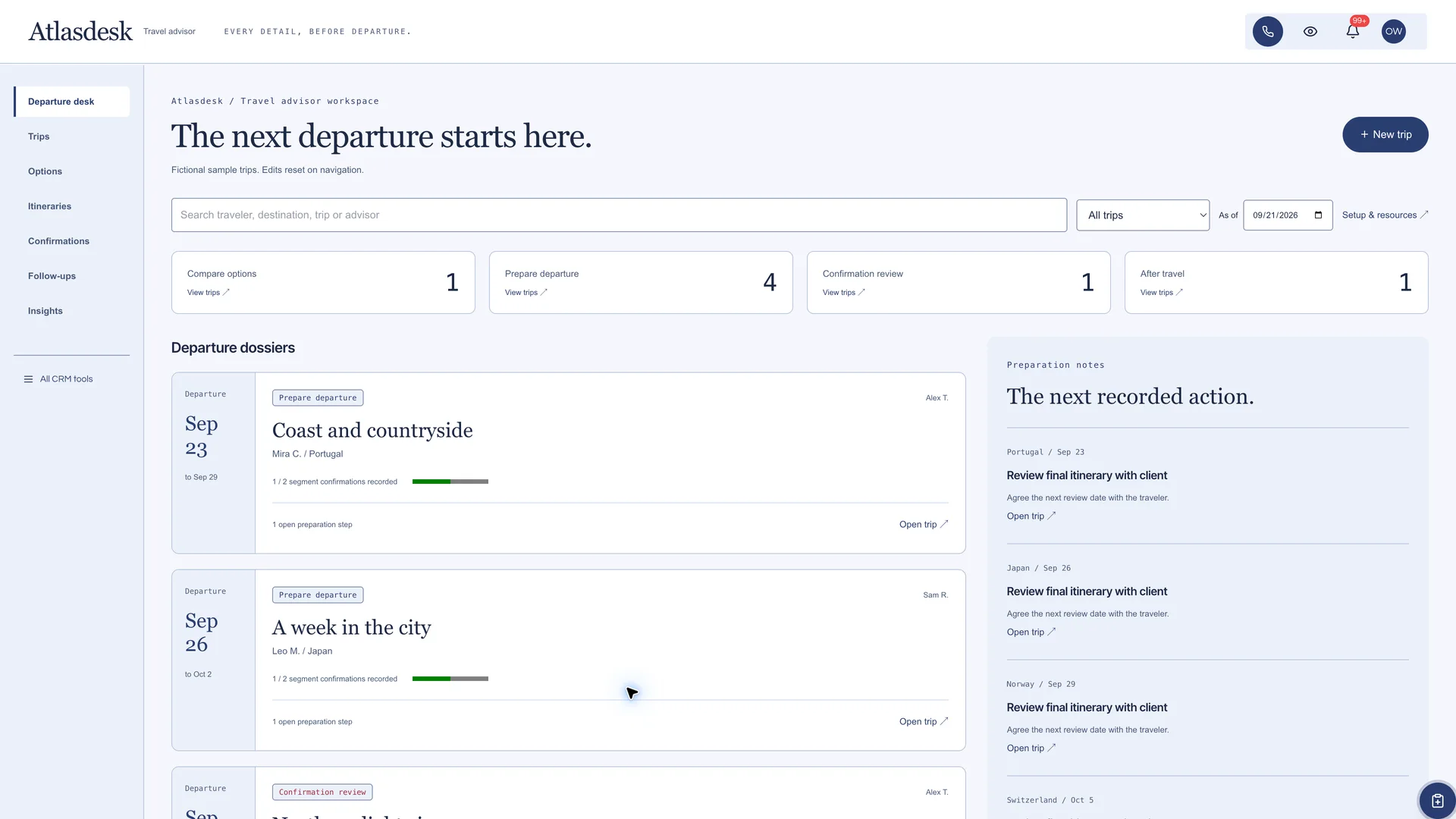
Trip dossiers with supplier options, itinerary segments and recorded confirmations.
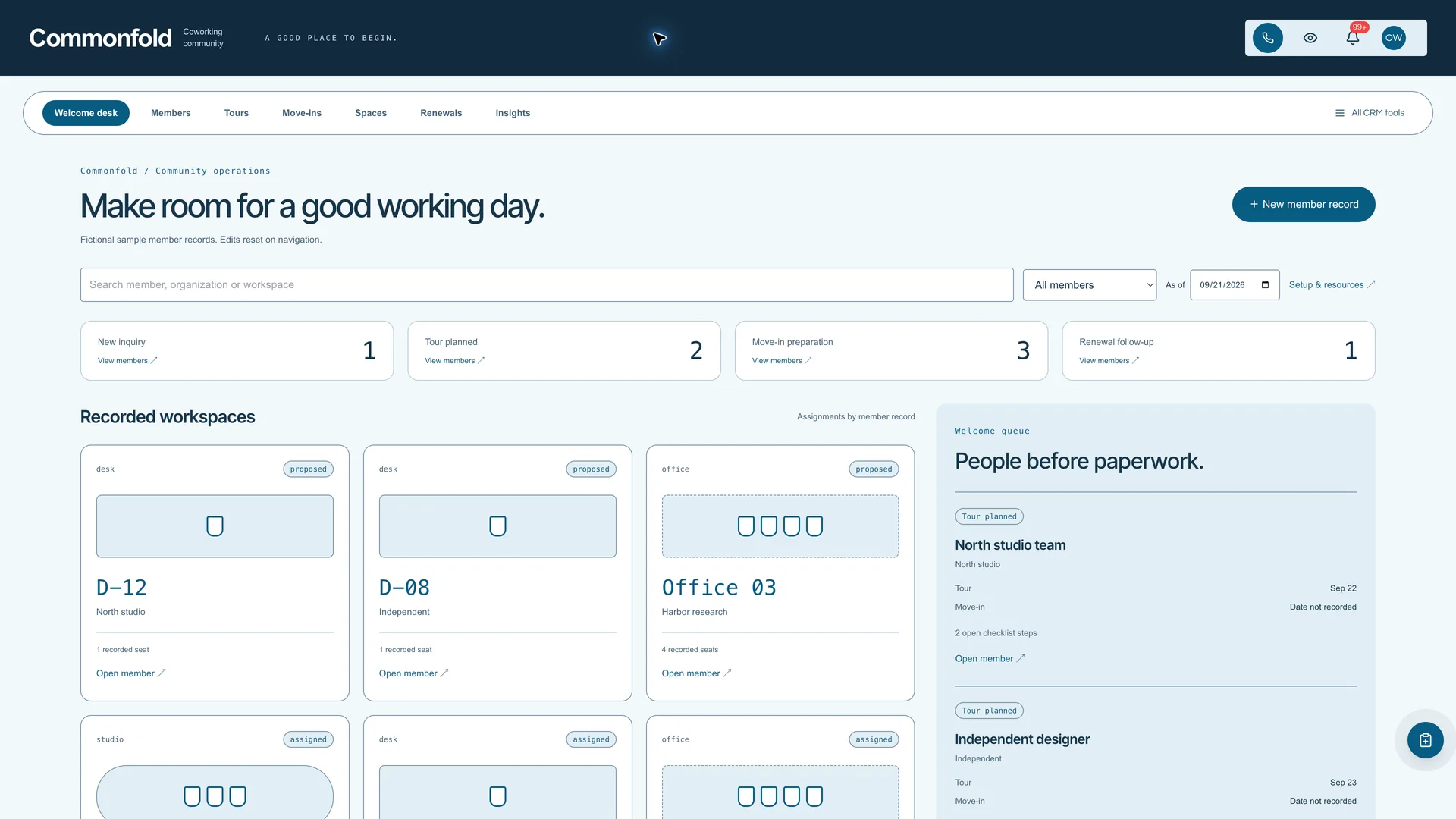
Member records with tours, move-in checklists, workspace assignments and renewal dates.
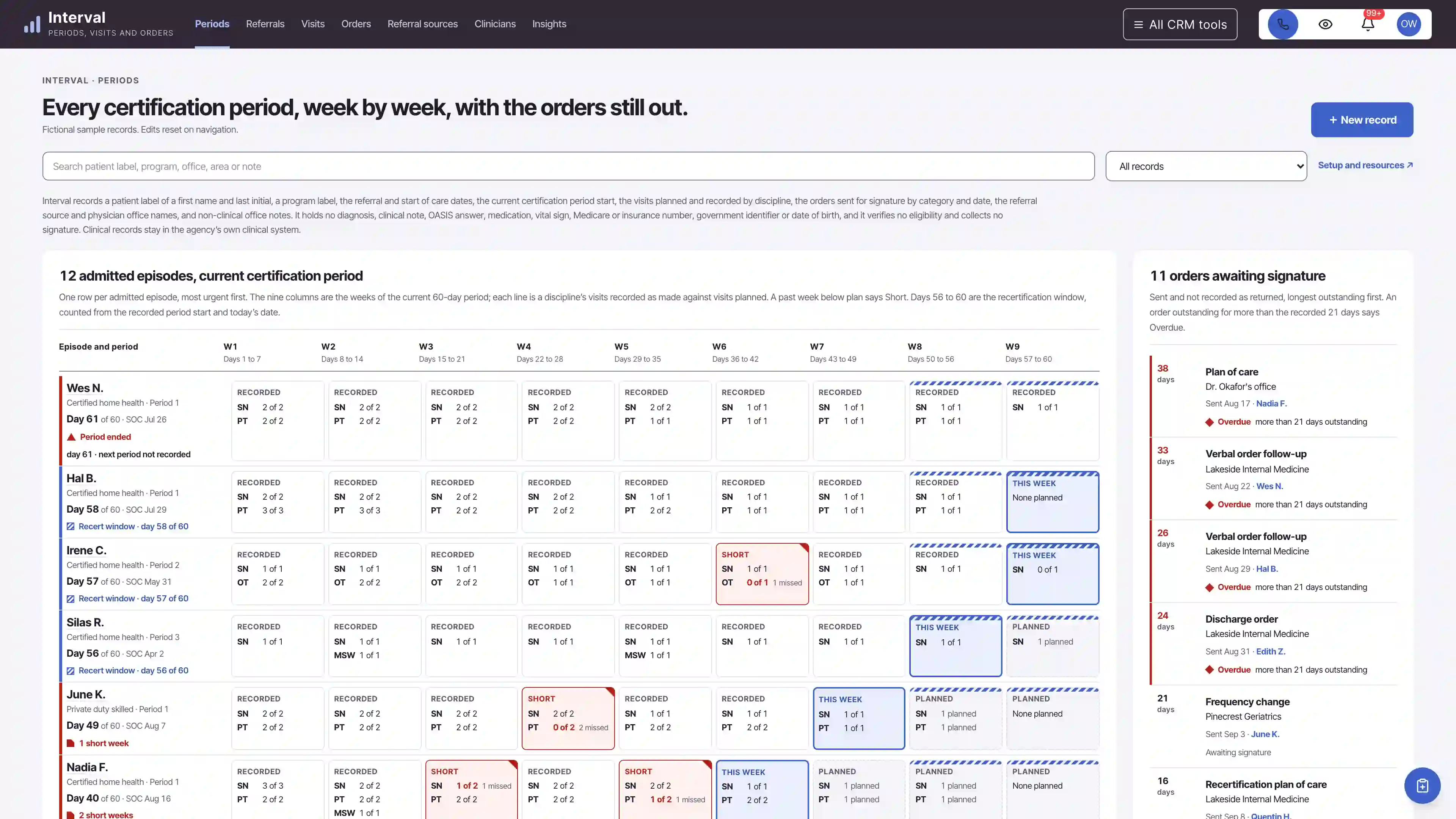
A certification period board with nine weeks of visits planned against visits recorded per episode, the recertification window marked, and every order still waiting on a physician signature beside it.
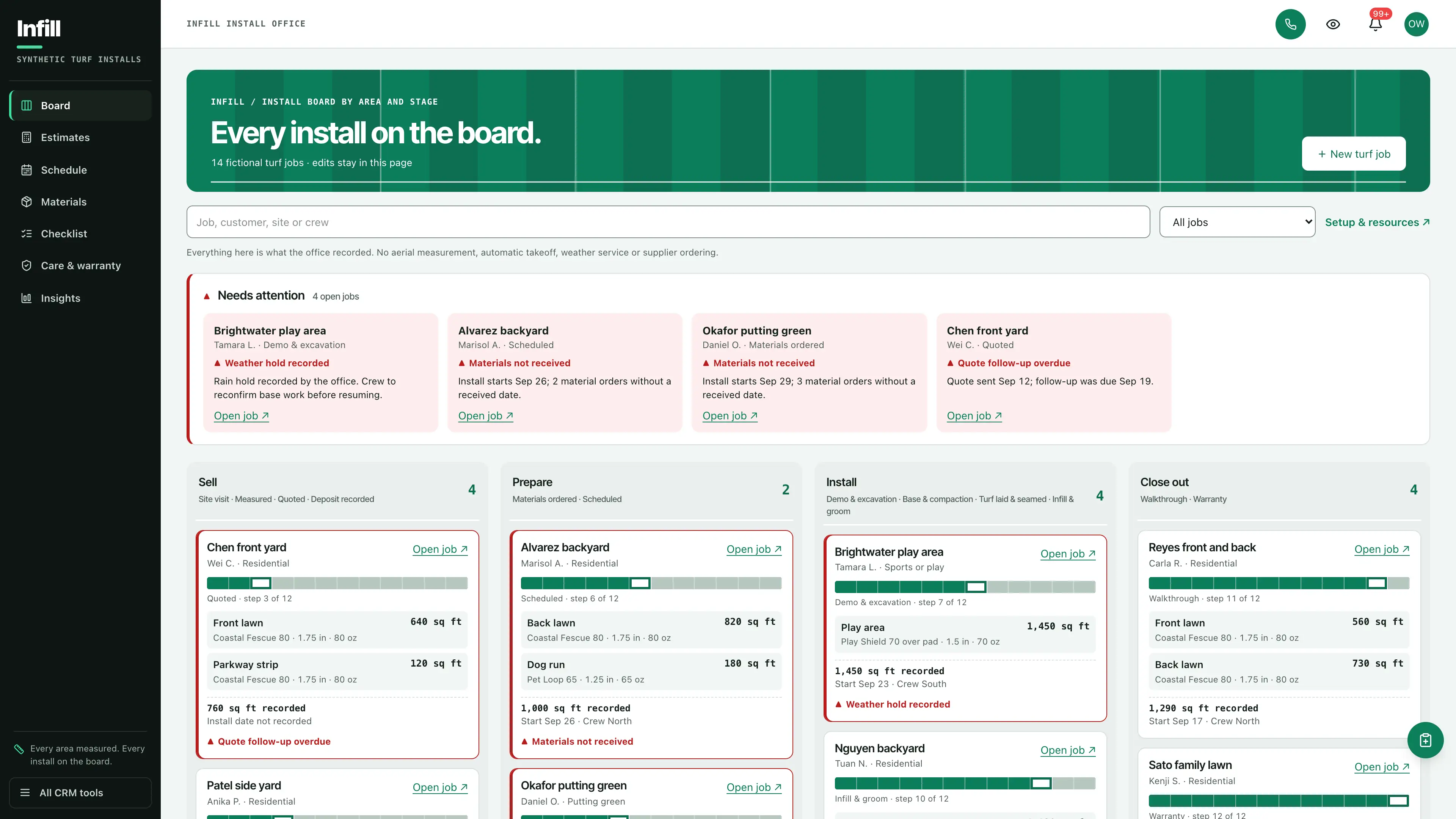
An install board by area and stage: every job lists its measured areas in square feet with product labels and a twelve-step track, led by jobs with materials not received, overdue quote follow-ups or a weather hold.
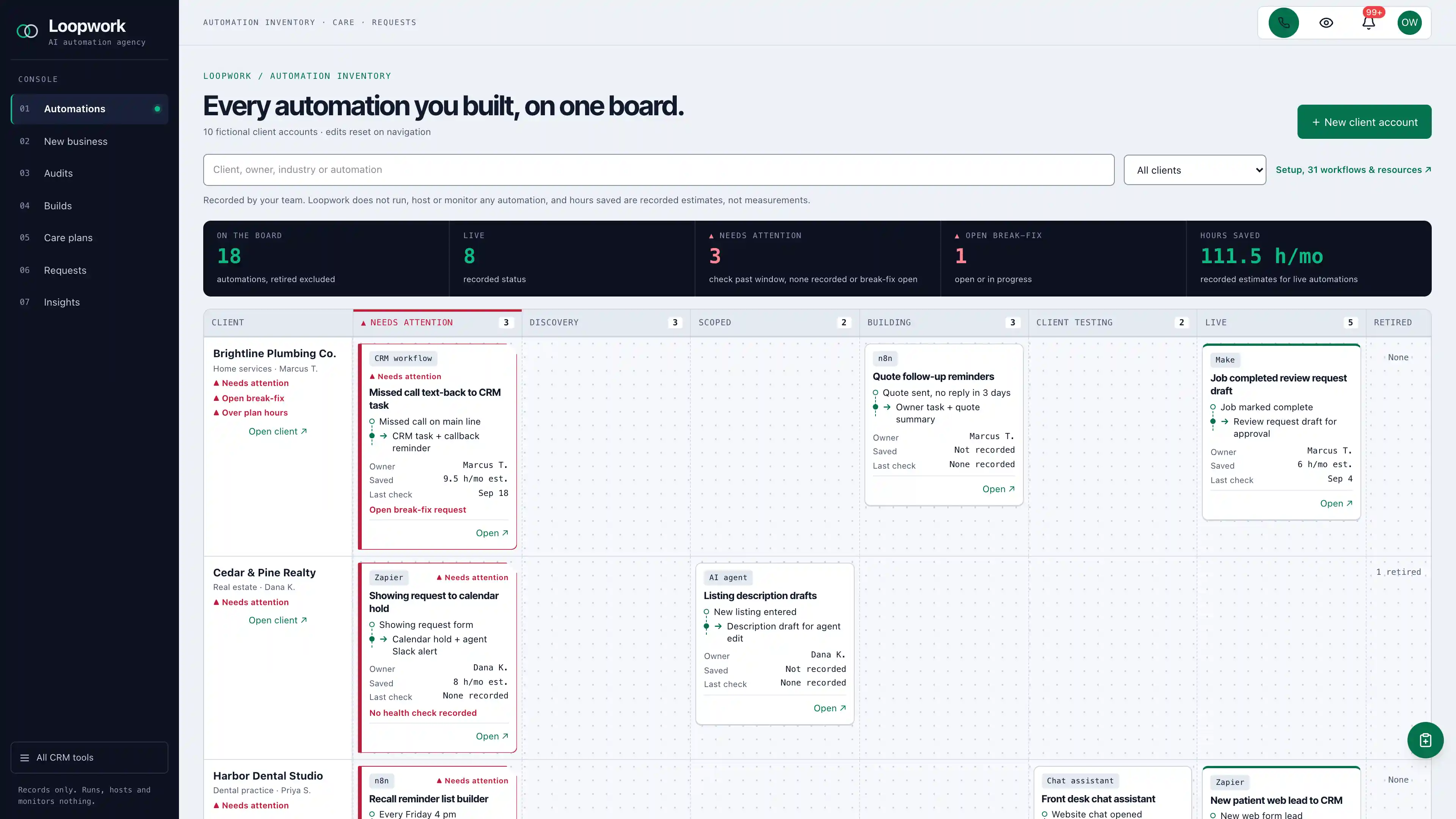
An automation inventory board with a card for every automation you built, grouped by client and flagged when a live one needs attention, plus audits, build checklists, care plans and 31 workflow drafts.
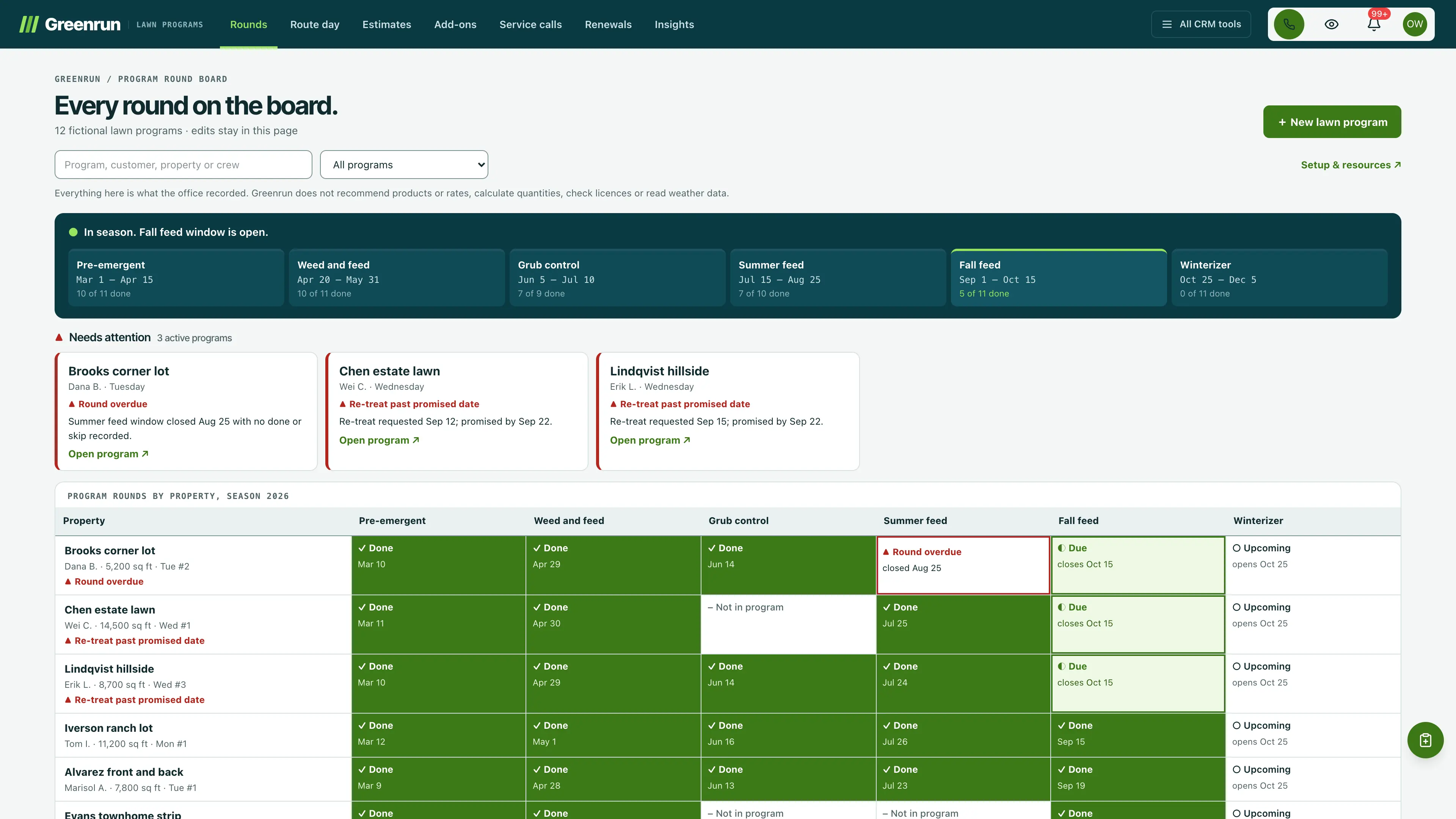
A program round board: every property is a row and the six season rounds are columns, from pre-emergent to winterizer, led by programs with a round overdue or a re-treat past its promised date.
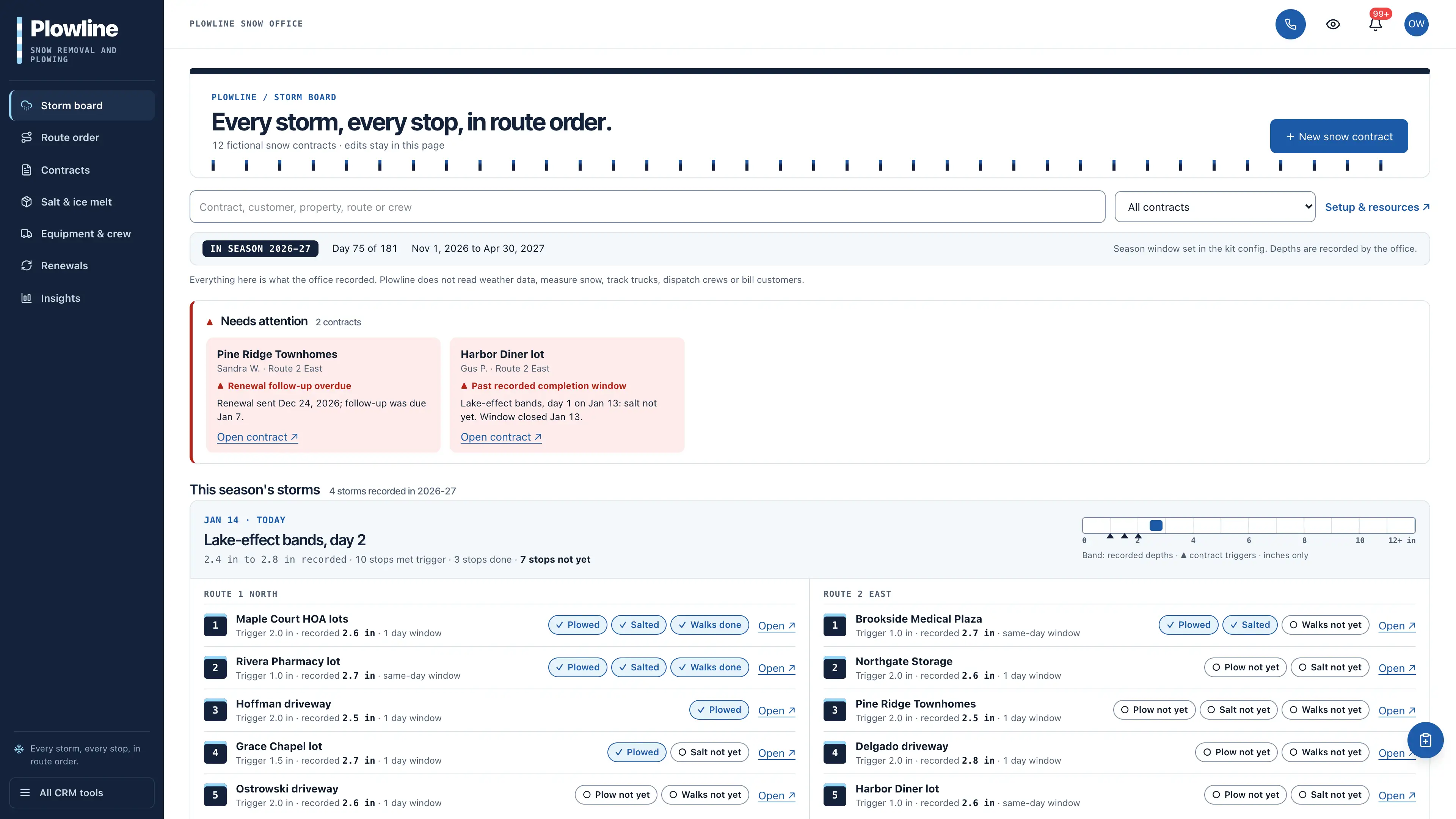
A season-aware storm board: each recorded storm lists the properties whose trigger depth it met, in route order, marked plowed, salted, walks done or not yet. Off season it leads with next season renewals and pre-season prep.
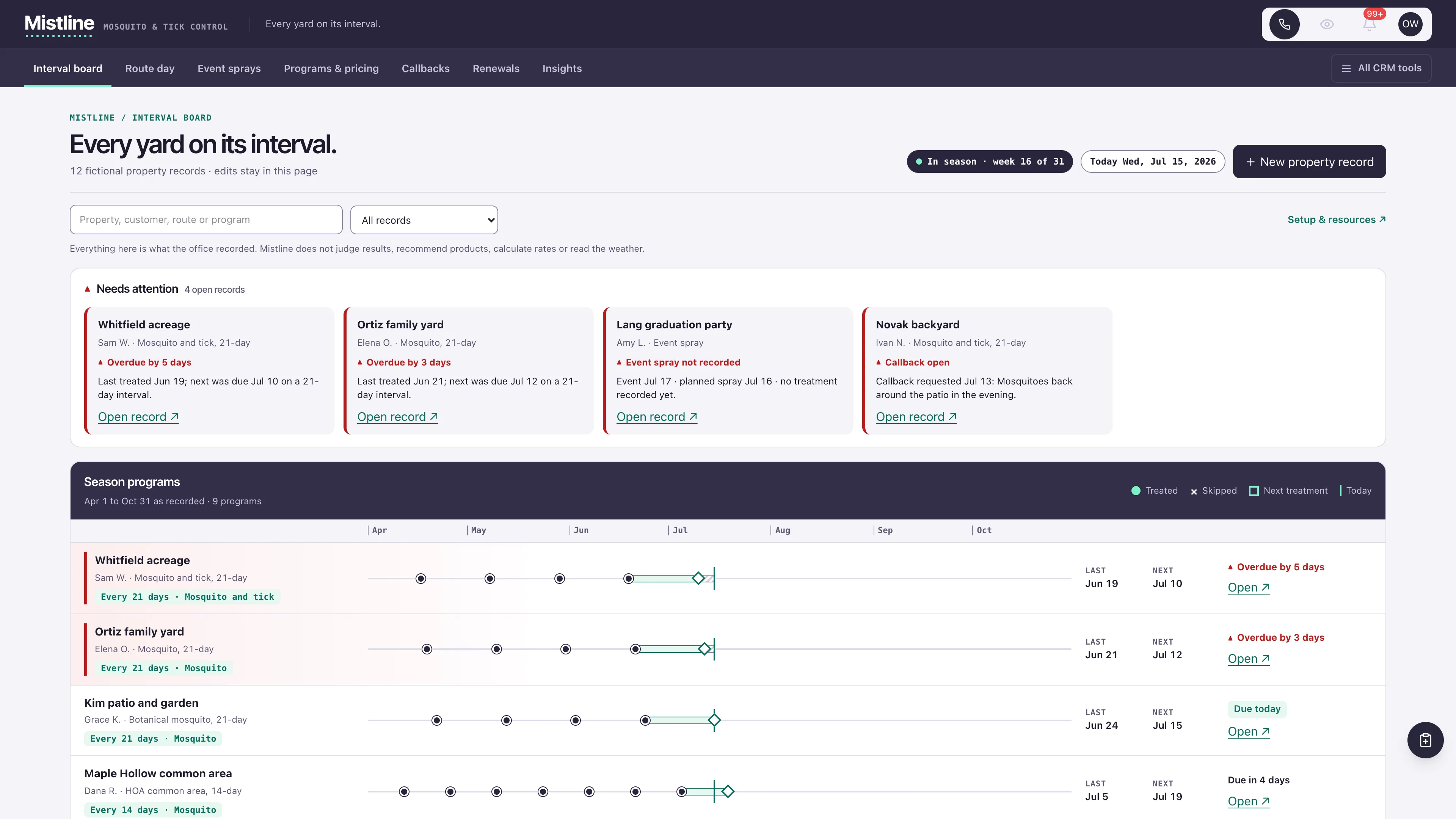
An interval board of season programs: each property shows its recorded interval, a season track with every recorded treatment and the next treatment in words, led by overdue treatments, open callbacks and event sprays not yet recorded, with an honest off-season board that leads with next season.
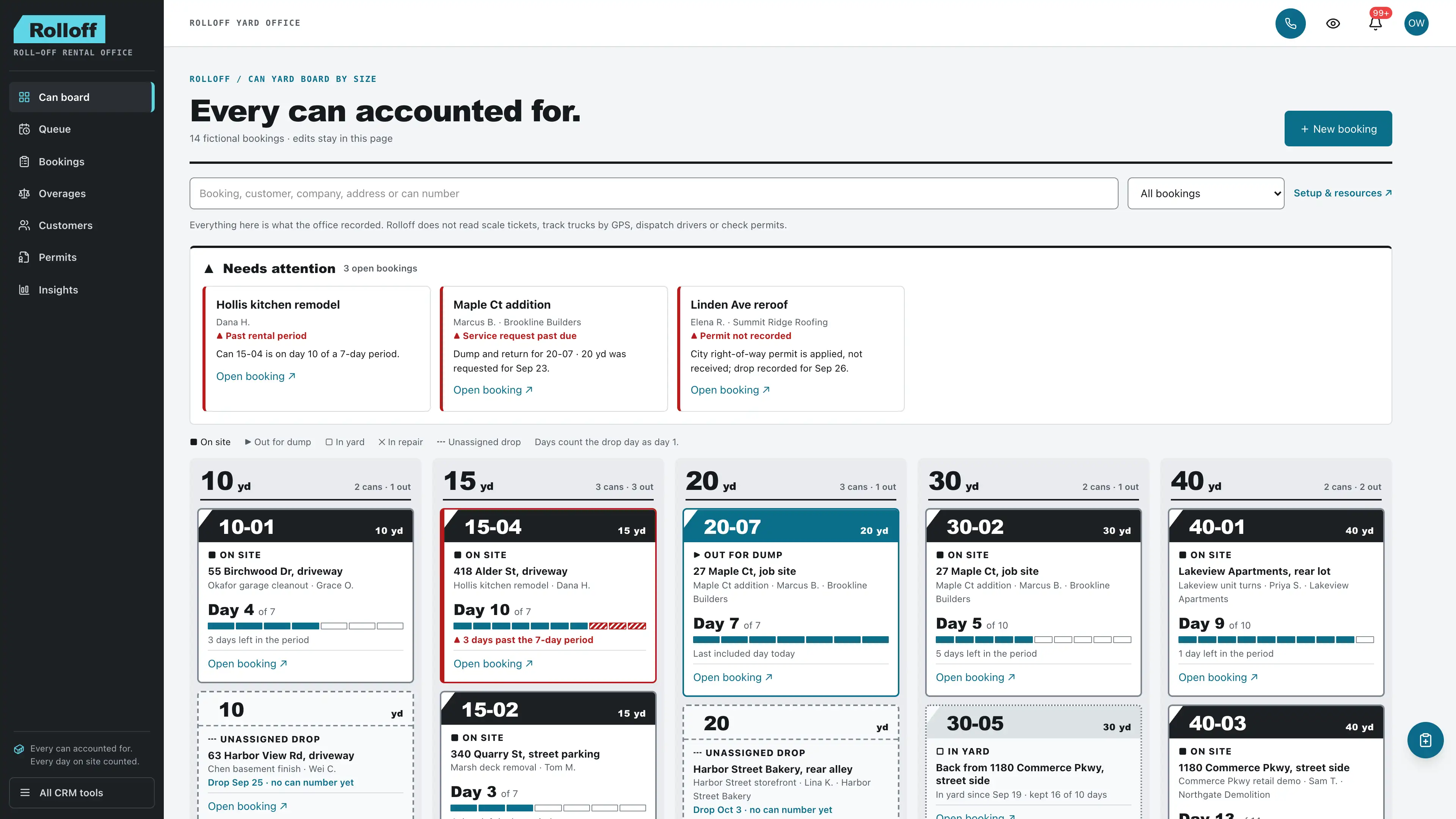
A can yard board by size: every can as on site, out for dump, in yard or in repair, with the job address and its days on site against the recorded rental period, led by cans past their period, permits not recorded and past-due swaps or pickups.
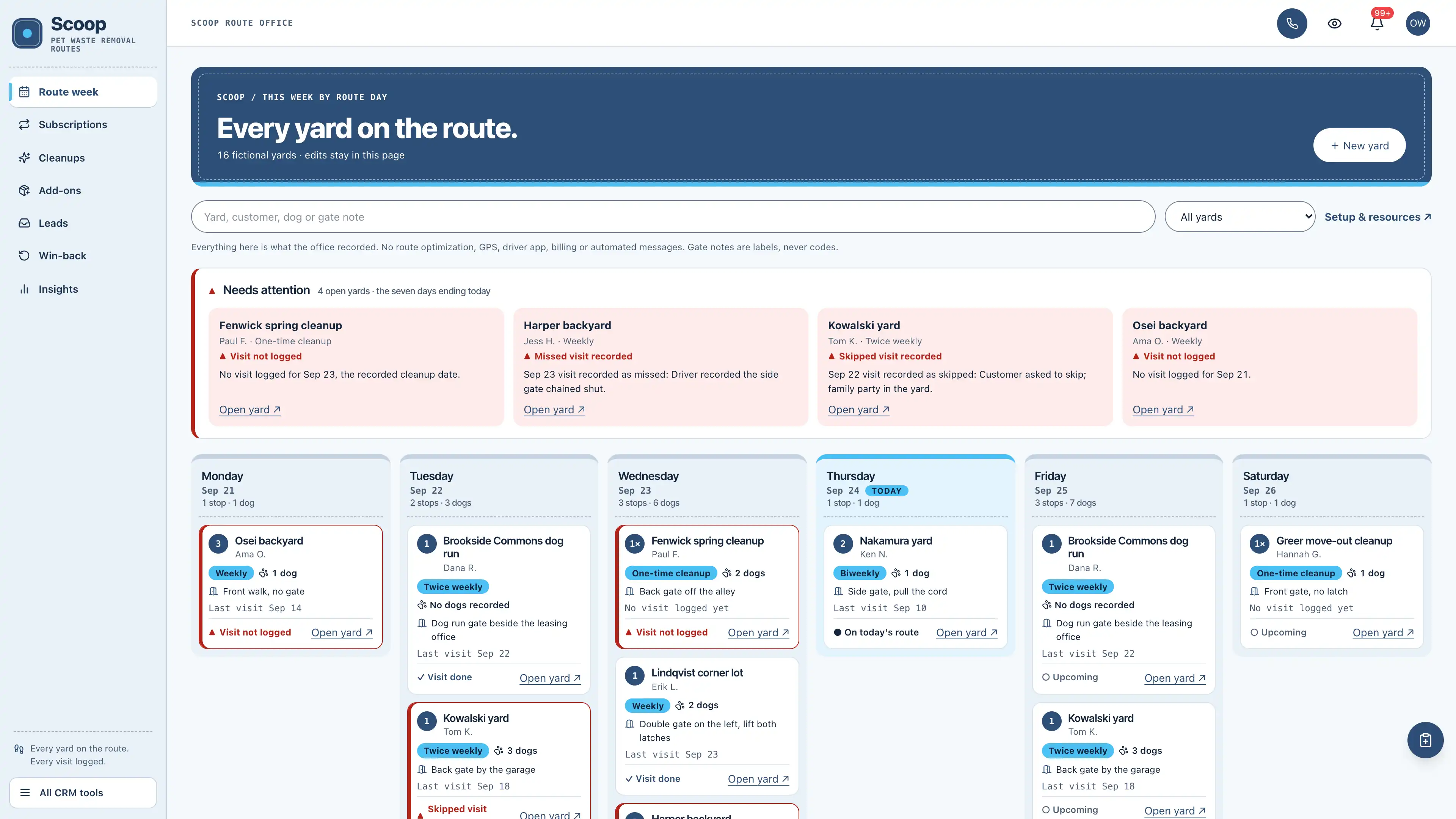
A route week by day: every stop in route order with its visit frequency, dog count, gate note label and last visit, led by yards with a missed, skipped or unlogged visit, plus plans, cleanups, add-ons, leads and win-backs.
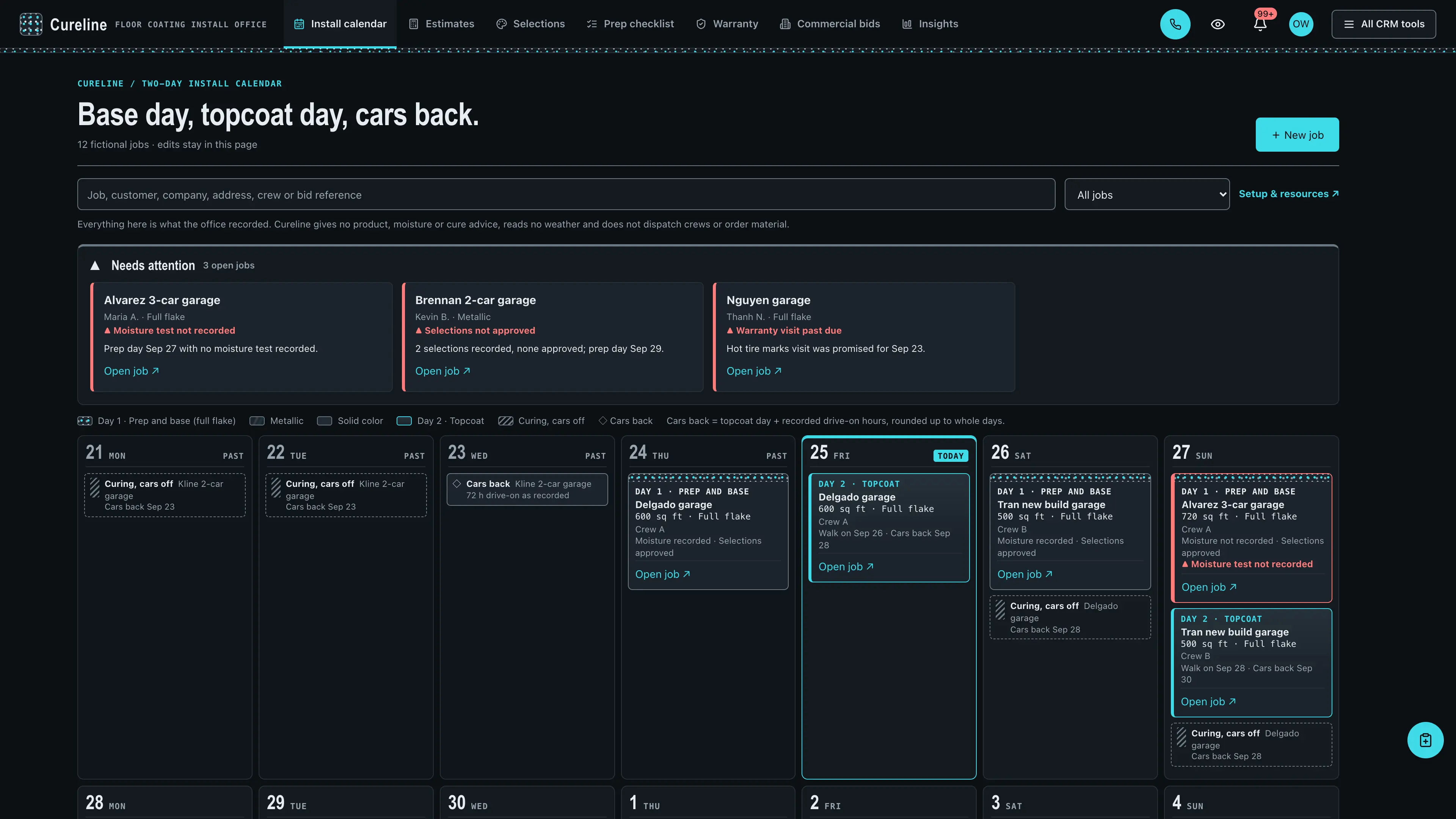
A two-day install calendar: every job on its prep and base day and its topcoat day, the curing days after it and the cars-back day counted from recorded hours, led by jobs with no moisture test recorded, selections not approved or a warranty visit past due.
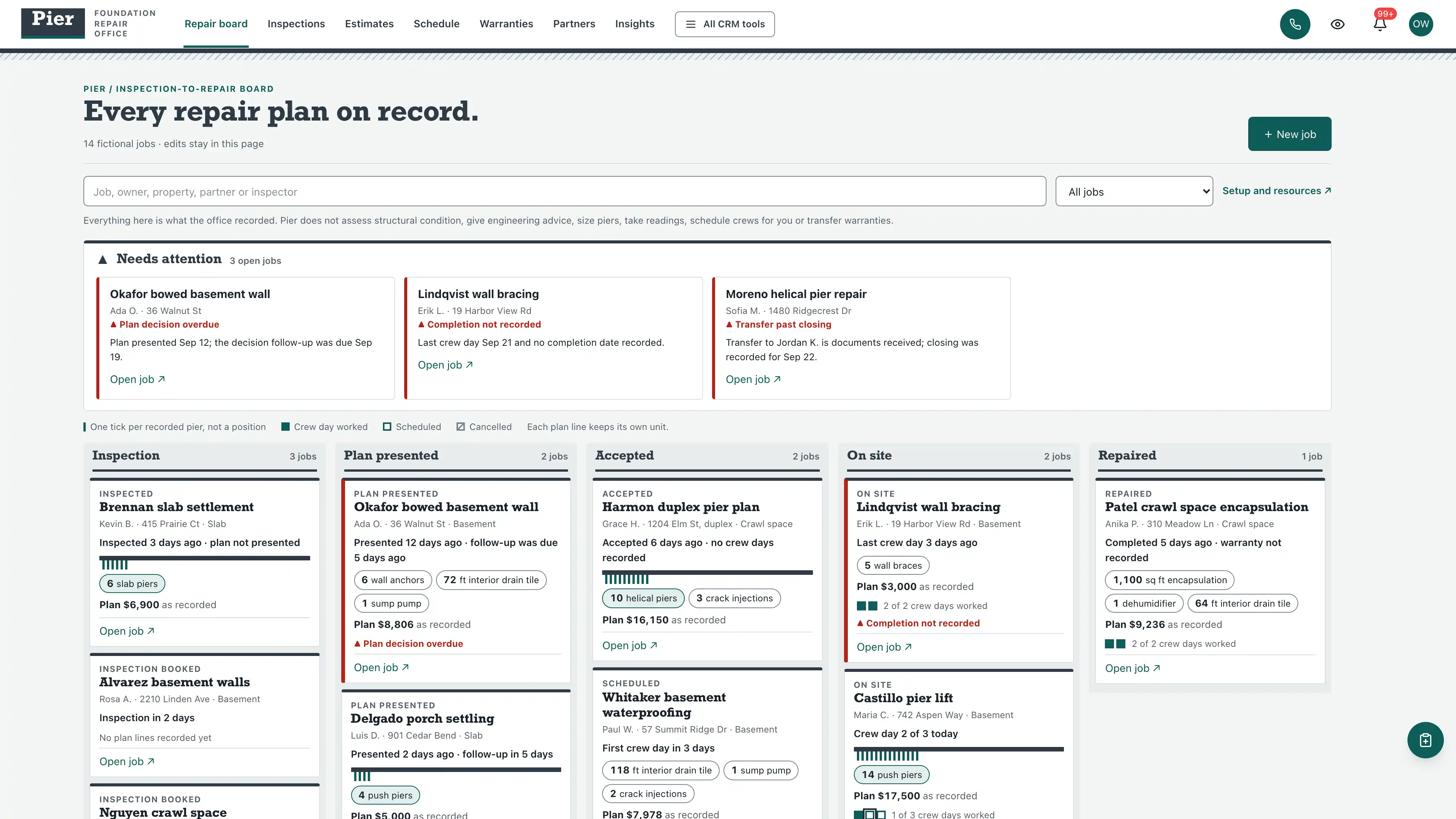
An inspection-to-repair board: every open job by stage with its recorded plan lines in their own units, crew days and warranty status, led by plan decisions overdue, completions not recorded and warranty transfers past closing.
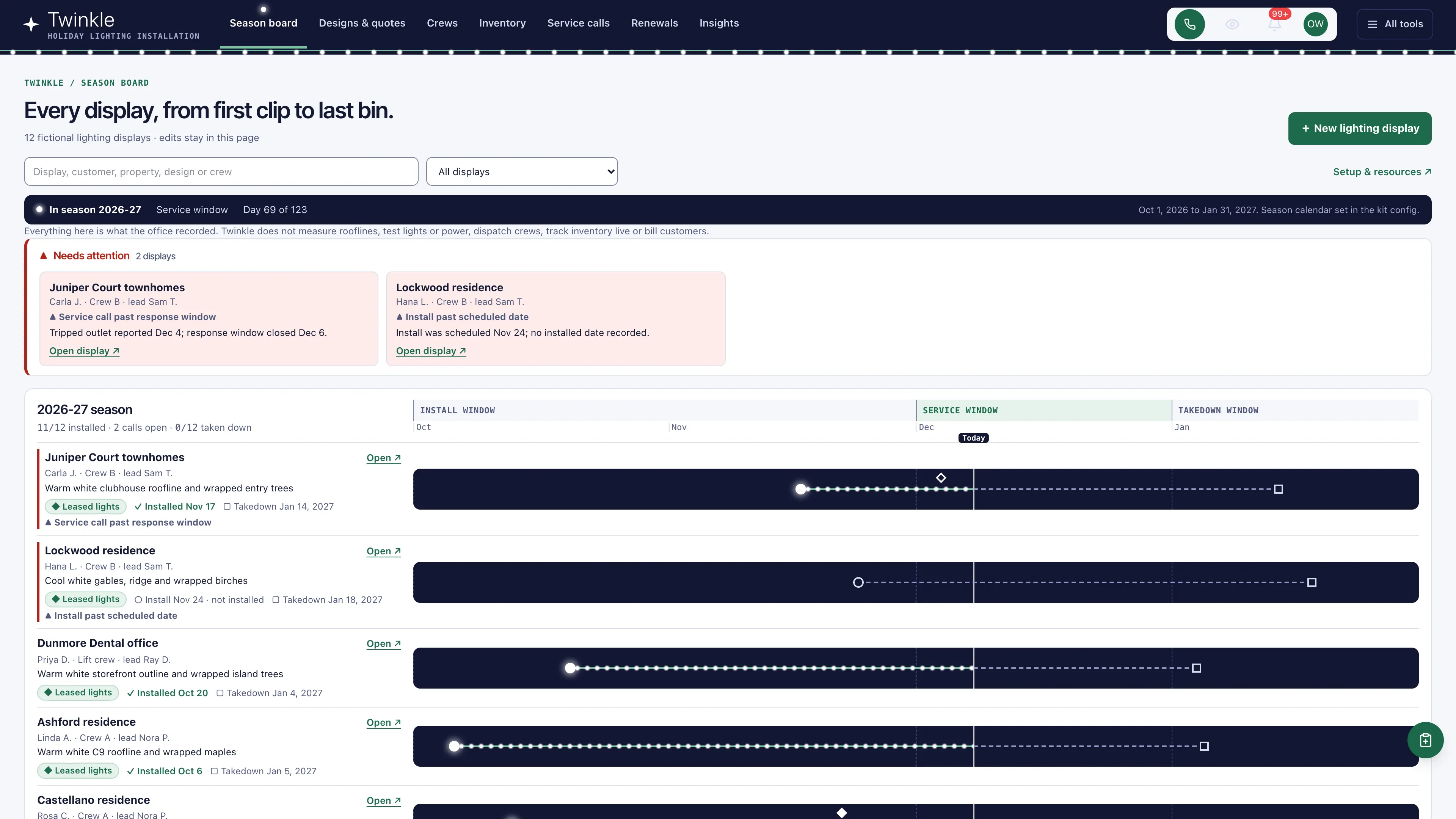
A season board with install, service and takedown windows on one date axis: each property with its design label, leased or customer-owned lights and install and takedown dates, led by late installs and takedowns and service calls past their response window. Off season it leads with renewals, early bookings and storage.
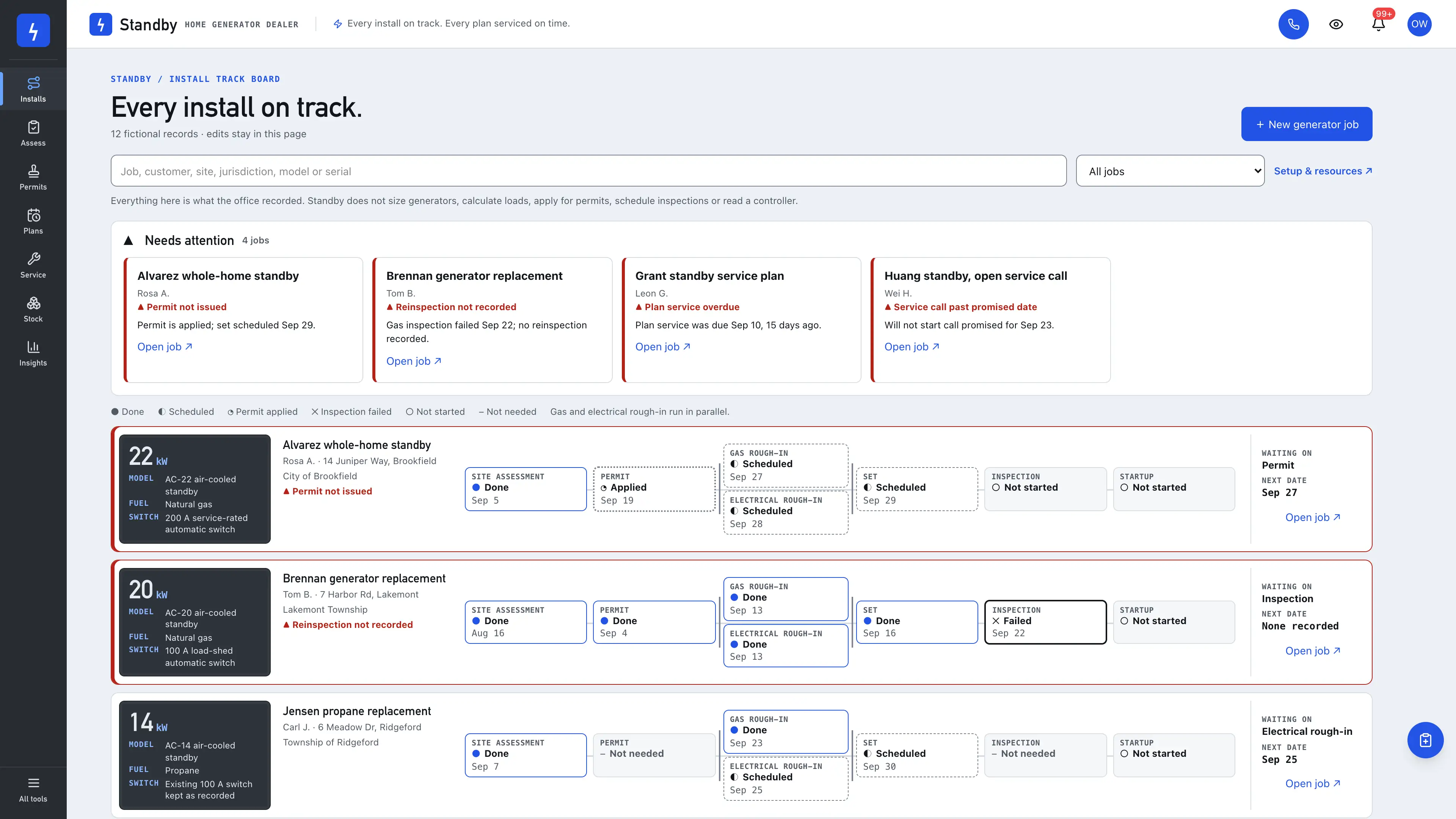
An install track board for home standby generators: each open install with its nameplate as recorded and a track from site assessment and permit through parallel gas and electrical rough-in, set, inspection and startup, led by permits not issued before the set, missing reinspections, overdue plan services and service calls past their promise.
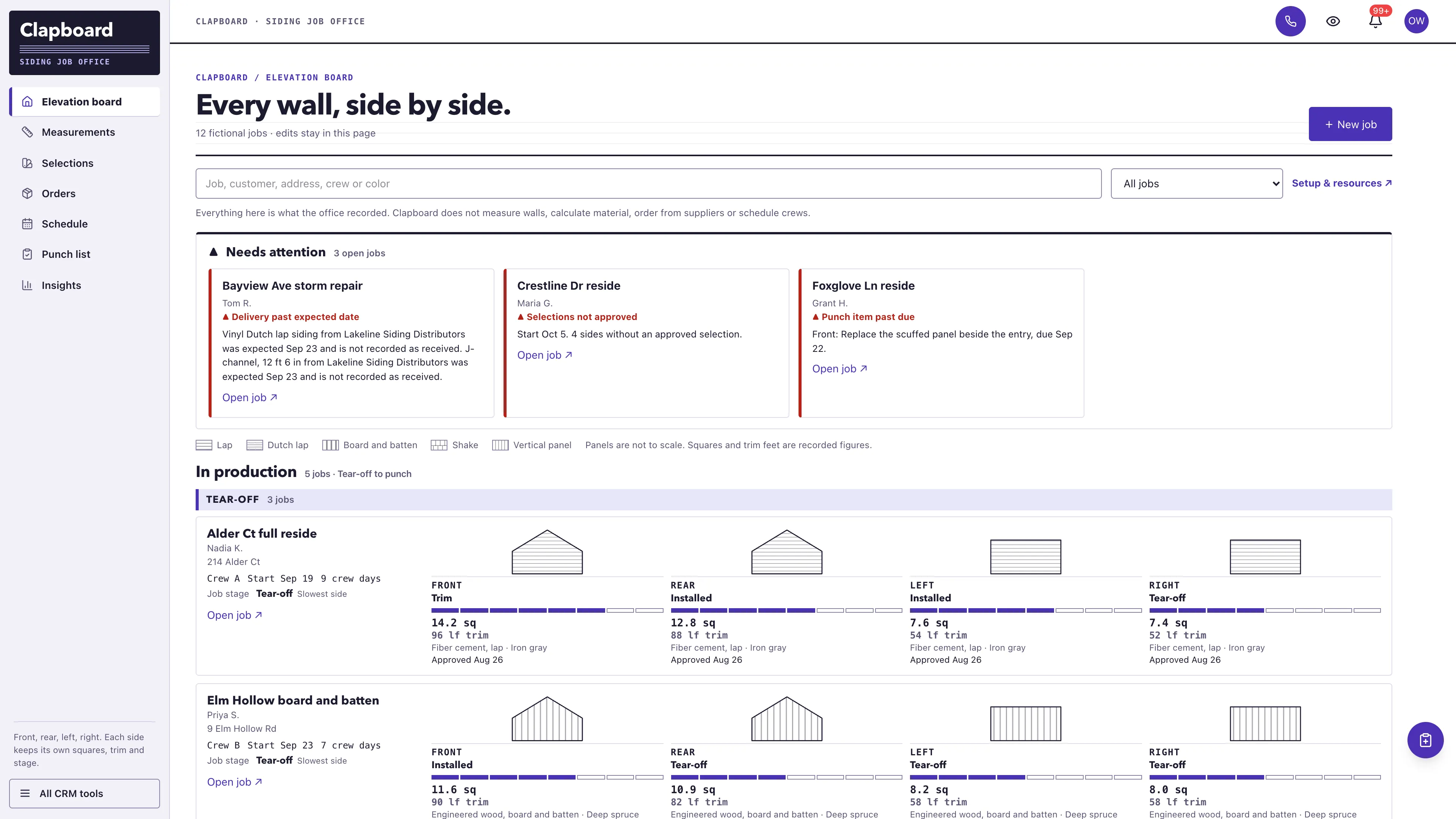
An elevation board for siding jobs: every job with its front, rear, left and right sides, each with its own recorded squares, trim footage, material and color selection and install stage, led by late deliveries, selections not approved before the start and past-due punch items.
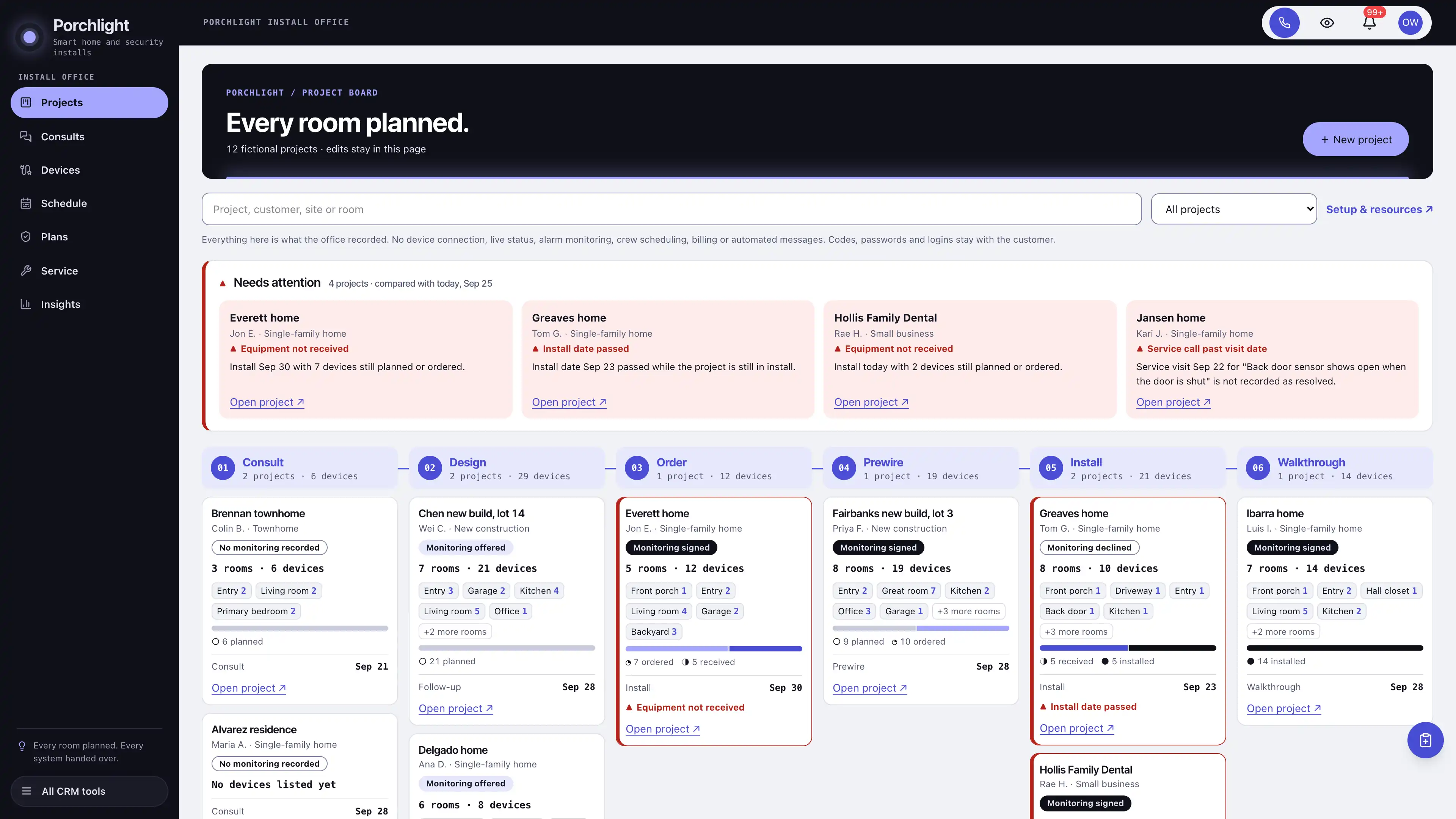
A six-phase project board from consult to design, order, prewire, install and walkthrough: every project with its rooms, device count, device status and monitoring contract status, led by installs past their date, equipment not received before install and service visits past their date, plus device lists by room, a dated schedule, monitoring and service plans and service calls.
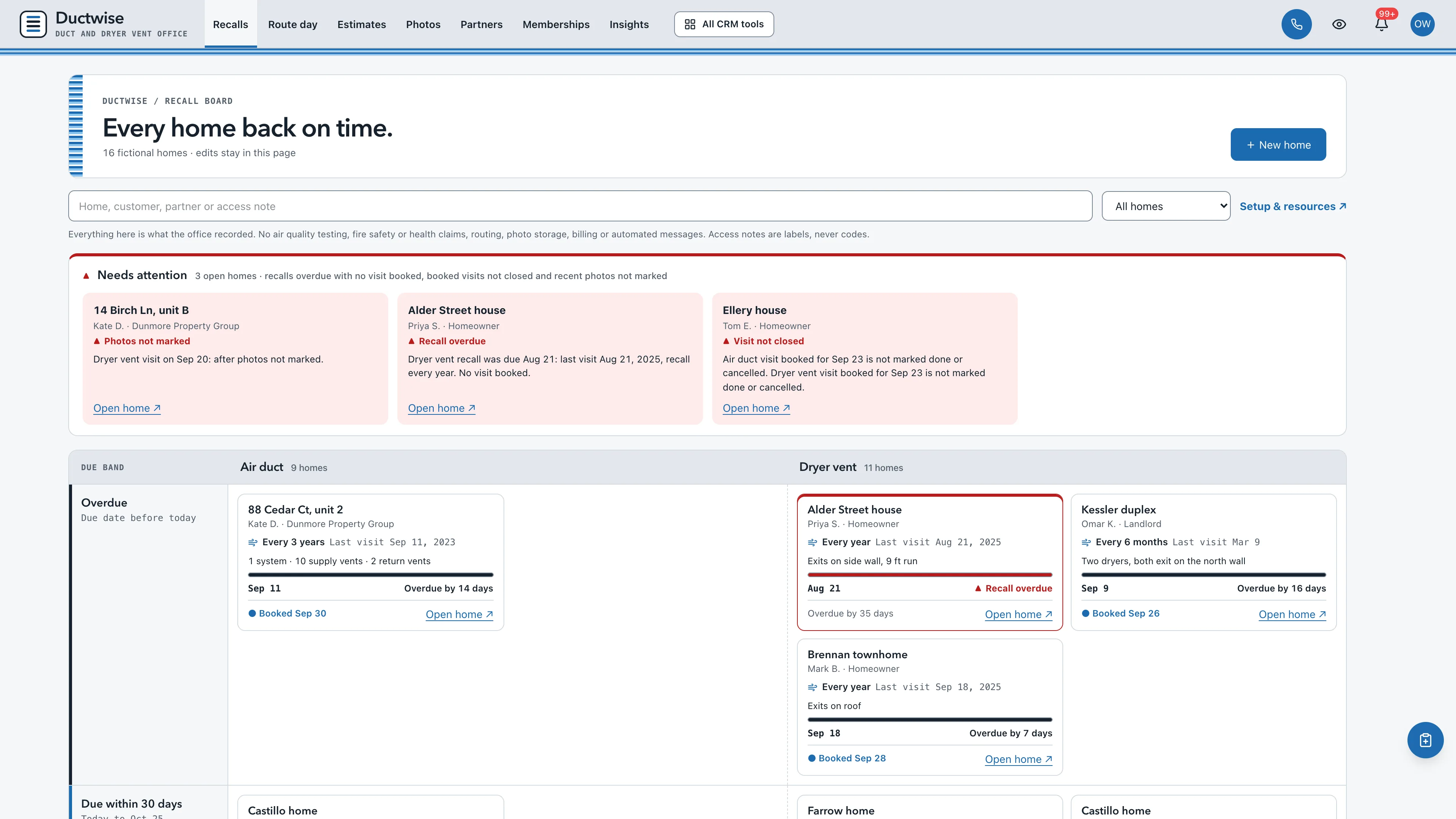
A recall board by service type: every home under Air duct or Dryer vent by when its next visit is due, computed from the last done visit and the recorded interval, led by overdue recalls with nothing booked, plus route days, estimates with vent counts, photo marks, partners and memberships.
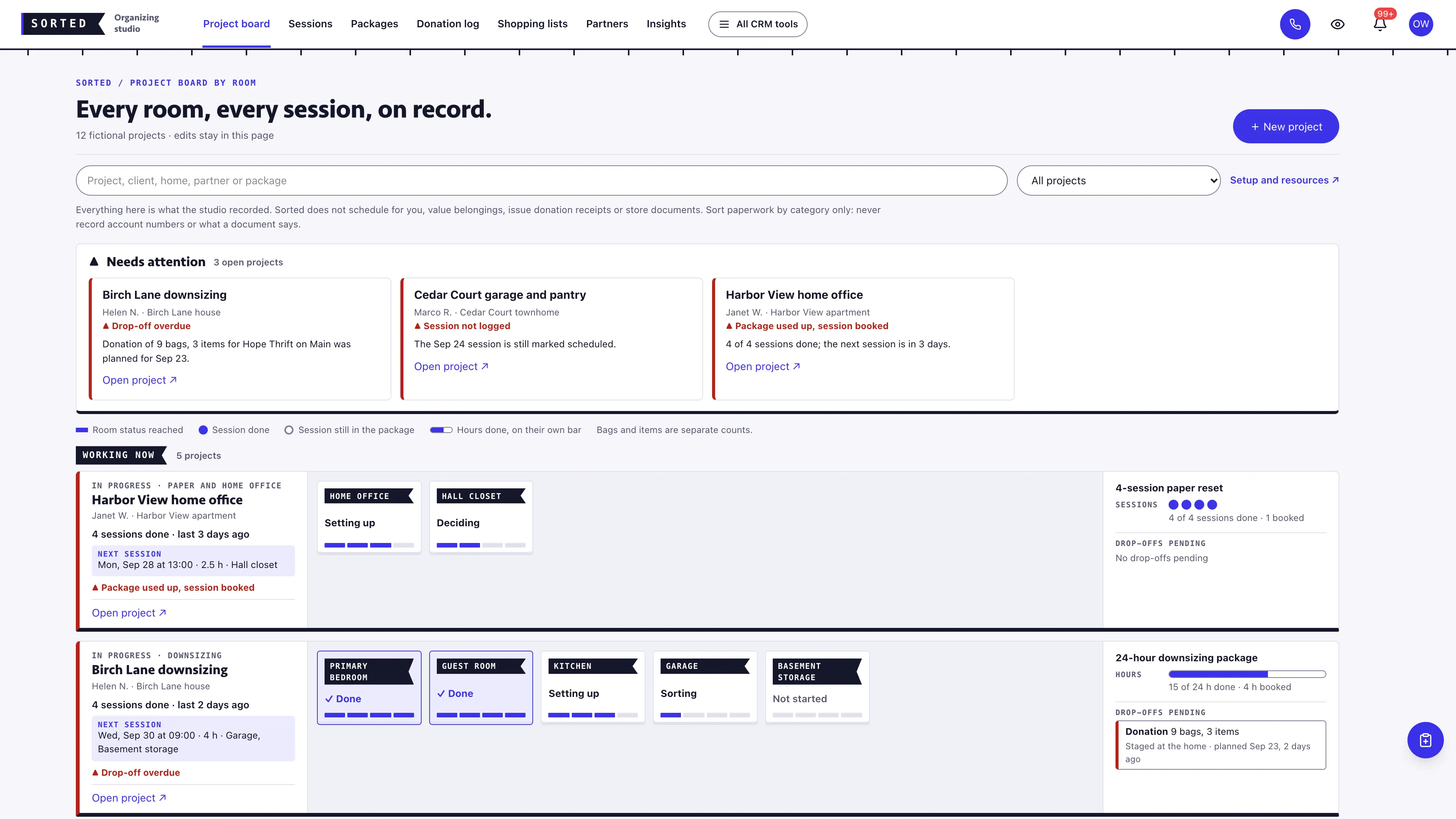
A project board by room: every open project as a shelf of room cubbies with their recorded status, the package as session pips and a separate hours bar, donation and consignment drop-offs still at the home, and the next session, plus a session week, packages, a donation log, shopping lists and partners.
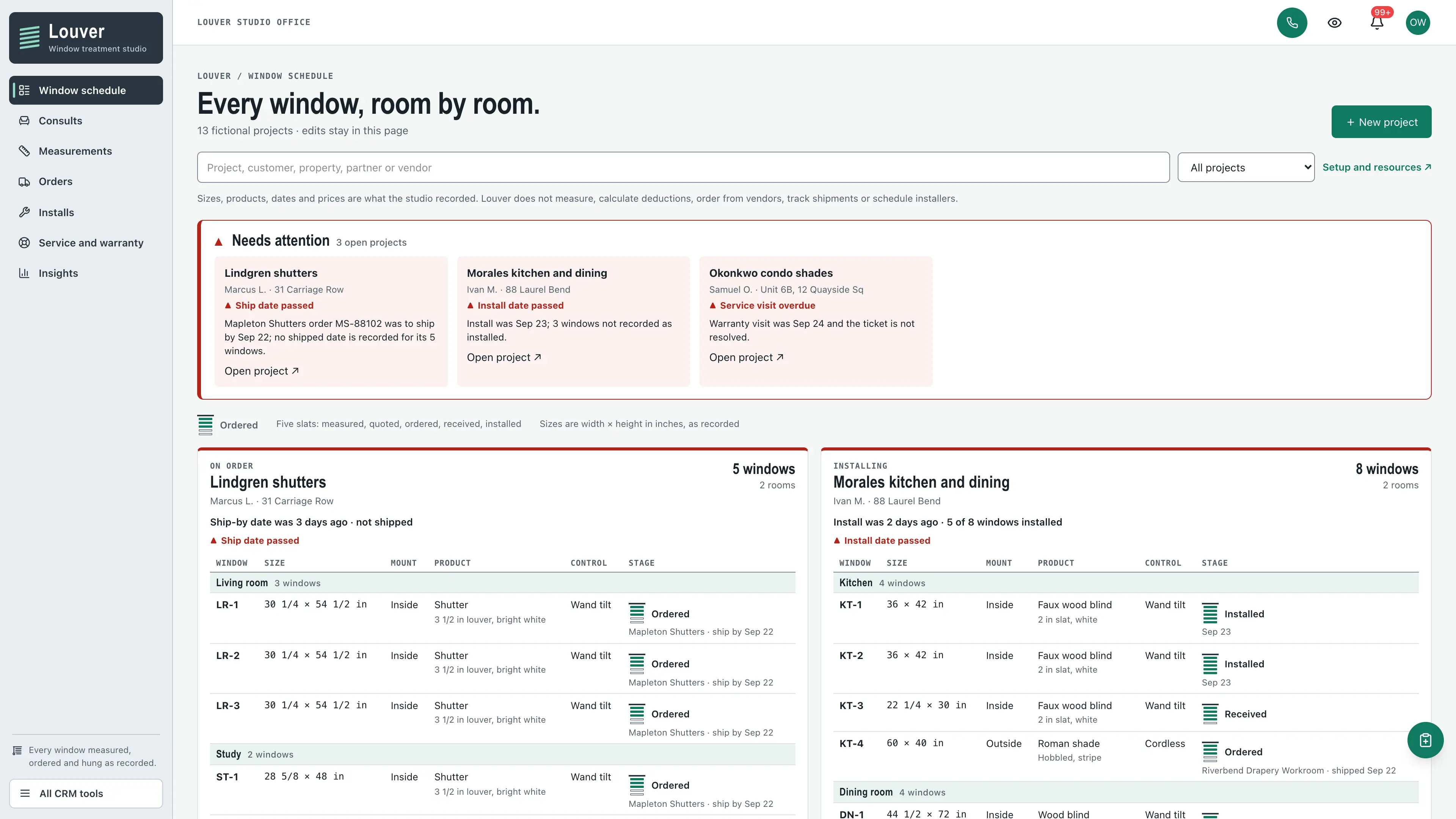
A window schedule per project: every window grouped by room with its width and height exactly as recorded in inches and eighths, product, control and a five-slat stage from measured to installed, plus consults, measure sheets, vendor orders with quoted lead days, install days and service tickets.
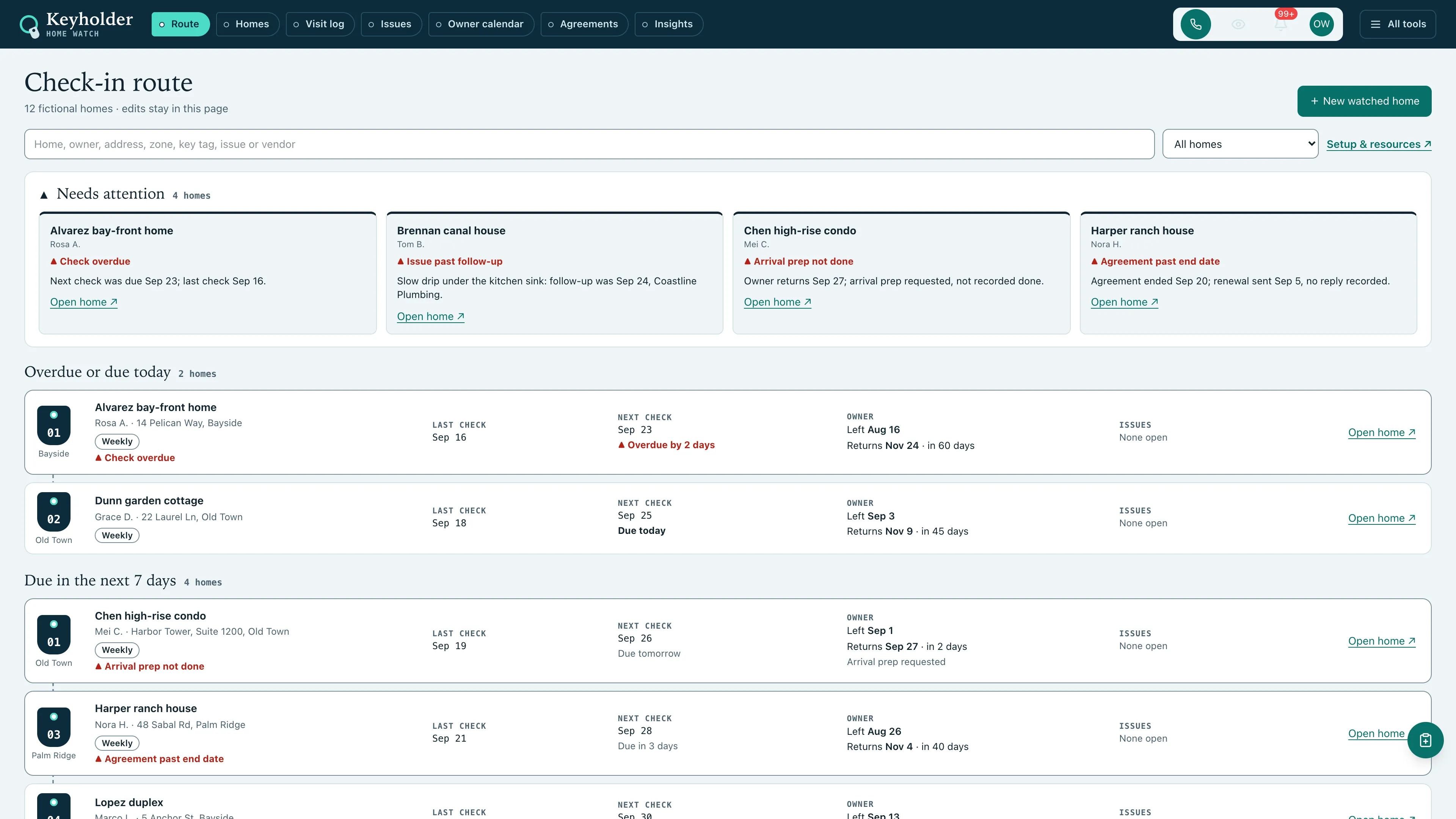
A check-in route for home watch companies: every watched home with its visit frequency, last and next check, the owner's departure and return dates and open issues, led by overdue checks, issues past follow-up, arrival prep not done and agreements past their end, plus a visit log with a checklist per visit, issues and vendors, an owner calendar and agreements.
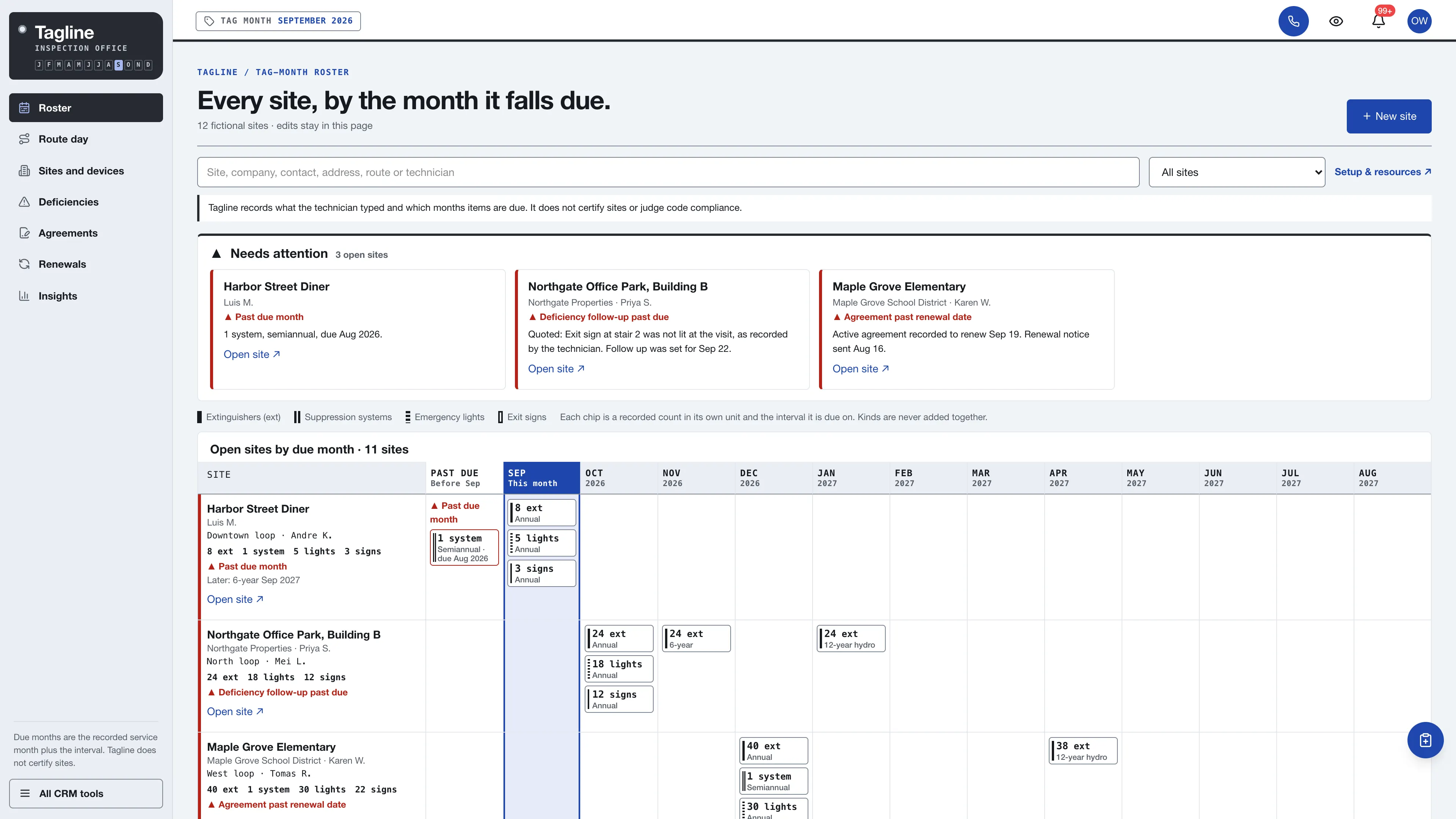
A tag-month roster for fire protection inspection companies: commercial sites as rows and months as columns, with each site's extinguishers, suppression systems, emergency lights and exit signs in the months they fall due, led by past due months, deficiency follow-ups past due and agreements past their renewal date. Tagline records what the technician typed and does not certify sites.
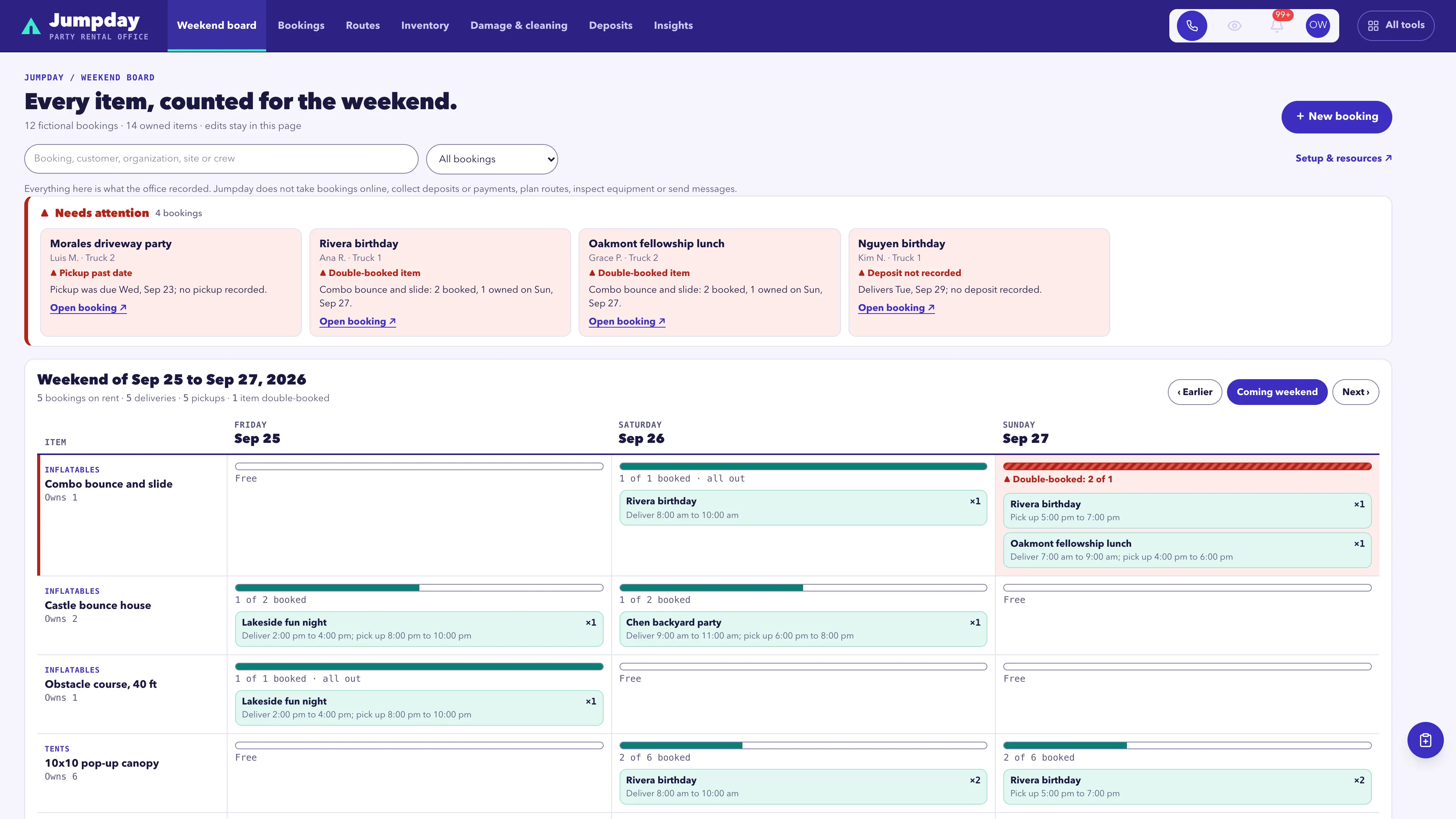
A weekend board with every owned item against Friday, Saturday and Sunday: units booked against units owned for each item, the bookings holding it with their delivery and pickup windows, and double bookings flagged from today onward. Late pickups and holds with no recorded deposit lead the needs-attention strip.
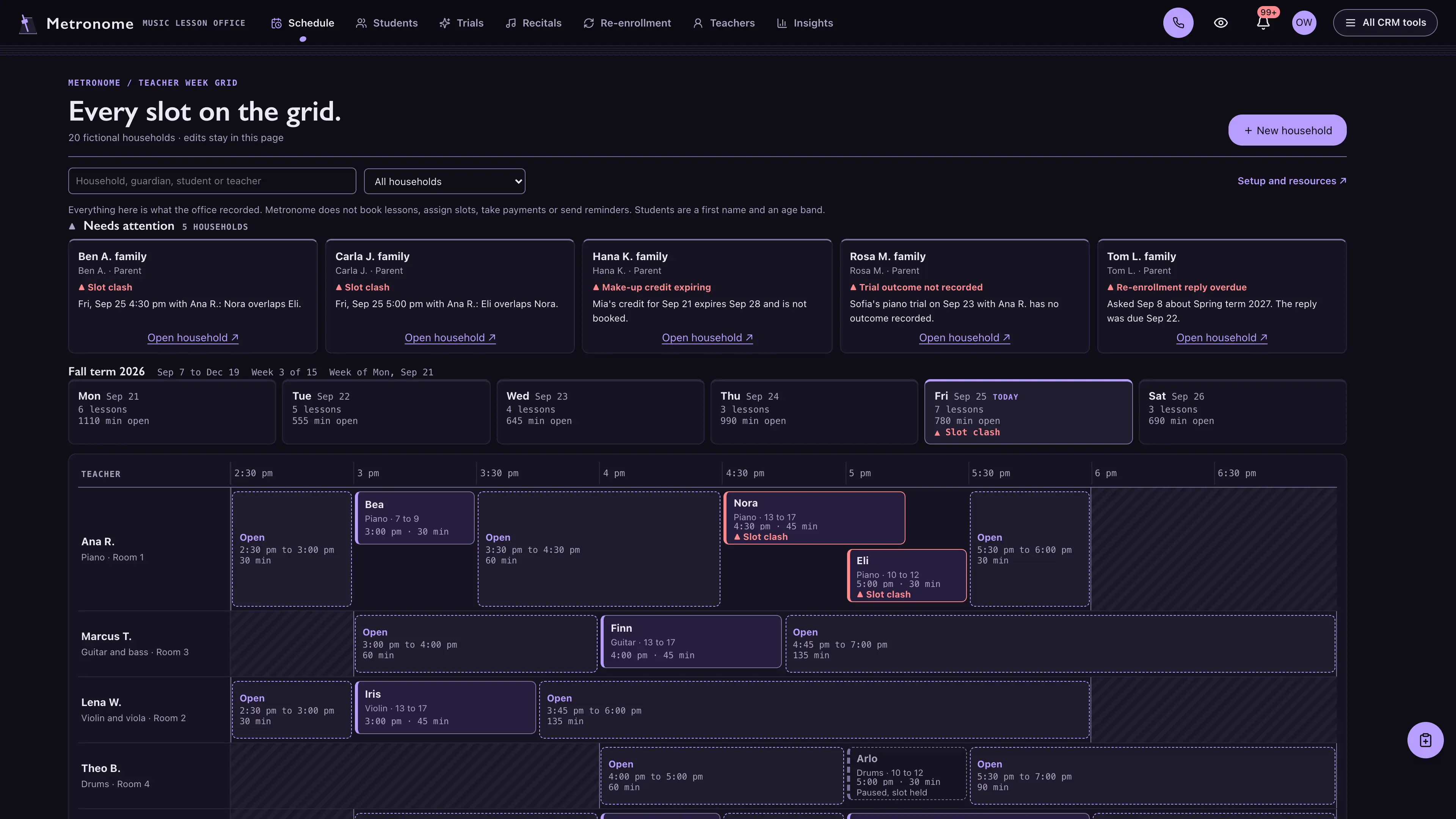
A teacher week grid for music lesson schools: teachers as rows, the day in 15-minute slots, weekly lessons, make-ups and trials placed by time and open slots drawn as open time, led by slot clashes, expiring make-up credits, missing trial outcomes and overdue re-enrollment replies, with students kept to a first name and an age band.
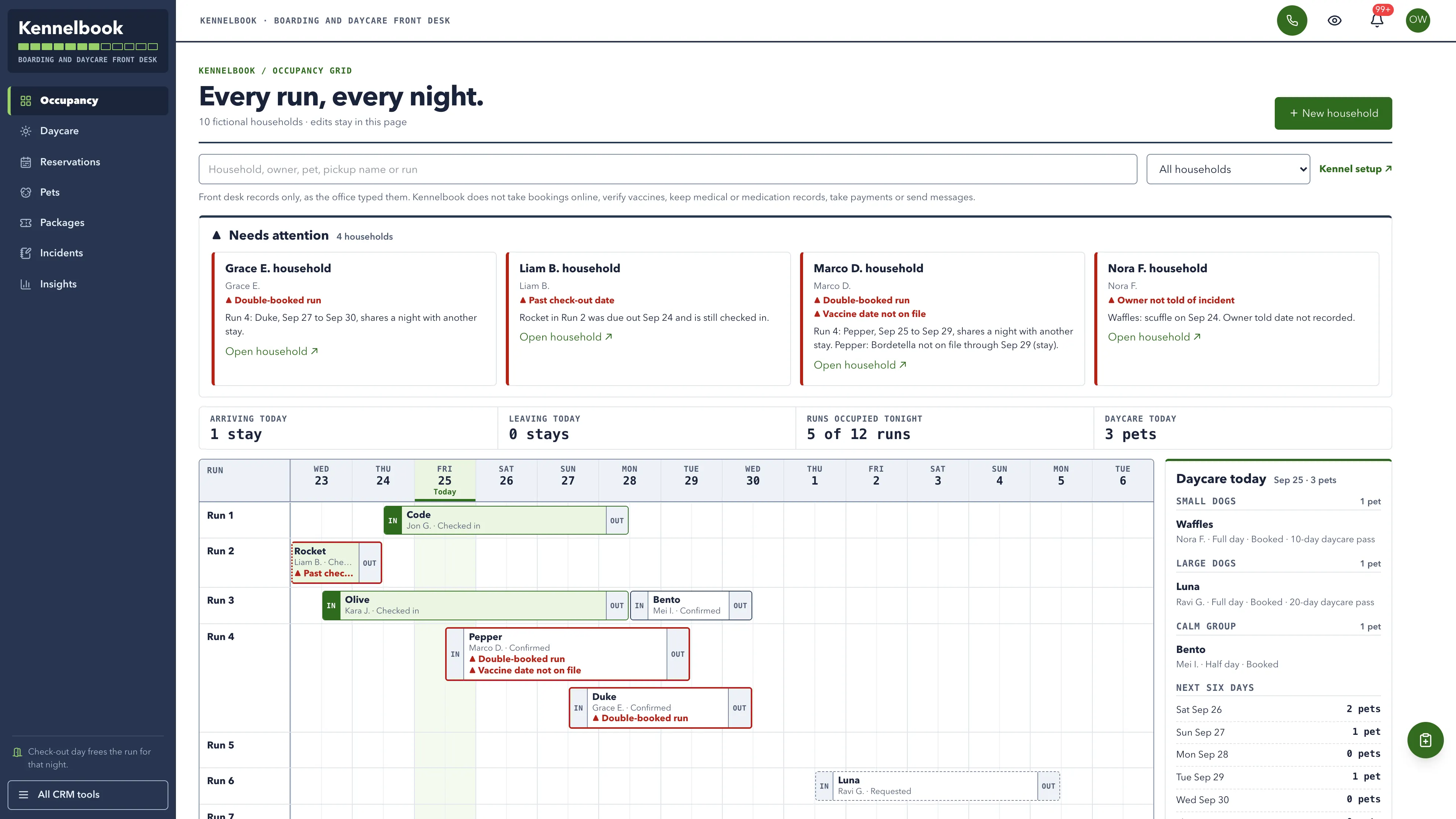
A kennel occupancy grid for boarding kennels and dog daycares: runs as rows and nights as columns, each stay drawn from check-in to check-out with double bookings in their own lane, daycare attendance by play group beside it, led by double-booked runs, vaccine dates not on file, pets past their check-out date and incidents the owner has not been told about. Front desk only, never a veterinary record.
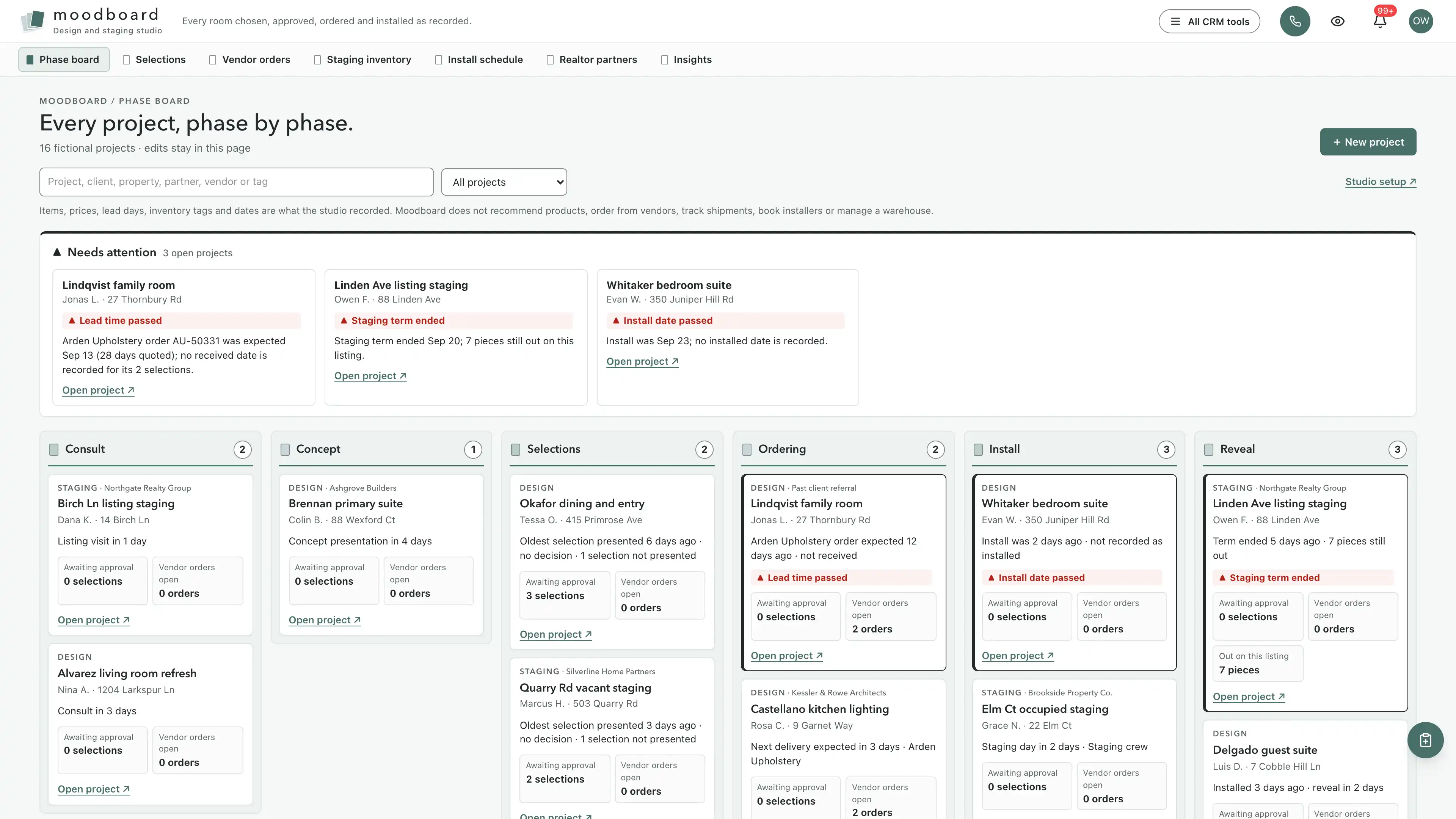
A project phase board for interior design and home staging studios: every open project in its phase from consult, concept and selections to ordering, install and reveal, each card showing the selections still awaiting the client's approval and the vendor orders still open, led by lead times passed, install dates passed and staging terms ended, plus selections by room, vendor orders with recorded lead days, a staging inventory of which tagged piece is out on which listing, install days and realtor partners.
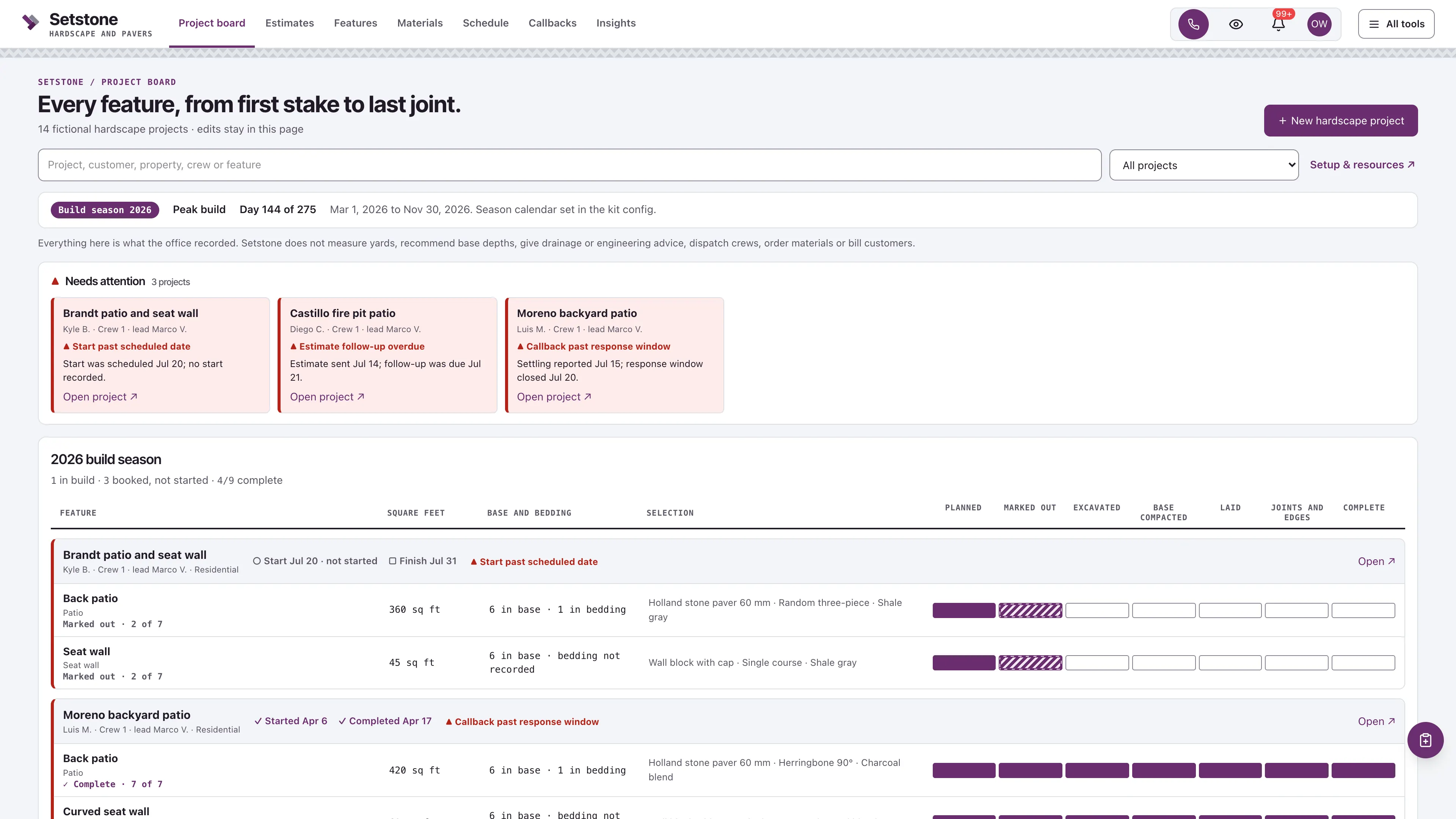
A project board by feature for hardscape and paver contractors: every patio, wall, walkway, driveway and set of steps with its recorded square feet, base and bedding depth and selection beside seven install stages, led by estimate follow-ups, late starts, late finishes and callbacks past their response window. Off season it leads with next season's bookings and estimates.
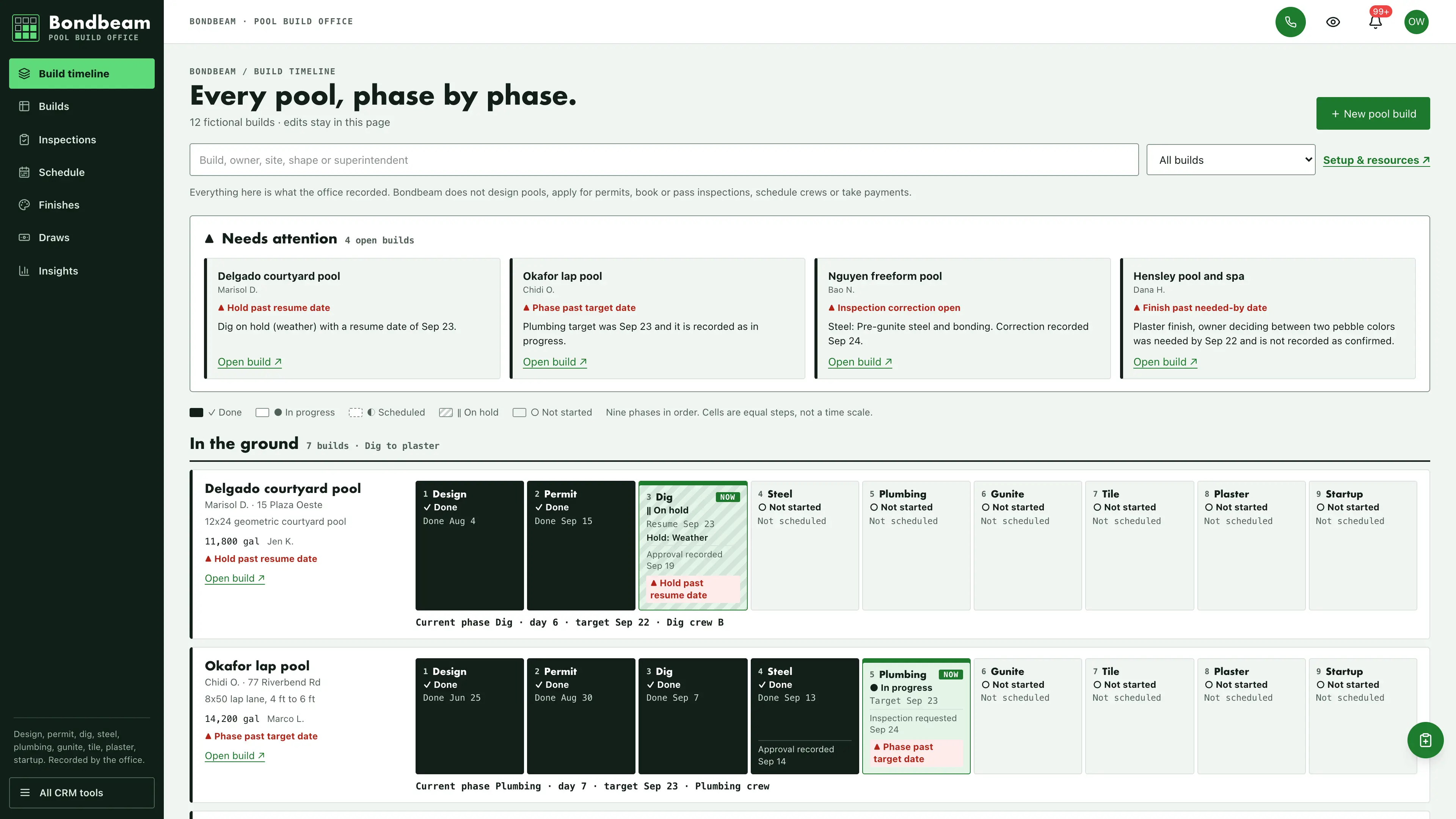
A build timeline for pool builders: every pool with its nine phases in order, from design and permit through dig, steel, plumbing, gunite, tile and plaster to startup, each with its recorded dates, crew, holds and inspection state, led by phases past their target, holds past their resume date, open inspection corrections and finishes past their needed-by date. Bondbeam records inspections as the office typed them and never decides that work met code.
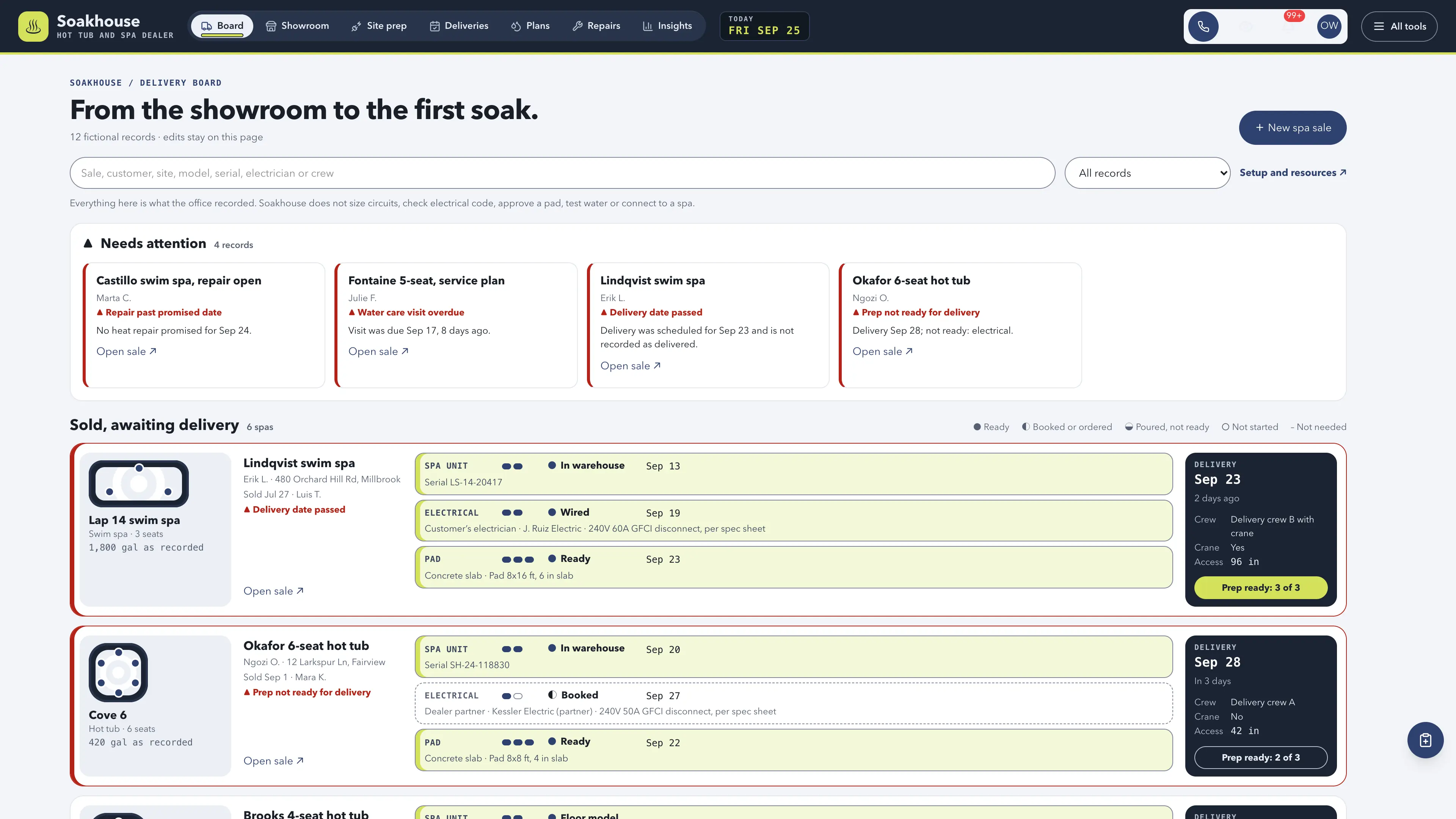
A delivery board for hot tub and swim spa dealers: every sold spa with a spa tile of its recorded seats and gallons, three stacked prep lanes for the spa unit, electrical and pad exactly as the office recorded them and a delivery box, led by prep not ready for delivery, passed delivery dates, overdue water care visits and repairs past their promise, then a service-plan roster. Soakhouse never sizes circuits or approves pads.
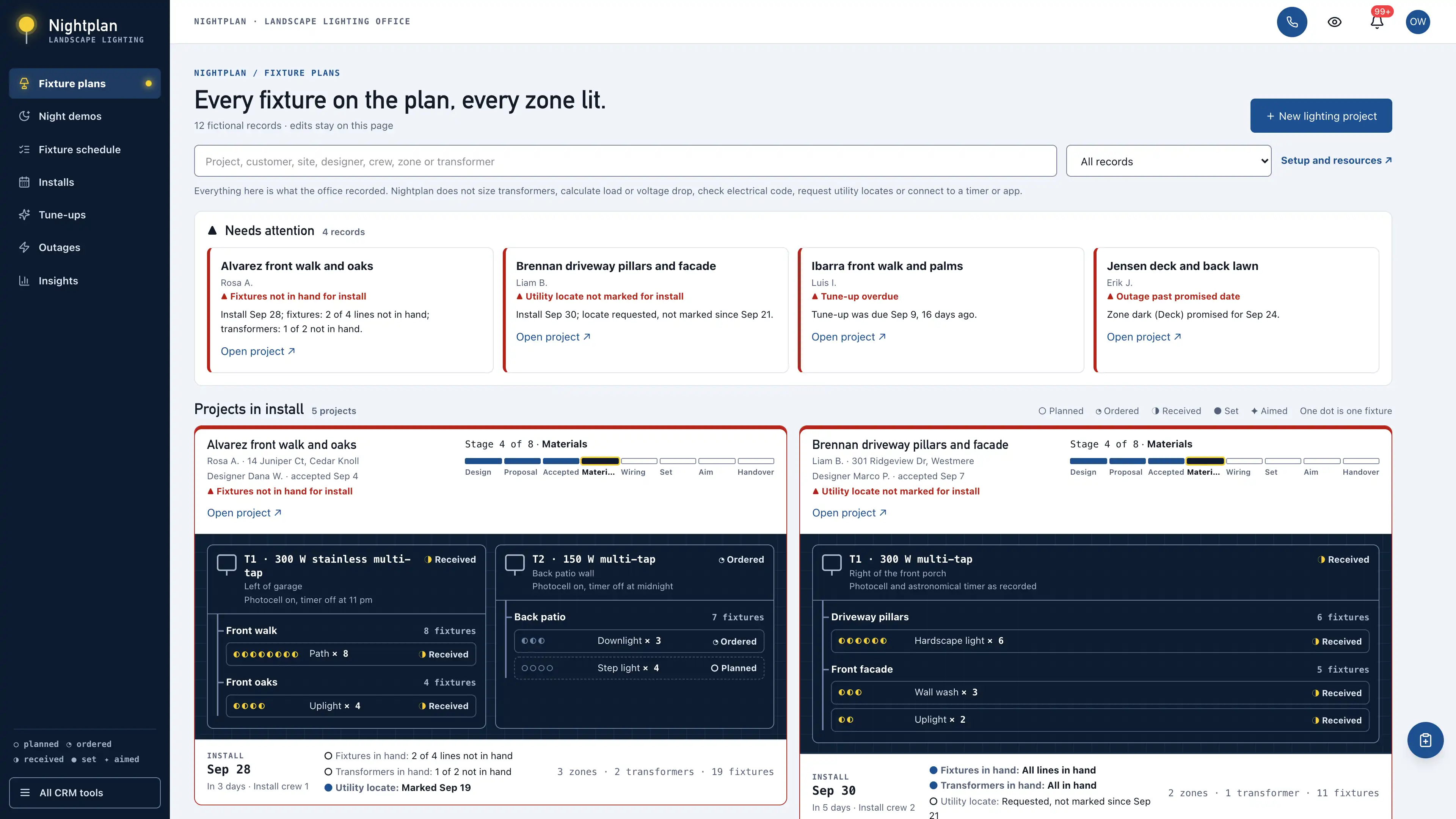
A fixture plan board for landscape lighting companies: every project in install drawn as its recorded wiring tree of transformers, zones and fixture counts on a night panel, with an eight-step install stage track and three before-install checks for fixtures, transformers and the utility locate, led by installs not ready, overdue tune-ups and outages past their promise, then a tune-up roster. Nightplan never sizes transformers or adds up watts.
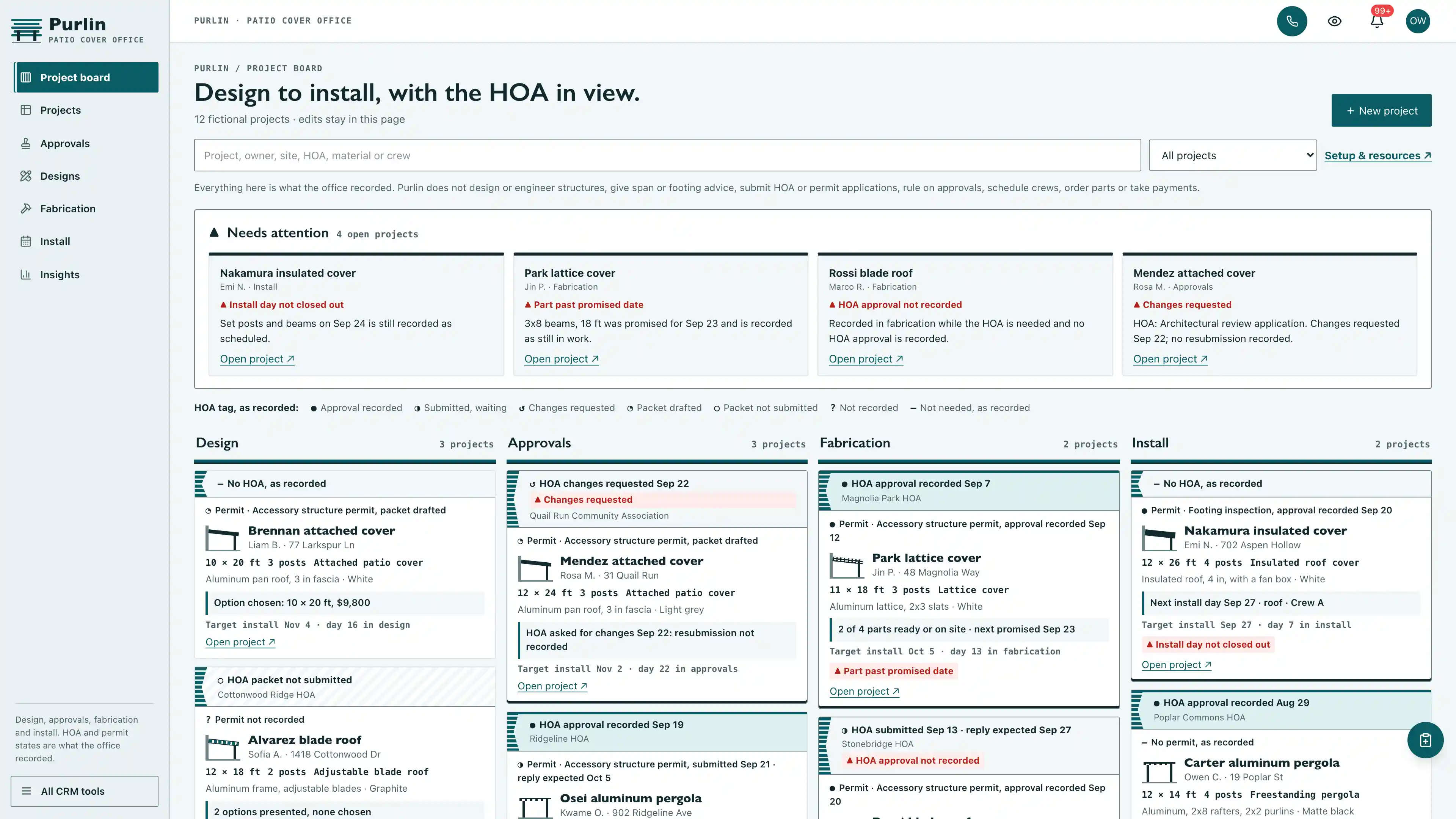
A project board for patio cover and pergola companies: every structure in four stage columns for design, approvals, fabrication and install, each card led by the HOA status and permit line as the office recorded them, led by changes requested, fabrication ahead of a recorded HOA approval, parts past their promised date and install days not closed out. Purlin records reviews as the office typed them and never states that a structure is approved or compliant.
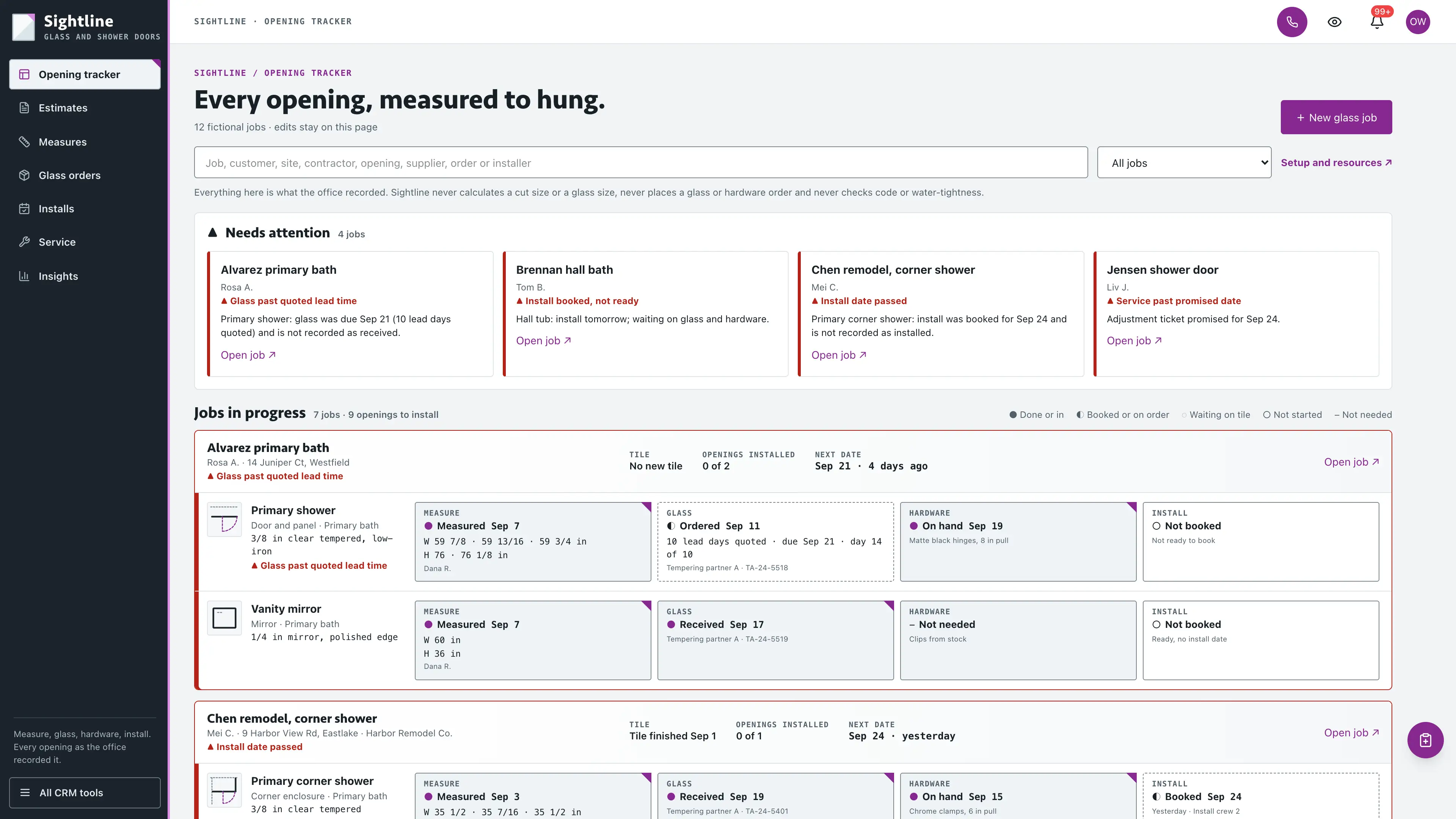
An opening tracker for glass and shower door shops: every shower, tub and mirror opening as a row with a plan glyph and four station cells for measure, glass, hardware and install, with widths and heights exactly as typed and each glass order against the lead days the supplier quoted, led by glass past its quoted lead time, installs booked before the glass is in, passed install dates and service past its promise. Sightline never calculates a cut size or orders glass.
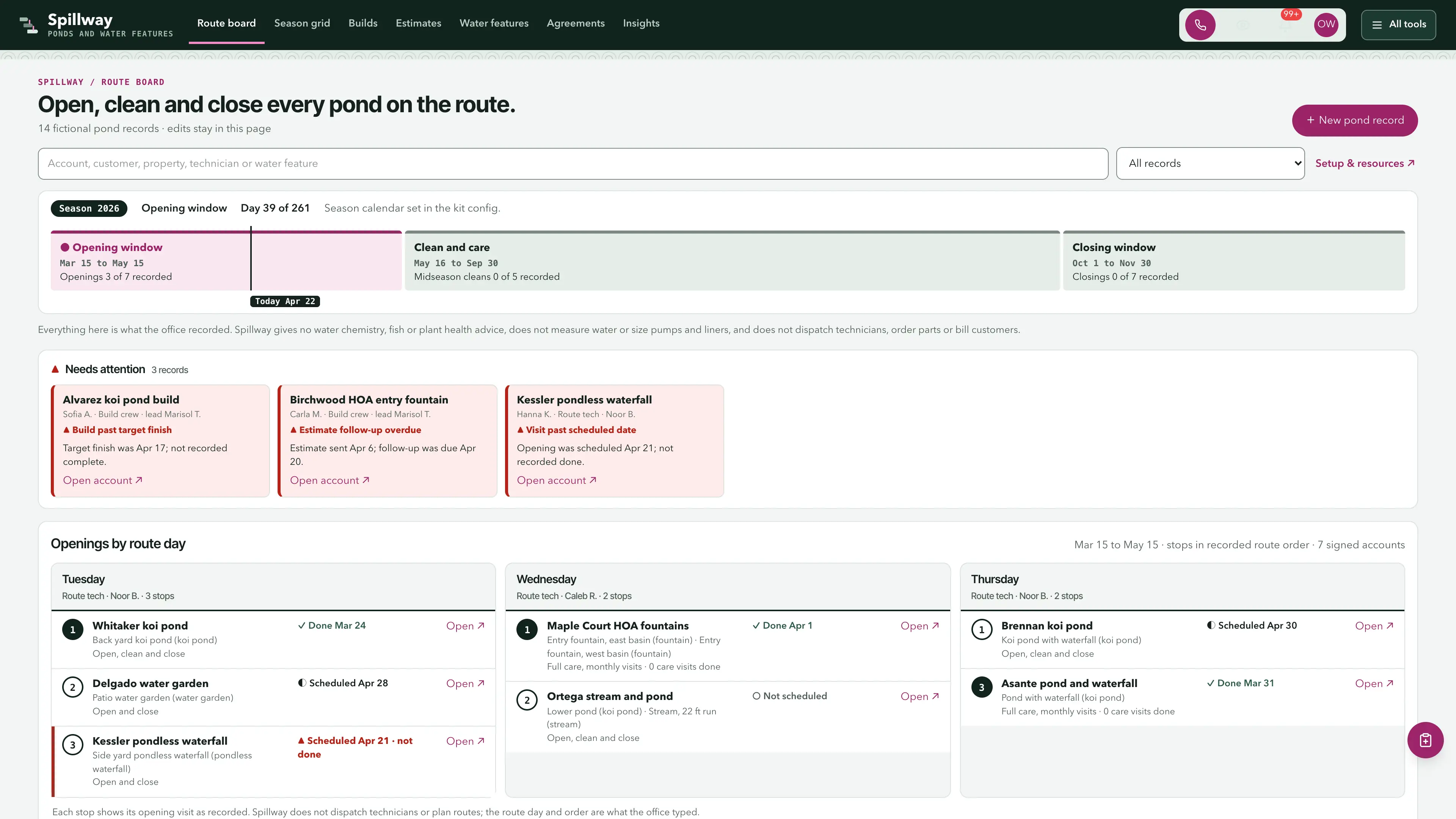
A seasonal route board for pond and water feature companies: the opening, midseason clean and closing windows worked as route lanes by route day, each stop saying in words whether its visit is done, scheduled, skipped or late, beside a build strip that moves new koi ponds, water gardens, pondless waterfalls and fountains through eight stages. Off season it leads with next season's agreements, booked openings and builds. Spillway gives no water chemistry, fish or plant health advice.
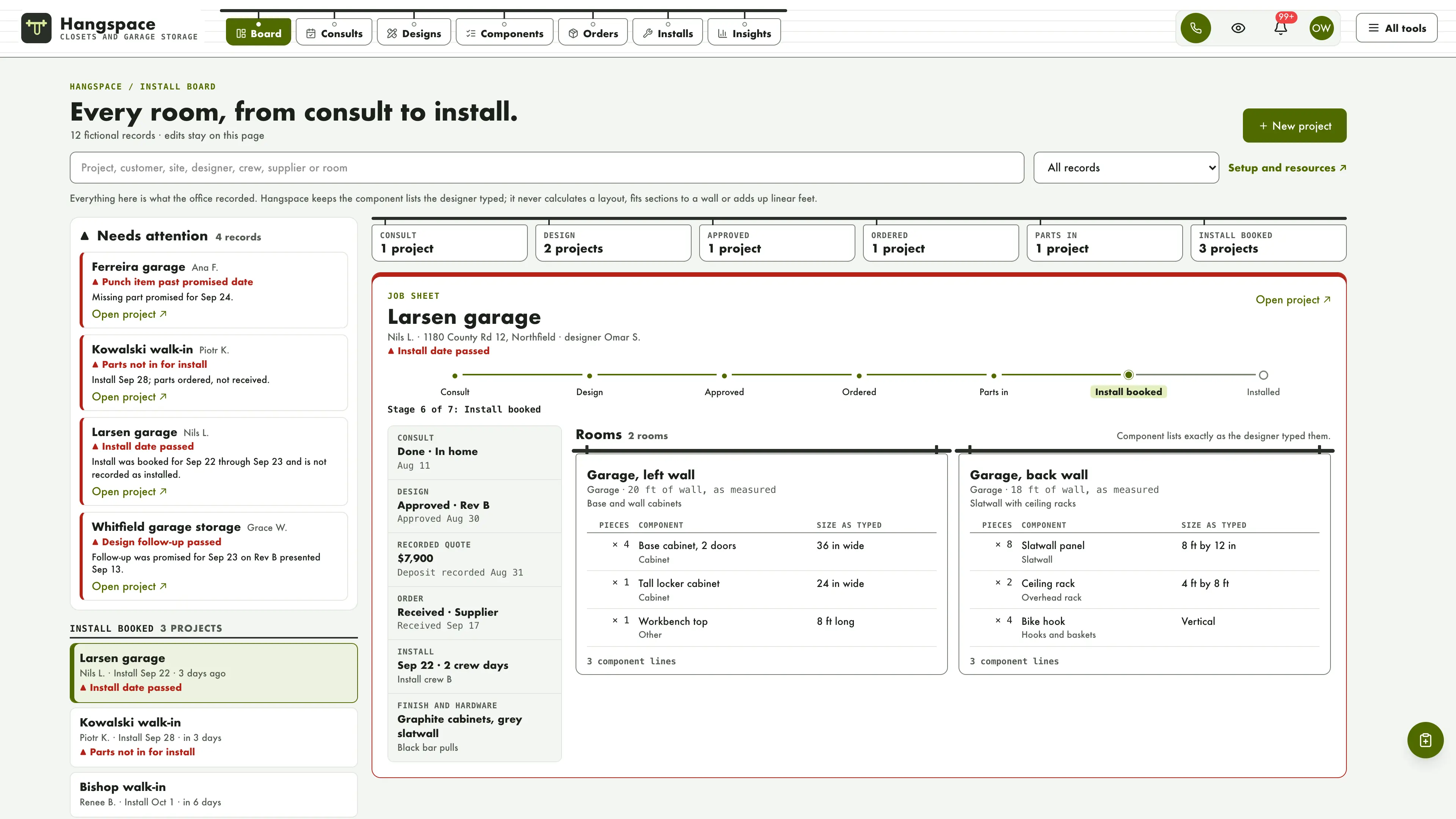
An install board for closet and garage storage companies: a stage rail and a project ladder from consult to install booked beside one open job sheet with a seven-station stepper and a rod-hung card for every room, each carrying its wall length as measured and its component list exactly as the designer typed it, led by parts not in for an install, passed install dates, passed design follow-ups and punch items past their promise. Hangspace never calculates a layout or adds up linear feet.
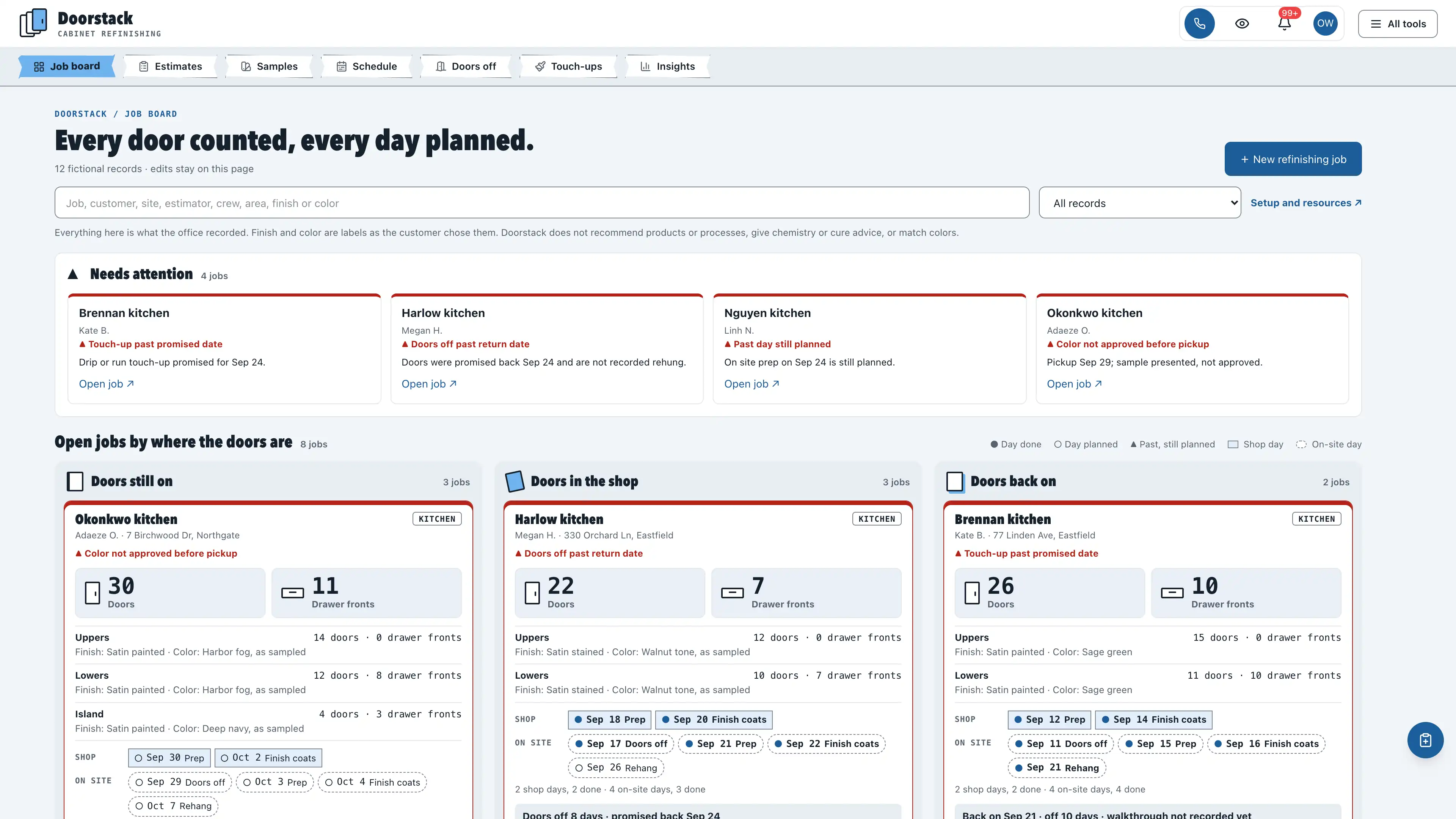
A job board for cabinet refinishing companies: every open job in one of three columns by where its doors are (still on, in the shop, back on), with door and drawer front counts in two separate tiles, each area’s finish and color exactly as the customer chose them, and a shop track above an on-site track of recorded days, led by colors not approved before pickup, doors past their return date, past days still planned and touch-ups past their promise. Doorstack never recommends a product or adds doors to drawer fronts.
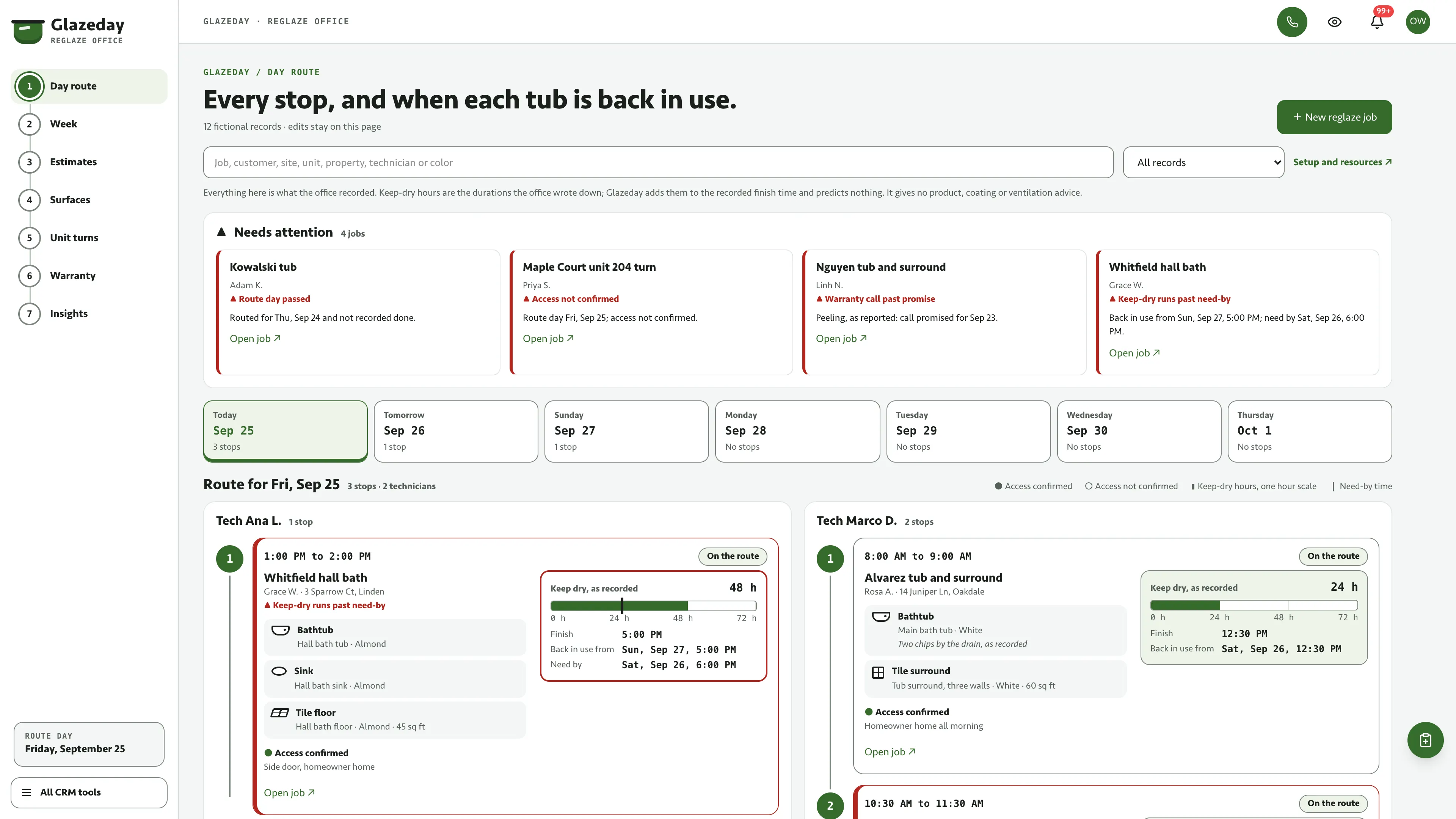
A day route for bathtub and tile reglazing companies: one lane per technician with numbered stops in recorded order, each showing the arrival window, the surfaces and colors, access confirmed or not and a keep-dry strip on one hour scale with the back-in-use time worked out from the recorded finish time and keep-dry hours, led by access not confirmed, keep-dry running past the need-by, passed route days and warranty calls past their promise. Glazeday gives no product or curing advice and predicts nothing.
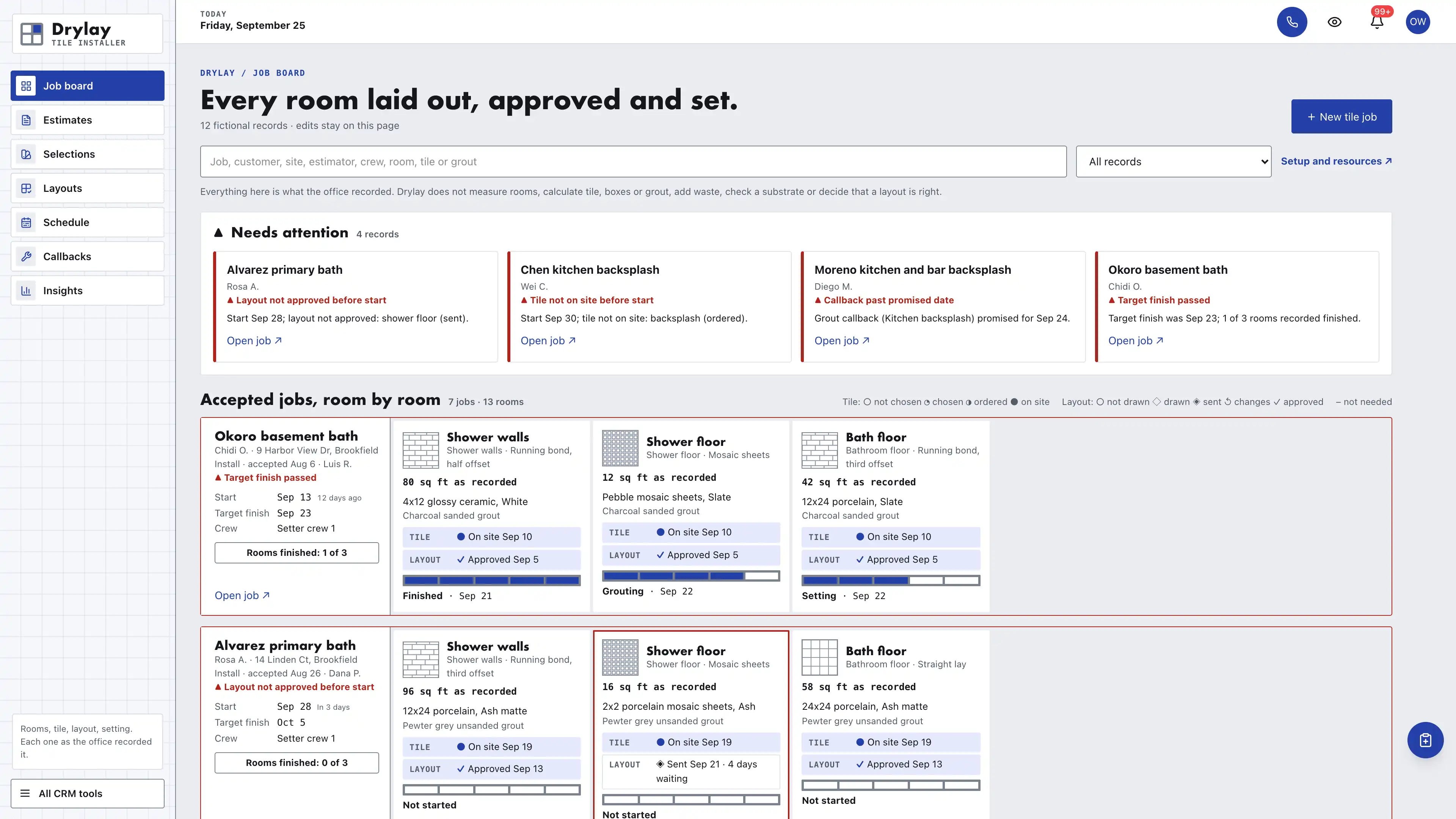
A job board for tile installers: every accepted job as a band of room tiles, each with a drawing of its recorded pattern, square feet as recorded, the tile and grout chosen, tile and layout approval status and a five-joint install course from surface prep to finished, led by layouts not approved or tile not on site before the start, passed target finishes and callbacks past their promise. Drylay never calculates tile, boxes or grout.
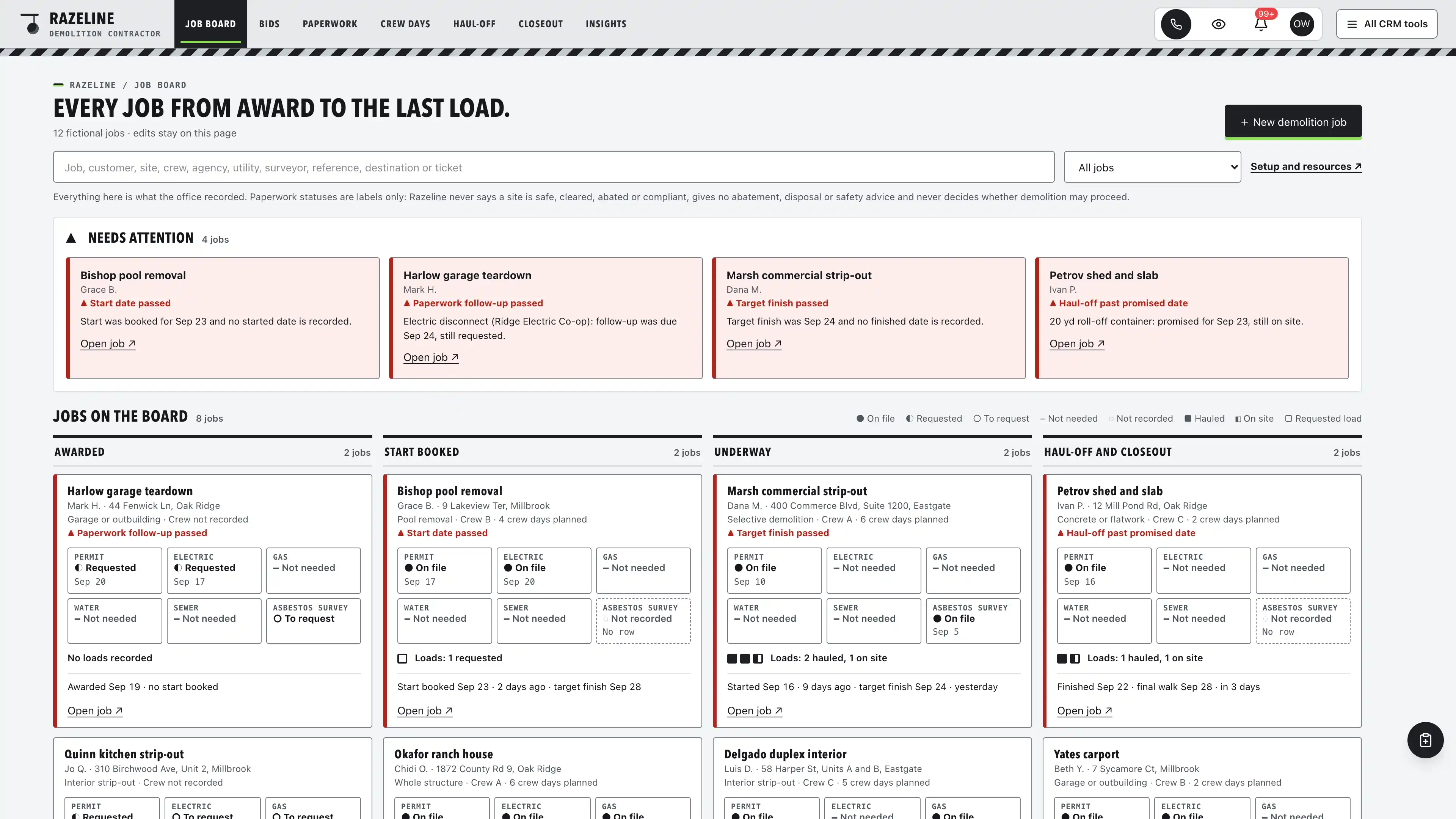
A job board for demolition contractors: every awarded job in a docket column (awarded, start booked, underway, haul-off and closeout) with six paperwork tags for the permit, electric, gas, water, sewer and asbestos survey status exactly as the office recorded them, and one pip per haul-off load, led by passed start dates, passed paperwork follow-ups, loads past their promised date and passed target finishes. Razeline never says a site is safe or cleared and never decides whether demolition may proceed.
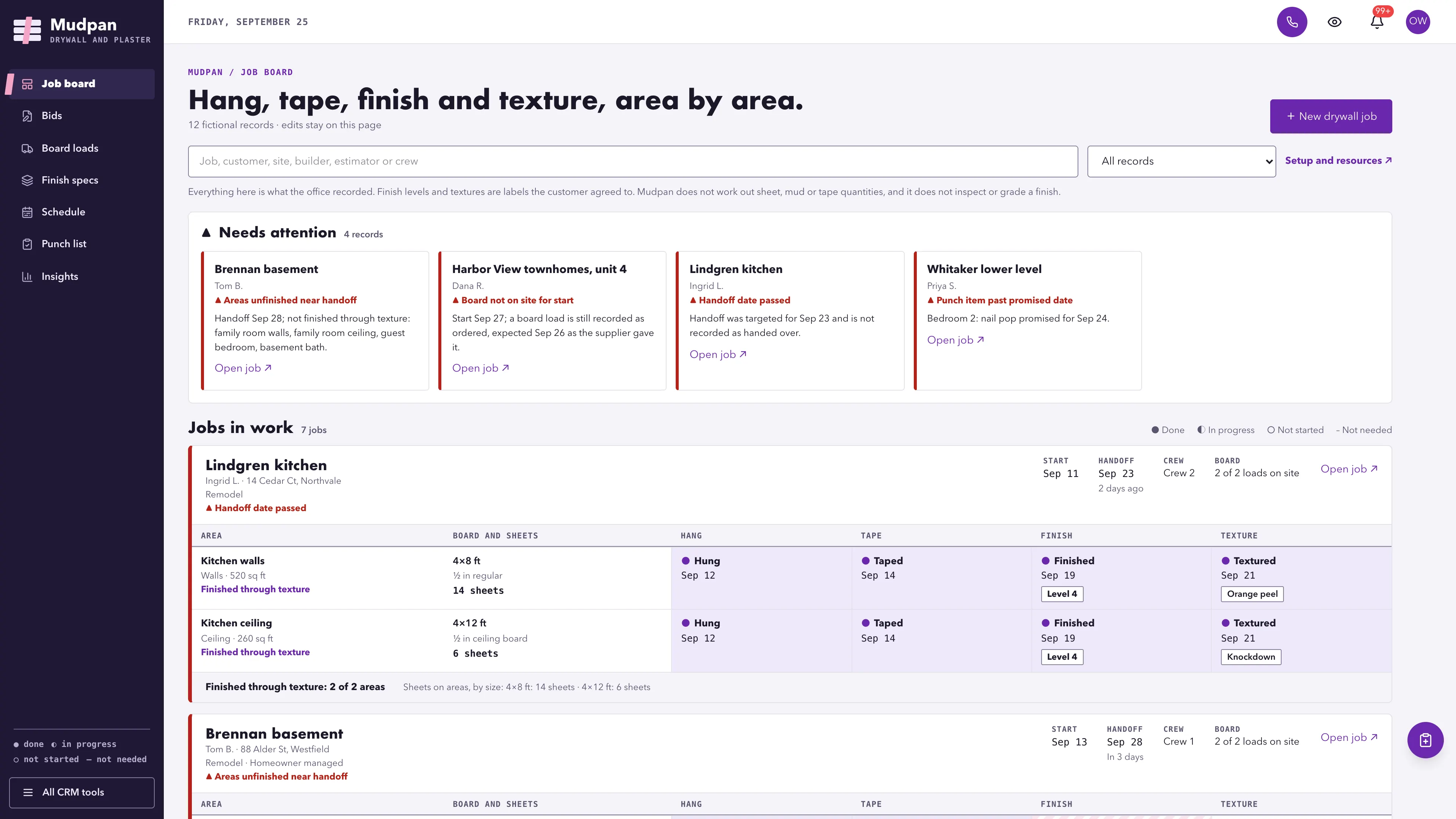
A job board for drywall and plaster contractors: every won job as a card with one row per area, its board and sheet count as typed, and hang, tape, finish and texture cells with the finish level and texture as labels, led by board not on site for a start, areas unfinished near the handoff, passed handoff dates and punch items past their promise. Mudpan never works out sheet, mud or tape quantities and never grades a finish.
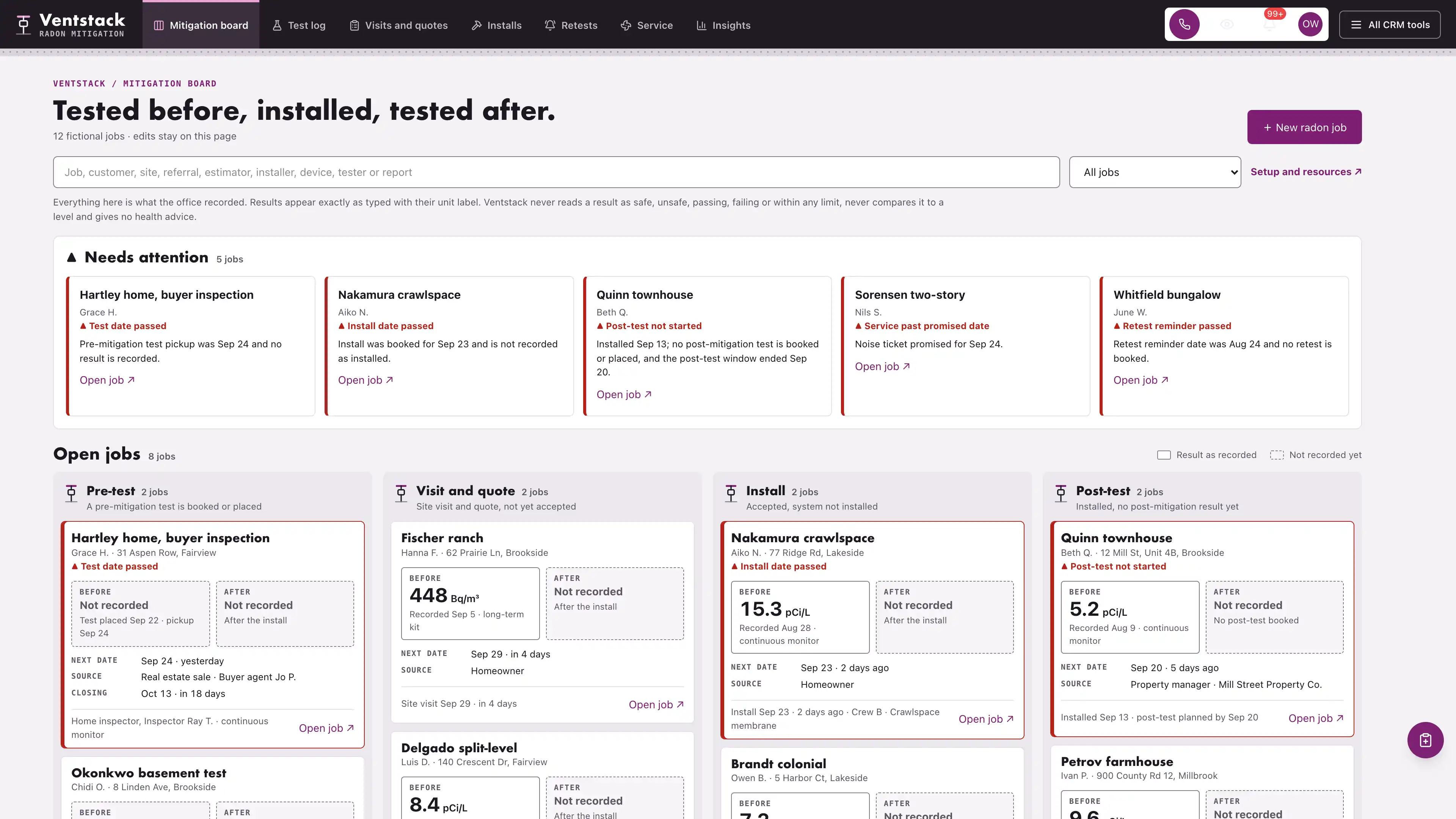
A mitigation board for radon mitigation contractors: every open home in one of four phase columns, pre-test, visit and quote, install and post-test, each card with a before and after pair of results exactly as typed with their unit label, led by passed test dates, passed install dates, post-tests not started, passed retest reminders and service past its promise. Ventstack never reads a result as safe, unsafe, passing or within any limit.
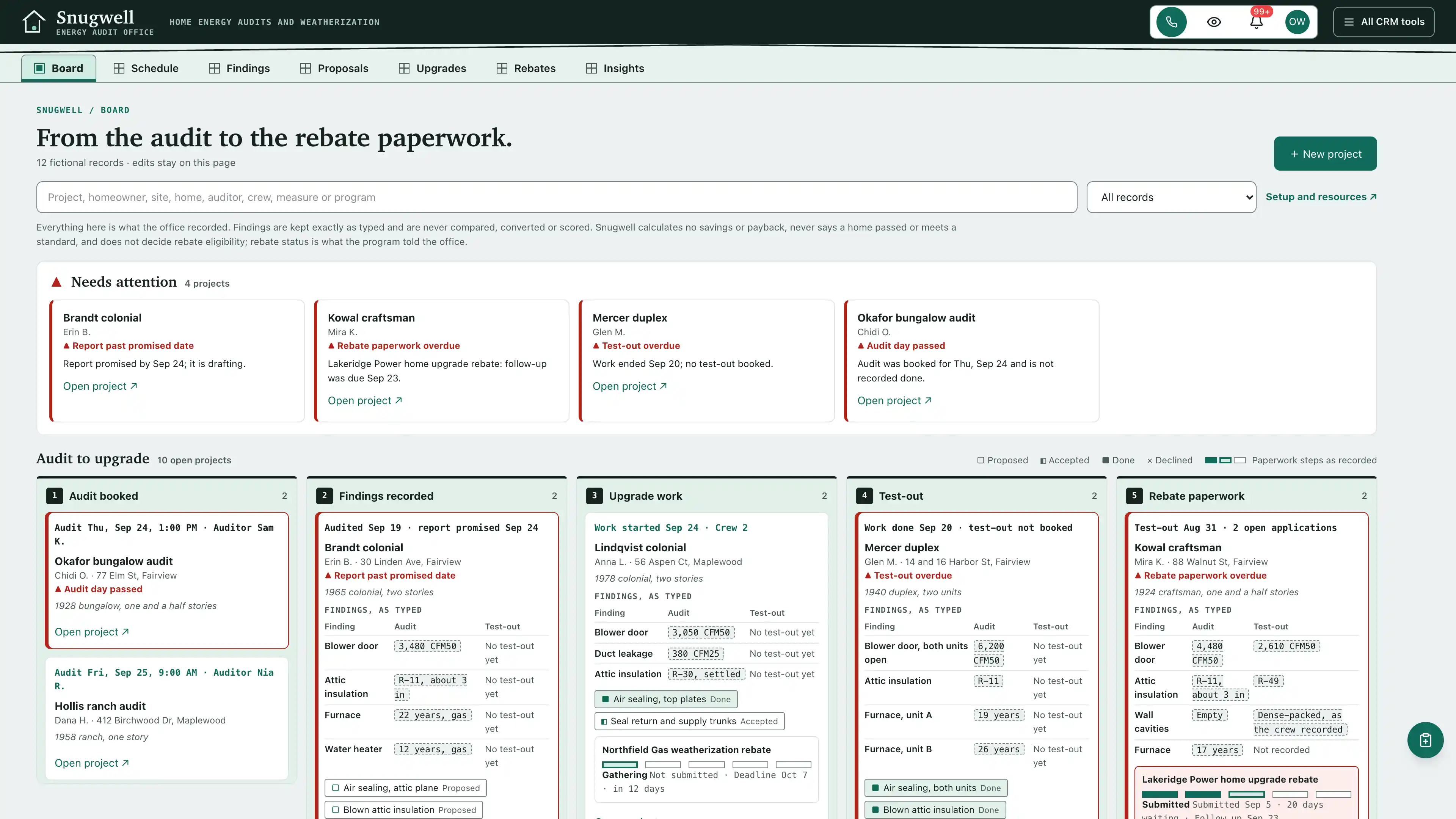
An audit-to-upgrade board for home energy audit and weatherization companies: every home in five columns from audit booked, findings recorded, upgrade work and test-out to rebate paperwork, with blower-door numbers, R-values and equipment ages kept exactly as the office typed them and a five-step paperwork strip for each rebate application, led by passed audit days, reports past their promised date, overdue test-outs and overdue paperwork. Snugwell never calculates savings, never says a home passed and never decides rebate eligibility.
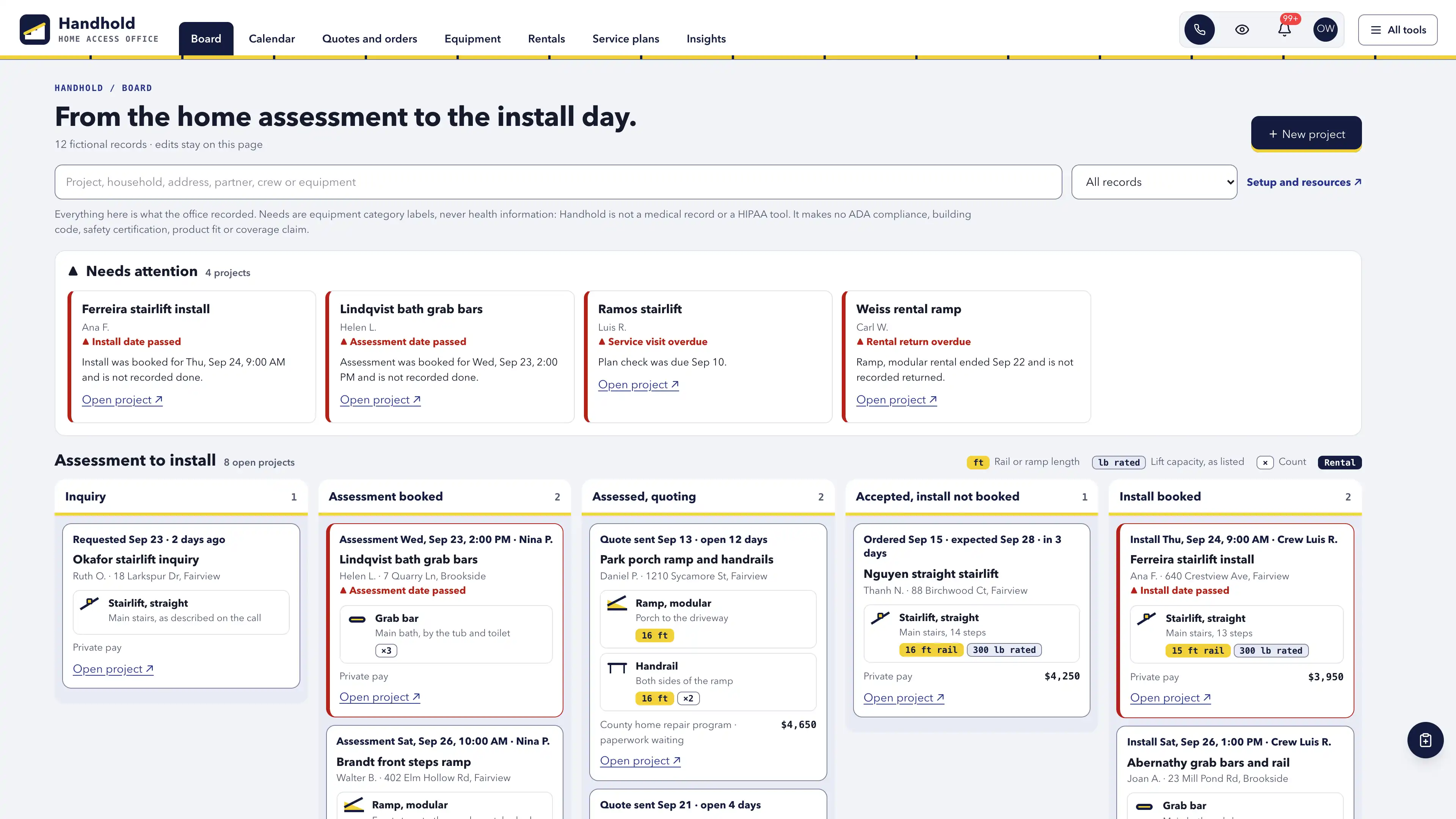
An assessment-to-install board for home accessibility dealers: stairlift, ramp, grab bar, handrail and platform lift projects in five columns from inquiry to install booked, each card with its next recorded date and equipment lines whose rail and ramp feet, rated pounds and counts stay in separate tags, led by passed assessment and install dates, rentals past their end date and overdue plan checks. Handhold records equipment labels only and is not a medical record or a HIPAA tool.
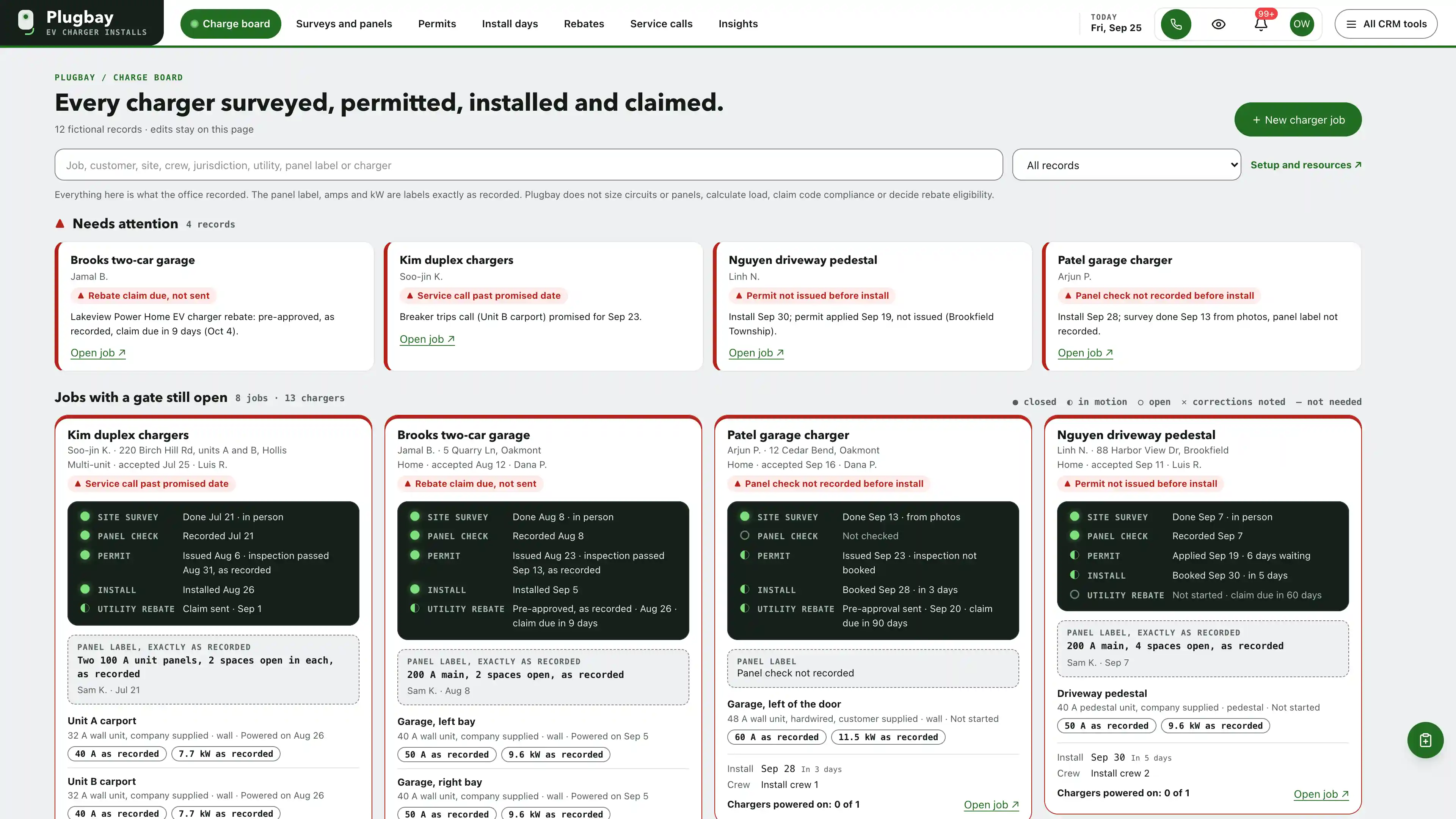
A charge board for EV charger installers: every job with a gate still open as a card with five status lights for the site survey, panel check, permit and inspection, install and utility rebate, the panel label exactly as the electrician recorded it and each charger with its amps and kW as recorded, led by installs coming up without a panel check or an issued permit, rebate claims due and service calls past their promise. Plugbay never sizes a circuit or panel, calculates load, claims code compliance or decides rebate eligibility.
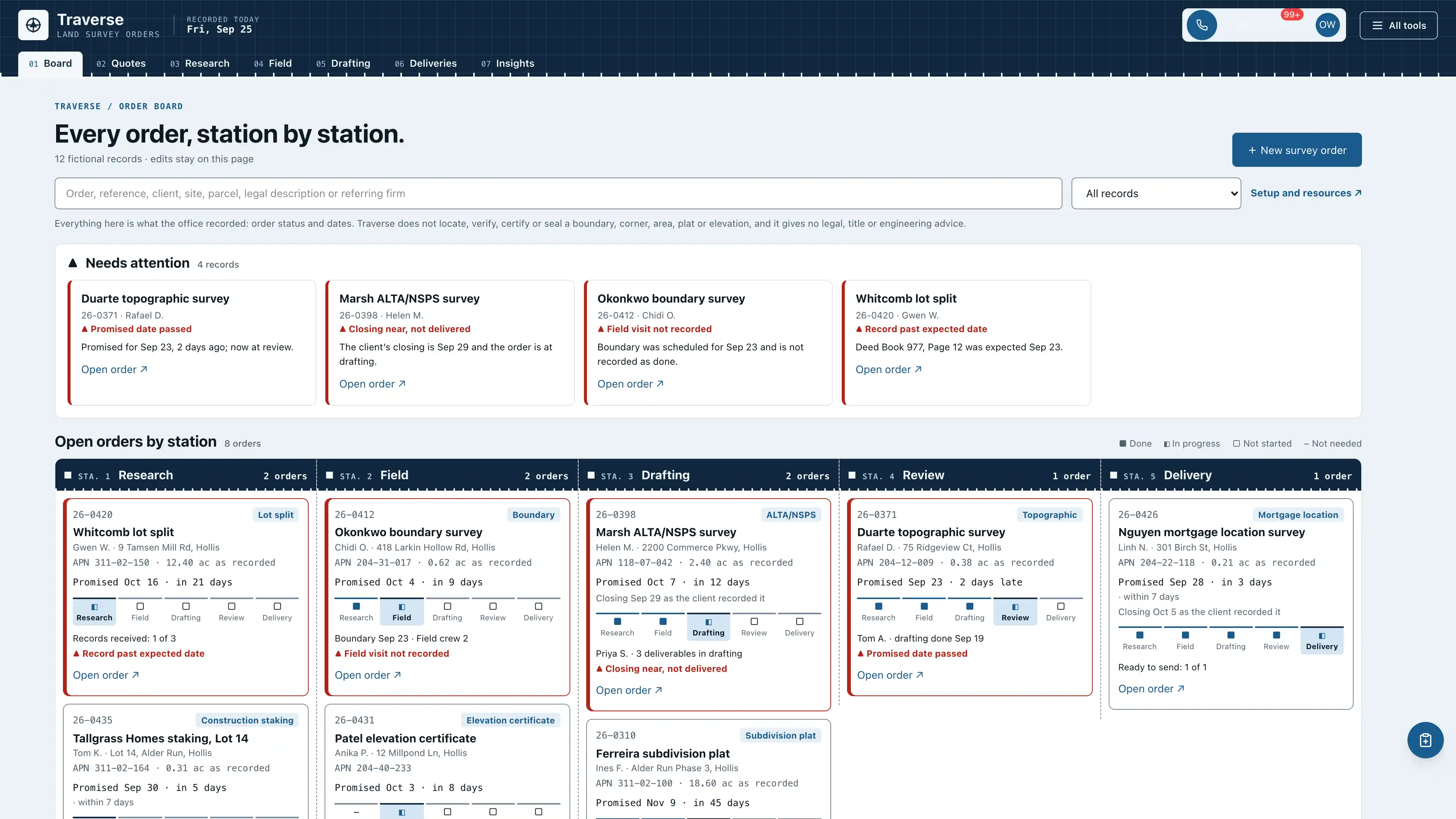
A survey order board for land surveying offices: every open order in five station columns for research, field, drafting, review and delivery, each card with its survey type, parcel and acres as recorded, the promised date in words and five station marks, led by promised dates passed, closings near an undelivered order, field visits with no recorded outcome and records past their expected date, then the next 14 days of promised dates, closings and field visits. Traverse records order status and dates only and never presents a boundary, plat or elevation as verified.
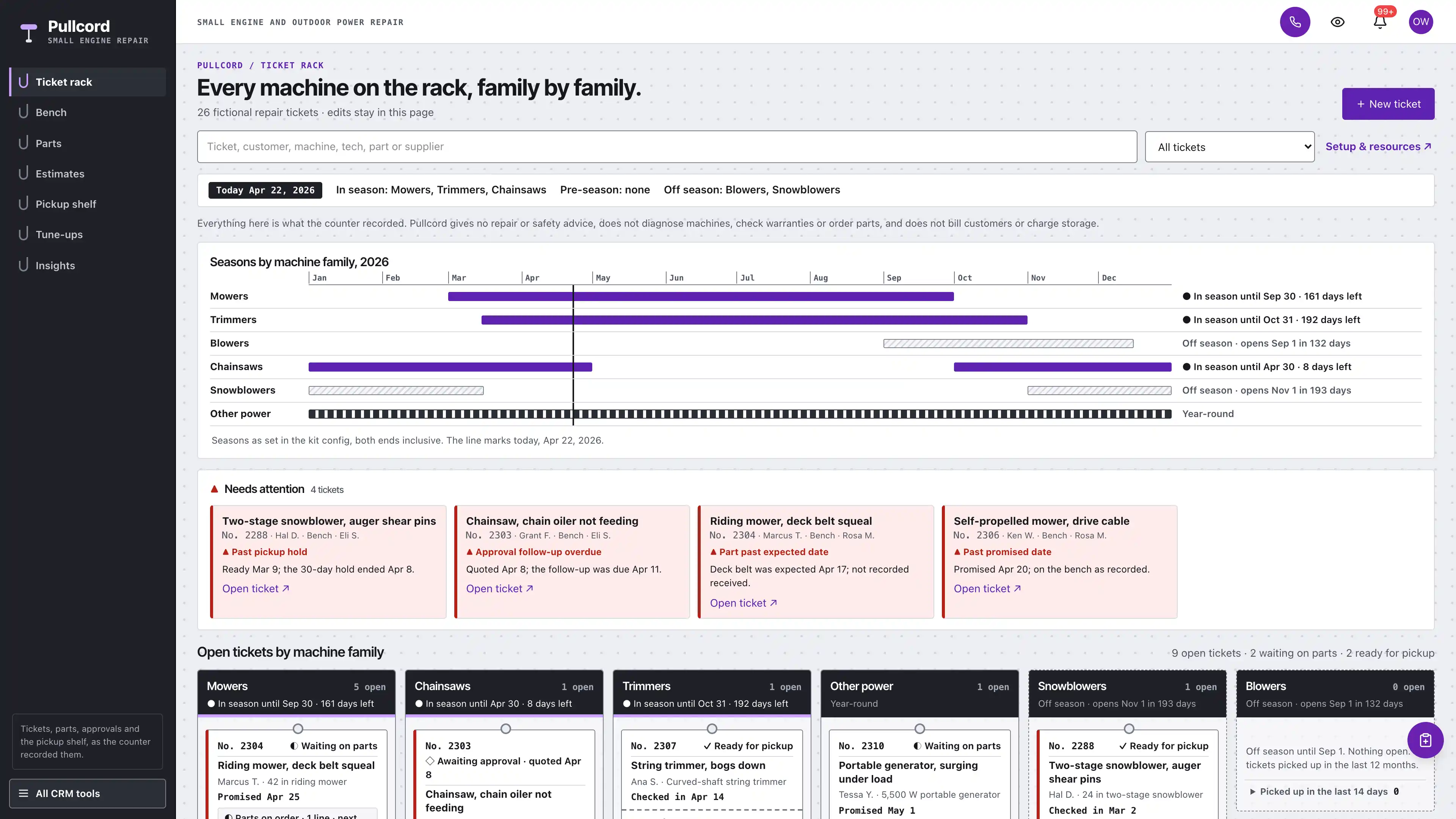
A ticket rack for small engine and outdoor power repair shops: every open ticket in its machine family column, mowers, trimmers, blowers, chainsaws, snowblowers and other power, each card saying in words whether it is awaiting approval, waiting on parts, on the bench or ready for pickup, led by promised dates passed, parts past their expected date, quotes past follow-up and machines past their pickup hold. Each family follows its own season, with booked pre-season tune-ups shown when it is out of season. Pullcord gives no repair or safety advice.
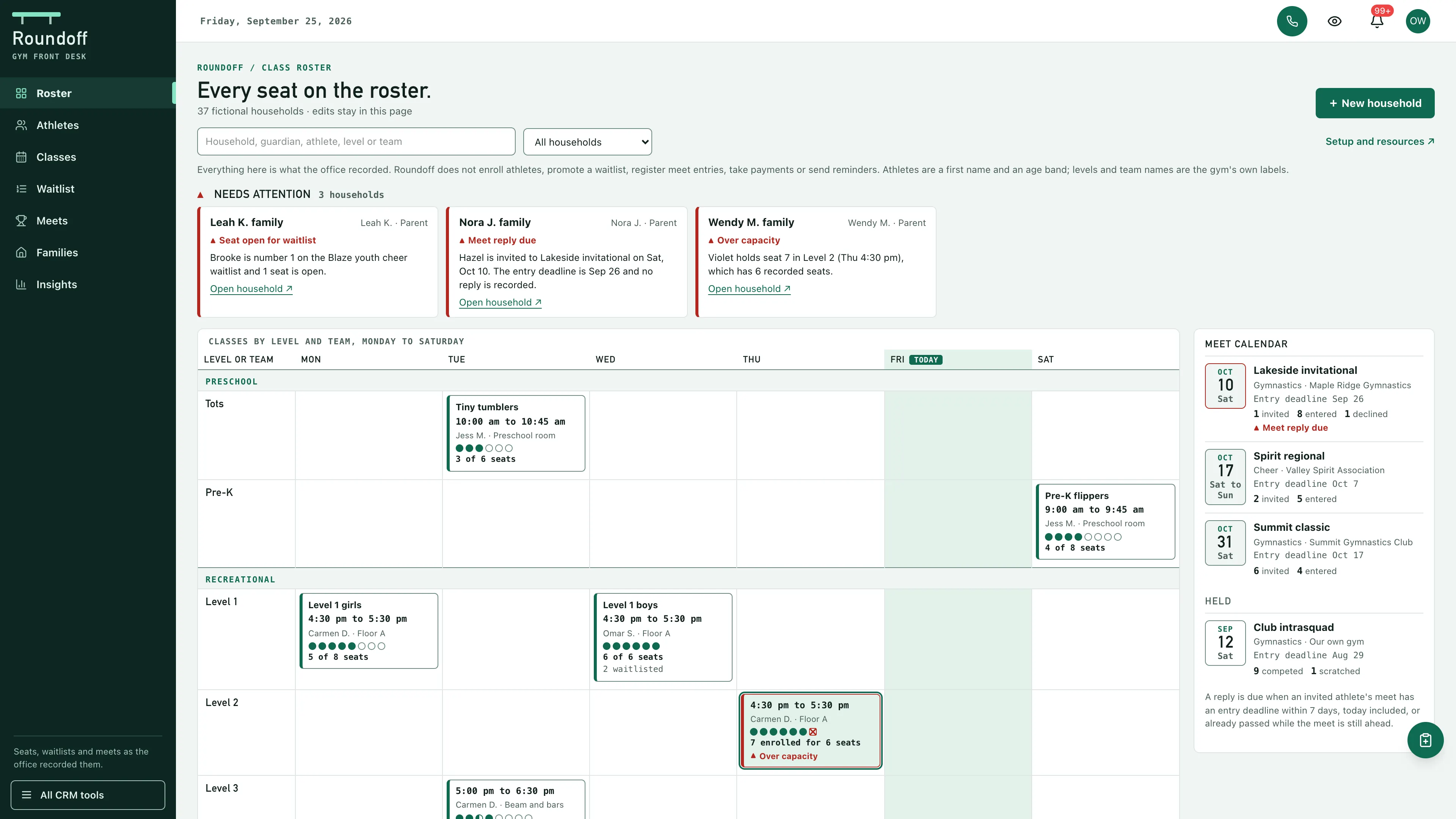
A roster grid for gymnastics and cheer gyms: the gym's levels and teams as rows, the weekdays as columns and every class a tile with its recorded seats drawn as pips, beside a meet calendar with entry deadlines, led by classes past their recorded seats, open seats with a waitlist and meet replies due, with athletes kept to a first name and an age band.
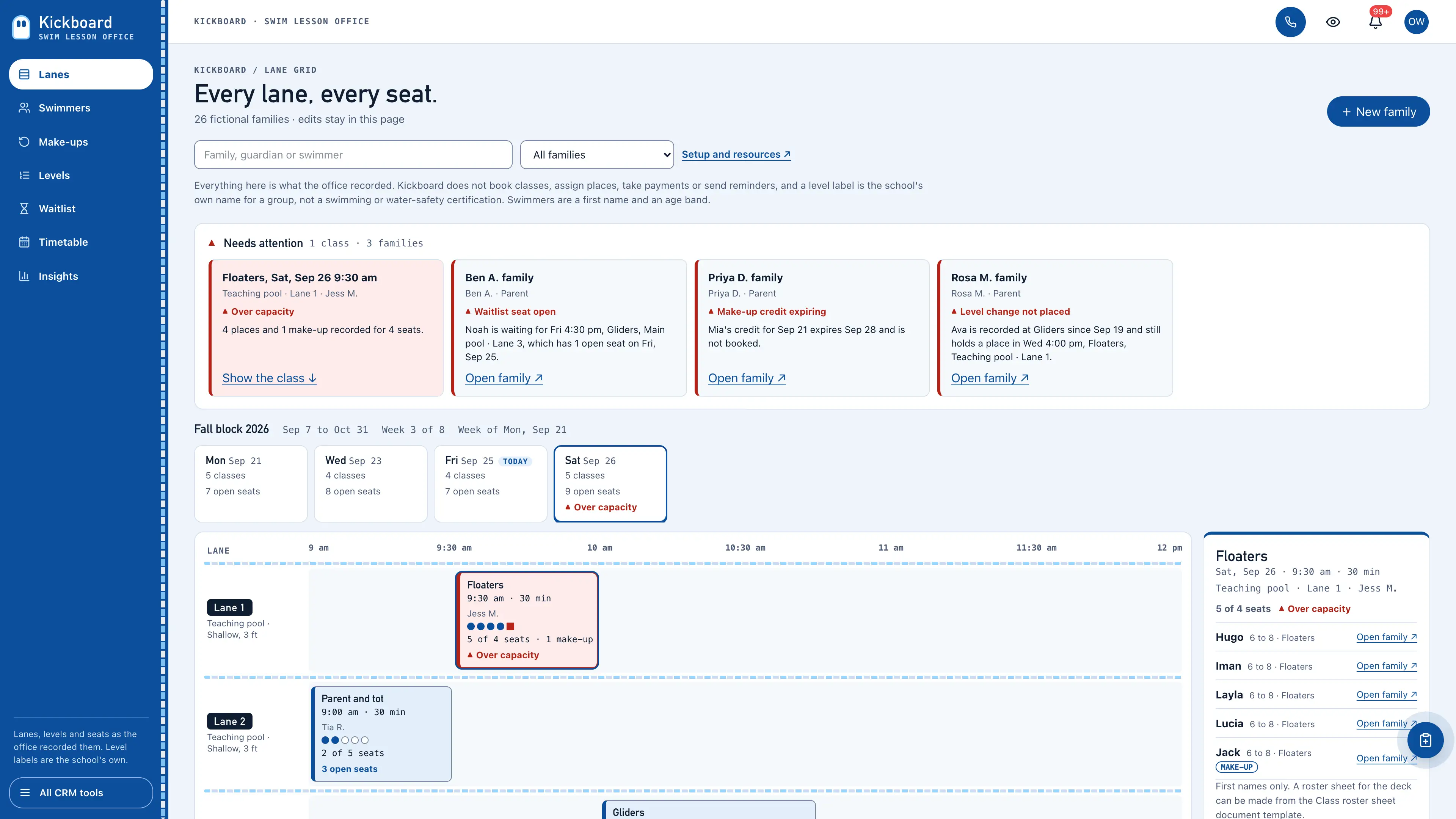
A lane grid for swim schools: the pool's lanes as rows and the day's time as columns, every group class placed by time with its level label, instructor and one mark per seat, led by classes over capacity, expiring make-up credits, level changes not yet placed and waitlist seats that have opened, with swimmers kept to a first name and an age band and levels kept as the school's own labels, never a certification.
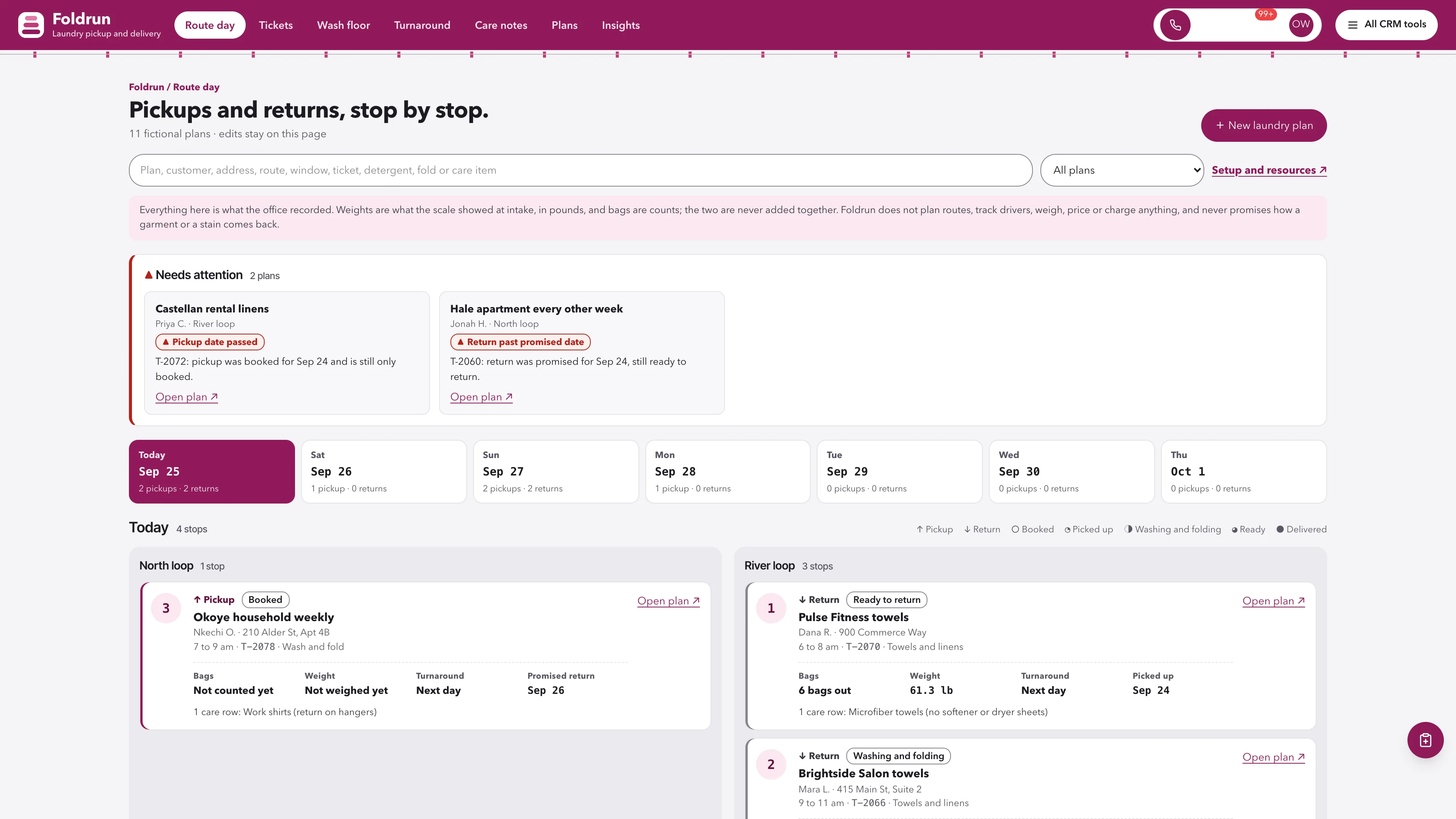
A route day for laundry pickup and wash-and-fold businesses: every stop on each route in the recorded stop order, with bags counted, the weight the intake scale showed and the promised return on separate lines, led by pickup dates that have passed and returns past their promised date, then tickets, a wash floor, turnaround, care notes and plans. Foldrun never adds bags to pounds and never promises how a garment or a stain comes back.
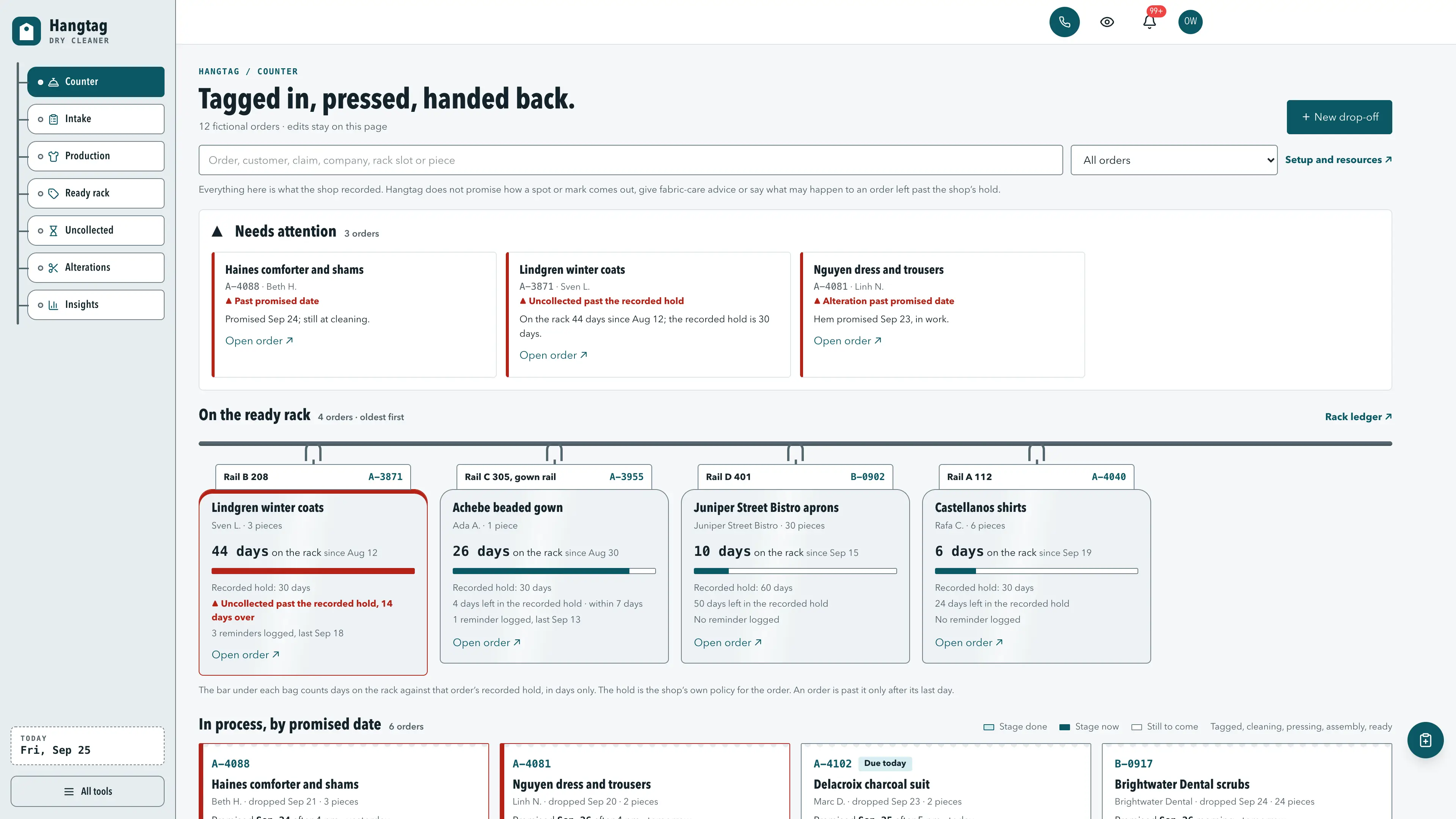
A counter workspace for dry cleaners: a ready rail that hangs every bagged order by rack slot, oldest first, with days on the rack against the hold your shop recorded, and claim slips for every order still in the shop with each piece at its stage, led by orders past their promise, orders uncollected past the recorded hold and alteration work past its promise. Hangtag never promises how a spot comes out.
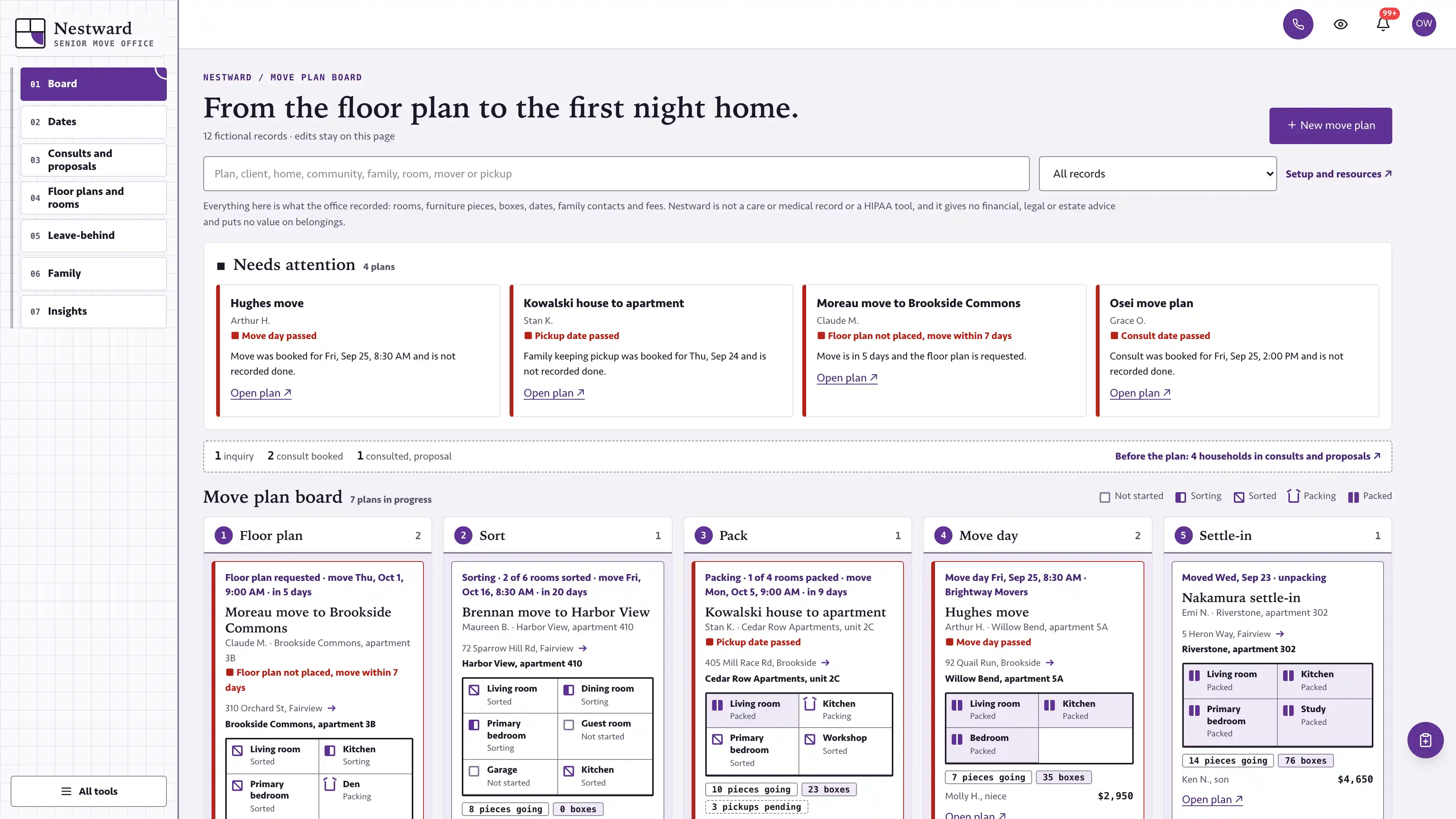
A move plan board for senior move managers: every plan in five phase columns (floor plan, sort, pack, move day and settle-in), each card with its next step in words, its rooms drawn as a small floor plan with a status for each room, furniture pieces going, boxes packed and pending pickups in separate tags and the family contact who decides, led by passed consults, move days and pickups and moves within 7 days whose floor plan is not placed. Nestward records rooms, furniture and boxes, is not a care or medical record or a HIPAA tool, and gives no financial, legal or estate advice.
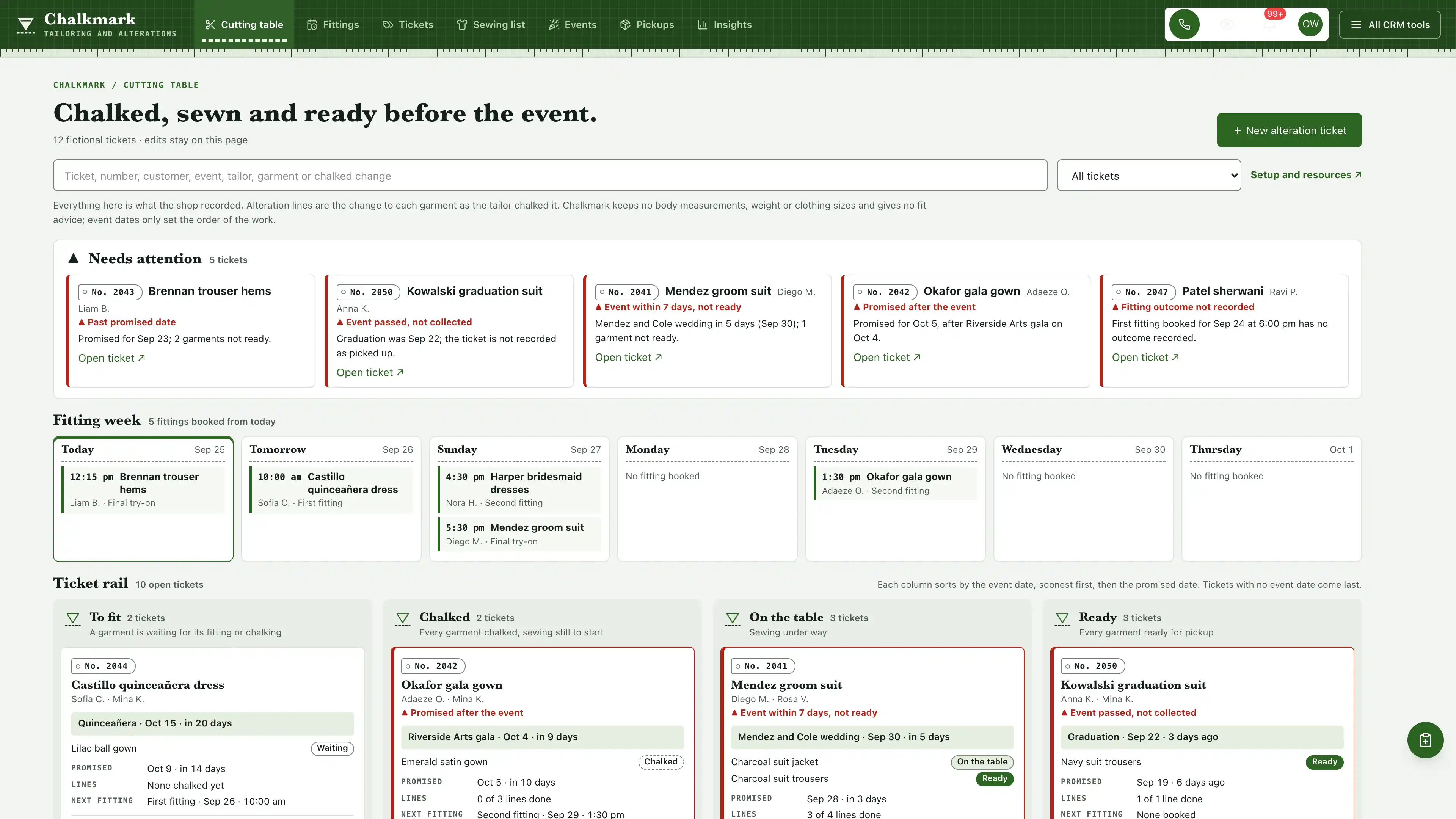
A cutting table for tailors and alterations shops: a seven-day fitting week above a ticket rail of open tickets in four columns (to fit, chalked, on the table and ready), each column ordered by the customer's event date, each card with the ticket number, the event countdown in words, every garment's state and the alteration lines done, led by past promises, promises after the event, events within 7 days, events passed and not collected, and fittings with no outcome recorded. Chalkmark records the change to each garment as chalked, never a person's measurements, weight or clothing size.
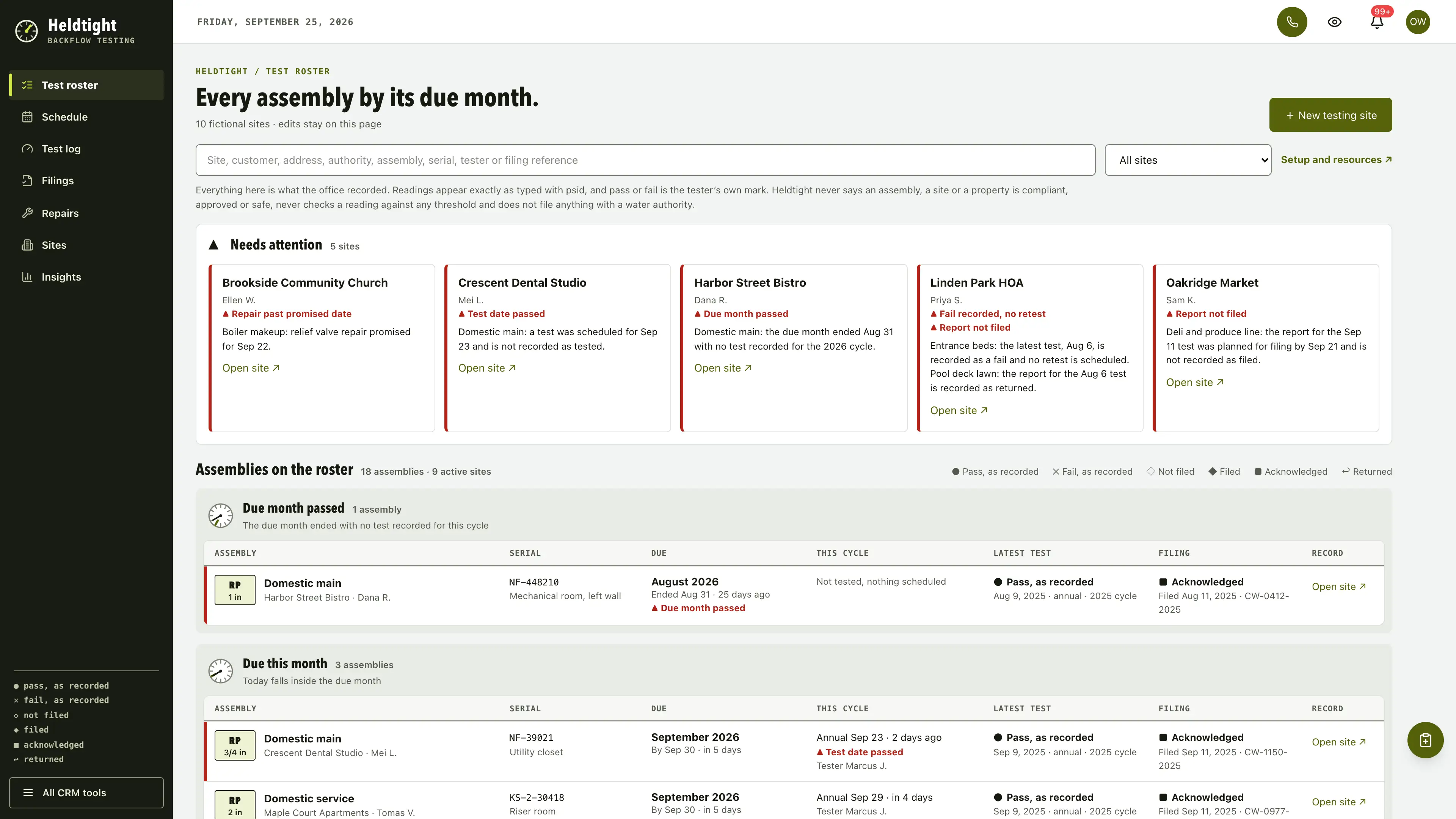
A test roster for backflow testing companies: every assembly on every site grouped by the due month the water authority notice shows, with this cycle's scheduled test, the latest result exactly as the tester marked it, readings as typed in psid and what the office recorded about filing the report, led by passed due months, passed test dates, fails with no retest, unfiled or returned reports and repairs past their promise. Heldtight records results and filings as labels and never says an assembly or a property is compliant.
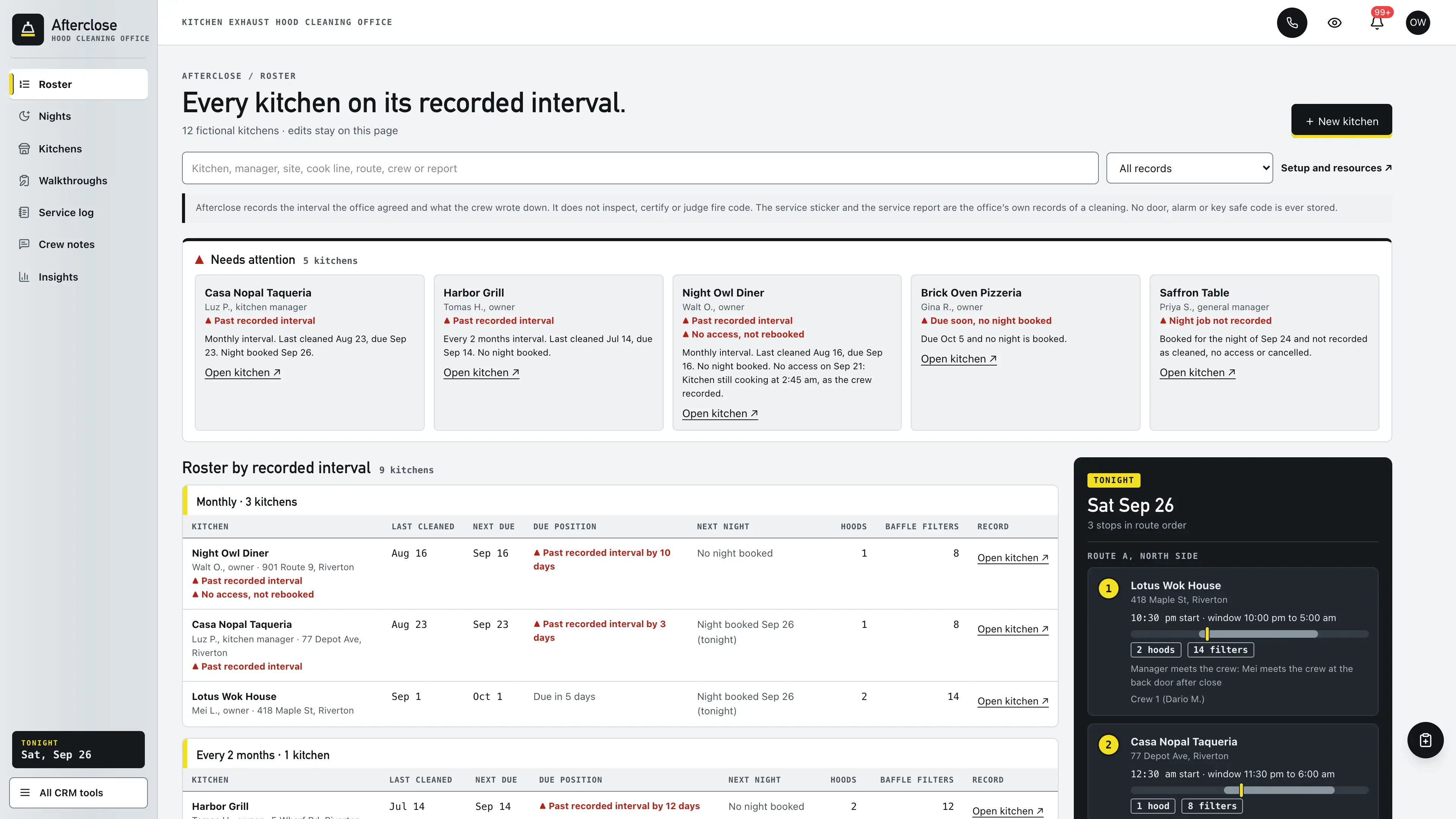
An interval roster for kitchen exhaust hood cleaning companies: every restaurant kitchen grouped by the cleaning interval the office agreed with the owner, sorted by next due date, with hoods and baffle filters in their own columns and tonight's route beside it in stop order, led by kitchens past their recorded interval, due with no night booked, nights never recorded and no-access nights not rebooked. Afterclose never stores door or alarm codes and does not inspect, certify or judge fire code.
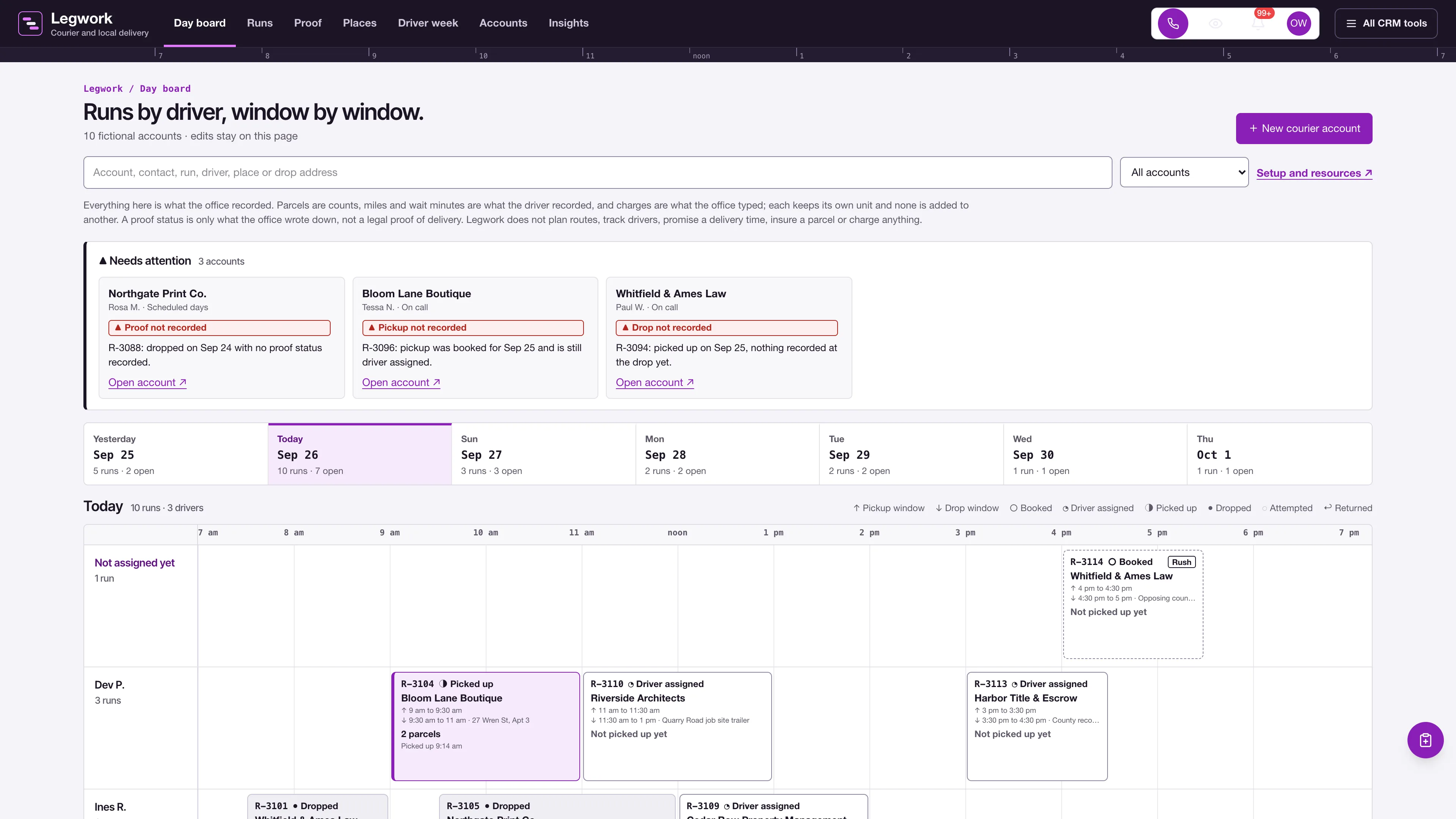
A day board for courier and local delivery businesses: every run in its driver's lane on a 7 am to 7 pm clock, from the booked pickup window to the booked drop window, with the parcel count and the proof status the office recorded, led by pickups, drops and proof statuses not recorded after the run date, then runs, proof, regular drop places, a driver week, accounts and insights. Legwork never adds parcels, miles, minutes or money together and never treats a proof status as legal proof of delivery.
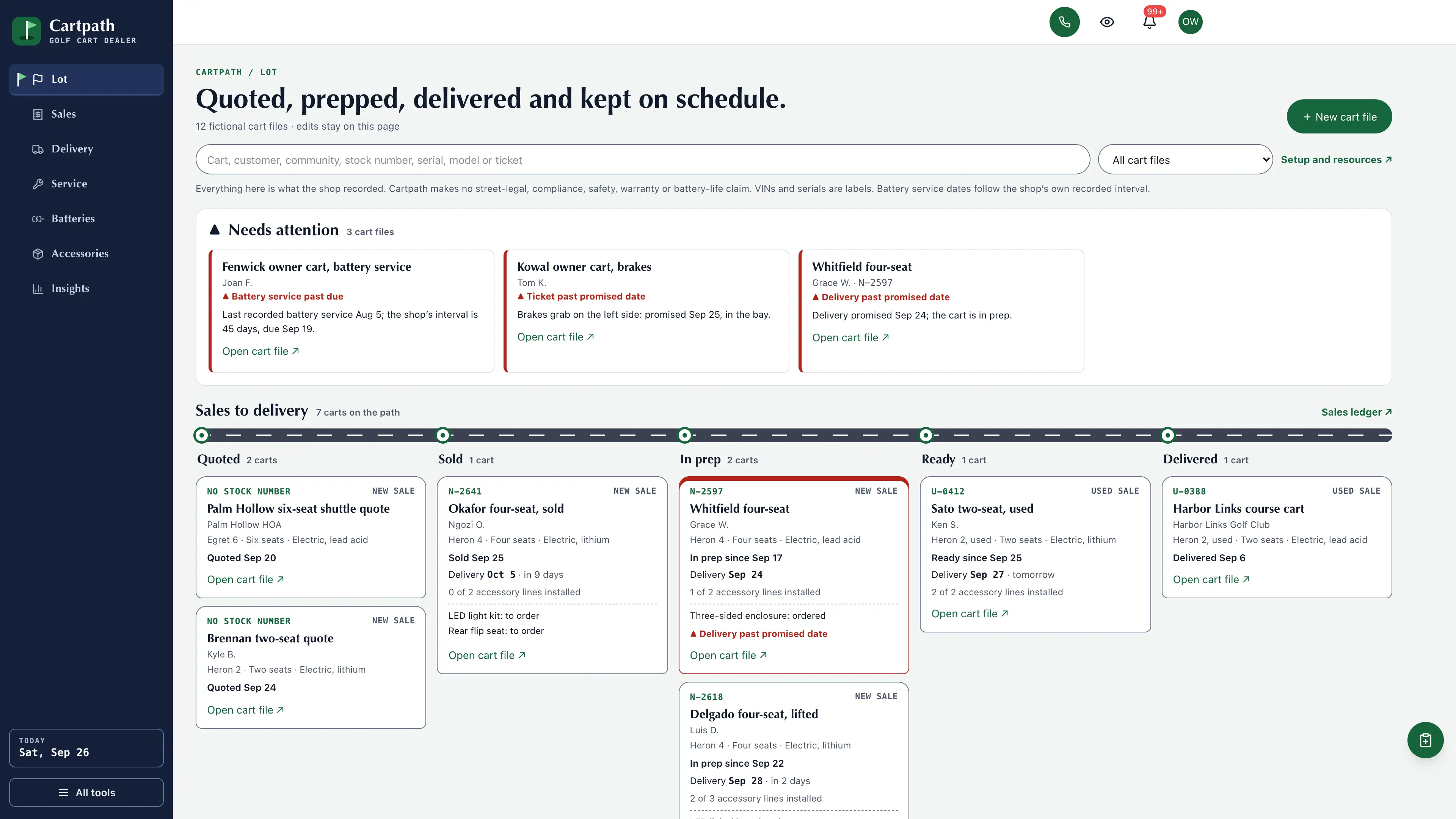
A lot workspace for golf cart dealers: a cart path that stands every sale under its station (quoted, sold, in prep, ready and delivered) with the promised delivery date and the accessory lines still open, a service ticket rack in four bay columns, and battery service dates against the interval your shop recorded, led by deliveries past their promise, tickets past their promise and battery service past due. Cartpath makes no street-legal, safety, warranty or battery-life claim.
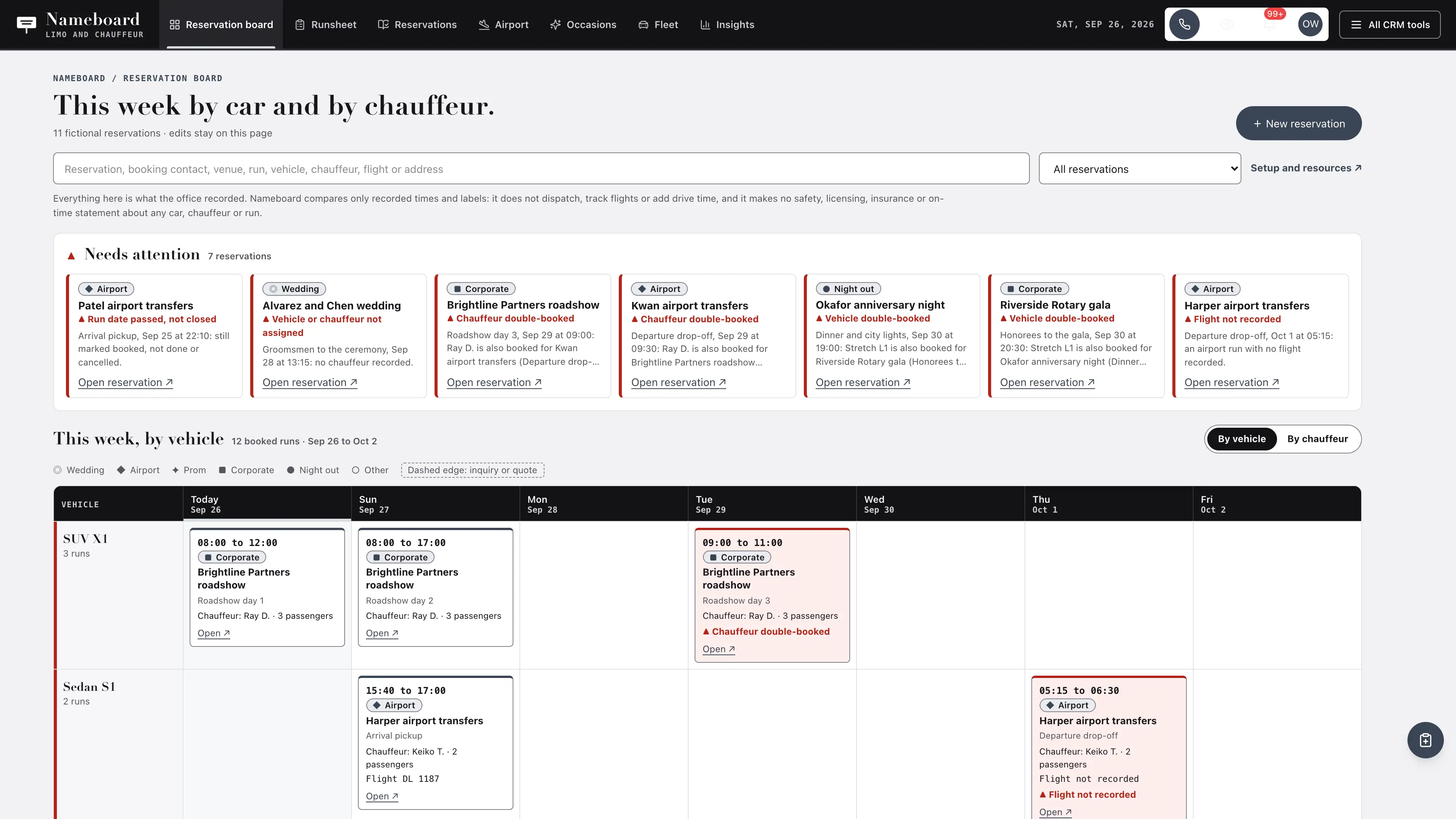
A reservation board for limo and chauffeur companies: the week's runs by vehicle or by chauffeur across seven days, with weddings, airport transfers, proms and corporate travel marked by occasion, led by double-booked cars and chauffeurs, runs with nobody assigned, airport runs with no flight and past runs still marked booked. Nameboard compares only recorded times, keeps flights exactly as typed, records only the adult who booked a prom and a head count, and makes no safety, licensing or on-time claim.
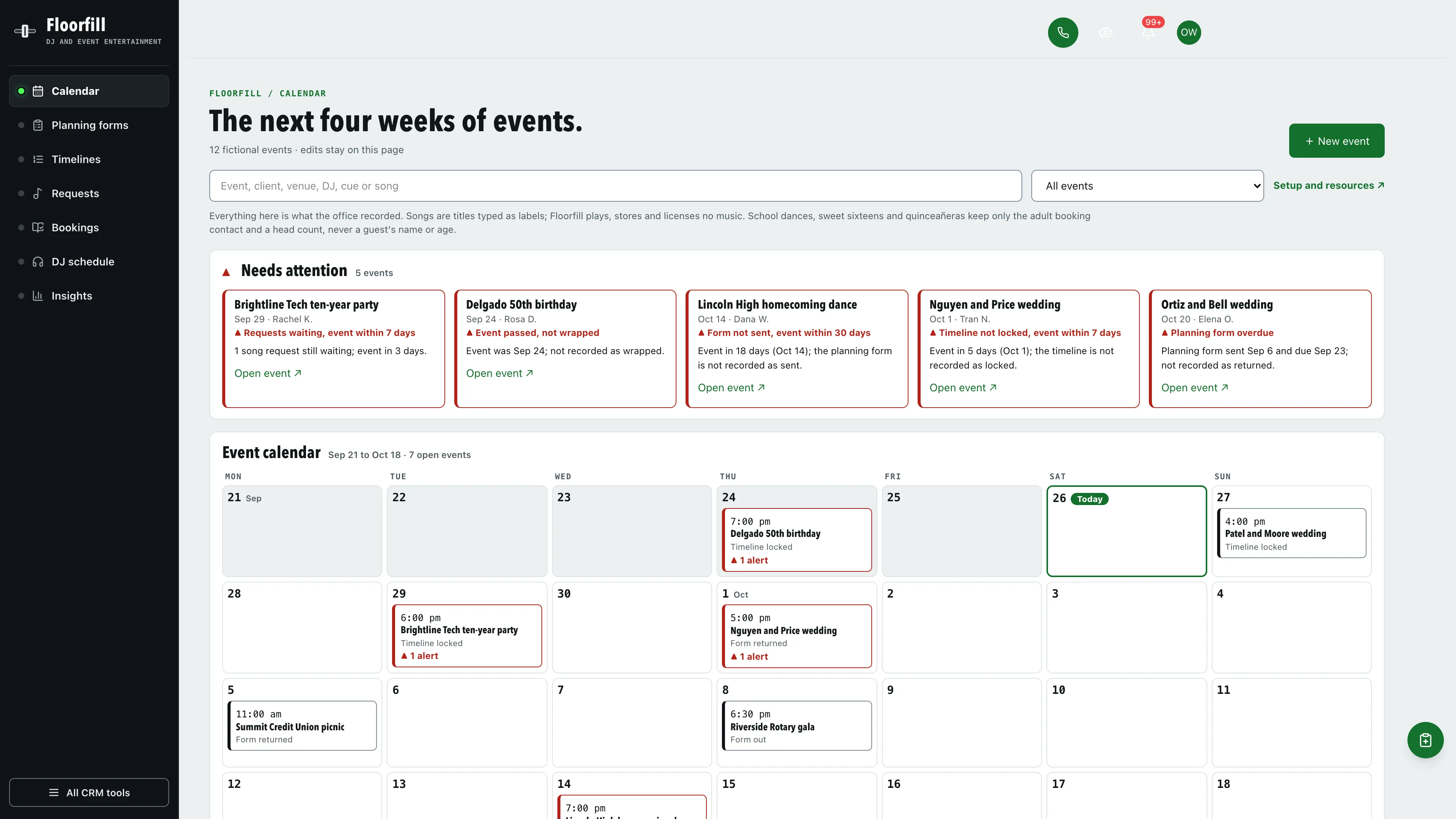
An event calendar for DJ and event entertainment companies: four weeks of open events by day with the planning form stage on each, then next-up cards with the planning form, the first cues of the night and song requests by status, led by overdue planning forms, forms not sent close to the date, timelines not locked within a week, waiting requests and events not wrapped. Floorfill records songs as titles only and keeps just the adult booking contact and a head count for school dances, sweet sixteens and quinceañeras.
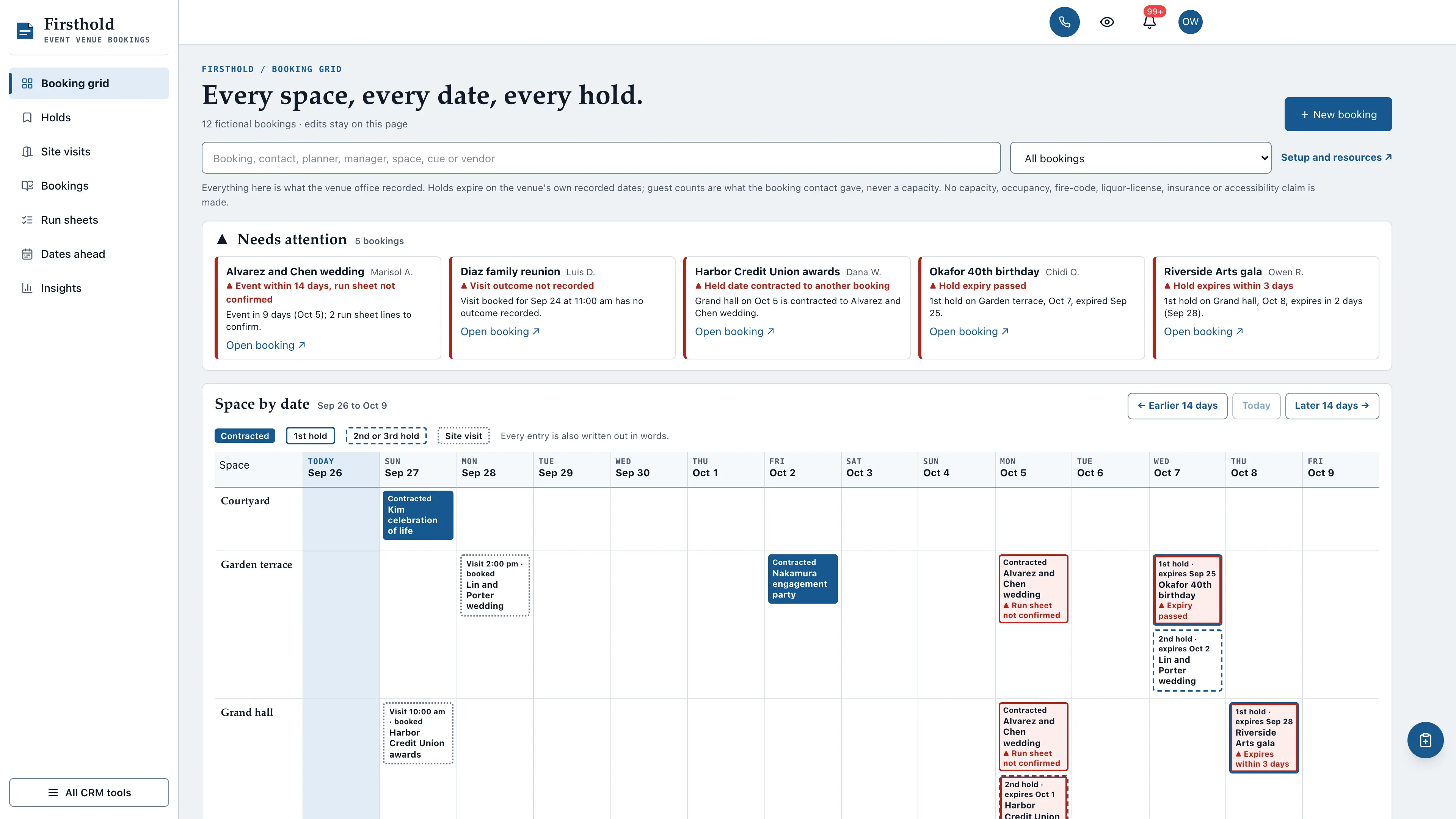
A booking grid for event venues: every space down the side and fourteen dates across the top, with contracted dates, first holds and second holds carrying the expiry date the venue set, and site visits, all written out in words, led by holds past or near their expiry, holds on a date another booking contracted, spaces contracted twice, events within 14 days with an open run sheet and site visits with no outcome recorded. Firsthold shows guest counts as the contact gave them and makes no capacity or compliance claim.
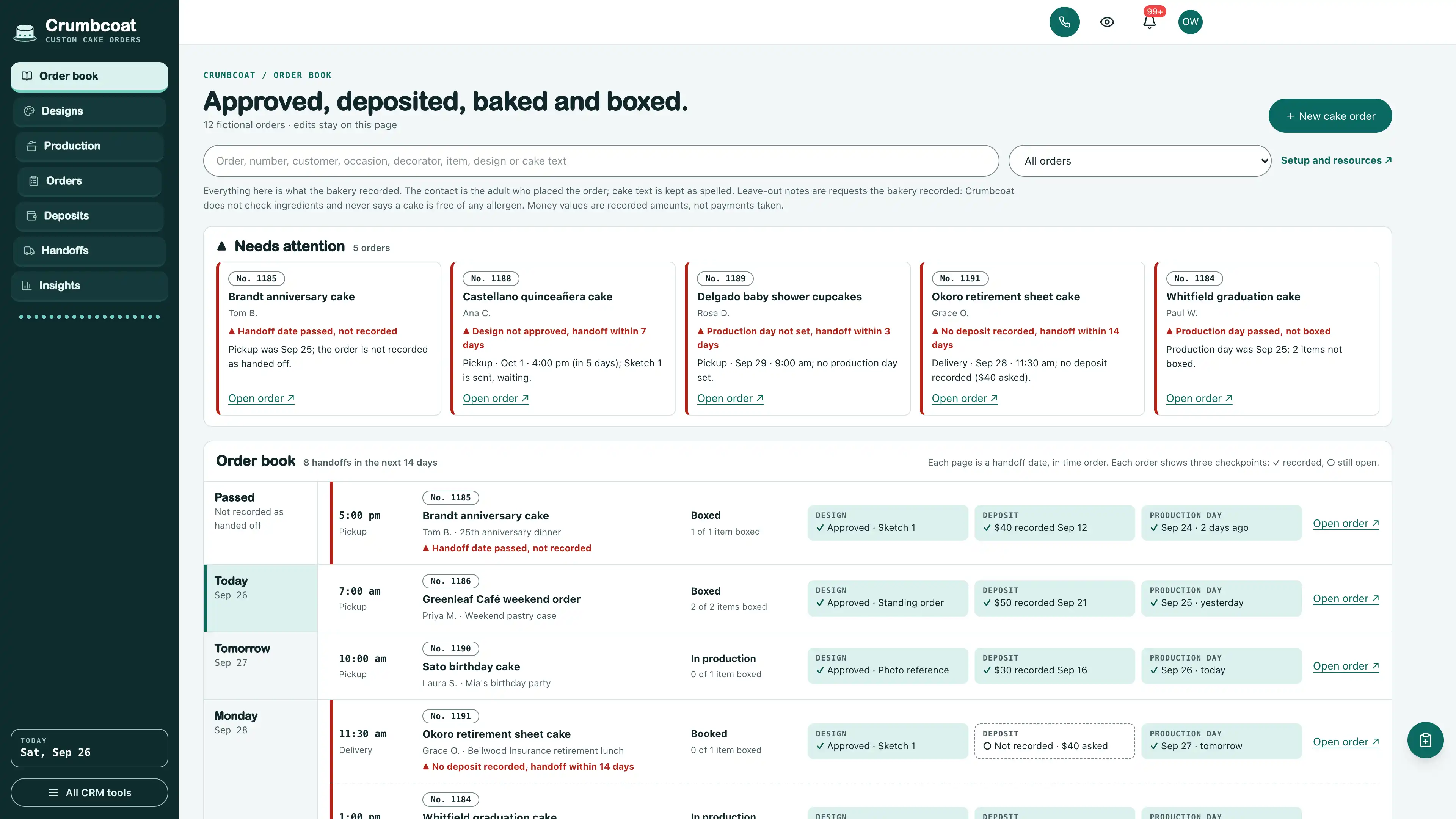
An order book for custom cake bakeries: a page for each of the next fourteen pickup and delivery dates, each order in time order with three checkpoints in words (design approved, deposit recorded, production day), led by designs not approved within a week, missing deposits, unset production days, production days passed with items not boxed and handoffs passed with nothing recorded. Crumbcoat records the adult who ordered, keeps the cake text as spelled and keeps leave-out requests as recorded requests, never as a promise that a cake is free of anything.
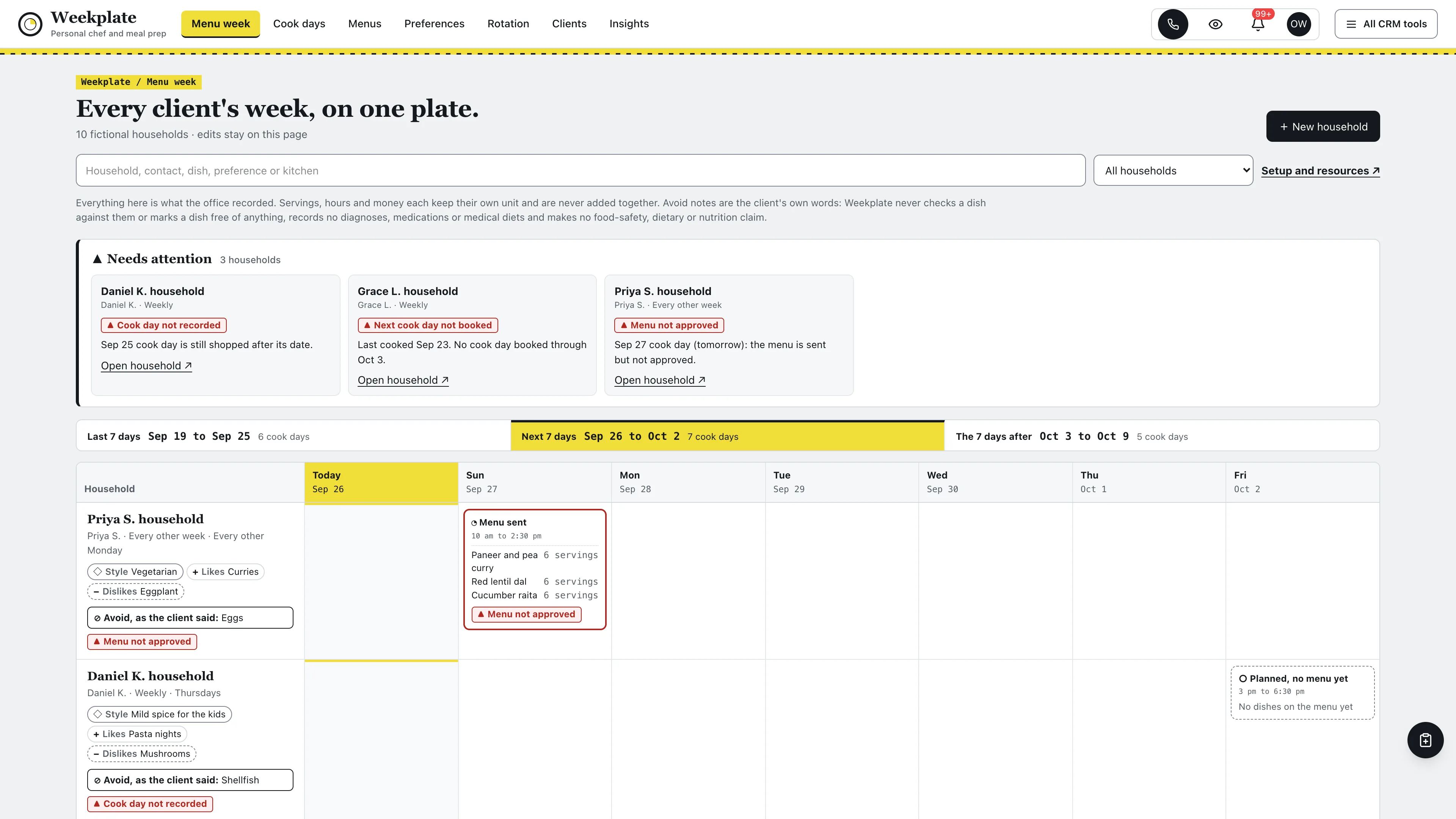
A menu week for personal chefs and meal prep businesses: every household you cook for as a row and the next seven days as columns, each cook day with its window and its dishes with planned servings, and each client's style, likes, dislikes and avoid notes in their own words, led by menus not approved by the day before, cook days not recorded after their date and weekly households with nothing booked, then cook days, menus by approval, preferences, dish rotation, clients and insights. Weekplate never marks a dish free of anything and records no diagnoses, medications or medical diets.
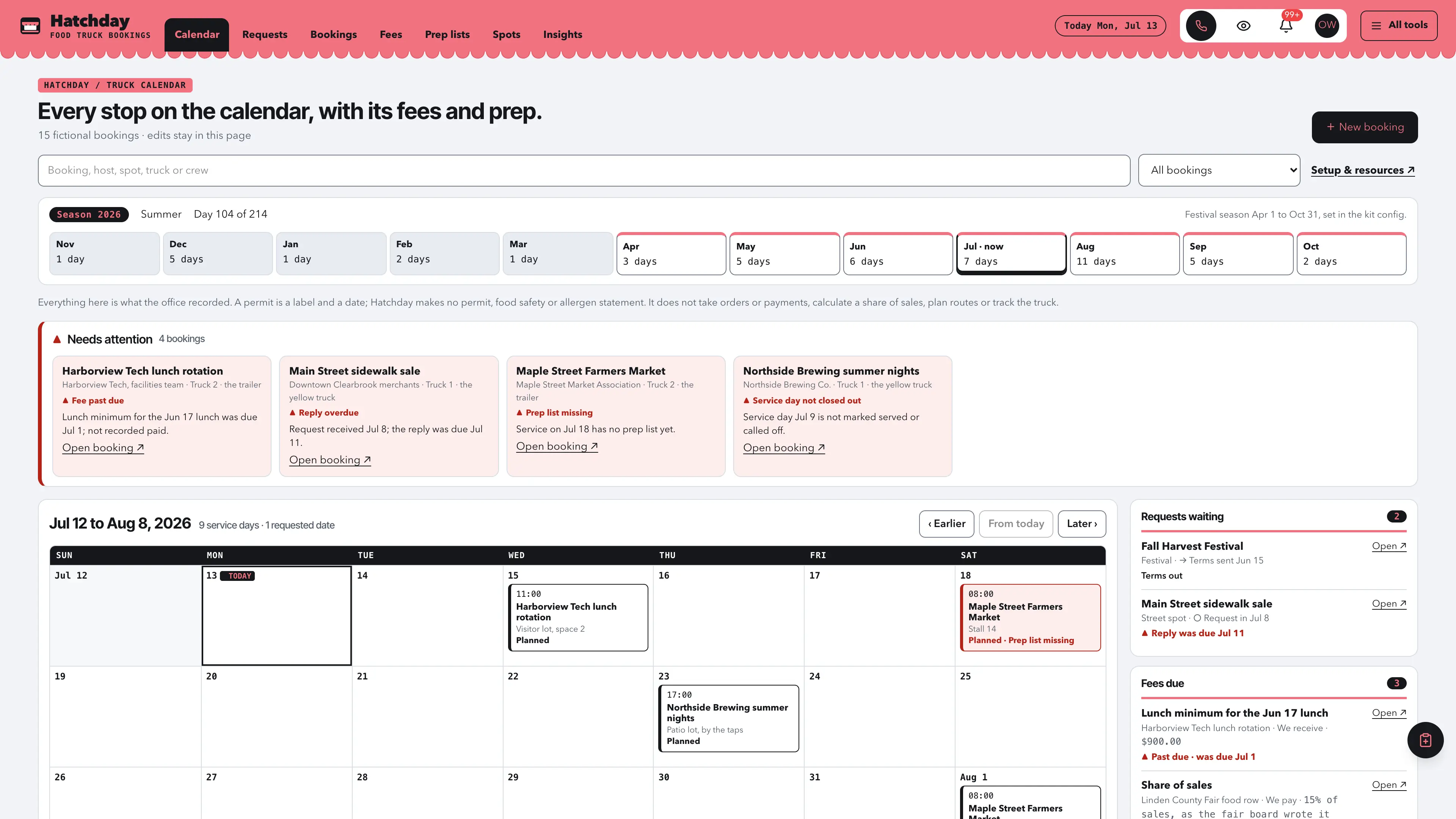
A booking calendar for food trucks: every festival, market, brewery night, office lunch and private party as service days on a four-week calendar, with the request behind each booking and its reply-by date, the fees the truck pays and receives and the prep list for each service day, led by replies overdue, fees past due, service days not closed out and prep lists missing. Hatchday follows the spring-to-fall festival season, shows the quiet winter honestly and records permits only as labels and dates.
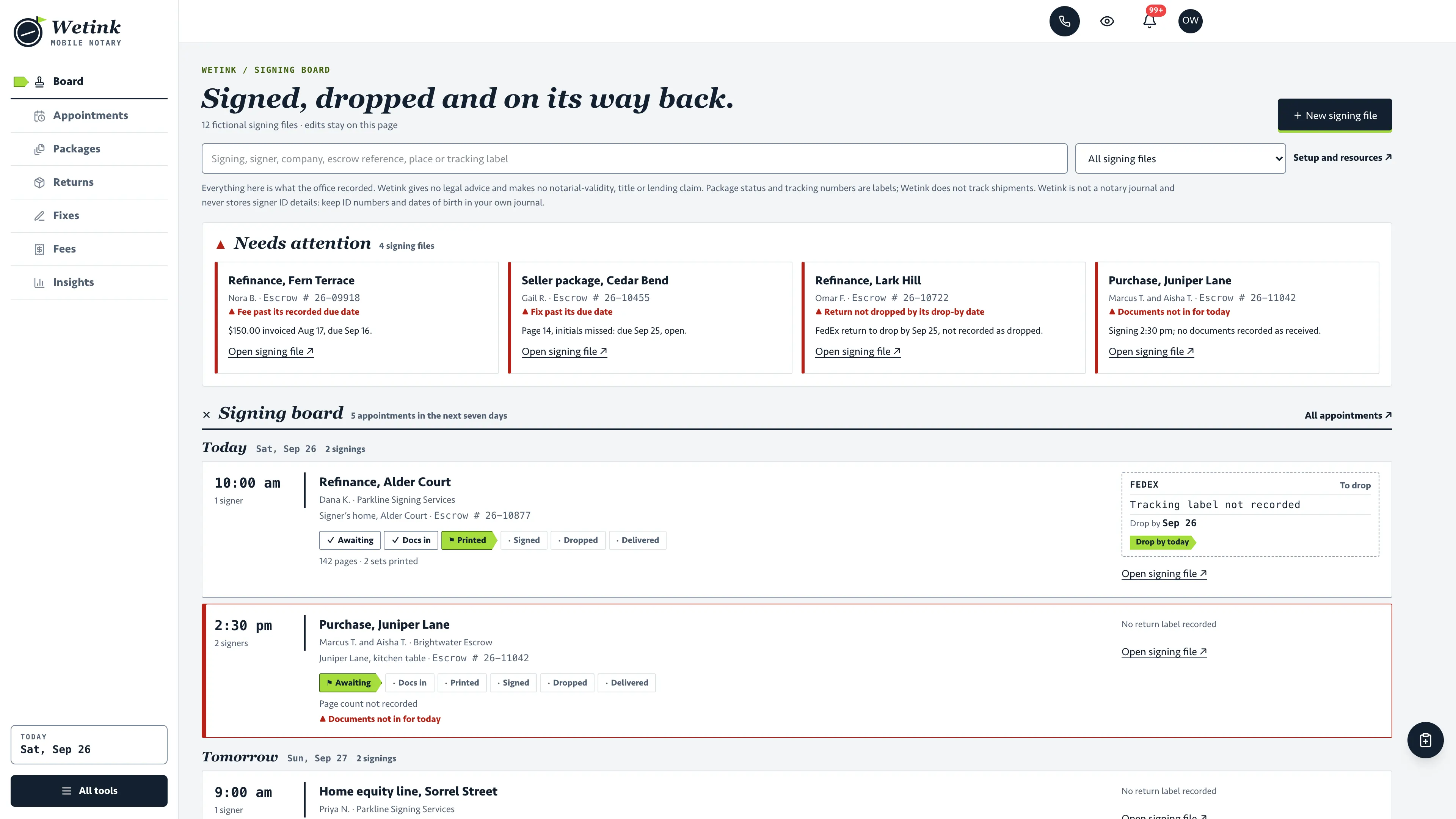
A signing board for mobile notaries and loan signing agents: today and the next six days of appointments by time, each with a package track from awaiting documents to printed, signed, dropped and delivered and its return shipping label, led by signings with no documents for today, returns not dropped by their drop-by date, fix requests past due and fees past their recorded due date. Wetink is not a notary journal, stores no signer ID details and makes no legal, notarial-validity, title or lending claim.
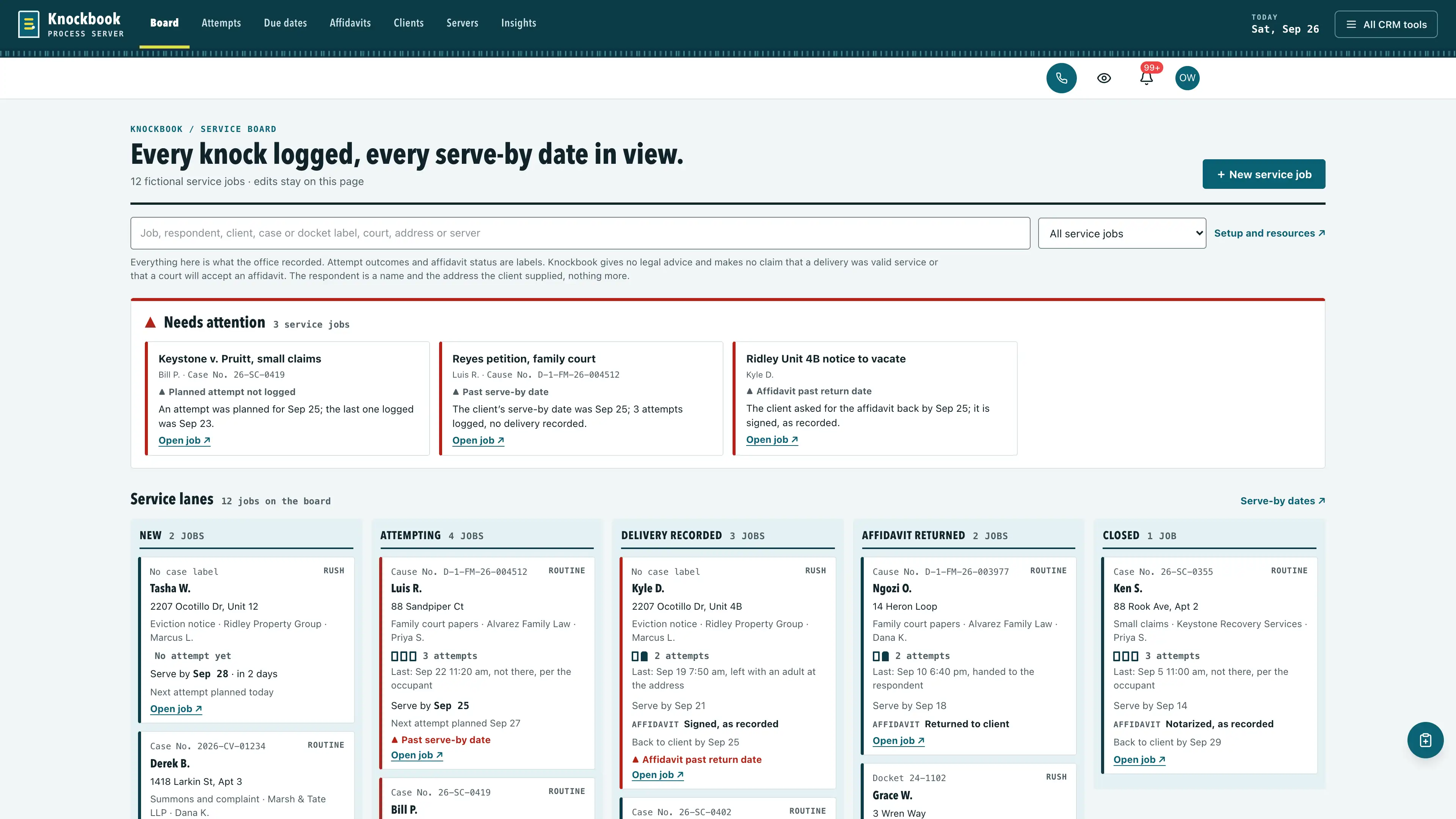
A service board for process serving offices: every job in one of five lanes from new to closed, each with its case or docket label, the respondent’s name and the address the client supplied, one tally mark per logged attempt, the serve-by date in words and the affidavit status, led by jobs past the serve-by date, planned attempts nobody logged and affidavits past the client’s return date. Knockbook gives no legal advice and makes no valid-service, court-acceptance or statutory-compliance claim.
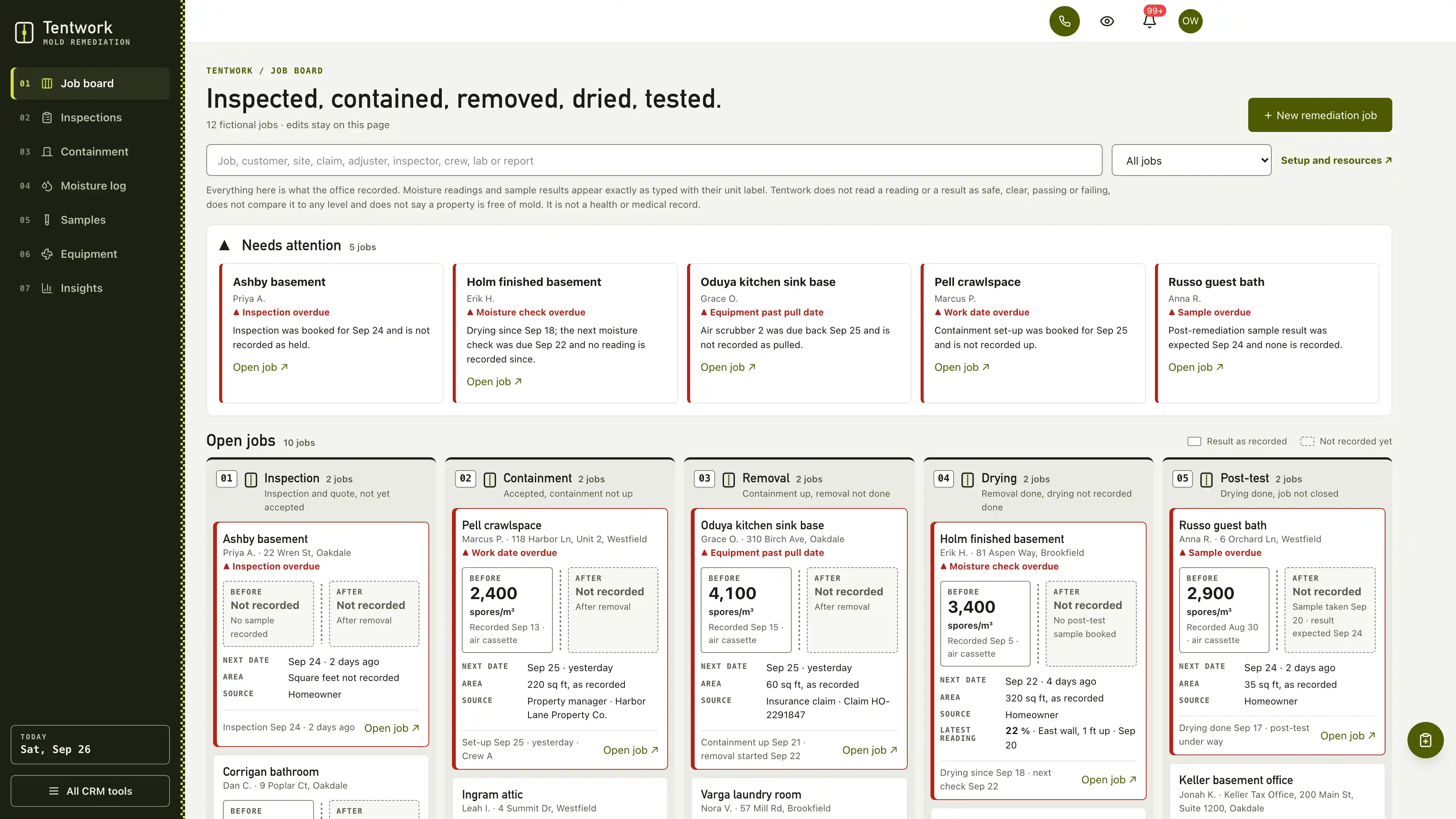
A job board for mold remediation companies: every open job in one of five numbered stage columns, inspection, containment, removal, drying and post-test, each card with a before and after pair of sample results exactly as typed with their unit label, led by overdue inspections, overdue work dates, overdue moisture checks, overdue samples and equipment past its pull date. Tentwork never reads a reading or a result as a verdict and is not a health or medical record.
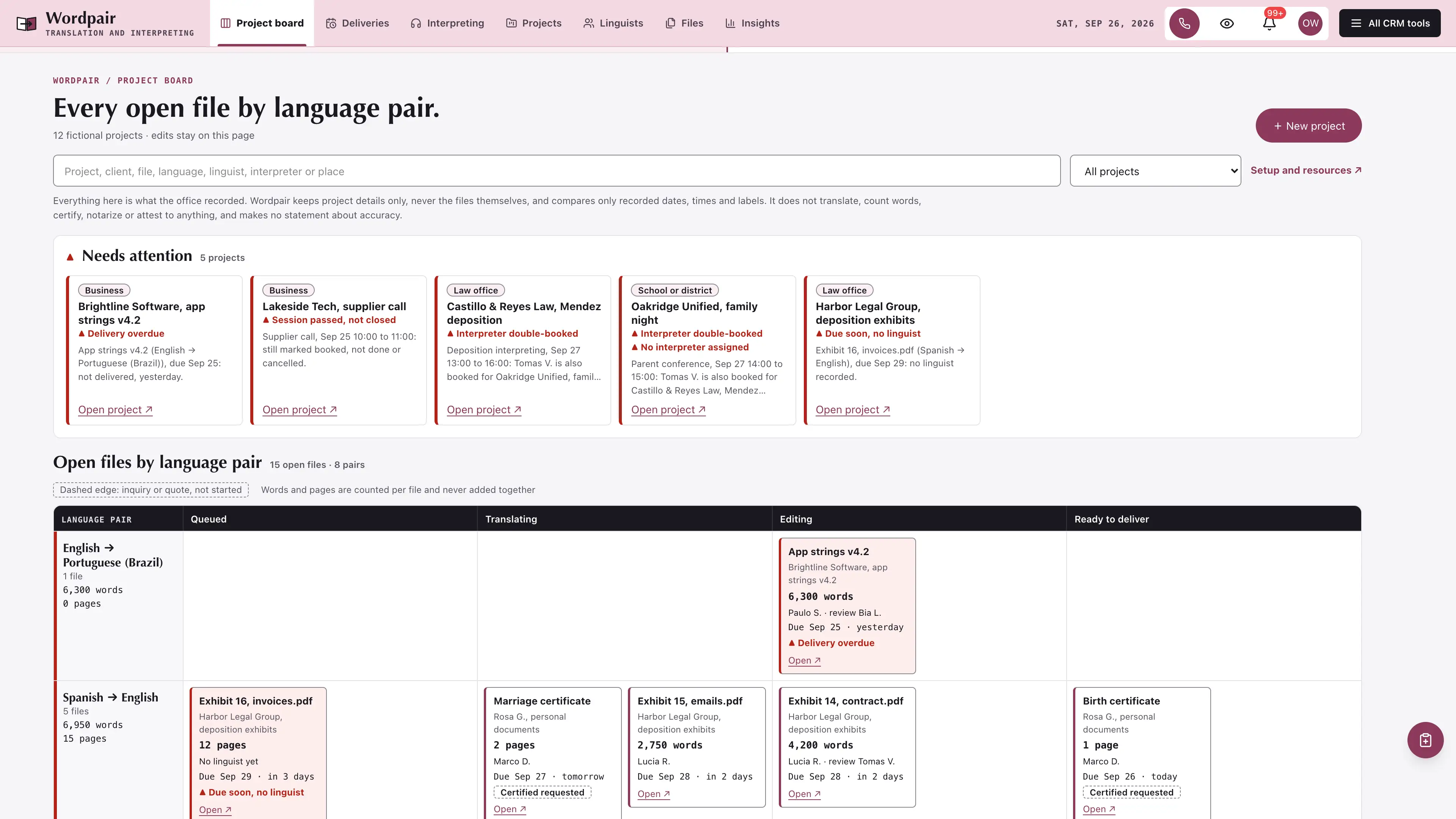
A project board for translation and interpreting offices: every open file by language pair and stage, with its count in words or pages, its linguist and its delivery date, led by overdue files, files due soon with no linguist, double-booked interpreters, sessions with nobody assigned and past sessions still open. Interpreting sits on its own schedule. Wordpair keeps project details only, never the files, refuses ID numbers, dates of birth and medical details, and makes no certification or accuracy claim.
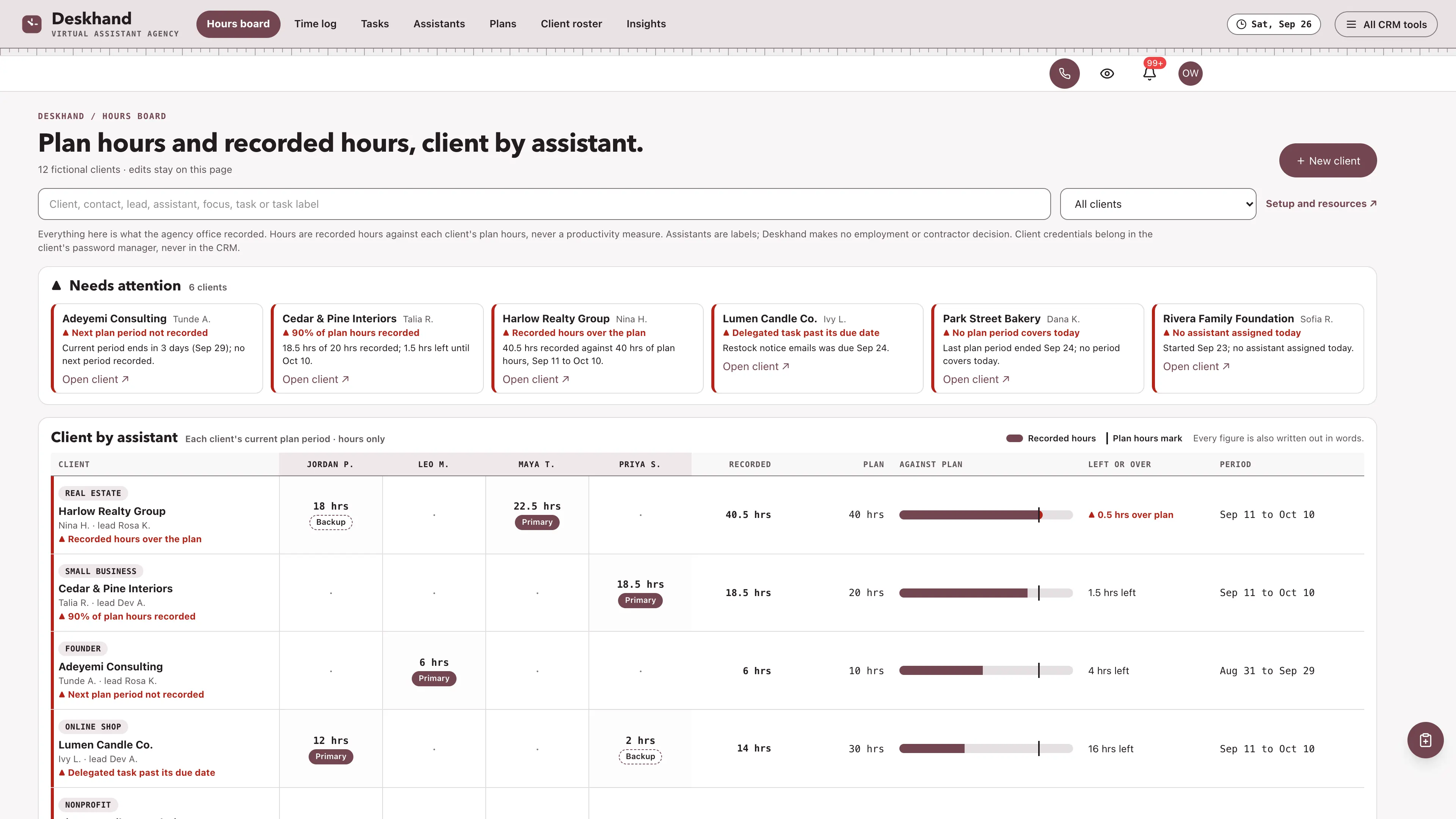
An hours board for virtual assistant agencies: every working client down the side and every assistant across the top, each cell the hours that assistant recorded in the client's current plan period, beside the plan hours and the hours left or over in words, led by clients over the plan, at 90% of it, with no plan period today, with a period ending and no next one, with no assistant today or with a delegated task past its due date. Deskhand keeps client logins out of the CRM and makes no productivity or employment claim.
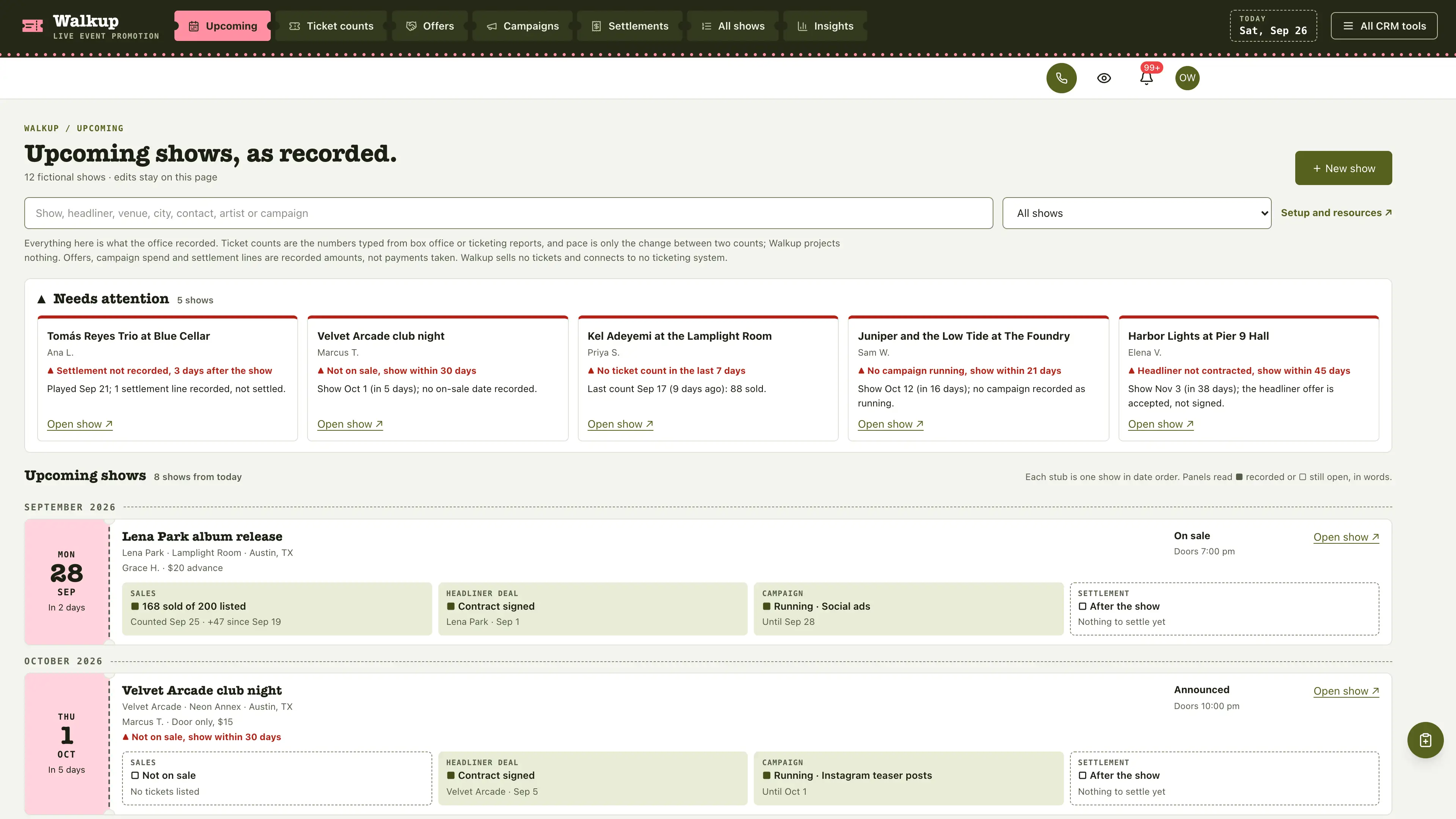
A show desk for independent live event promoters: every upcoming show as a ticket stub in date order with four panels in words (ticket sales as recorded with the change since the count before, the headliner deal, the campaign and the settlement), led by unsigned headliners, shows not on sale, stale ticket counts, shows with no campaign running and settlements not recorded. Walkup shows only the counts the office typed from its reports and never projects a sale.
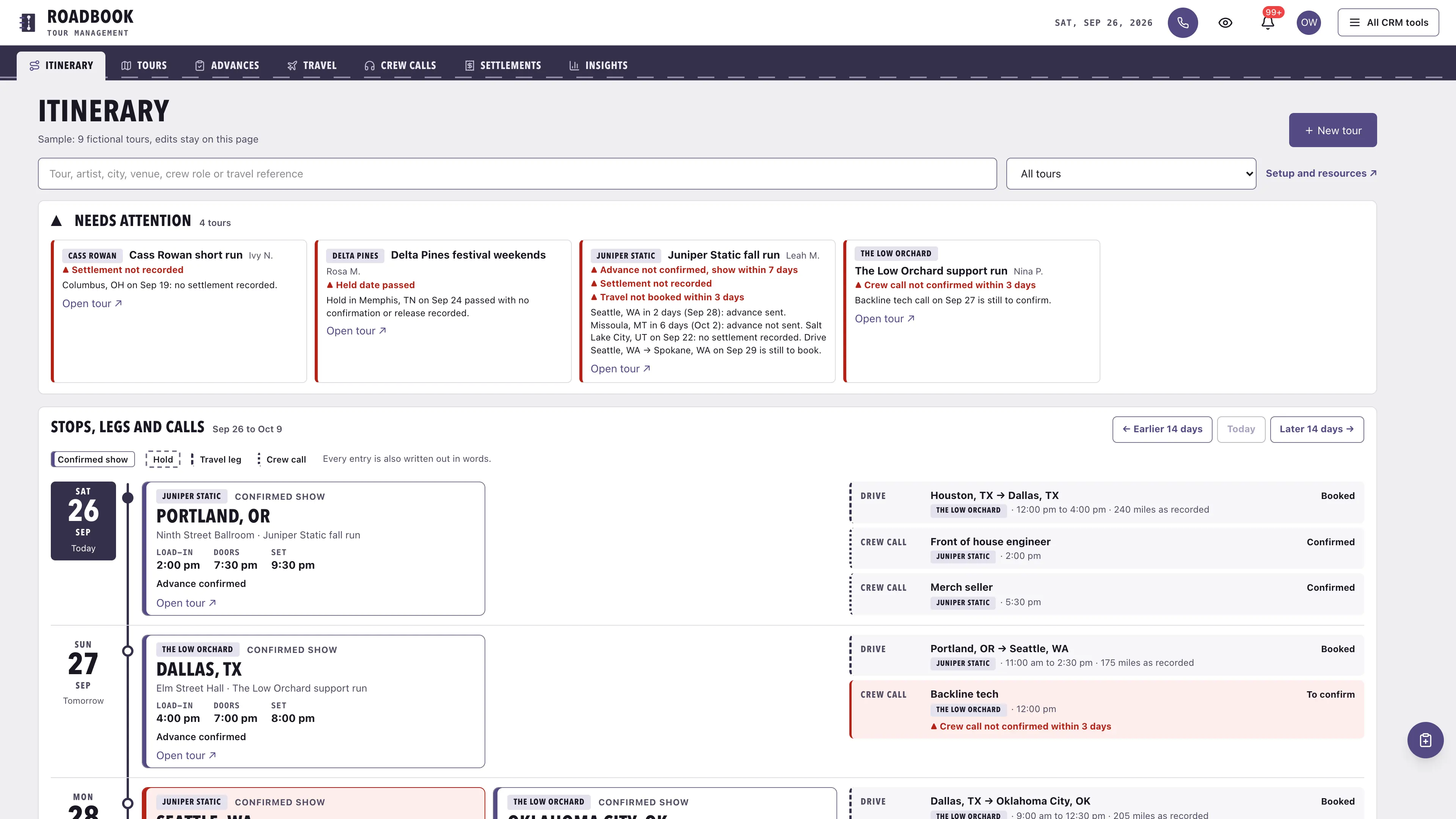
A tour book for artist managers and tour offices: fourteen days as a road, one row per day, each show with its city, venue, load-in, doors and set times and its advance in words, and beside it the drives with their miles, the flights with their numbers, the hotel confirmation labels and the crew calls, led by advances still open near the show, legs not booked, crew calls not confirmed, holds past their date and shows with no settlement recorded. Roadbook records guarantees, door splits and settlements as the office typed them and never calculates them.
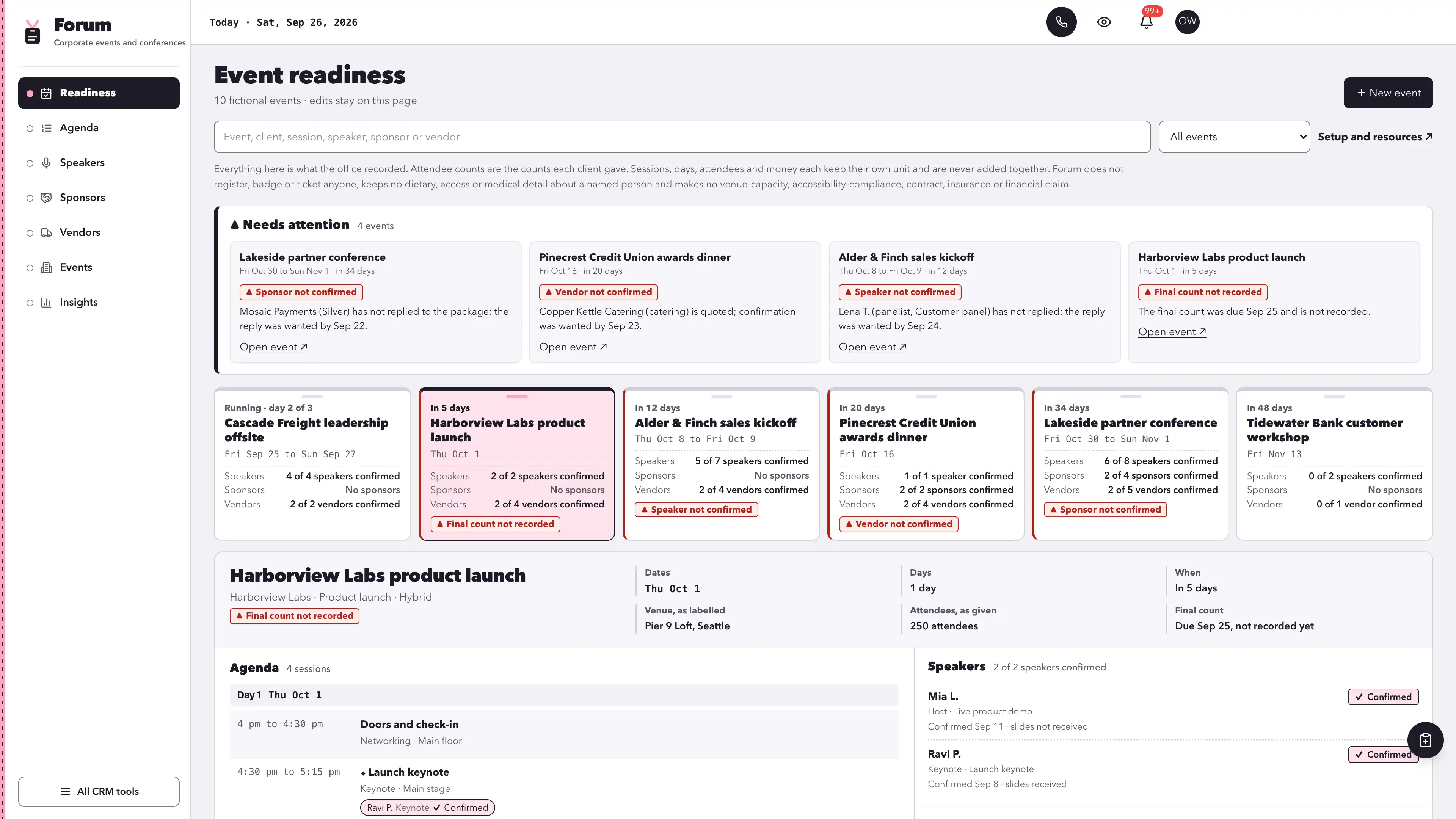
An event readiness board for corporate event and conference planners: every upcoming conference, sales kickoff, offsite, product launch, workshop and awards dinner in date order, and for the event you pick, its agenda by day and room beside the speakers, sponsors and vendors with the confirmation the office recorded, led by speakers, sponsors and vendors past their reply dates and final counts past due, then agendas, speakers, sponsors, vendors, client events and insights. Forum keeps attendee counts as the client gave them and makes no venue-capacity, accessibility-compliance, contract, insurance or financial claim.
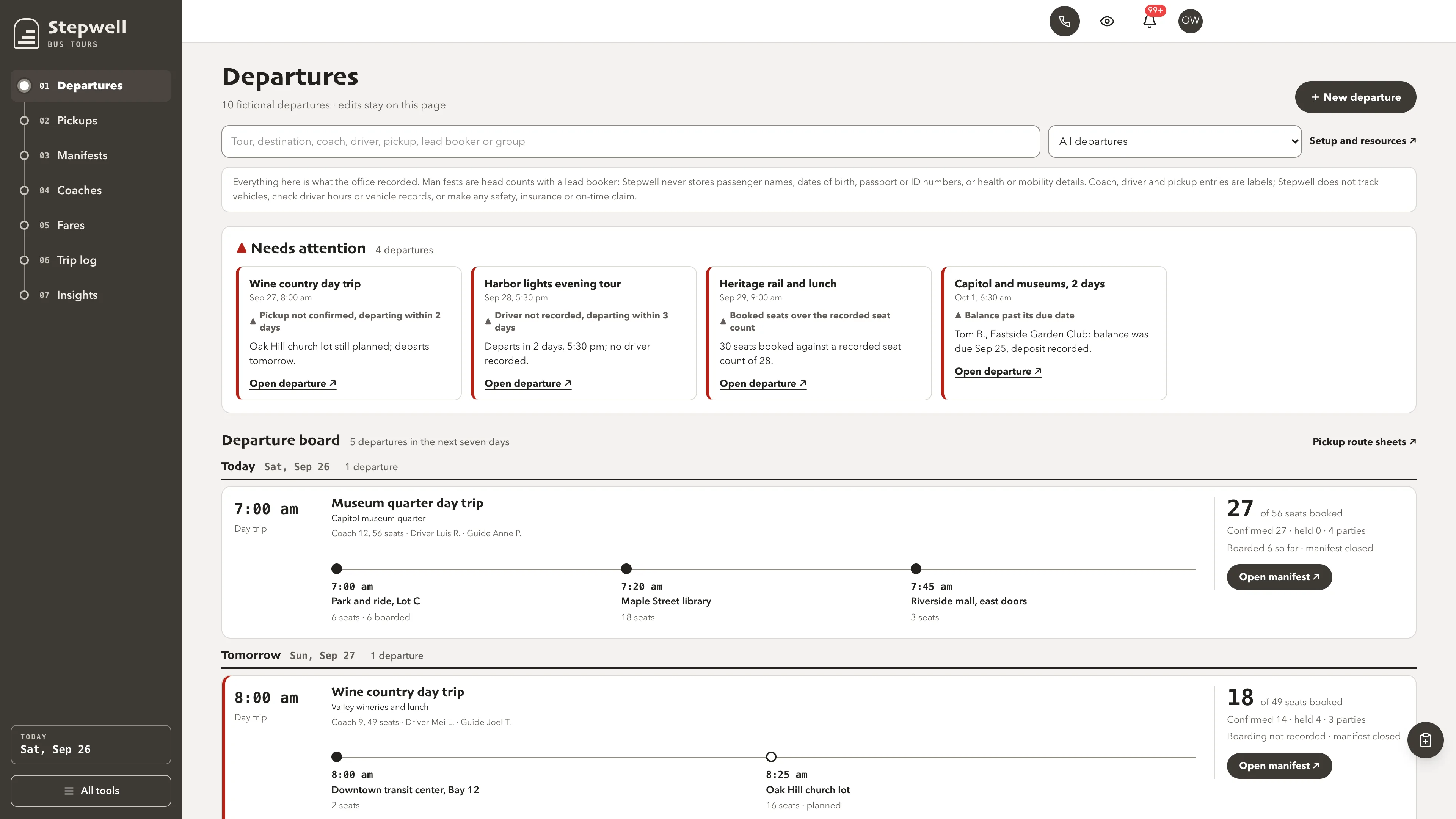
A departure board for coach tour and group charter operators: today and the next six days of departures by time, each with its pickup route as a line of stops and a manifest block of seats booked, confirmed, held and boarded against the recorded seat count, led by booked seats over the recorded seat count, pickups still planned within two days, drivers not recorded within three days and balances past their due date. Stepwell keeps manifests as head counts with a lead booker, never passenger names, dates of birth, ID numbers or health details, and makes no DOT, FMCSA, safety, insurance or on-time claim.
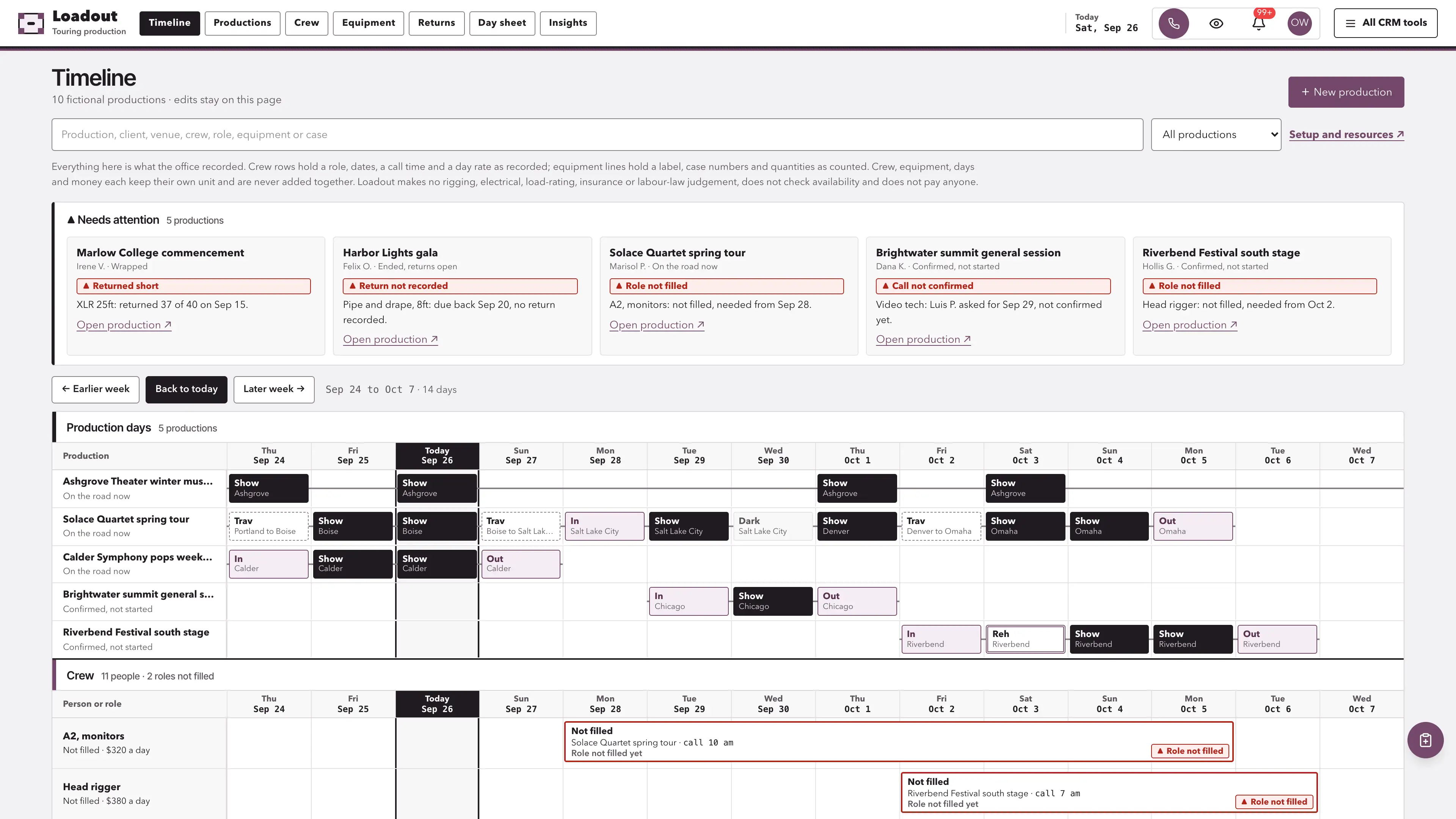
A dense fourteen-day timeline for touring production companies: production days as labelled tiles, crew assignments by person with call times and status, and equipment lines with case numbers and quantities from out date to return, in three separate bands, led by roles not filled within seven days, calls not confirmed within three days, returns past their due-back date and short counts. Loadout keeps crew, quantities, days and money apart and makes no rigging, electrical, load-rating, safety, insurance or labour-law claim.
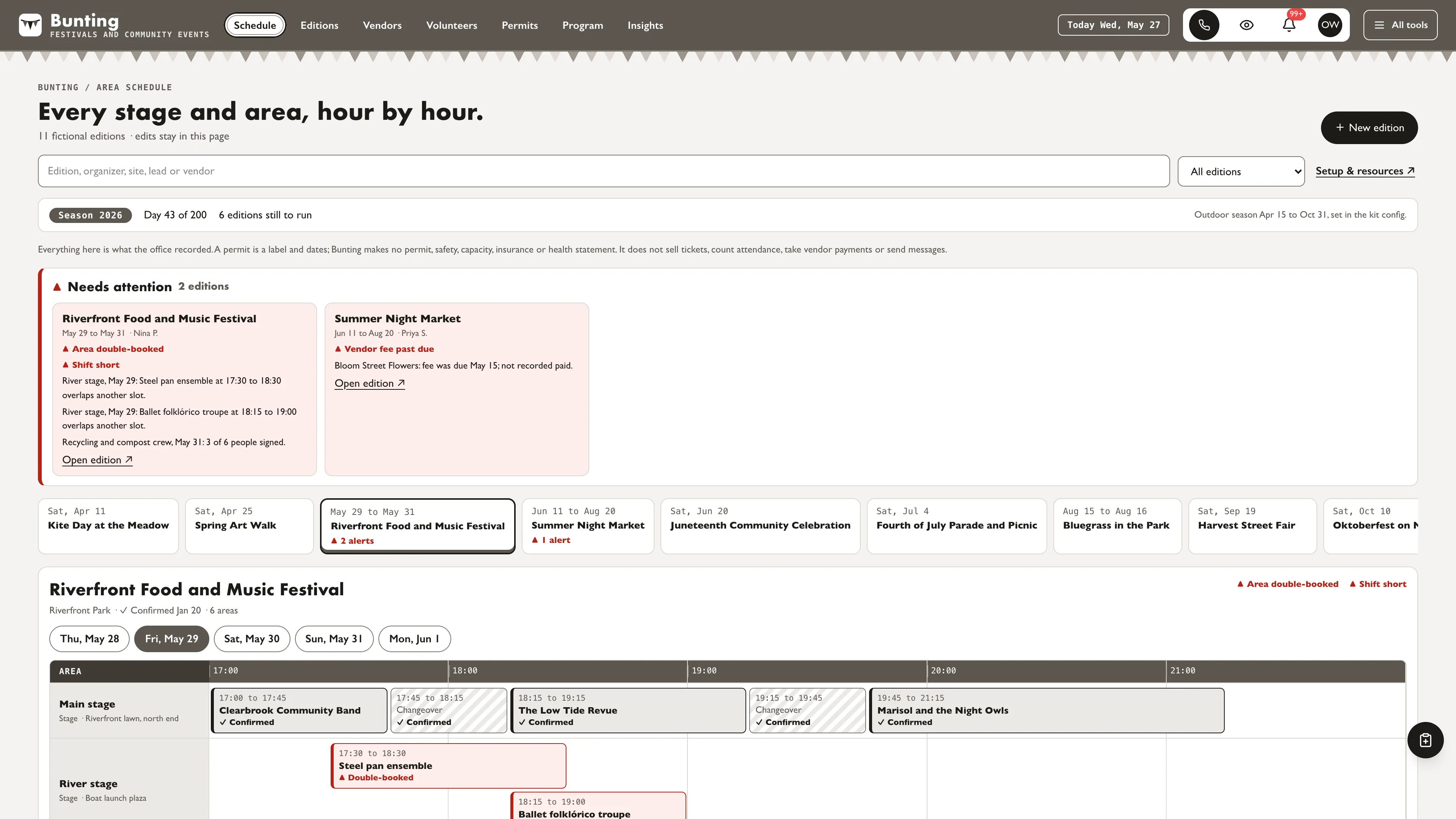
An area schedule for the office that runs festivals, parades, street fairs, market series and community days: one lane per stage or area with every program slot placed by the hour, and beside it the vendors in each area, the day’s volunteer shifts and the permit labels, led by double-booked areas, shifts short of people, vendor fees past due and permits not recorded by their needed-by date. Bunting follows the spring-to-fall season, shows planning and winter honestly, records young volunteers only as a group count with an adult leader and keeps permits as labels and dates.
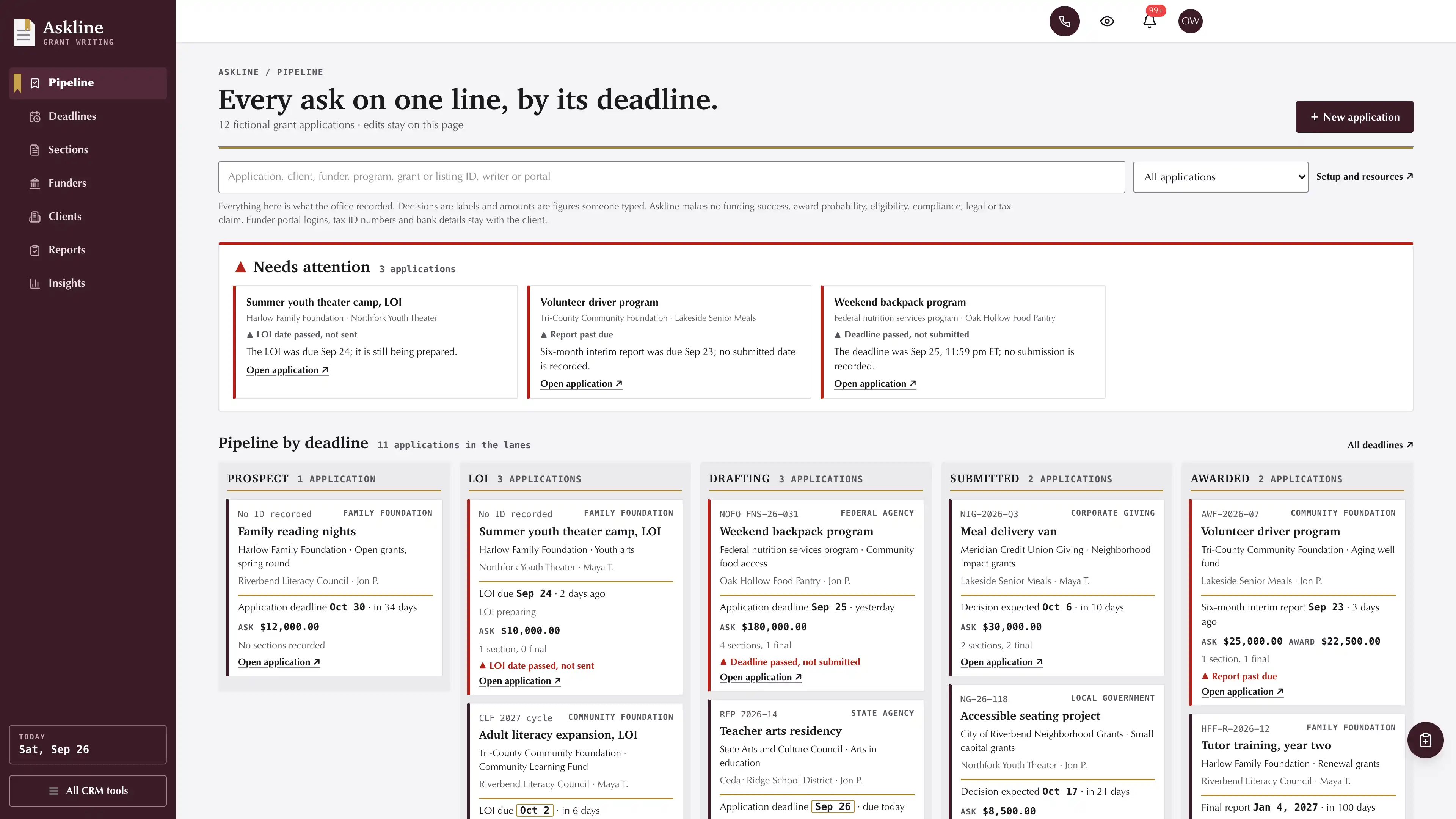
A grant pipeline for grant writing offices and freelance grant writers: every application in one of five lanes from prospect through LOI, drafting and submitted to awarded, each sorted by its next deadline, with the funder, program and grant or listing ID, the ask and section progress, led by missed deadlines, late letters of inquiry and award reports past due. Askline makes no funding-success, award-probability, eligibility or compliance claim, and keeps funder portal logins, tax ID numbers and bank details out.
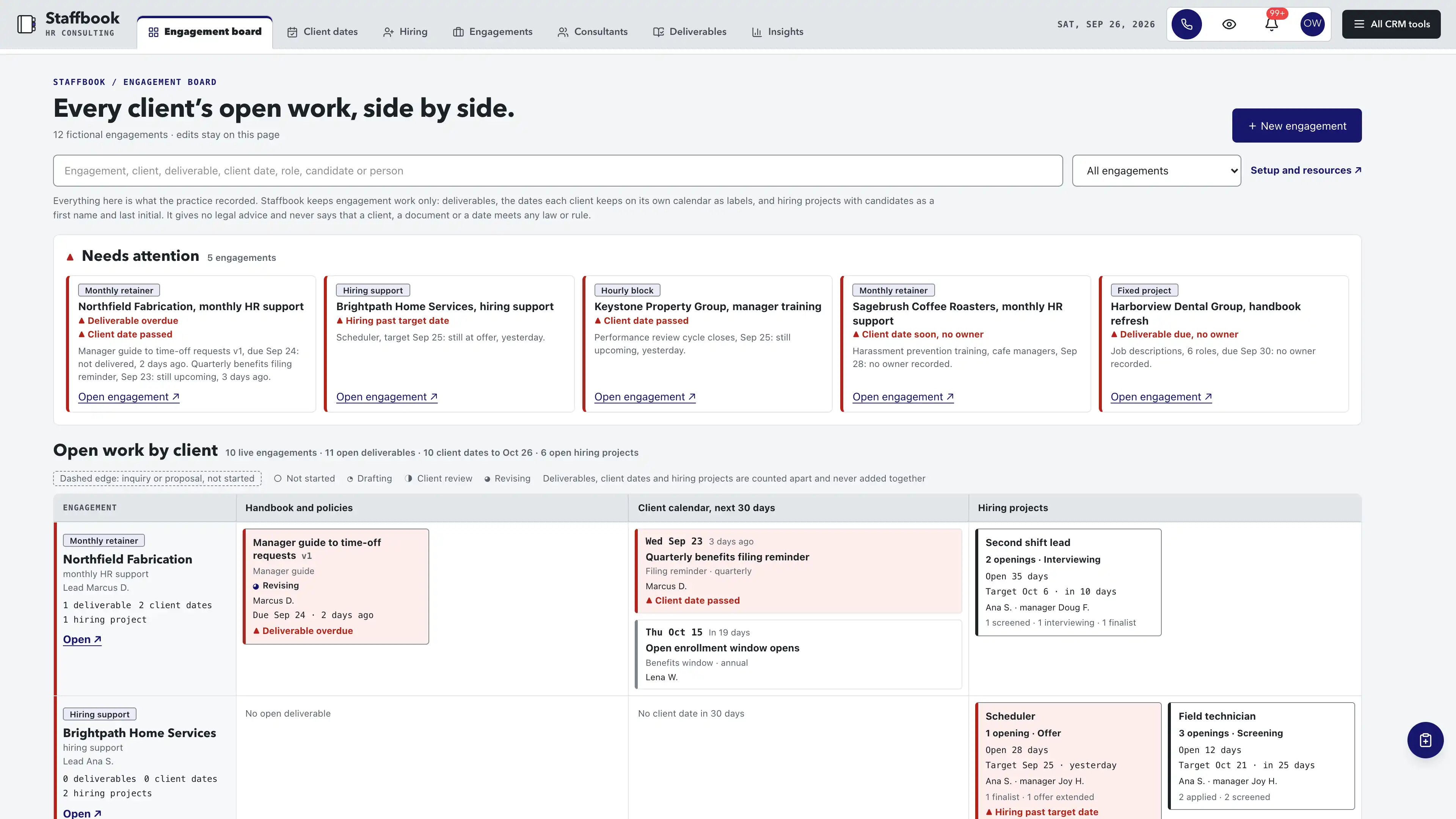
An engagement board for HR consulting practices: one row per client with its handbook and policy deliverables, the dates the client keeps on its own calendar and its hiring projects side by side, led by overdue deliverables, deliverables due with no owner, client dates passed or coming up with no owner and hiring projects past their target date. Staffbook records candidates as a first name and last initial, keeps no personal details about employees or candidates and gives no legal advice.
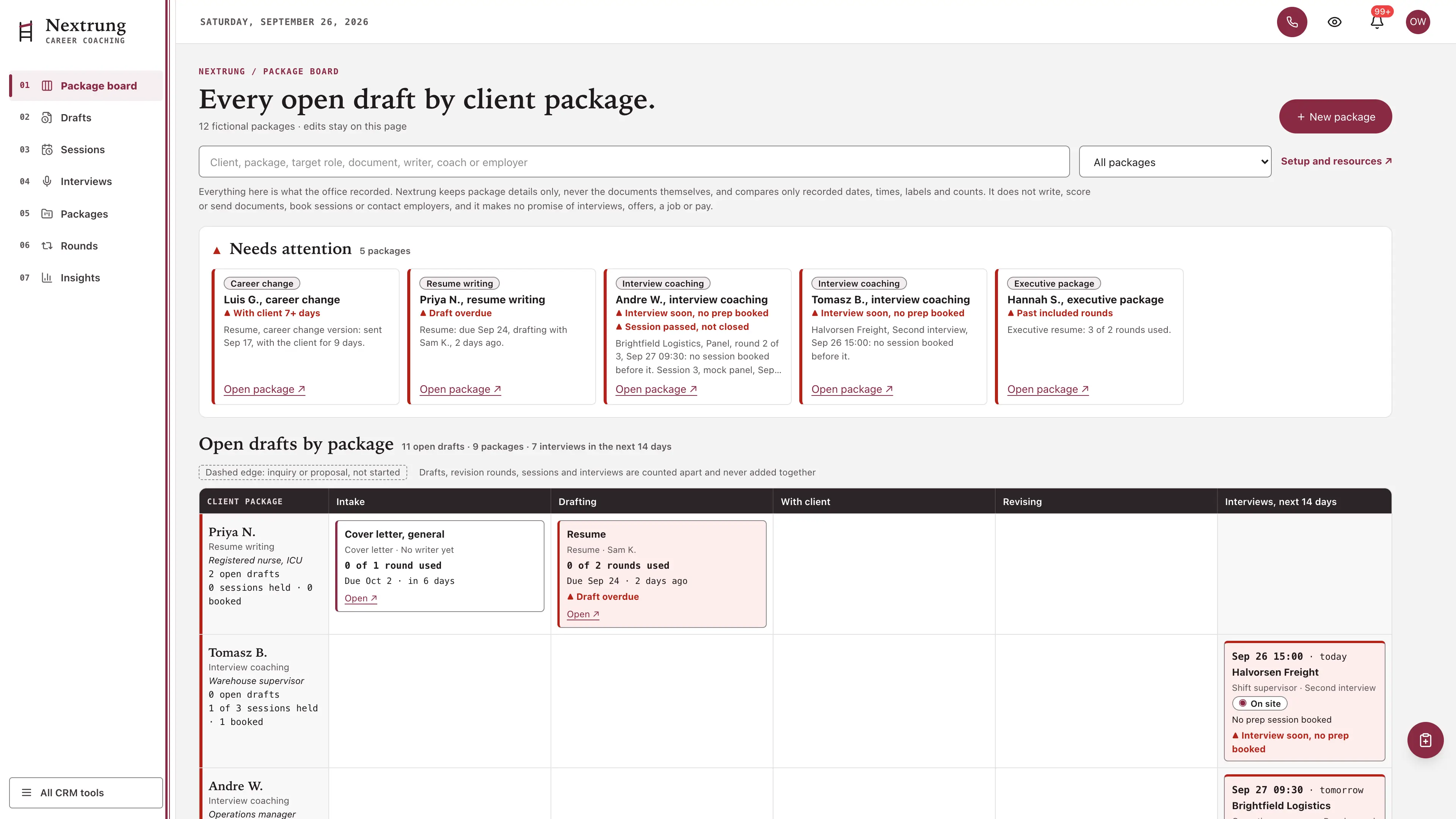
A package board for career coaches and resume writers: every open resume, cover letter and LinkedIn draft by client package and stage, with its writer, its due or sent date and revision rounds used against rounds included, beside the interview dates the client shared and whether a prep session is booked, led by overdue drafts, drafts with the client for a week, extra rounds, interviews with no prep and past sessions still open. Nextrung keeps salary history, health details and background-check results out of the CRM and makes no promise of interviews, offers or pay.
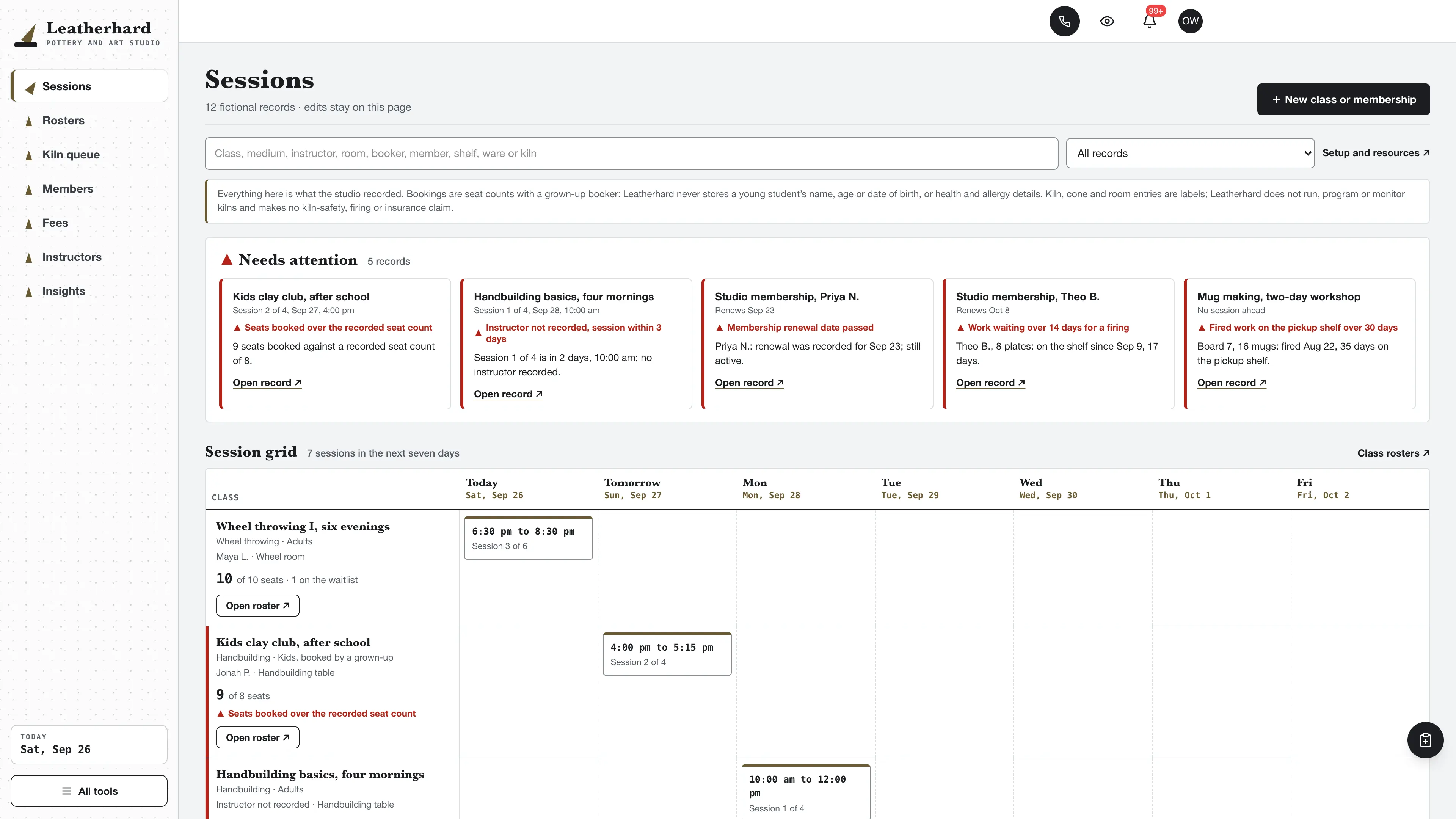
A session grid for pottery and art studios: the week’s classes as rows and today and the next six days as columns, each session with its time, its number in the class and seats booked against the recorded seat count, beside a kiln queue counted in pieces and studio memberships with shelves and renewal dates, led by overbooked classes, sessions within three days with no instructor, work waiting more than 14 days for a firing, fired work left on the pickup shelf more than 30 days and memberships past their renewal date. Leatherhard keeps rosters as seat counts with a grown-up booker, never young students’ names, ages or health details, and makes no kiln-safety, firing or insurance claim.
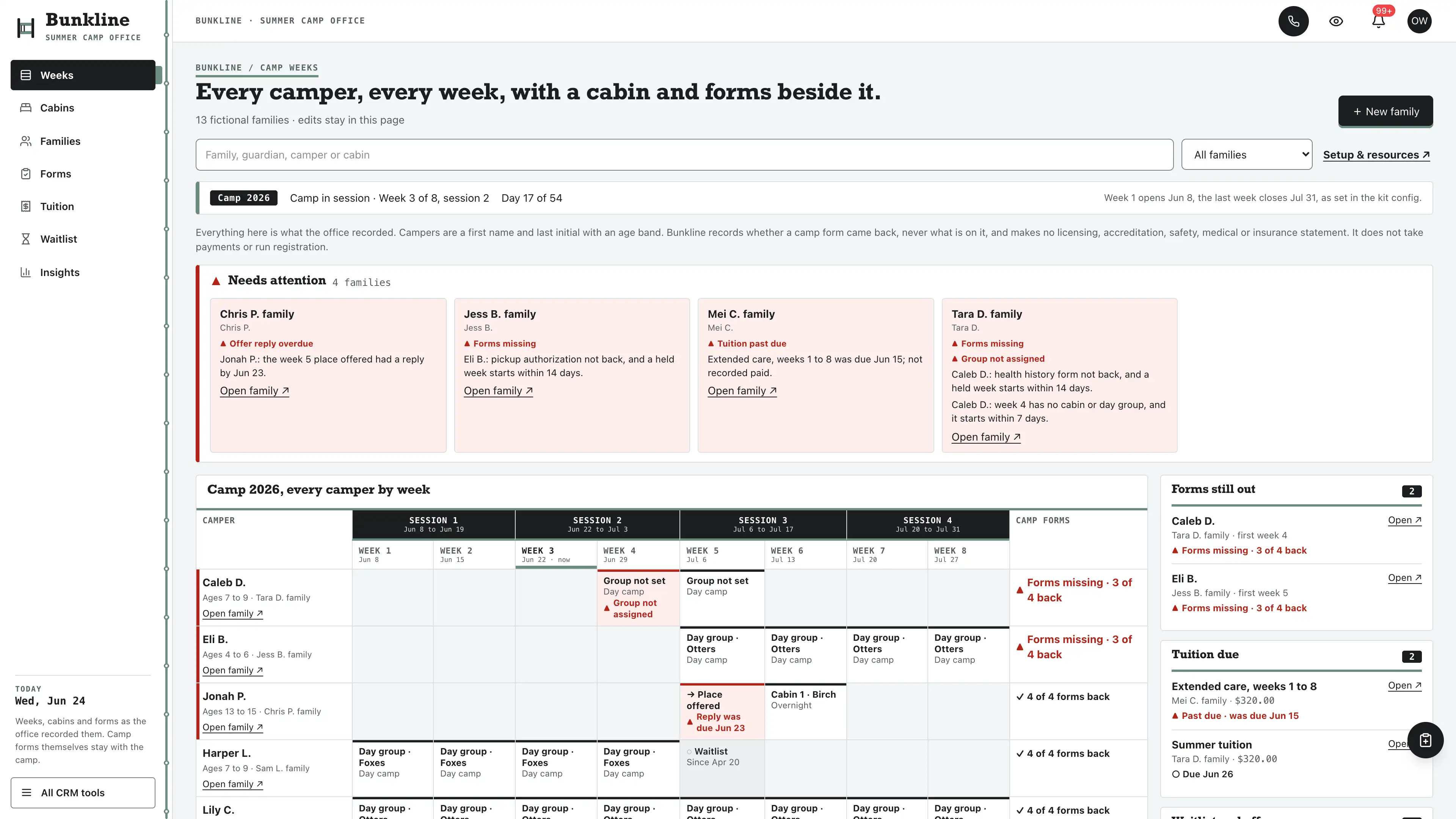
A camp weeks board with every camper by week under their sessions, the cabin or day group, the waitlist and its offers, camp forms by whether they came back, and tuition.
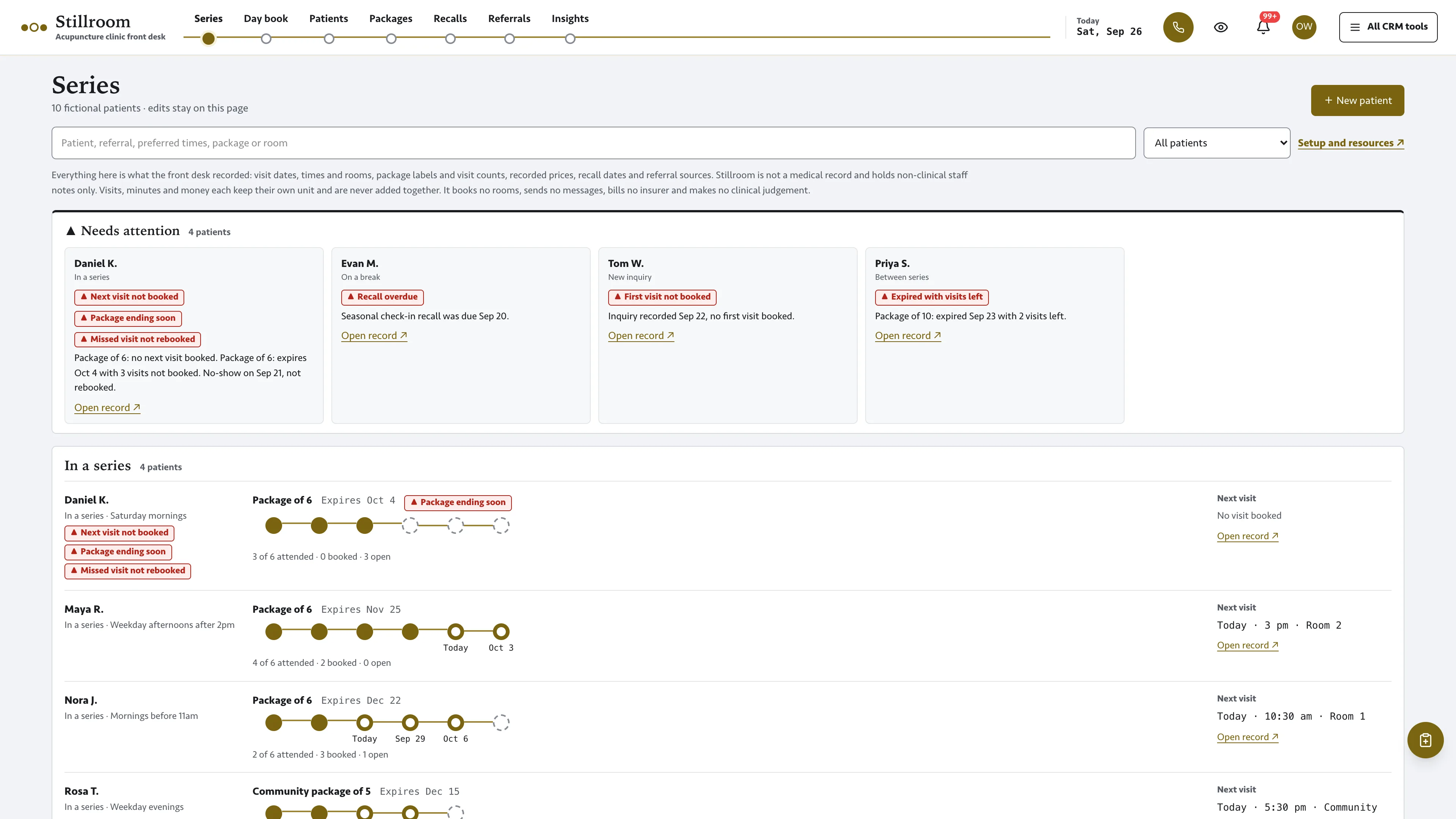
A front-desk workspace for acupuncture clinics: each patient’s visit package drawn as a string of beads (attended, booked and open visits), the day’s visits by room, patients by state, packages with recorded prices and expiry dates, recalls and referral sources, led by inquiries with no first visit booked, series with no next visit, packages ending soon or expired with visits left, overdue recalls and missed visits not rebooked. Stillroom is not a medical record or a HIPAA compliance product, refuses health information, dates of birth and insurance numbers, and makes no medical, efficacy or insurance-billing claim.
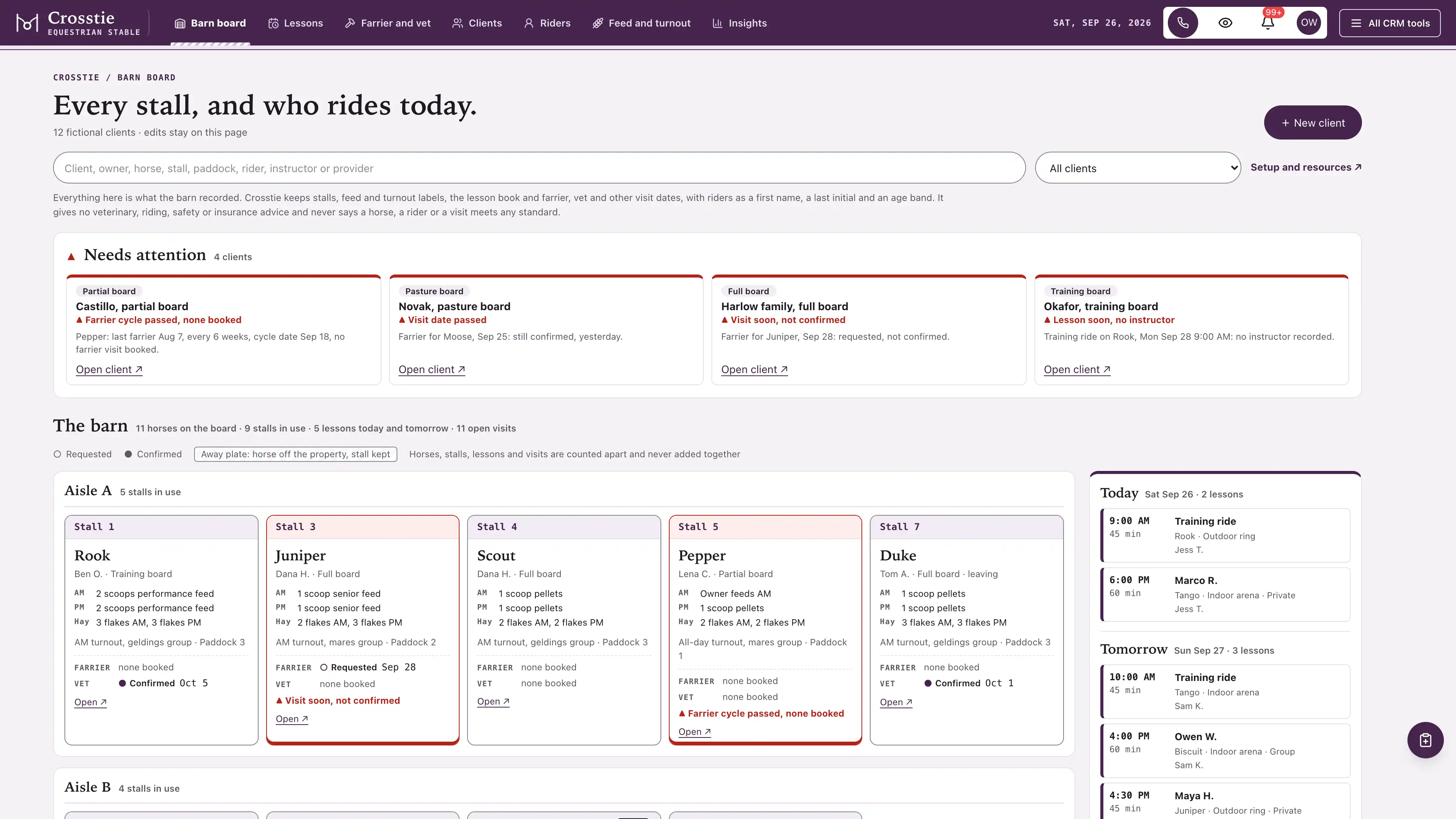
A barn board for boarding and lesson barns: every aisle drawn as its stalls, each horse with its feed, hay and turnout labels and its next farrier and vet visit, with today's lesson book beside it, led by visits past their date, requested visits in the next three days, farrier cycles passed with nothing booked and lessons with no instructor. Crosstie keeps riders to a first name, a last initial and an age band, keeps no rider ages, schools or health details and gives no veterinary or riding advice.
ROADMAP COMPLETE
The original fifty-industry roadmap is complete. Any new kit released during your access year is built the same way as the kits above and sent to All Access members as it ships.
Get every kit with DevLaunch All AccessNew kits are listed here as roadmap entries before they publish. A kit becomes a purchasable product only when its page is published here.
HELP SHAPE THE NEXT KIT
Tell us your industry and the work you want to manage. Share a kit idea on the Build Board, support requests from other businesses, and follow its progress.
DEVLAUNCH ALL ACCESS
DevLaunch All Access includes every GoSeedly CRM kit, all 195 available today, along with every class, course, and product we release, and private calls with Aaron.
Every published kit as original editable source, with optional pipelines, workflow drafts, and guided installers. Browse the kits
The full DevLaunch library and software collection, plus each eligible release during your access year, added to your portal as it ships.
Bring the idea, the offer, or the bottleneck, and leave with a plan you can follow.
Want more than one kit? All Access covers the whole CRM kit library and the rest of what we make. See everything it includes on the All Access page.
See DevLaunch All AccessAlready a member? Open your downloads.
For your own compatible Seedly CRM. Seedly software, hosting and installation services are separate. Each full-interface kit uses its own web installation.
Connect to your own compatible Seedly installation, with its accounts, data, and permissions.
Keep the interface simple or add the kit’s optional starter content. The choice stays with you.
Edit the source yourself or give your AI coding agent the included installation and customization guides.
MORE FROM GOSEEDLY
Explore the tools that sit alongside your industry workspace.
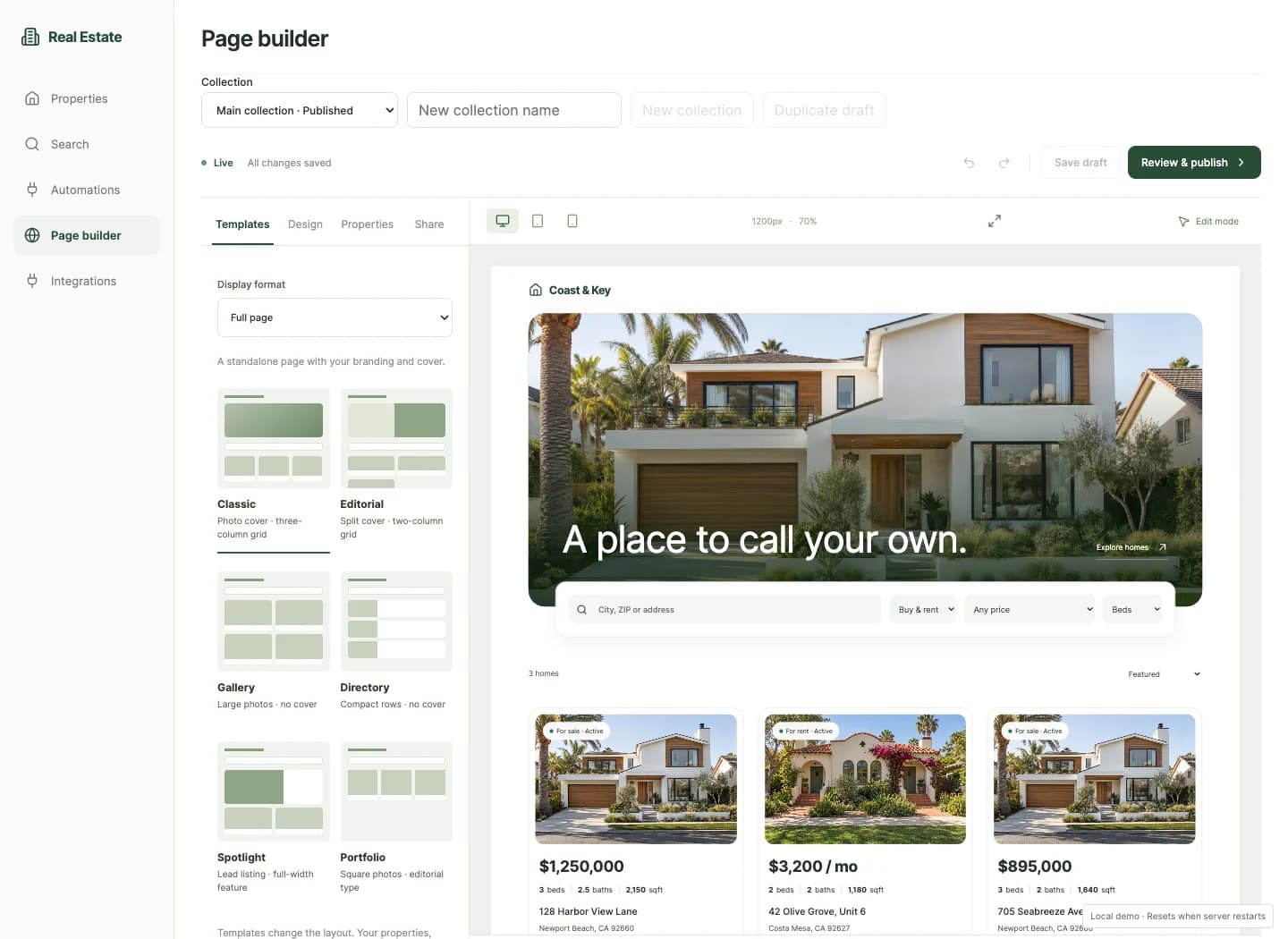
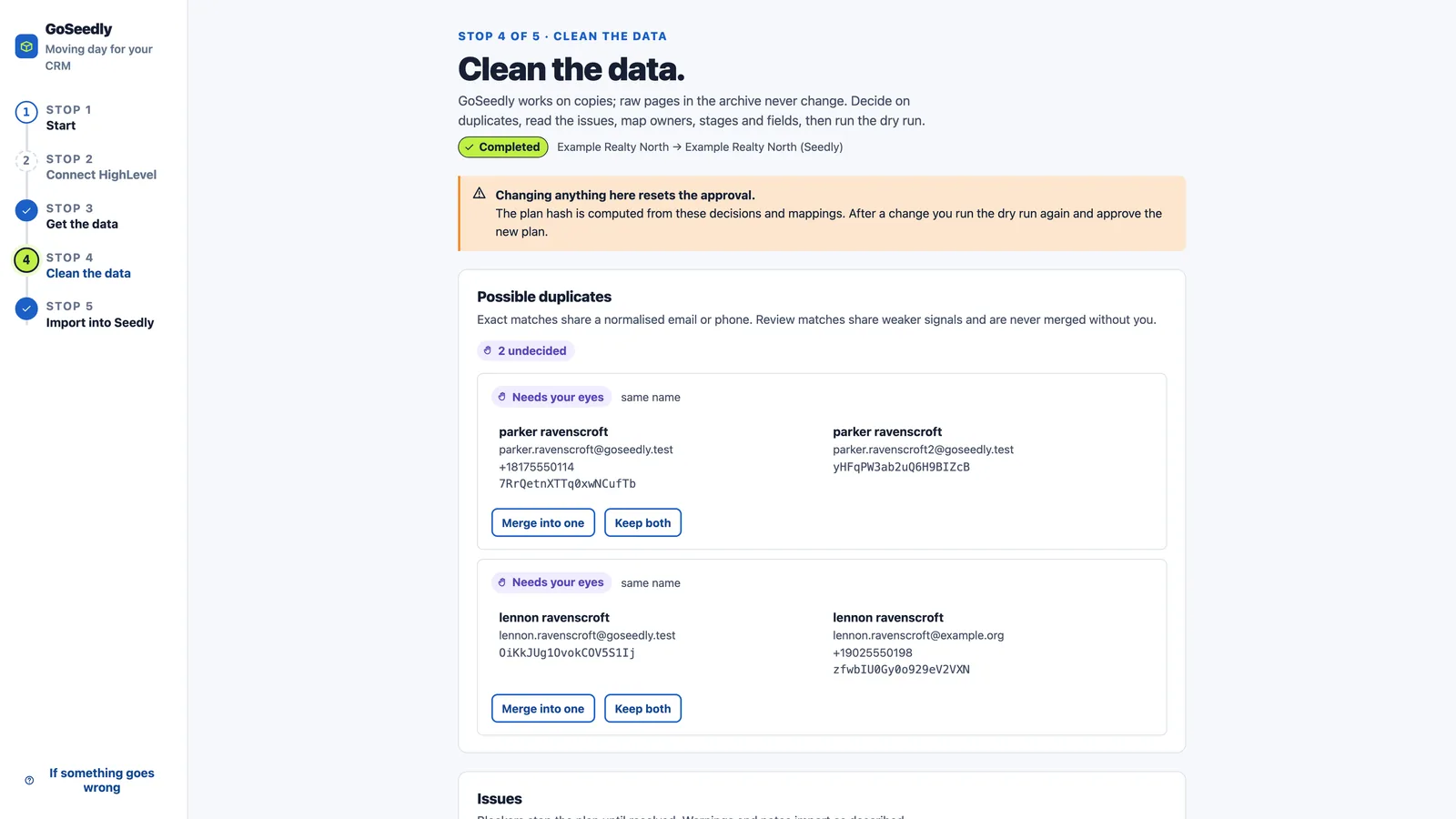
Move supported HighLevel records into your Seedly CRM with export, cleanup and review tools.
Explore the tool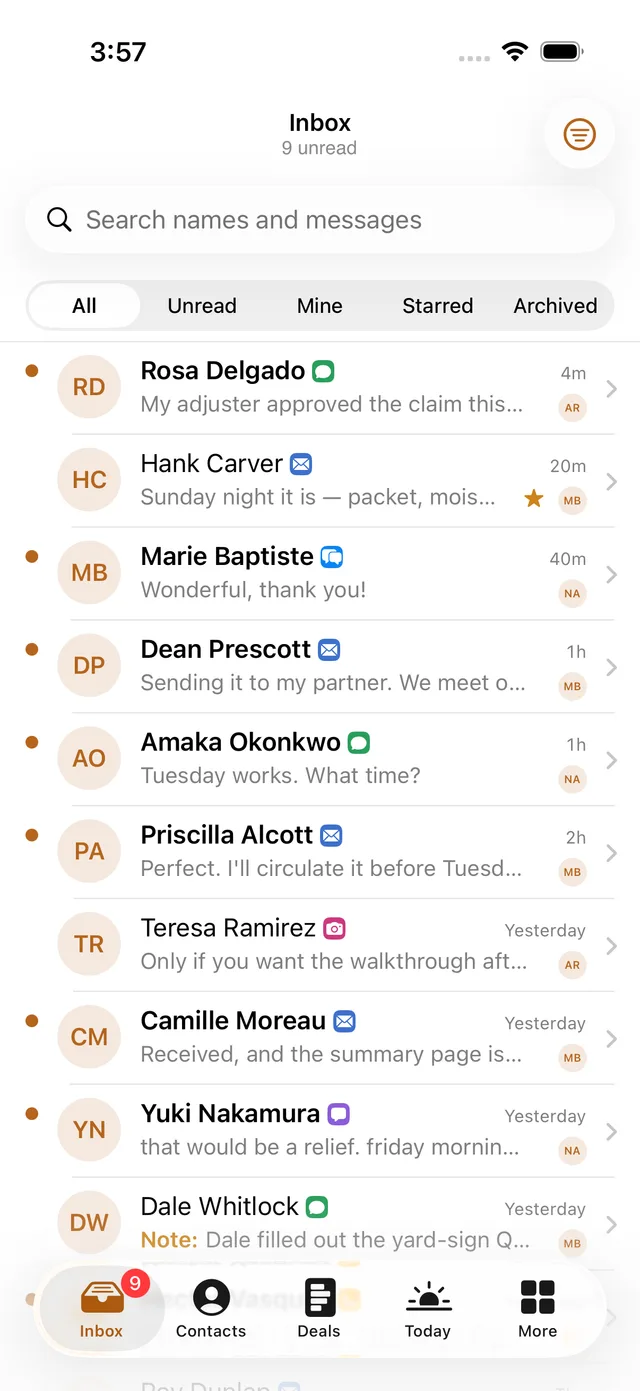
Bring your CRM along with native iOS and Android app source you can brand and customize.
Explore the toolCustomer experiences / Trustpilot
Selected excerpts from reviews of DevLaunch training, software, and services. Individual customer experiences across DevLaunch.
We use essential storage to keep the site working. With your permission, we also use analytics and the Whop Pixel to understand visits and advertising results. Optional analytics stay off until you choose.
Read our Cookie Policy and Privacy Policy.