A cutting table for tailors and alterations shops: the fitting week across the top and every open garment ticket on a rail ordered by the customer's event date, so the wedding on Saturday comes before the hem nobody needs until next month. Chalkmark keeps fittings, tickets, the sewing list by tailor, event dates and the ready shelf in one connected workspace, and it records the change to each garment, never a person's measurements.
See the fitting week and every ticket in event order.
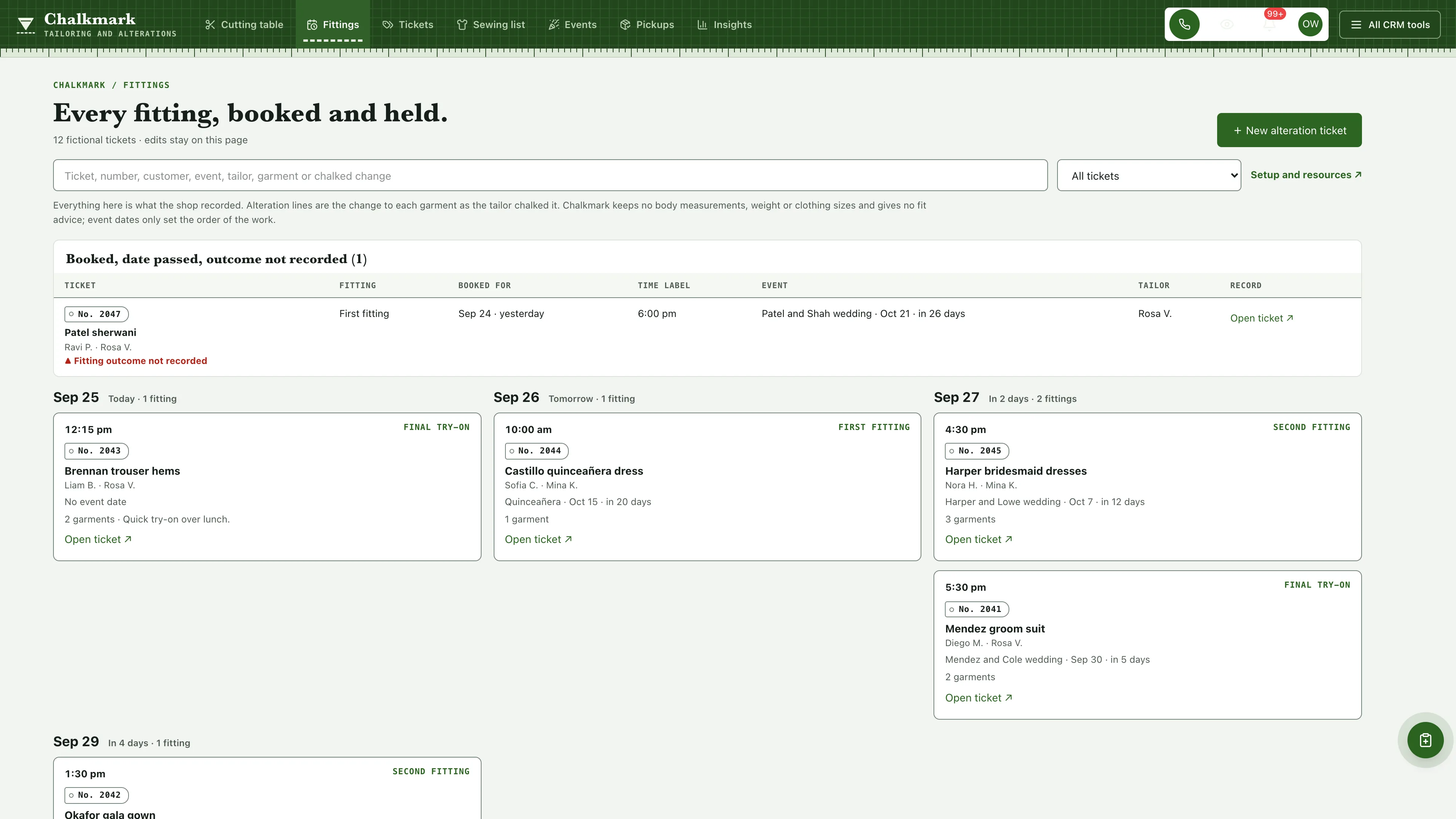
A needs-attention strip, seven days of booked fittings, then open tickets in four columns: to fit, chalked, on the table and ready. Each card carries the ticket number, the event with a countdown in words, each garment's state and the lines done. Past promises, promises after the event, events within seven days, events passed and fittings with no outcome lead.
Booked fittings whose day passed with no outcome first, then booked fittings by day with the time label, kind, ticket and event countdown, then fittings held, missed or cancelled in the last 30 days.
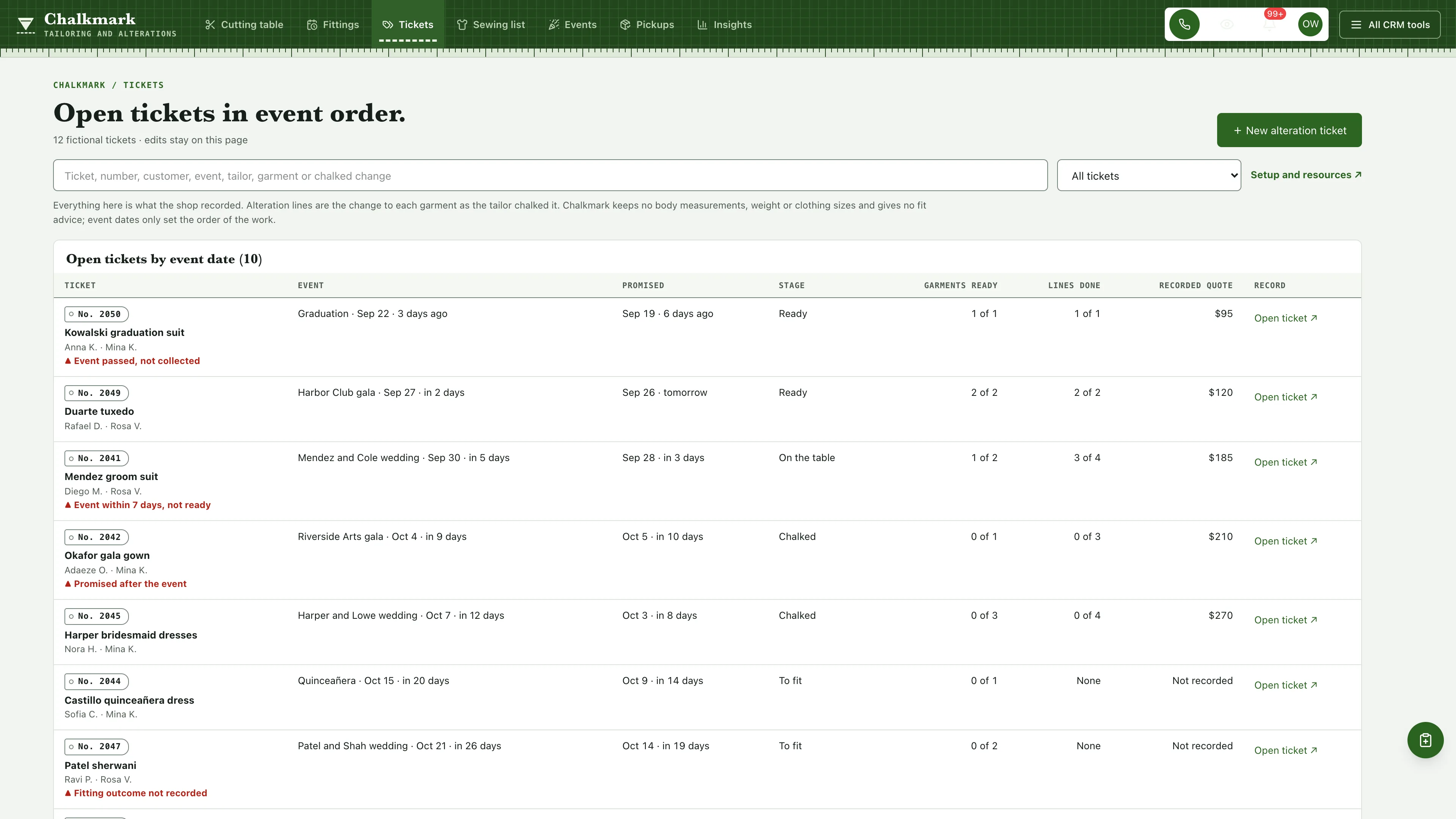
Open tickets sorted by event date and then the promise, with the stage, garments ready, lines done and the recorded quote in their own columns, then tickets picked up or cancelled in the last 30 days.
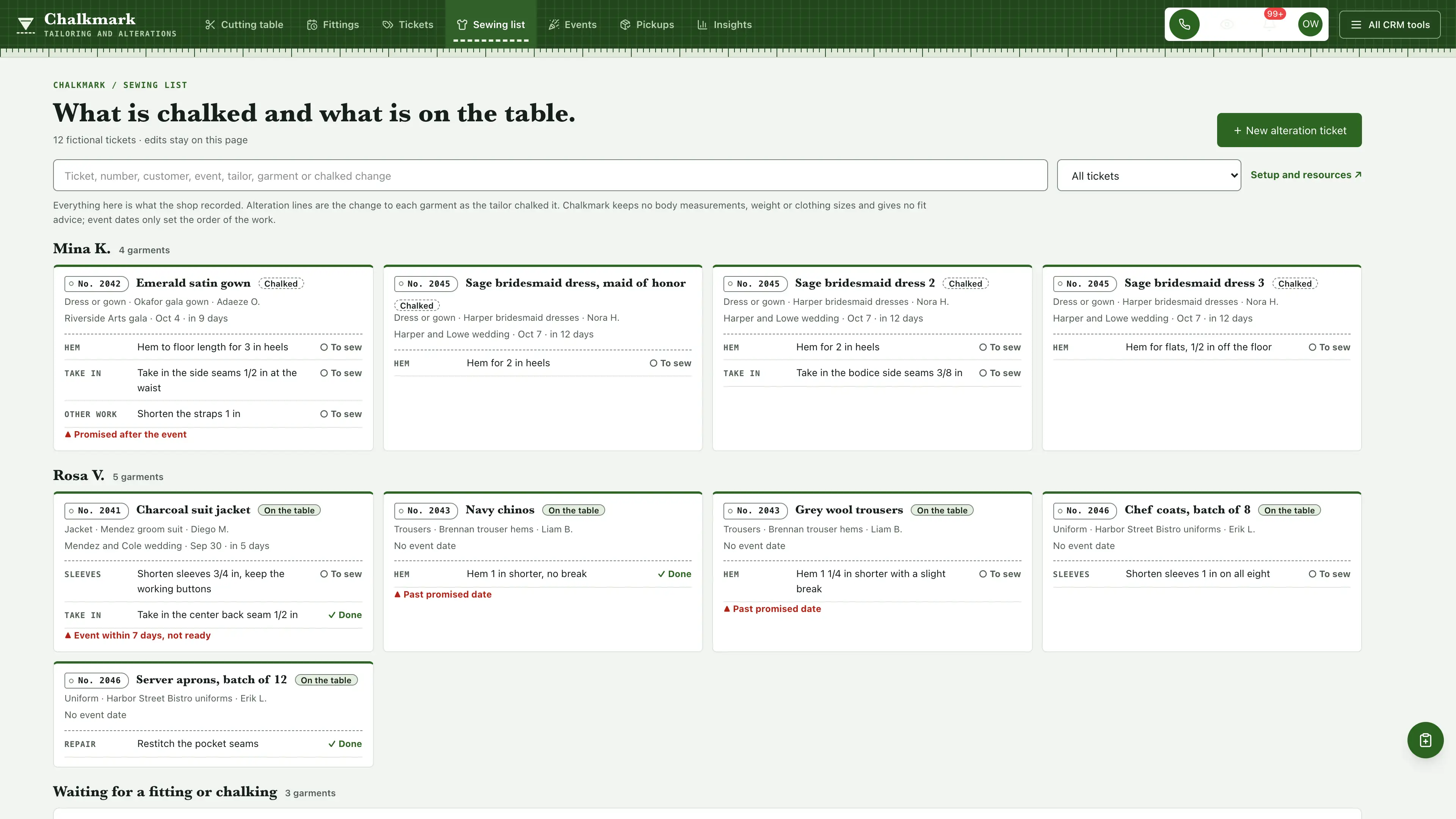
Chalked and on-the-table garments grouped by tailor, each listing its alteration lines exactly as typed with a done or to-sew word, then garments still waiting for a fitting.
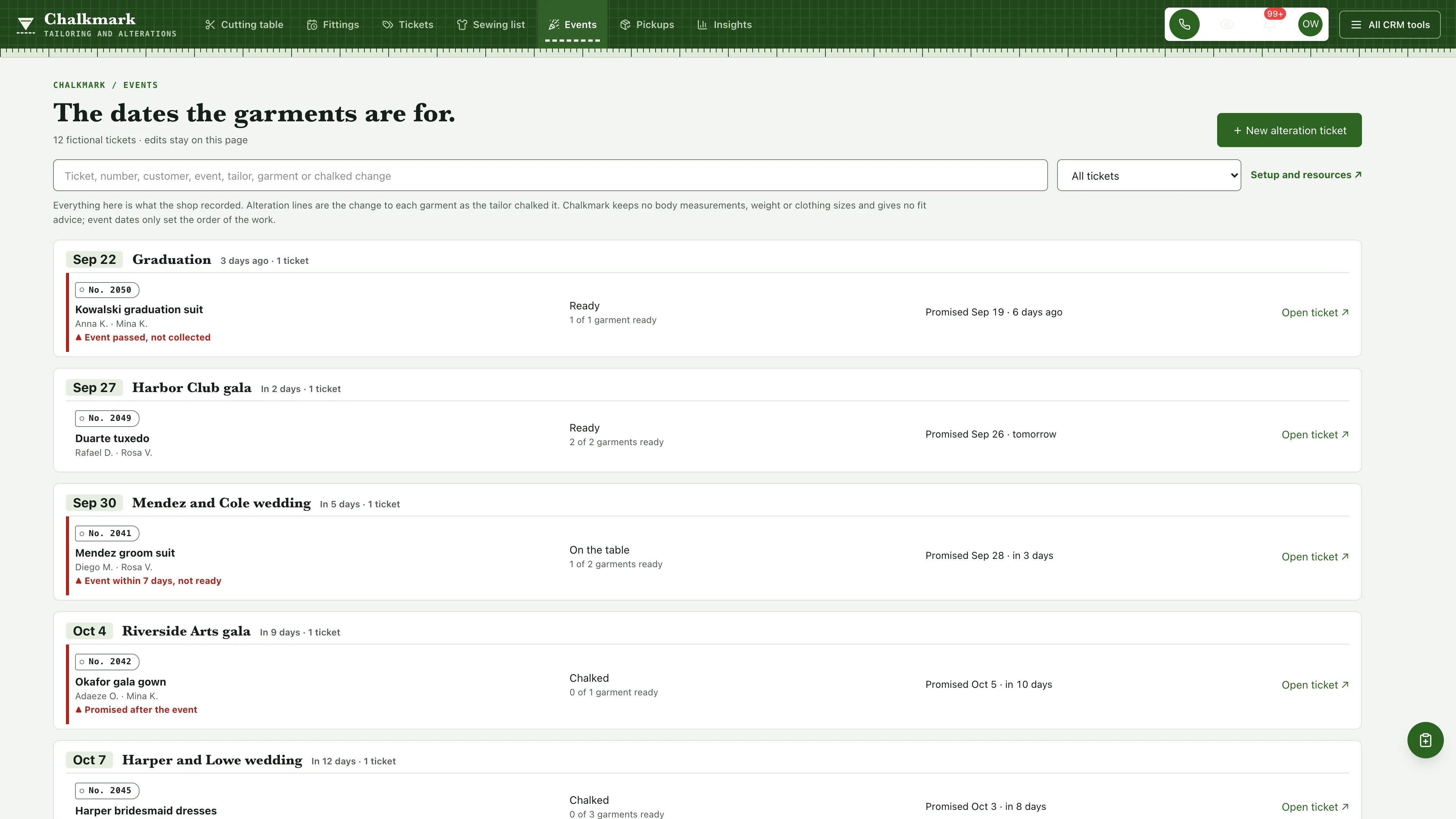
Open tickets grouped by the event date the customer gave, passed events first, each with a countdown, its stage and how many garments are ready, then open tickets with no event date.
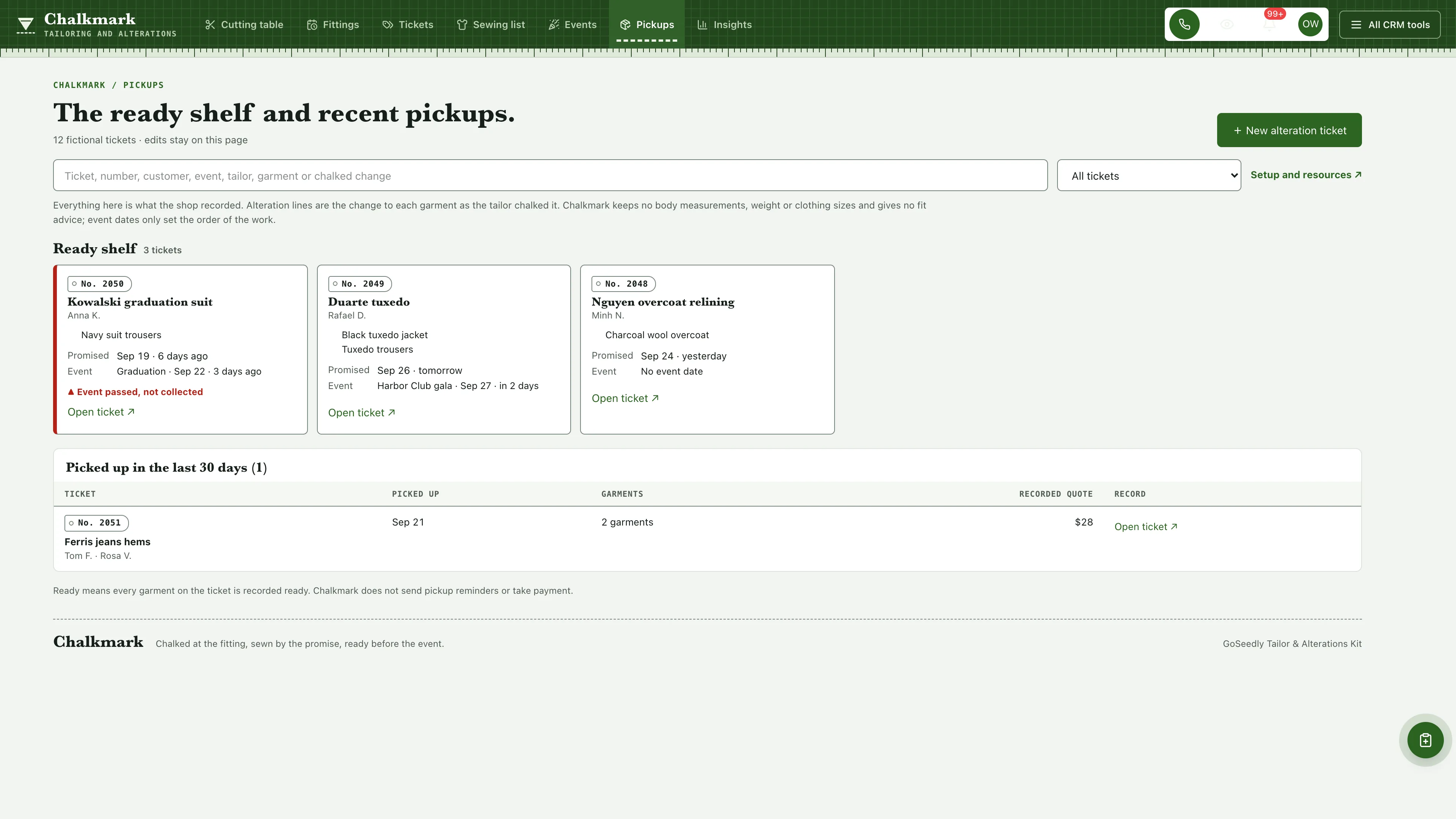
Ready tickets in event order with their garments, promised date and event, flagged when the event has passed and nobody has collected, then tickets picked up in the last 30 days.
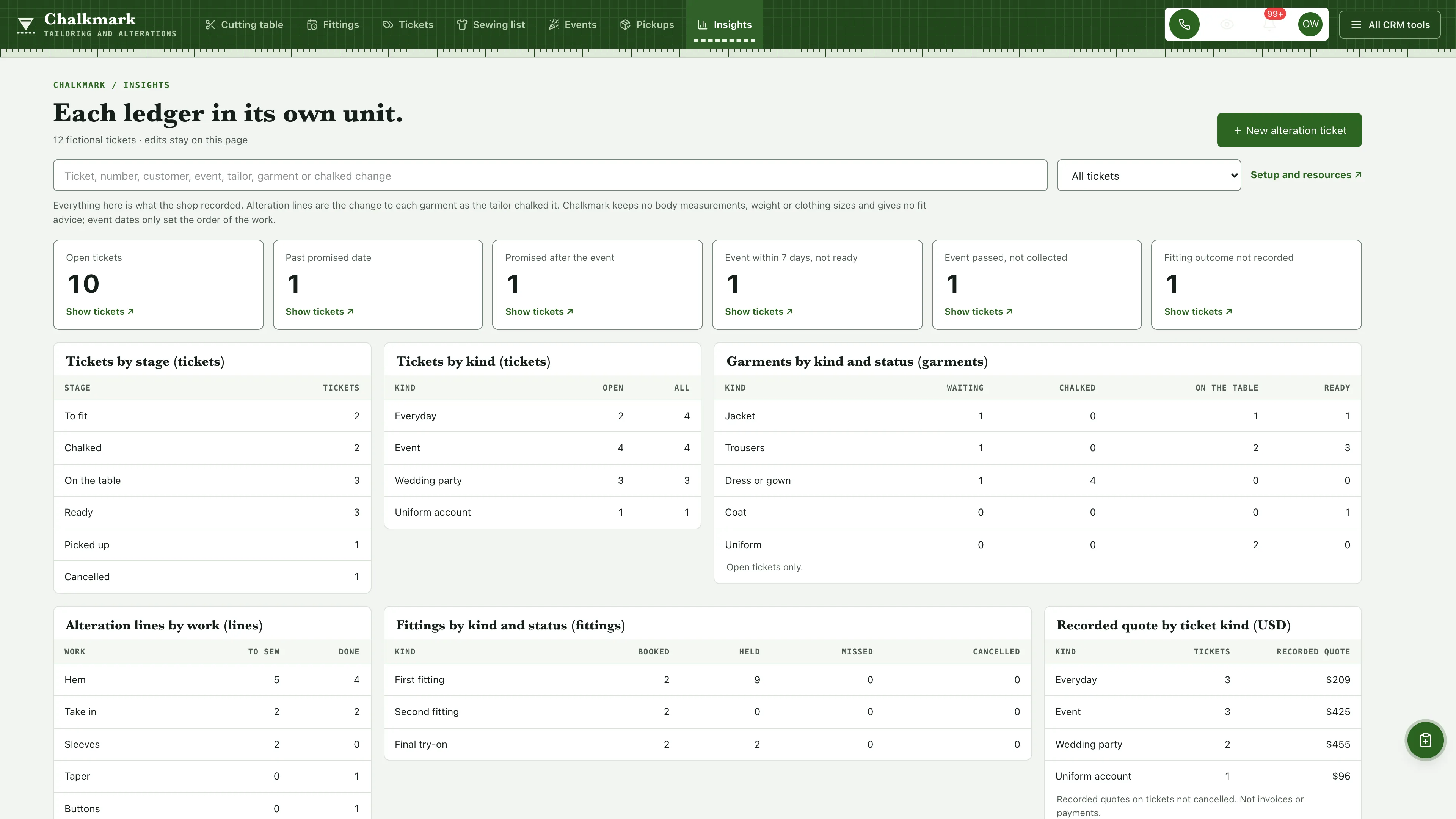
Tickets by stage and kind, garments by kind and state, alteration lines by work, fittings by kind and status and recorded quotes by ticket kind. Garments, lines, fittings and dollars are never added together or drawn on one scale.
YOUR PROCESS, YOUR STARTING POINT
Useful structure. Only what you choose.
4 pipelines and 9 workflow drafts. Add the parts that match your work, with a separate sample view for exploring the interface.
01 / FOUR PIPELINES
Choose your starting structure.
Use a ready-made stage sequence or connect drafts to a suitable existing pipeline.
Alteration tickets · 7 stages
Event and wedding parties · 8 stages
Uniform and business accounts · 7 stages
Everyday repairs · 7 stages
02 / NINE WORKFLOW DRAFTS
Give the next step a shape.
Fitting preparation
Chalk line check
Sewing start
Final try-on
Ready for pickup
Party list check
Ready before the event
Account quote follow-up
Everyday pickup call
Native trigger, task, wait, and note nodes provide editable examples. Every draft stays inactive until you review and publish it.
03 / SAMPLE WORKSPACE
Explore before adding records.
Explore 12 fictional tickets: ten open (two to fit, two chalked, three on the table and three ready), one picked up and one cancelled, with 20 garments, 23 alteration lines, 17 fittings and 84 checklist steps. Sample edits stay in memory and reset on navigation or reload.
No sample customers are inserted into your CRM.
Starter setup checks selected kit additions before removal and preserves edited records and live work.
MORE OF THE WORKING DAY
From the first inquiry to the final handoff.
Editable native forms and document templates give your team a practical starting point.
01 / INTAKE & FOLLOW-UP
Three ready-to-edit forms.
Alteration request
Wedding party fitting request
Uniform account request
Choose forms individually in Setup & resources, then customize and publish them in the native form builder.
02 / WORKING DOCUMENTS
Three reusable templates.
Alteration ticket
Fitting sheet
Pickup slip
Open each template in Documents and complete it for the actual job or visit.
03 / THE NEXT STEP
Checklists alongside the work.
Record progress and notes in the kit’s operating views. Keep earlier rows by archiving them, and retain the context for the next person.
Forms collect information for staff review. They do not automatically change the kit’s custom records. Repeating setup preserves existing resource edits.
THE KIT, UNPACKED
Your workspace. Your starting point. Your code to edit.
One contact-linked ticket holds the ticket number and kind, the event and its date, the dates received, promised and picked up, the tailor and the recorded quote, plus every garment with its state, every alteration line as chalked, every fitting with its time label and outcome, and an editable checklist.
Cutting table operating view
Fittings operating view
Tickets operating view
Sewing list operating view
Events operating view
Pickups operating view
Insights operating view
Three native form drafts and three editable document templates
Editable ticket checklists and preserved row history
Four optional pipeline templates and nine inactive workflow drafts
12 fictional in-memory tickets
Guided setup, compatibility report, and private rollback receipt
AI-agent documentation for customized installations
Original editable source, configuration, and tests
Run the guided setup from the extracted kit. Supported integrations can be installed directly; customized integration files get a reviewed merge.
02
Connect the required helper.
Deploy the included helper from your authoritative backend source before connected edits. Build your web app, then choose any optional pipelines and drafts you need.
03
Set up your own team.
Edit business name, descriptor and default pipeline name. Sign in with your account and verify the workflows and permissions your team uses.
Compatibility and operational details
Seedly CRM 5.8.4 · extension API 1. Node.js 20 or newer. The installer checks supported integration-file versions and does not deploy your web app or backend. The included original backend helpers are required for connected ticket creation, edits and resource setup. They preserve native account permissions, unrelated custom fields and row history, keep every alteration line exactly as typed, refuse access codes, logins, card numbers, Social Security numbers and a person's measurements, weight or size, and check revisions before saving. Deploy them from the authoritative backend source. Pipelines and workflow drafts are optional.
Chalkmark records what the shop chalked, sewed, promised and handed back. It keeps notes about garments, not people: there is no field for body measurements, weight or clothing sizes, and the notes guard and native form drafts refuse them. It gives no fit, style or care advice, drafts no patterns, orders no fabric, books no calendars, sends no reminders or messages and takes no payments. Door, gate and building codes, Wi-Fi and app logins and passwords, payment card numbers and Social Security numbers are refused in recorded text and in the native form drafts.
Calling, messaging, signing, payments, and external integrations depend on your Seedly installation, account permissions, plan, and configured providers. Screenshots use sample data and reference imagery. Hosting, installation, and ongoing maintenance are your responsibility.
Checking access…
DEVLAUNCH ALL ACCESS
Every kit. And everything else.
DevLaunch All Access includes every GoSeedly CRM kit, all 195 available today, along with every class, course, and product we release, and private calls with Aaron.
All 195 CRM kits
Every published kit as original editable source, with optional pipelines, workflow drafts, and guided installers. Browse the kits
Every class, course, and product
The full DevLaunch library and software collection, plus each eligible release during your access year, added to your portal as it ships.
Private calls with Aaron
Bring the idea, the offer, or the bottleneck, and leave with a plan you can follow.
DevLaunch All Access
Want more than one kit? All Access covers the whole CRM kit library and the rest of what we make. See everything it includes on the All Access page.
For your own compatible Seedly CRM. Seedly software, hosting and installation services are separate. Each full-interface kit uses its own web installation.
BEFORE YOU MAKE IT YOURS
Good questions. Clear answers.
How do I receive the kit?+
Purchase securely through Whop. Your original source ZIP and installation documentation are delivered manually to the email used at checkout. This is a one-time purchase of this kit; Seedly software, hosting, and installation services are separate.
Does this include Seedly CRM?+
You obtain and configure Seedly separately. The kit adds original frontend screens, a shared theme, starter definitions, and integration instructions. It does not include Seedly’s codebase, license, hosting, or a separate CRM database.
Is this one connected workspace?+
Chalkmark keeps its moss cutting-mat top bar and ruler band across the kit views and native CRM tools in the same signed-in account. Contacts, Calendar, Estimates, Documents, and other full modules retain the functionality supplied by your own Seedly installation. Existing authored content and provider screens retain their own layouts.
Can I use it with existing customizations?+
Yes, with a compatibility review. The installer checks the supported integration files. Changed integration files need a reviewed merge; the included AI-agent guide explains how to preserve custom extensions, permissions, providers, and routes.
Do I have to import all the starter content?+
No. Choose individual pipelines and workflow drafts, use a compatible existing pipeline, or install none. Workflows remain inactive until reviewed and published. They use native triggers, internal tasks, optional notes, and timed waits. A wait does not verify task completion or recheck the current stage. The included drafts do not send customer messages.
Can I remove the examples and starter content?+
Sample records stay in memory and never create customers in your CRM. Leave sample mode to return to your account. Starter setup lets you review removal of unused kit additions; server checks retain edited or published workflows and pipelines with live work or references. Removing the frontend does not delete account records.
Can different subaccounts use different kits?+
The current design and branding apply to the whole web installation. Subaccounts still separate data and access. Use a separate web installation for another full-interface kit; running different kit designs by subaccount in one installation requires additional customization.
Selected excerpts from reviews of DevLaunch training, software, and services. Individual customer experiences across DevLaunch.
Your privacy, your choice.
We use essential storage to keep the site working. With your permission, we also use analytics and the Whop Pixel to understand visits and advertising results. Optional analytics stay off until you choose.
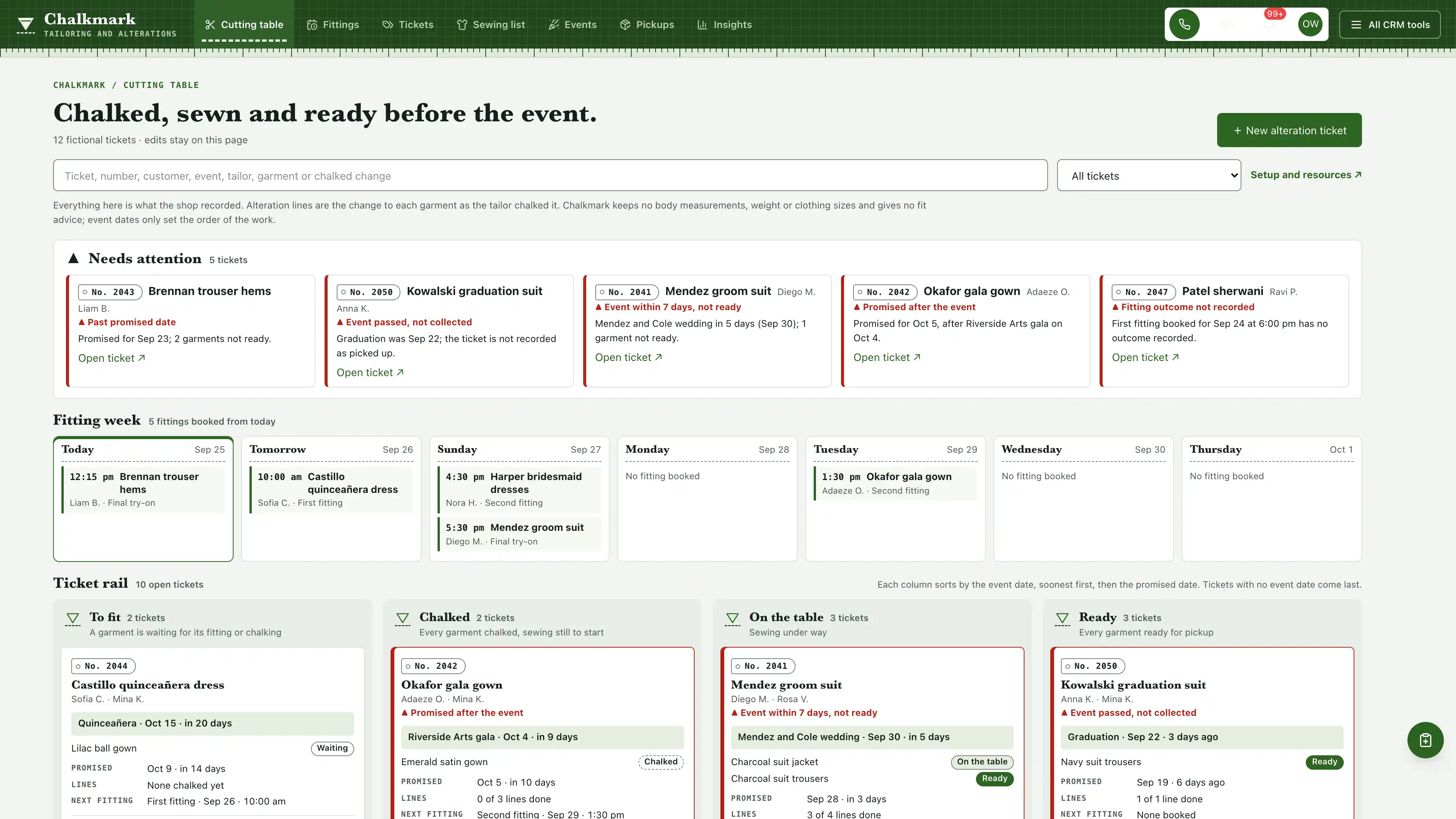 01 / Cutting table