CRM KitsChurches: retreats, camps, trips and registrations
Every bed, seat and balance for the trip, on one board.
A workspace for the church office that runs retreats, camps, conferences and trips: one registration per household per event, the amount due and payments as recorded, each child's permission form and medical release as received or not, and the hard part, who sleeps in which cabin and who rides which bus. Cabins and buses are columns with people assigned against their capacity, and the office moves people by dragging or with a picker. Bedroll records what the office decided, takes no payment and keeps no medical detail.
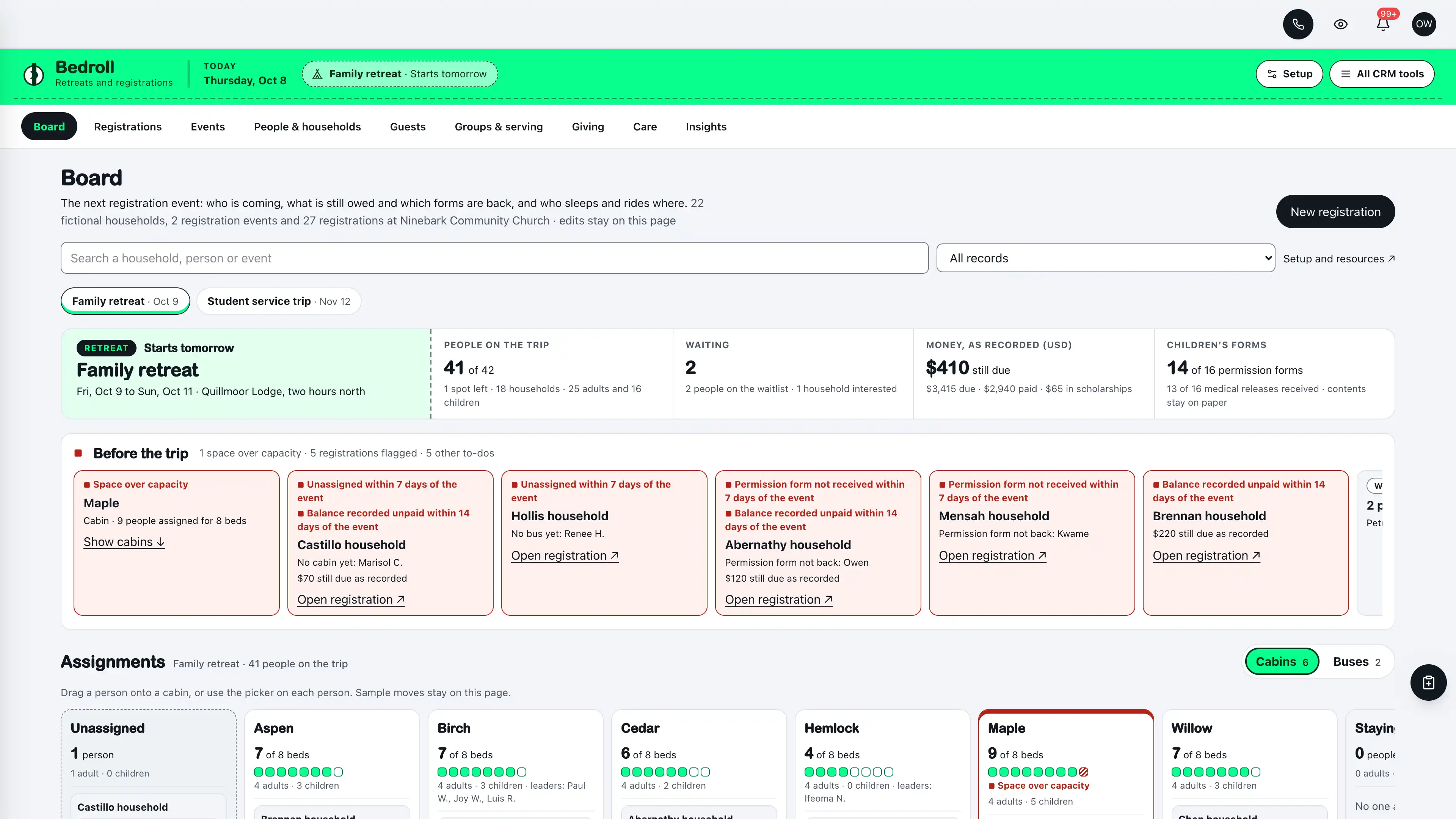
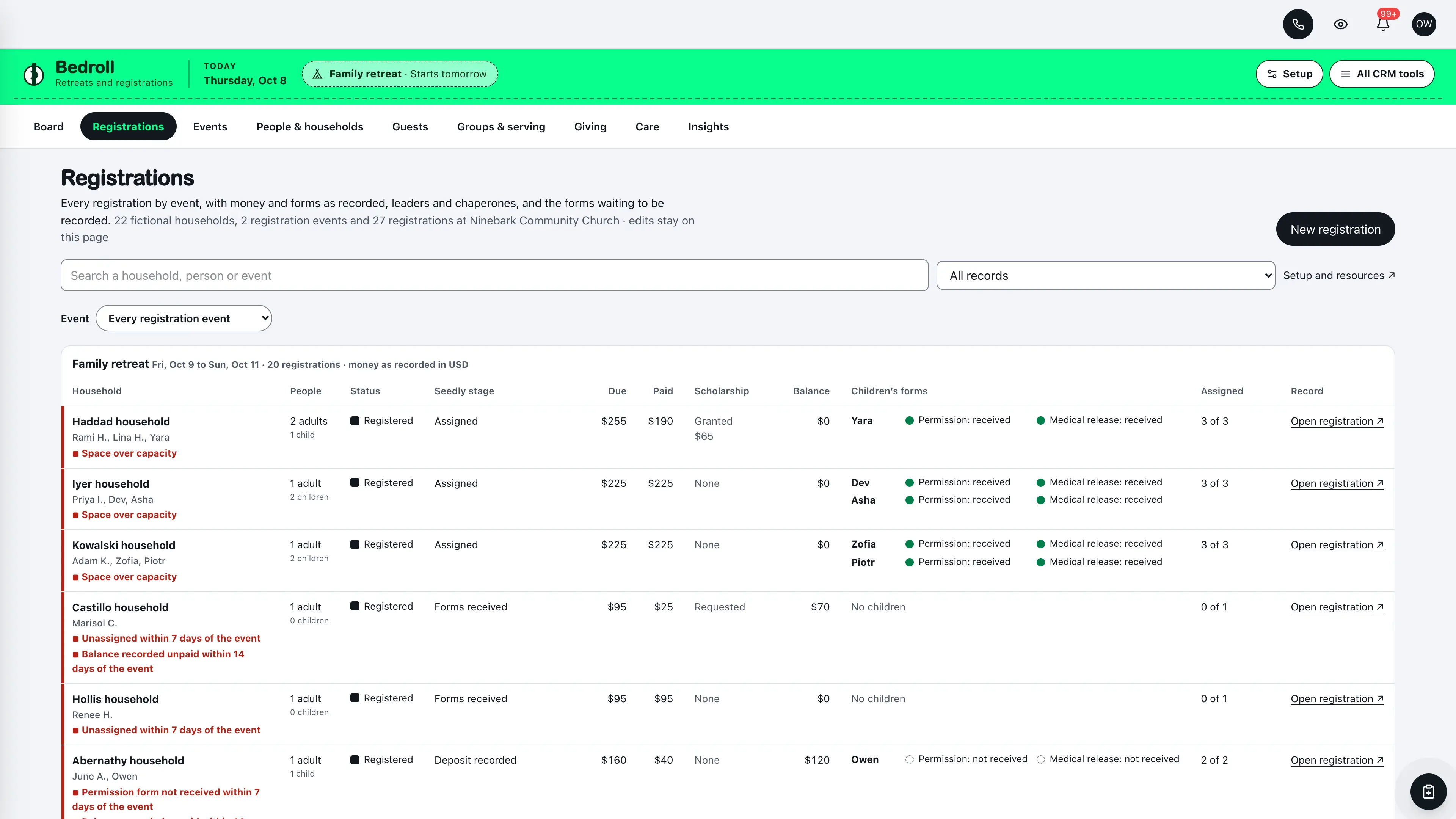
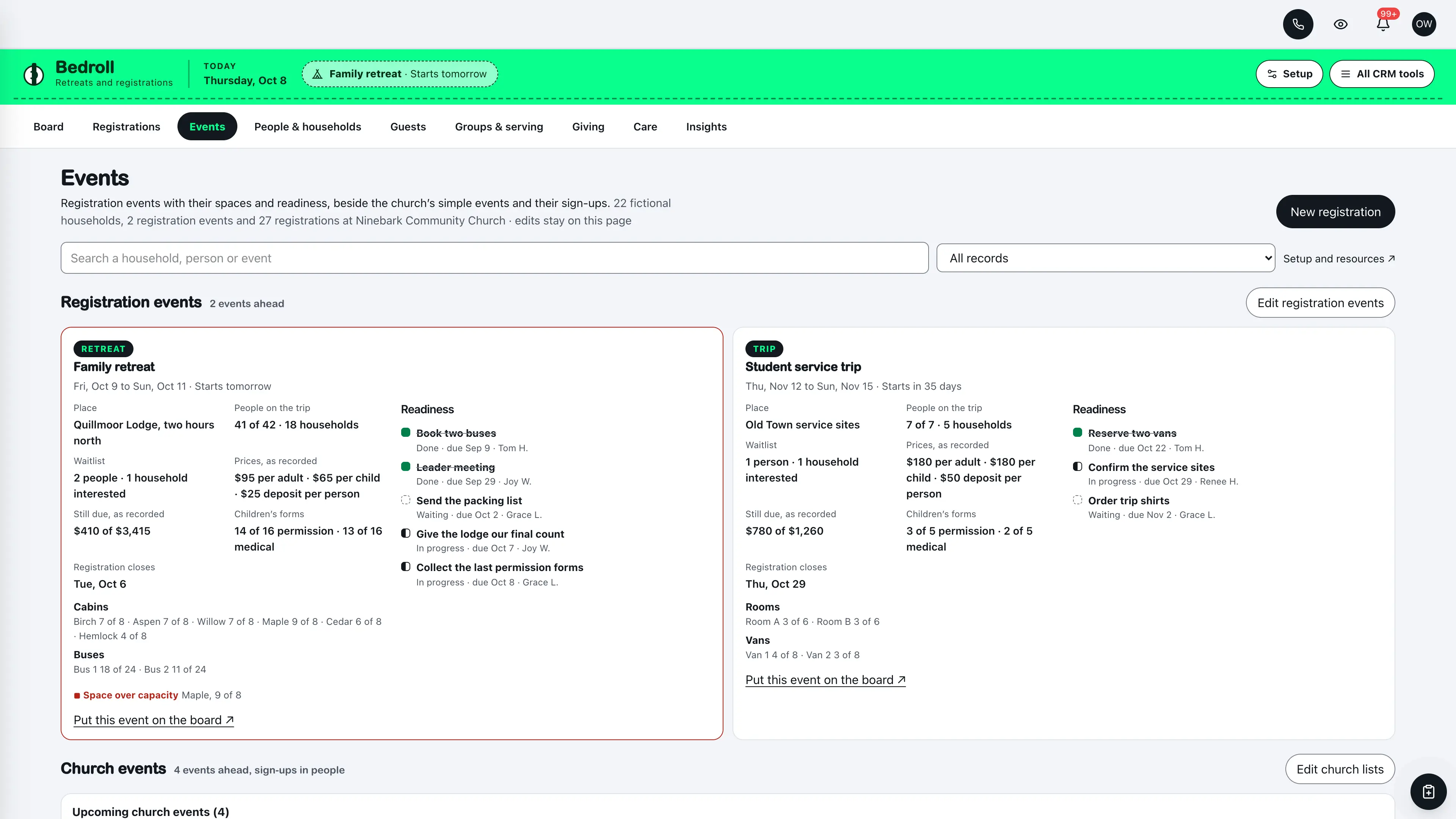
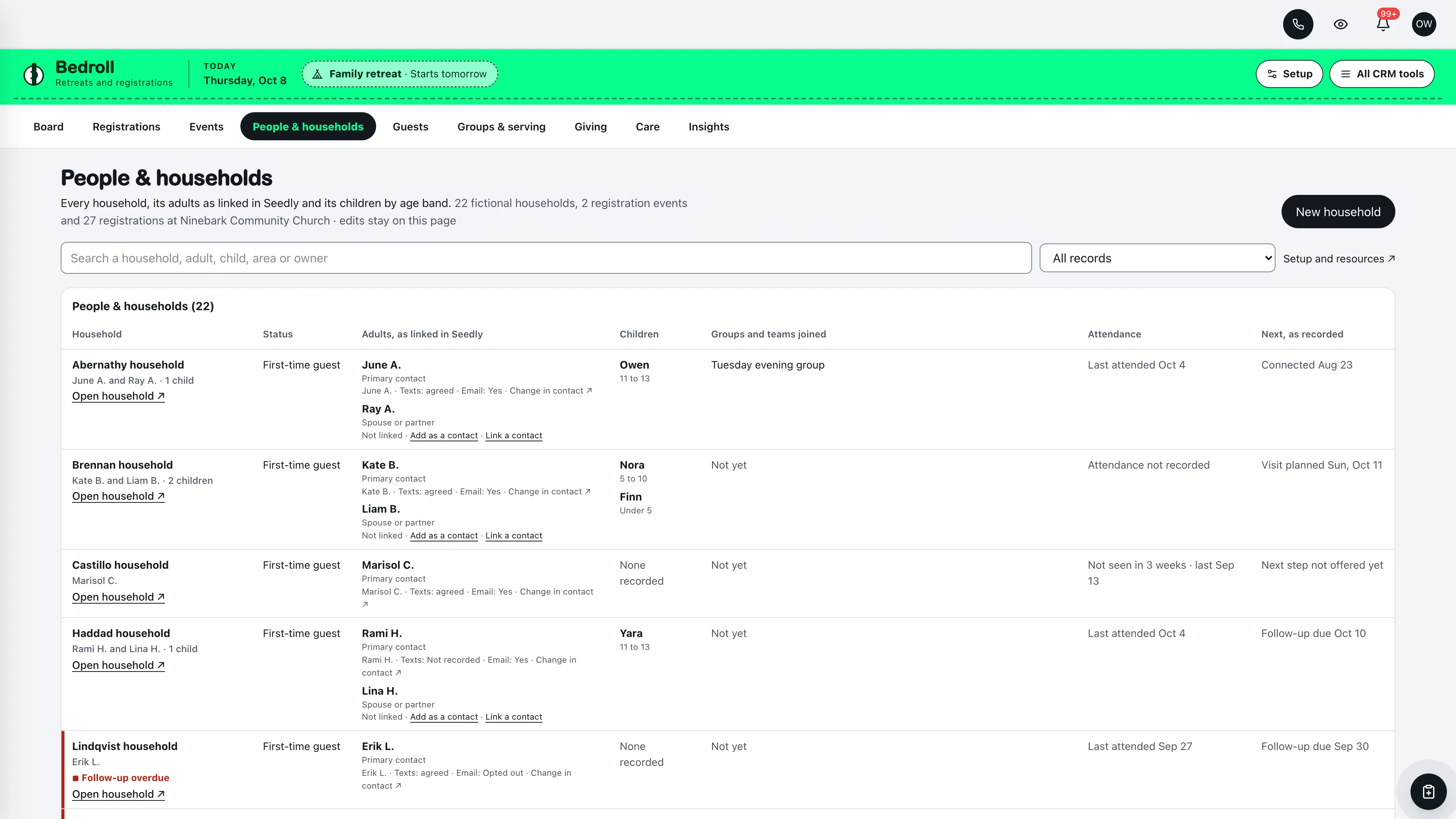
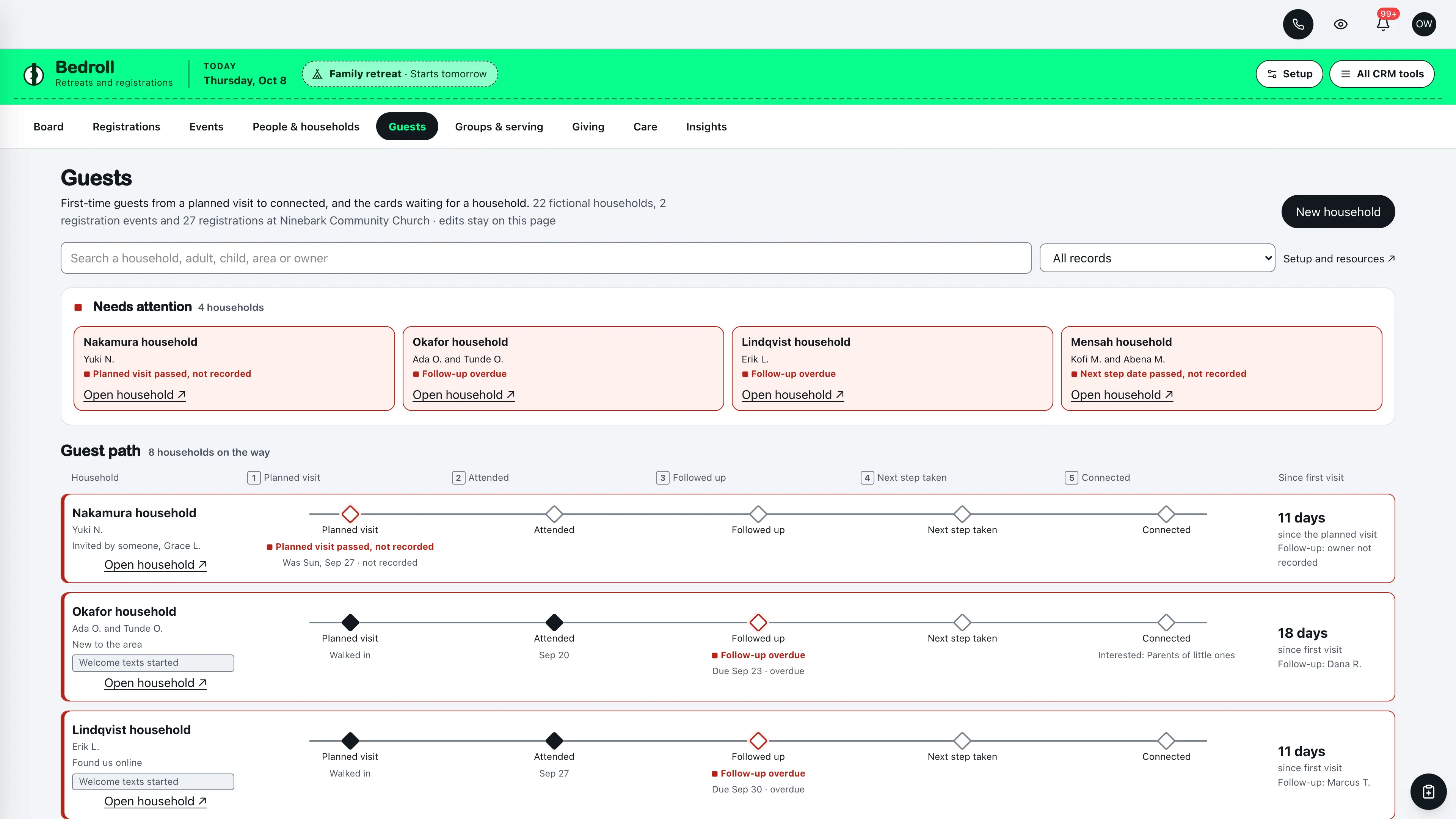
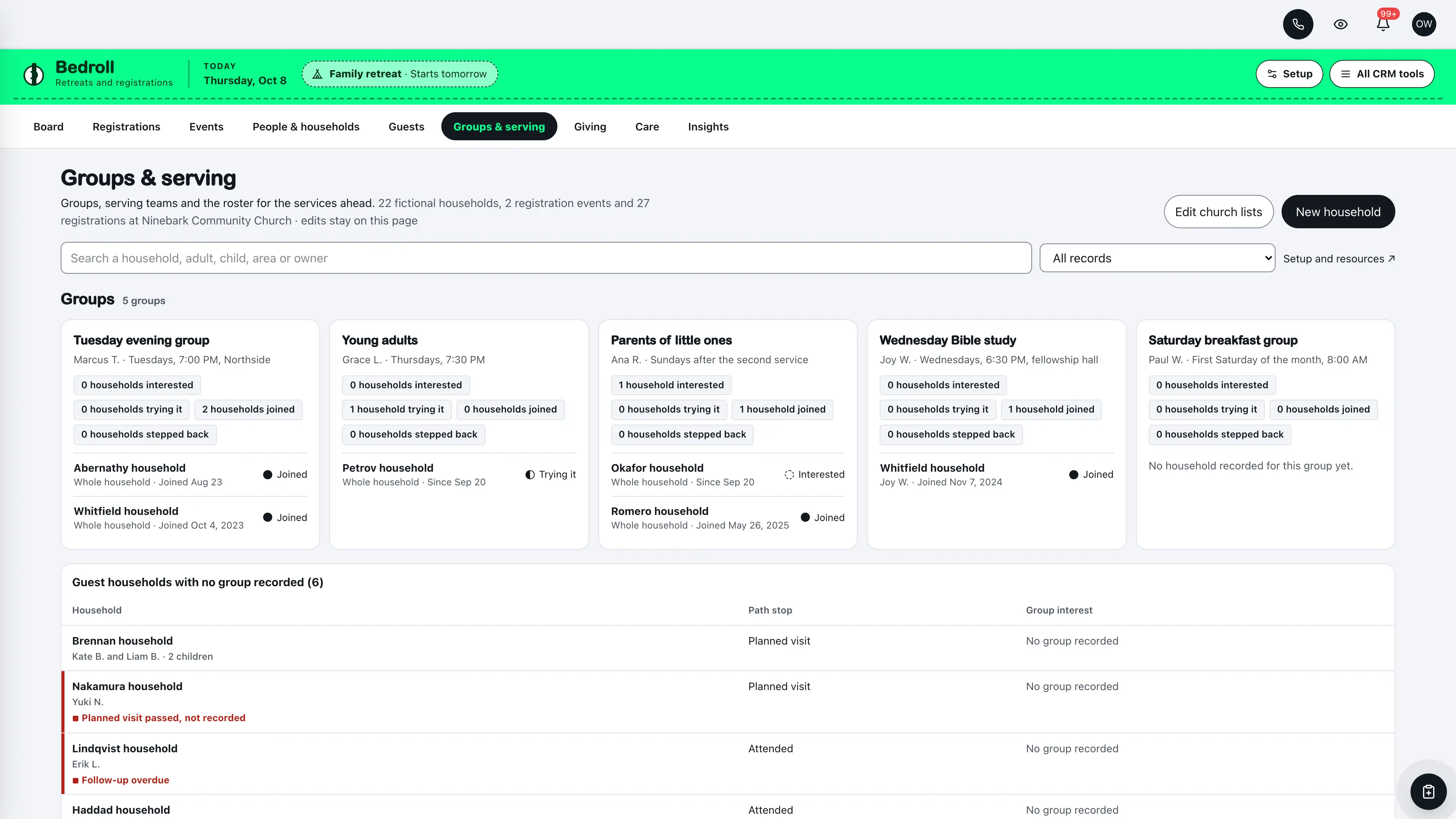
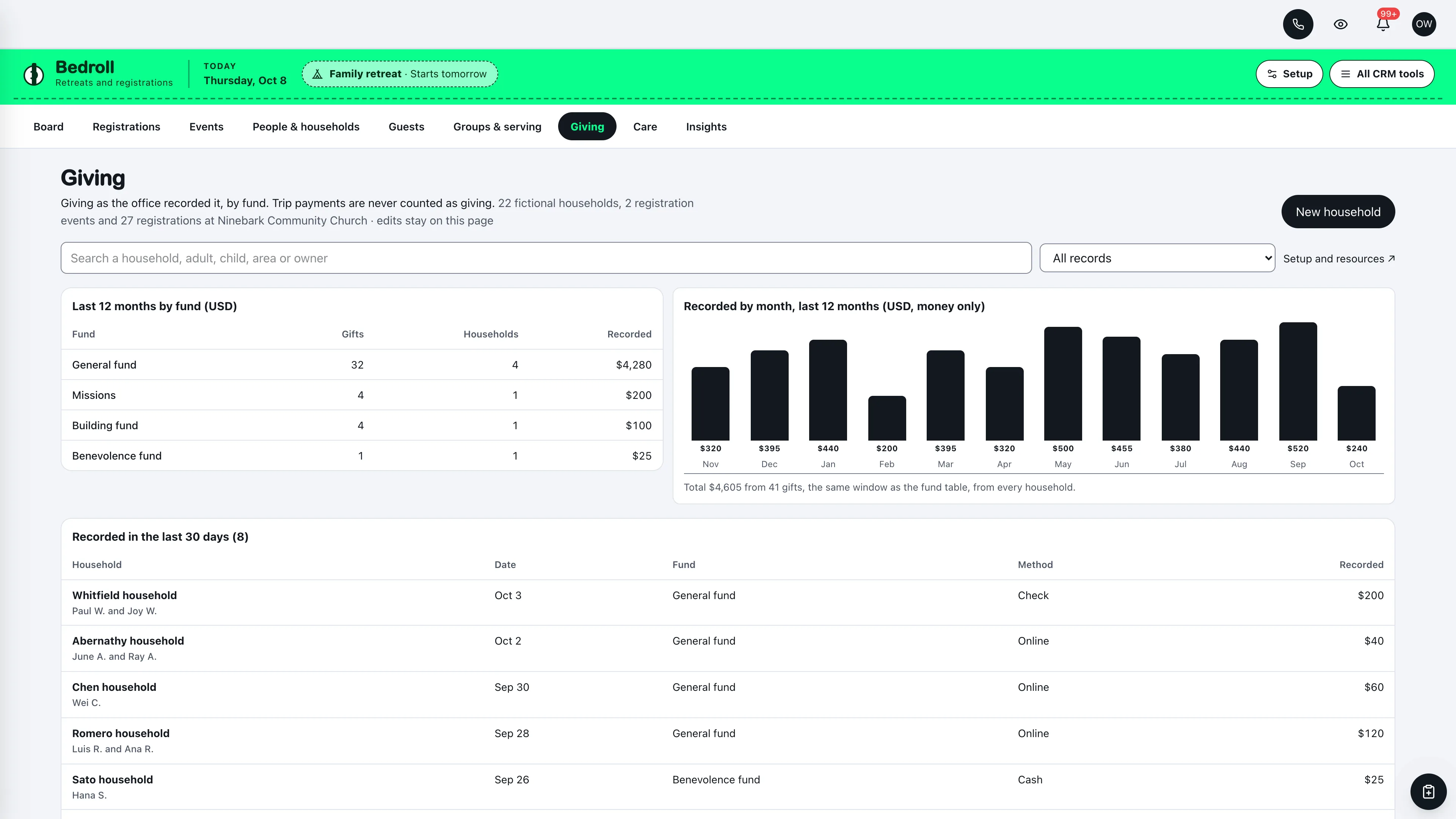
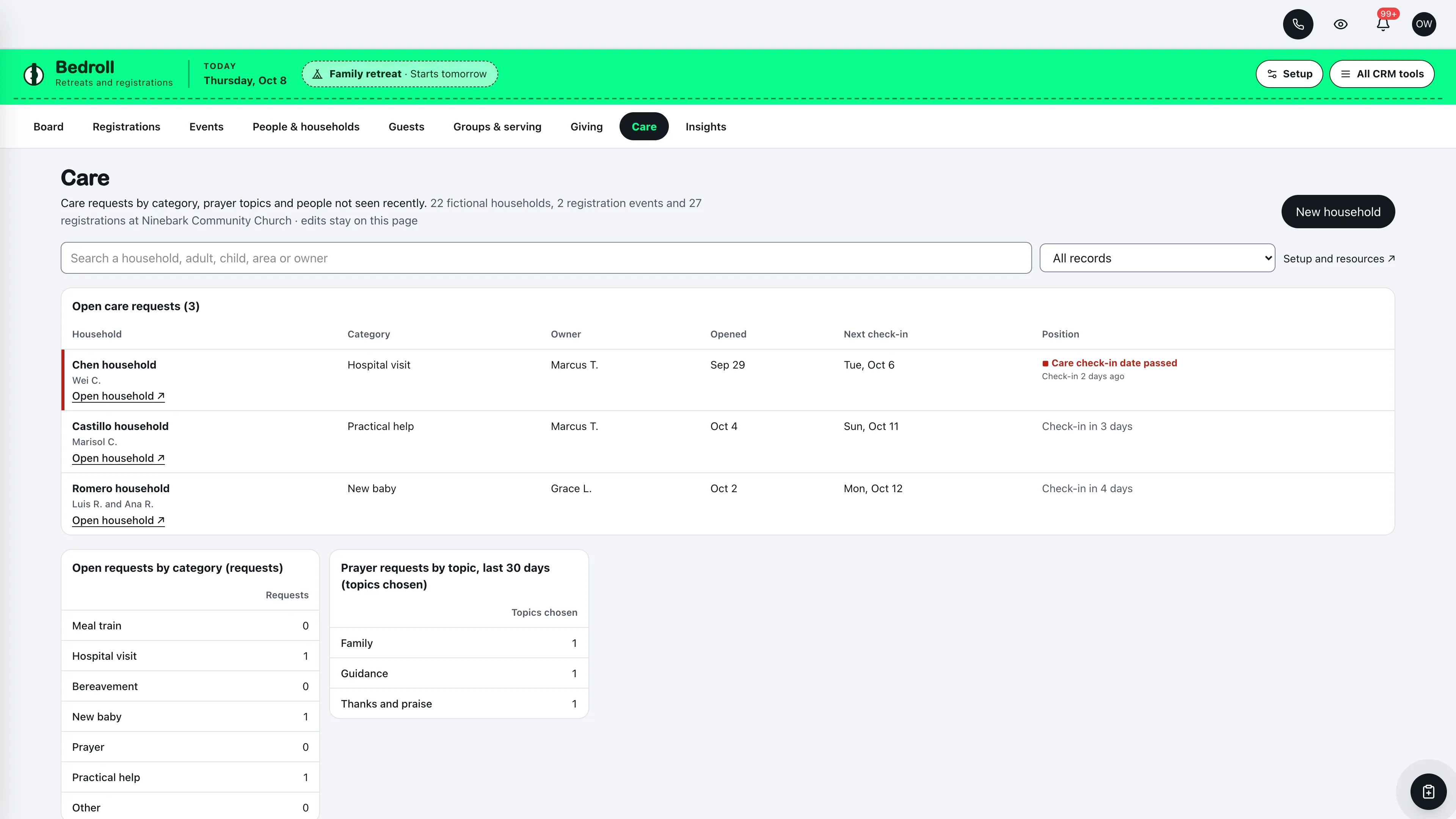
Put every person in a cabin and a seat.
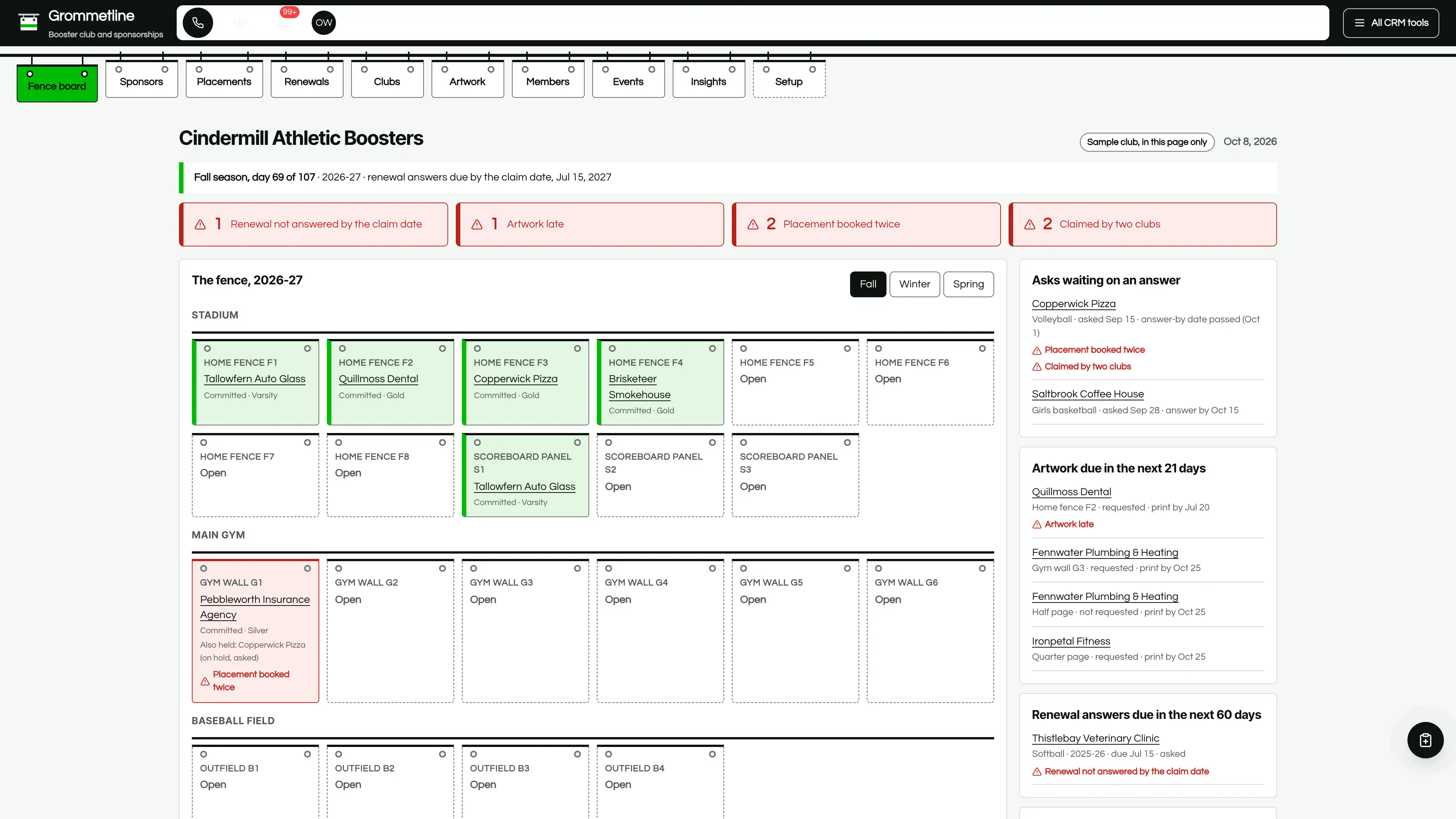
The next registration event as a ticket: dates, place, people on the trip against capacity, the waitlist, what is still due as recorded and children's forms received. Before the trip leads with the cabin over capacity and each registration with someone unassigned, a permission form not back or a balance still due, then leaders whose church steps are not recorded as done and readiness items due. Below, cabins (or buses) stand as columns with a row of seat marks against capacity and an Unassigned lane first, people grouped by household, adults by name and children by first name and age band.
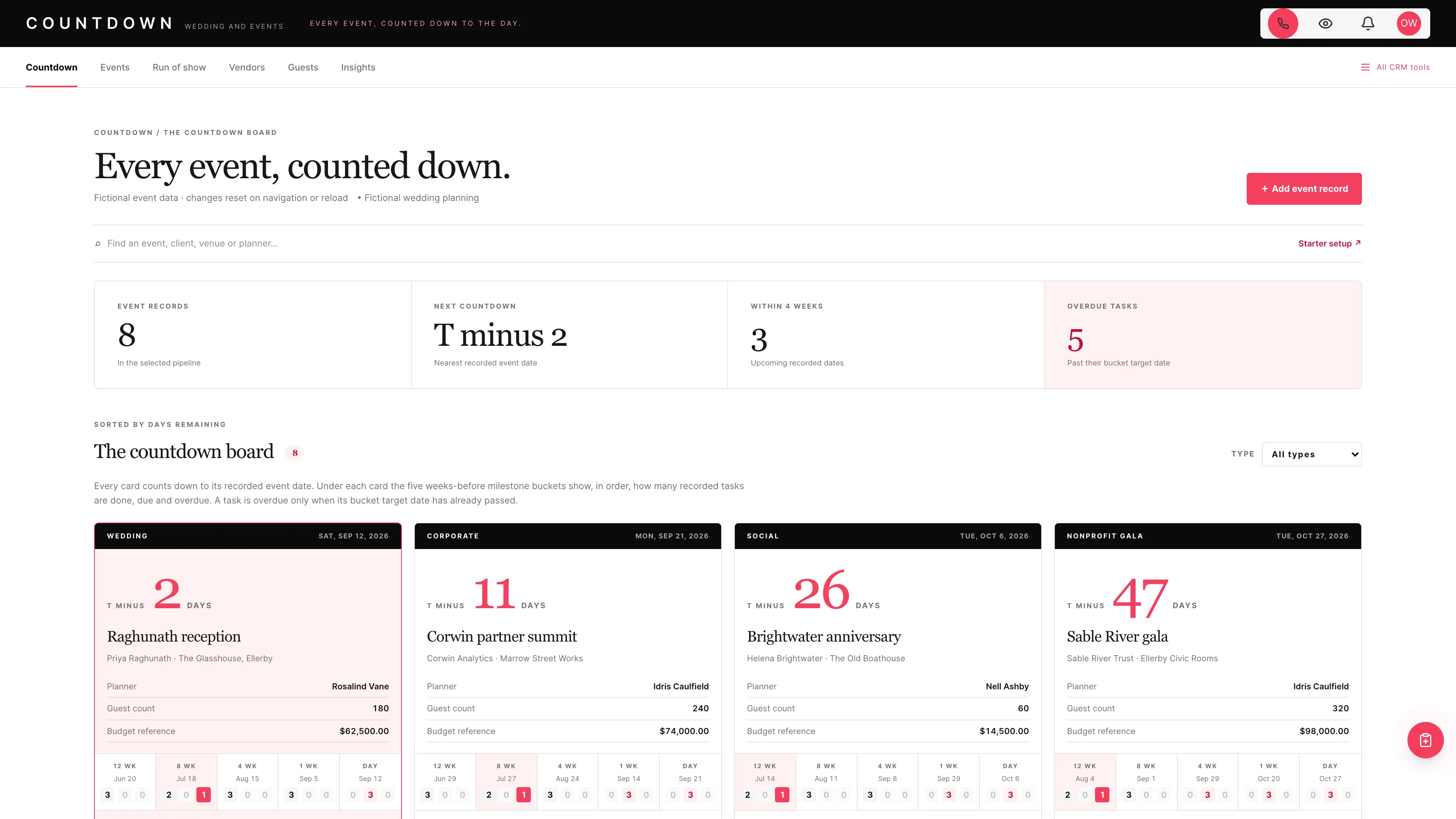
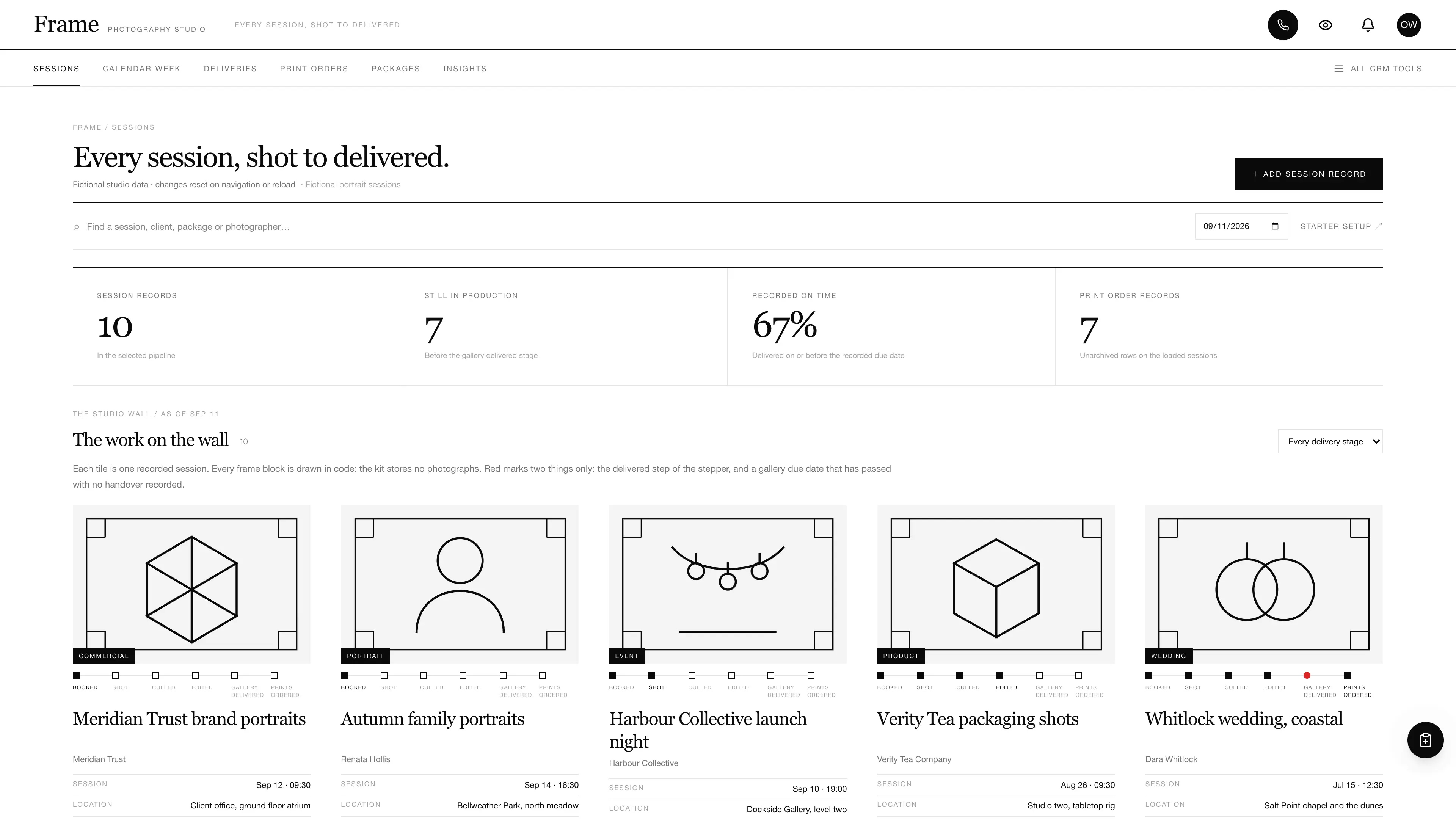
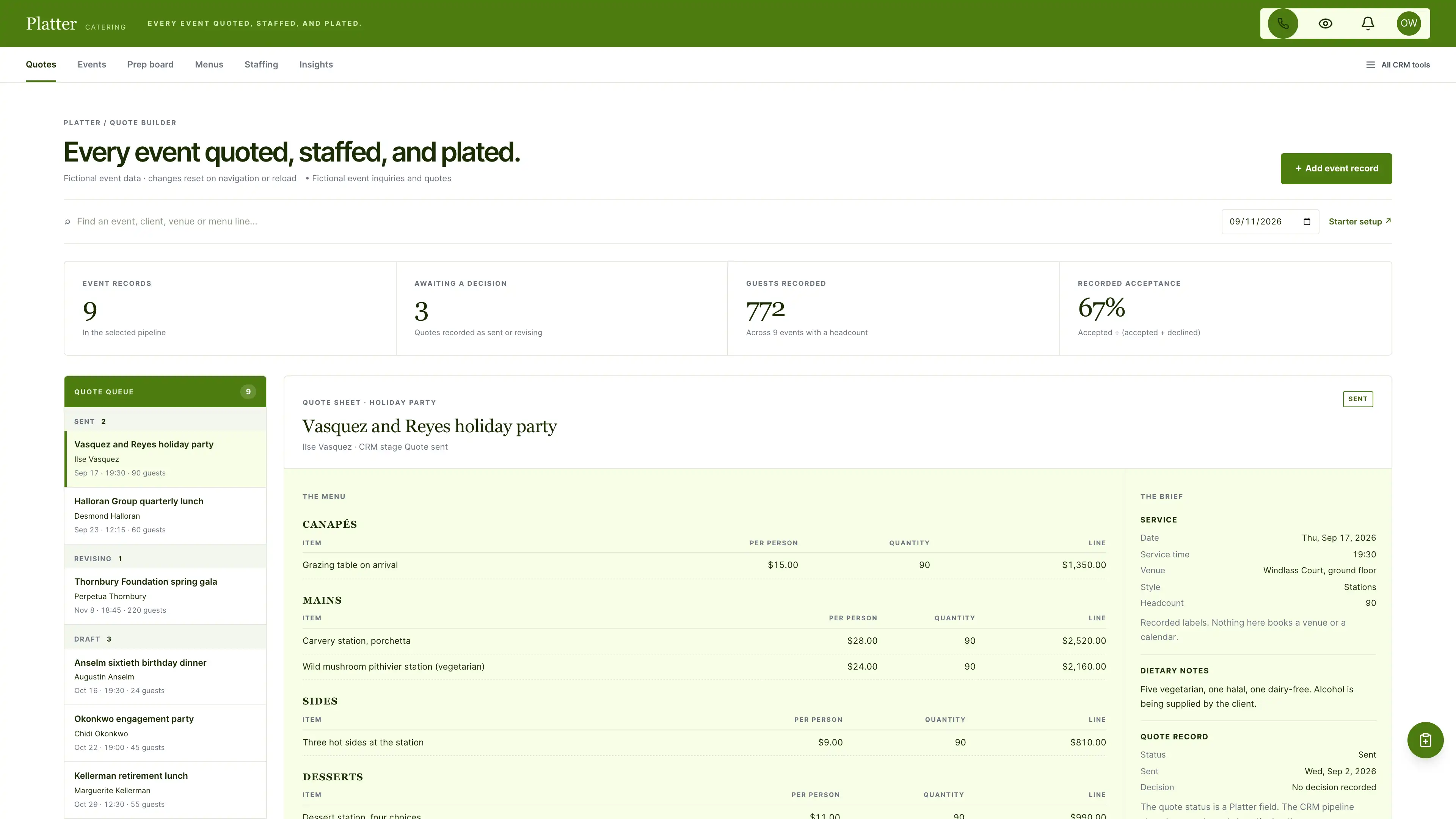
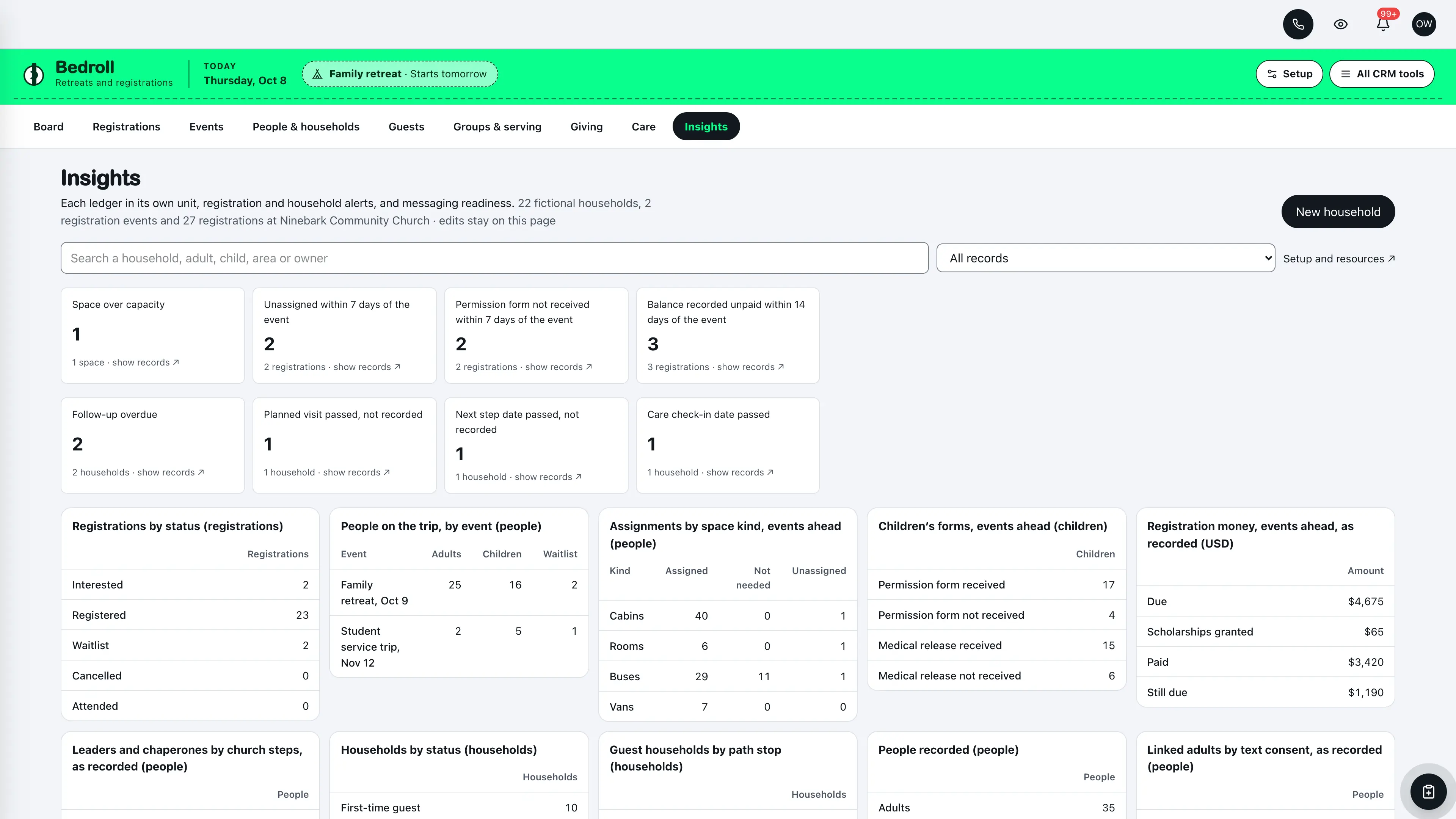
Actual interface captures with fictional sample data. Open a screenshot to see it full size.
What’s in the kit
Screens
- Board operating view with the event ticket, Before the trip and cabins, rooms or buses as columns
- Drag or pick assignments that save each household's registration
- Registrations with money and forms as recorded, leaders and a form inbox
- Events with registration events, spaces and readiness beside church events
- People & households operating view
- Guest path with a card inbox
- Groups and serving roster, giving as recorded, care and insights views
- Three message drafts in send mode with every send step off, plus thirteen task drafts
- Six closed-choice native form drafts and five editable document templates
- Shared church tags, segments, a list, custom values, snippets, a connection card QR code and a pastor calendar
six pipelines
- Guest follow-up · 8 stages
- Serving teams · 7 stages
- Group leaders · 7 stages
- Care requests · 7 stages
- Event registrations · 7 stages
- Trip leaders and chaperones · 6 stages
Optional. Install the ones that match your work, or connect drafts to a pipeline you already use.
16 workflow drafts
- Planned visit welcome
- First visit follow-up
- Next step invitation
- Next step check
- Group leader introduction
- Thirty-day check-in
- Serving team first conversation
- Serving roster confirmation
- Care request owner
- Registration received
- Forms follow-up
- Balance follow-up
- Packing list reminder
- Guest welcome from the connection card (texts and emails, every send step off)
- Guest welcome after a recorded first visit (texts and emails, every send step off)
- Re-engagement (a text, a call, an email and a task, every send step off)
Inactive until you review and publish them. Message steps ship switched off.
Forms and documents
- Plan your visit
- Connection card
- Prayer request
- Serving team interest
- Event sign-up
- Event registration
- Membership covenant
- Volunteer policy
- Packing list
- Permission form
- Room and bus assignment sheet
Editable native forms and document templates. Forms collect information for staff review.
Sample workspace
Explore Ninebark Community Church, a fictional church with a family retreat within the week, six cabins and two buses, 18 households and 41 people on the trip, one cabin over capacity, two people unassigned, two permission forms not back and three balances still due as recorded, plus a student service trip five weeks out with two vans and two rooms, on top of 22 households with children recorded as a first name and an age band, first-time guests, groups, a two-service roster, events, care requests and 41 recorded gifts. Sample edits stay in memory and reset on navigation or reload.
No sample customers are added to your CRM.
Setup and source
- Guided setup and compatibility report
- Private rollback receipt
- AI-agent guide for customized installations
- Original editable source, configuration, and tests
How setup works
Full installation guideCheck your Seedly
Extract the kit and run the guided setup. It checks your installation and flags customized files before it changes anything.
Connect the helper
Deploy the included helper from your backend source, then build your web app and choose any starter pipelines and drafts.
Make it yours
Set business name, descriptor, default pipeline name and message mode. Then sign in and check the workflows and permissions your team uses.
Technical details and compatibility
Seedly CRM 5.8.4 · extension API 1. Node.js 20 or newer. The installer checks supported integration-file versions and does not deploy your web app or backend. The included original backend helpers are required for connected registrations, the registration events record, the form inbox, households, the church lists, linked contacts and setup. They preserve native account permissions, unrelated custom fields and row history, keep registrations, spaces, people, households and money apart, refuse codes, logins, card and bank numbers, Social Security numbers, children's ages and names lists, allergy, medicine, diet, injury, behavior, custody, pickup and rooming-restriction notes and health details as a guard against accidental entry rather than a guarantee, refuse dates still ahead for things that already happened and a second open registration for the same household and event, and check revisions before saving. Install the source with the kit's installer, then deploy the helpers from the authoritative backend source, then build and deploy the web app. To update from 0.1.0, run the 0.1.0 installer's remove and then the 0.1.1 install in the Seedly working tree with no deploy or build between them, then deploy the backend, then build and deploy the web app; if remove refuses over your own edits, keep a copy, put the file back exactly as the 0.1.0 installer wrote it (from your own Git history right after you installed it, or by installing 0.1.0 into a scratch copy of your project as it was before the kit), remove, install and re-apply them. A 0.1.0 page that is still open between the two deploys keeps working: every helper it calls keeps its 0.1.0 arguments and answers, and the 0.1.1 page reads new helpers of its own. Afterwards re-create the unpublished form drafts as the QUICKSTART says; setup marks anything still pointing at a deleted form as needing attention, with what to do. The shared church lists fit one to three weekly services; a church with four or more should keep its roster and headcounts elsewhere for now. Pipelines, drafts, forms and documents are optional.
Each registration is an opportunity in Event registrations, linked to the household's contact, holding the event, the household, the status, the date it came in, its people as row IDs from that household (never a copy of a child's name) with a cabin, room, bus, van, tent or table for each kind the event uses or a recorded not needed, an adult's role and a leader's church steps as a status, each child's permission form and medical release as received yes or no, the amount due, a scholarship and payments as recorded, and a short note. Registration events live in their own account record with their dates, place, prices and deposit as recorded, capacity, spaces and readiness list; it shares the Seedly account's one stored document with the church lists and setup's receipts, and a save that would fill that document is refused with what to clear, never half-written. Households keep the shared church record: adults linked to Seedly contacts, children as a first name and an age band only, groups and teams, attendance, sign-ups, gifts as recorded by fund and care requests as category labels.
Bedroll records what the office decided. It creates each registration's opportunity at the stage its record has reached and never moves it afterward; the office drags it in Seedly. A stage draft runs only when a registration is dragged into its stage on the Seedly board, not when Bedroll records a registration at a later stage, and the Registrations view marks a board that is behind. The Forms, Balance and Packing list tasks are due 10, 14 and 7 days before the event, read from the registration when the draft runs. Bedroll reads every open registration and every open household with its own queries, past Seedly's 1,000-opportunity board limit, and today, the strap, the inbox days and the server's own checks (clearing an event a year after it ends, the 120-day window of finished events, marking a registration attended only once its event has started) follow the church time zone. The card inbox, the Event registration form inbox, prayer requests and the consent counts read within a fixed budget on any size of pipeline, matching each submission to its household with one indexed read, and say how far they got when the budget runs out or a form holds more than its newest 200 submissions, so a busy church's inbox never fails on size. The registration events record holds a busy year: about 18 events of 40 cabins, rooms or buses at a time fit, up to 40 events, and at 40 the editor names the earliest event and the day it can be cleared; the README gives the sizing. Every Seedly write re-reads the account's settings document, so on a large account Bedroll does long jobs in steps that each stay within Convex's read limit, and the page goes on by itself and shows how far it got: draft due dates after a start-date move, setup's adds and removals, a large household's church tags and re-engagement. Each board move saves that household's registration and says so when it fills a space past its capacity. Lists that follow the search box say showing N of M while their counts read every household, red carries only an alert's own name, and every view says what it is still reading instead of an empty list. A family marked attended as it arrives stays on the board, in every count and in every alert until the event ends. A household has one open registration per event, an event keeps its currency once it has a registration, and moving an event's start date moves its registrations' task due dates. Bedroll takes no payment, sends no payment link and issues no receipt; amounts are what the office typed, in the event's currency. A child's permission form and medical release are received yes or no; their contents stay on your church's own paper or secure form, and medicines, allergies, diets, injuries and other health details, and behavior, custody, pickup and rooming-restriction notes, are refused in every note. Counts of adults and children per space are shown, never judged: Bedroll makes no safety, supervision or compliance claim, has no room-sharing field and records a leader's church steps only as a status, never a check result. Saving a household keeps the church tags on its linked contacts and moves the guest follow-up opportunity forward a stage, never back. The household editor finds any contact by first name, email or company with its search box, and an unlinked primary adult is offered the household's own Seedly contact while it is still in Seedly, so Add as a contact never makes a second contact for the same person, while a partner on the family phone or email or an adult child with a parent's name gets a contact of their own; a contact deleted in Seedly is never linked or tagged again, its adult gets Add as a contact, its household still saves, and no registration is recorded on it. The three message drafts hold real texts and emails with every send step switched off, every text behind a check that the contact agreed to texts and every email behind one that they did not opt out, every text ending with the opt-out line, each draft added with a 10:00 to 19:30 church-time send window, and a paused check ending the run rather than sending; you add them only after ticking that you record consent, you can add them before your A2P campaign is approved, and nothing sends until your office reads each step and turns it on. Bedroll has no child check-in and refuses children's exact ages, birthdays, names lists (including lists after youth words and after a short place, such as Kids on the bus: Leo, Ava), allergy and custody notes and health details. Giving is only what the office typed in, and trip payments are never counted as giving. Access codes, Wi-Fi and portal logins, card, bank and routing numbers and Social Security numbers are refused in recorded text, while text such as Bus 2 leaves at 7:30 AM, Medical release received and John 3:16 is kept. That is a guard against accidental entry, not a guarantee, and the shapes it cannot tell from ordinary text are listed in the README. The public form drafts hold only names, email, phone and fixed choices, and the Event registration form asks no medical, allergy or diet question. Install one church kit per Seedly installation. A matching Seedly church website template is available separately.
Six optional pipeline templates and 16 inactive workflow drafts. 27 fictional in-memory registrations.
Calling, messaging, signing, payments, and external integrations depend on your Seedly installation, account permissions, plan, and configured providers. Screenshots use sample data and reference imagery. Hosting, installation, and ongoing maintenance are your responsibility.
Get the Events & Retreats Church CRM Kit
Checking access…

DevLaunch All Access
Every kit and every template.
- All 220 CRM kits for Seedly CRM
- All 190 website templates for Seedly Sites
- Every class, course, and product we release, added as it ships
- Private calls with Aaron
Already a member? Open your downloads.
Questions
How do I receive the kit?
Purchase securely through Whop. Your original source ZIP and installation documentation are delivered manually to the email used at checkout. This is a one-time purchase of this kit; Seedly software, hosting, and installation services are separate.
Does this include Seedly CRM?
You obtain and configure Seedly separately. The kit adds original frontend screens, a shared theme, starter definitions, and integration instructions. It does not include Seedly’s codebase, license, hosting, or a separate CRM database.
Is this one connected workspace?
Bedroll keeps its spring-green strap and view bar with the nine views beside the native CRM tools in the same signed-in account. Contacts, Calendar, Estimates, Documents, and other full modules retain the functionality supplied by your own Seedly installation. Existing authored content and provider screens retain their own layouts.
Can I use it with existing customizations?
Yes, with a compatibility review. The installer checks the supported integration files. Changed integration files need a reviewed merge; the included AI-agent guide explains how to preserve custom extensions, permissions, providers, and routes.
Do I have to import all the starter content?
No. Choose individual pipelines and workflow drafts, use a compatible existing pipeline, or install none. Workflows remain inactive until reviewed and published. The task drafts use native triggers, internal tasks, optional notes and timed waits. The three message drafts hold text and email steps that ship switched off. Each step sends only after your office turns it on, and texts go only to people with recorded consent. A wait does not verify task completion or recheck the current stage.
Can I remove the examples and starter content?
Sample records stay in memory and never create customers in your CRM. Leave sample mode to return to your account. Starter setup lets you review removal of unused kit additions; server checks retain edited or published workflows and pipelines with live work or references. Removing the frontend does not delete account records.
Can different subaccounts use different kits?
The current design and branding apply to the whole web installation. Subaccounts still separate data and access. Use a separate web installation for another full-interface kit; running different kit designs by subaccount in one installation requires additional customization.
More hospitality, events & creative kits
Browse all 220 kits